The name Anatoli invites thoughts of shorthaired house cats across Turkey’s Anatolian peninsula, but household identification still starts with what a registry writes about type—not with oral labels alone. The World Cat Federation (WCF) registers the breed as Anatoli (ANA): a medium to large, muscular shorthair with medium-heavy bone; massive neck and chest; medium-length legs with round paws; a medium, well-furnished tail; a medium-length blunt-triangular head with an almost straight profile and firm chin; large ears with broad bases and slightly rounded tips, set rather high and upright; large oval eyes set at a slight slant, with even color matching the coat; and a short coat without a woolly undercoat that feels fine yet harsher to the touch.[1] WCF’s EMS code table lists ANA as recognized by WCF, which means the breed is shown and registered primarily inside that federation’s system.[2] The sections below follow standard type, coat and daily setup, then indoor enrichment and health questions that can be checked against primary sources.
How the standard describes type and color limits
On the point scale, WCF awards twenty-five points each to body and tail, head and eye shape, and coat texture and color; ten each to ears and eye color; and five to condition. That weighting treats the blunt-triangular head, solid torso, and short harsh coat as one ideal type, not a coat-color contest.[1] Chocolate and cinnamon—and their dilutes lilac and fawn—are not recognized in any combination, nor is the pointed pattern; all other colors and patterns are allowed, including any amount of white.[1] Show cats may therefore be mostly white, tabby, tortoiseshell, and more, but should not present pointed masks or chocolate-series colors. Standards describe a show ideal; household cats vary in head length, ear set, and coat harshness, so one photograph cannot dictate every care plan.
Separating Anatoli from Turkish Van and Turkish Angora helps identification: those breeds carry longhair or region-linked standards in multiple associations, while ANA is written in WCF as a shorthair without a woolly undercoat and with a broad color palette.[1][2] CFA or TICA championship breed lists are not the identification basis here. A similar-looking shorthair at another association’s show must be checked against that association’s own names; it is not automatically an Anatoli. Before buying or adopting, ask which registry, which parent registration numbers, and whether breeding follows the ANA standard—clearer than the oral label “Turkish shorthair.” This article’s type and color boundaries follow the 2010 WCF standard and the current EMS table; secondary sites’ temperament stories or unchecked origin timelines are not treated as verified history.
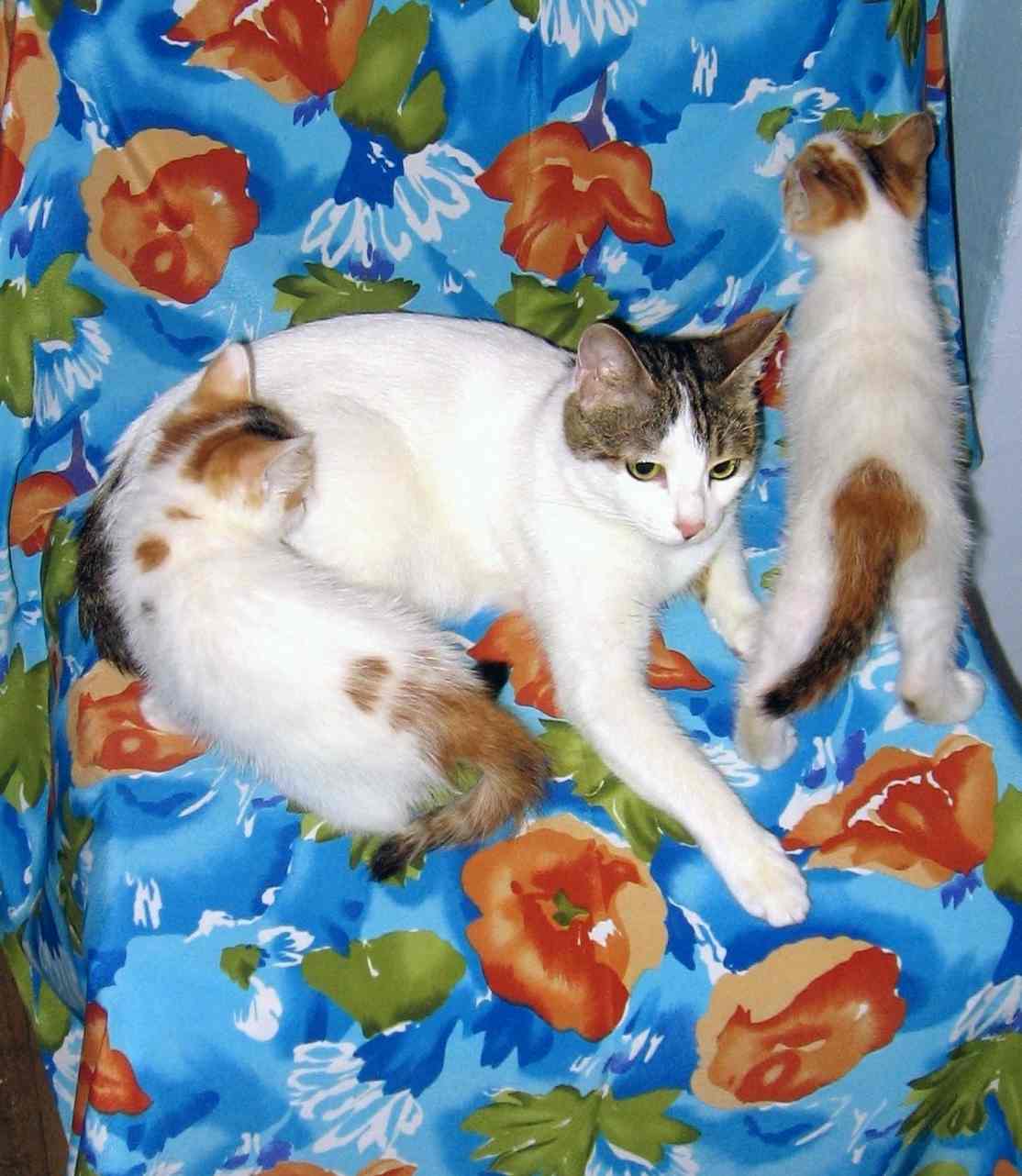
Figure: Owner-labeled Anatoli cat Astghik. Zara-arush, Wikimedia Commons[5]

Coat care and activity space
A short coat without a woolly undercoat, fine yet harsher to the touch, points to light grooming: remove dead hair and keep skin ventilated, rather than deep undercoat work used for many longhairs.[1] A rubber brush or short-tooth comb used occasionally—and a little more in shed season—usually fits; daily “show-ring” combing is not required by the standard. Bath frequency still follows the individual cat and veterinary advice, not coat harshness alone. Early handling of ears, paws, and the mouth area makes nail trims, carriers, and exams easier later. The coat wording does not prove shed volume or allergen load; those need individual observation, not breed promises.
A medium-to-large, muscular frame with a massive neck and chest implies sturdy cat trees, window lookouts, and wide pathways—not only lightweight toys or a single cardboard box labeled “enrichment.”[1] In multi-cat homes, the FelineVMA emphasis on multiple, separated key resources matters: extra litter boxes, food and water stations, and rest spots reduce crowding around a solid-bodied cat.[3] WCF’s standard supplies no temperament scale, so sociability, alone-time tolerance, and ease with children or other pets cannot be inferred from head shape or ear size. What can go on a preparation list is vertical space and rotating chase-and-pounce toys so activity lands in permitted zones rather than furniture edges. Temperament is observed in real life and adjusted as needed.
Indoor environment and health questions
Most companion cats live indoors. The Feline Veterinary Medical Association’s 2025 indoor-cat position statement stresses that physical safety alone is not enough: emotional and behavioral needs must be met as well. Its five pillars are a safe place; multiple and separated key resources (food, water, litter, rest, and lookouts); opportunity for play and predatory behavior; positive, consistent, predictable human–cat interaction; and an environment that respects smell and other senses.[3] For a larger shorthair that needs vertical movement, dispersed resting spots and solid climbing structures map more cleanly onto those pillars than mealtime feeding alone. The statement is a general indoor-cat framework, not an Anatoli-specific trial.[3]
The published WCF type standard does not attach a breed-disease list, so genetics cannot be “read” from a blunt-triangular head or a short harsh coat, and appearance is not a diagnosis.[1] For cats in general, Cornell’s Feline Health Center describes hypertrophic cardiomyopathy as a common heart disease: left-ventricular wall thickening can reduce pumping efficiency; many affected cats look normal early on; diagnosis relies on echocardiography after ruling out hypertension and hyperthyroidism; severe cases may involve labored breathing or thromboembolism-related hind-limb emergencies.[4] Asking breeders or rescue groups about echocardiograms, routine exams, and sudden deaths in near relatives is more useful than ranking ear size. Household care still means vaccines, parasite control, dental and weight management on a veterinary schedule, with imaging when indicated—not treating “no disease listed in the standard” as a lifetime free pass.[4]
To recognize an Anatoli, check WCF’s blunt-triangular head, solid torso, short coat without a woolly undercoat, and color bans. To share a home, plan light grooming, the five indoor pillars, and ordinary feline heart and wellness questions. Standards identify type; temperament, health, and care intensity still rest on the individual cat and veterinary judgment—not on a show ideal or one owner photograph.
References
-
World Cat Federation. Anatoli (ANA) breed standard (2010-01-01). https://wcf.de/pdf-en/breed/ANA_en_2010-01-01.pdf
-
World Cat Federation. WCF EMS CODE (updated 2026-11-01). https://wcf.de/pdf-en/WCF-EMS_EN.pdf
-
Feline Veterinary Medical Association. Meeting the Physical and Emotional Needs of Indoor Cats (position statement news, 2025-08-28). https://catvets.com/news/2025-indoor-cats-position-statement/
-
Cornell Feline Health Center. Hypertrophic Cardiomyopathy. https://www.vet.cornell.edu/departments-centers-and-institutes/cornell-feline-health-center/health-information/feline-health-topics/hypertrophic-cardiomyopathy
-
Wikimedia Commons. File:Astghik 1.jpg. https://commons.wikimedia.org/wiki/File:Astghik_1.jpg