The English Springer Spaniel takes its name from the moment a hidden bird takes flight. Working through tall grass or brambles, the dog would follow the bird's scent and “spring” it from cover. If the bird fell, the Springer had another job: find it and carry it back to the hunter. The work called for stamina and a dog that could follow its nose while keeping track of a person. An everyday walk offers a chance to do both. Give your Springer time to investigate a scent, then move on together when the dog looks back at you. [1]
Watch a Springer stand and then walk a few paces. The American Kennel Club (AKC) describes a muscular dog standing about 19 to 20 inches at the shoulder and weighing about 40 to 50 pounds, with a smooth stride that covers ground easily. Long, well-feathered ears frame the face, and the eyes have a gentle expression. The black and white in the first photograph is one of several colors and patterns the double coat can take. Those long ears are easy to pick out on the lawn. After a run through grass, they also deserve a closer look. [1]
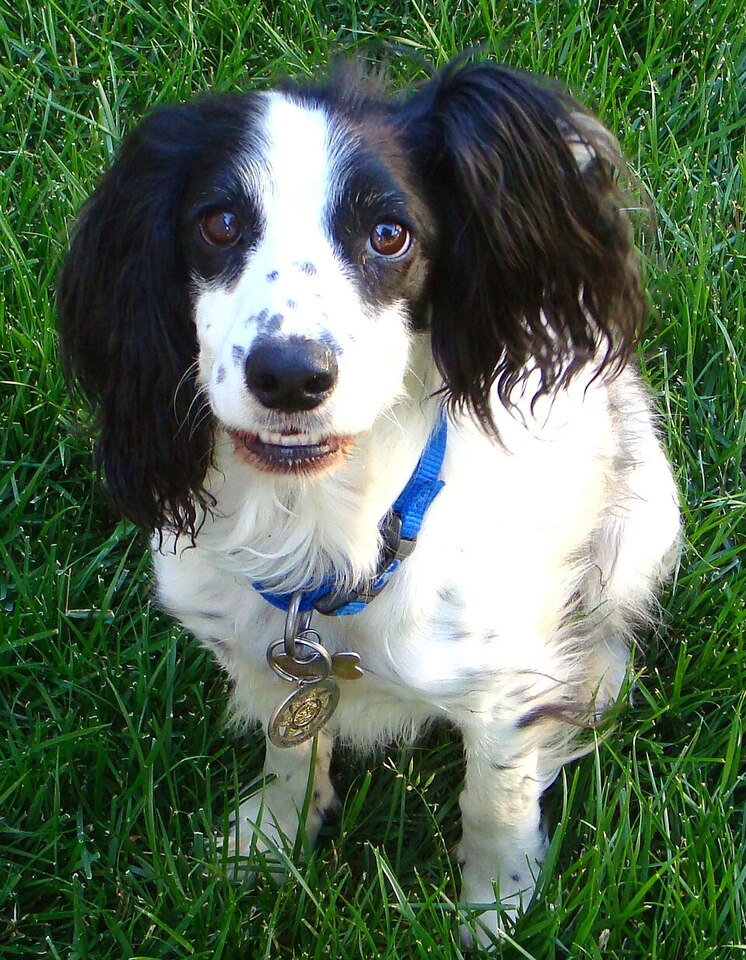
Figure: The English Springer's stance. Amadscientist, Wikimedia Commons[2]

To judge how a Springer would fit into your household, picture a typical workday. Who can take the dog out for a walk with time to explore? Who will enjoy playing when they get home? The AKC lists long walks, hikes and games with people among the breed's activities. A Springer can live in an apartment or small house when its exercise needs are met. A fenced yard makes a game of fetch convenient. In an apartment, count the trip to a suitable play space as part of the outing. Even in a family of weekend hikers, someone needs to pick up the leash on Monday. [1]
At home, try teaching a retrieve in three parts: finding the toy, bringing it back and letting go. Start with the search. In a quiet room, let the dog watch you place a familiar toy beside a chair leg. Give a short cue such as “find it.” When the dog reaches the toy, praise the find, even if the toy stays on the floor. Once the cue is familiar, tuck the toy just out of sight around the chair leg. A small change in position gives the dog a new problem to solve within a few steps. [1]
For the return, put the toy nearby in plain sight. When the dog picks it up, call it back and leave room for it to come right up to you. Practice the handover when you're already close together. Hold your hand low, use the same release cue each time and start another round once the dog lets go. Giving up the toy can become part of the fun. If your Springer finds it easily but circles the room with it, shorten the return trip next time. If the dog comes straight back and hangs on, work on the handover by itself. [1]
Springers enjoy working with people, and a new scent can catch their attention in mid-stride. Early socialization and puppy classes help them get used to unfamiliar people, dogs and surroundings. Take familiar cues outdoors gradually. On a quiet stretch of a walk, call your dog's name and give it a chance to turn and join you before you explore the next patch together. Families who enjoy teaching new skills might try tracking, obedience or agility. A photograph catches the instant a Springer clears a bar. Waiting to start and coming back to the handler afterward are skills worth practicing, too. [1]
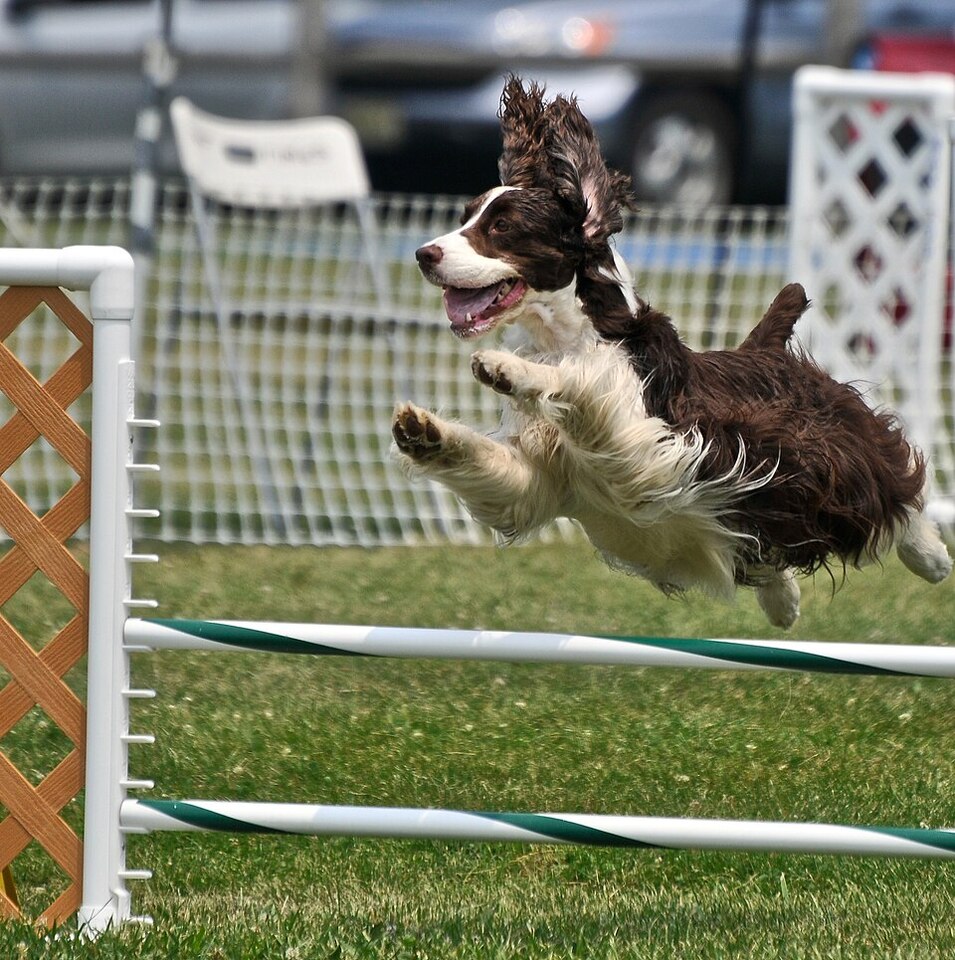
Figure: A Springer over an agility hurdle. Bob Jagendorf, Wikimedia Commons[3]

Allow for time together indoors as well. Springers seek company, and the AKC notes that behavior can become difficult when they regularly spend long periods alone. Before bringing one home, compare the times everyone leaves and returns. How long is the house empty, and who is around for a walk or a game? Let the individual dog shape those plans. A keen searcher might enjoy another hiding place for the toy. A dog that likes walking alongside you might enjoy practicing a familiar cue on the way. Its response will tell you more about what keeps it engaged than a mileage target could. [1]
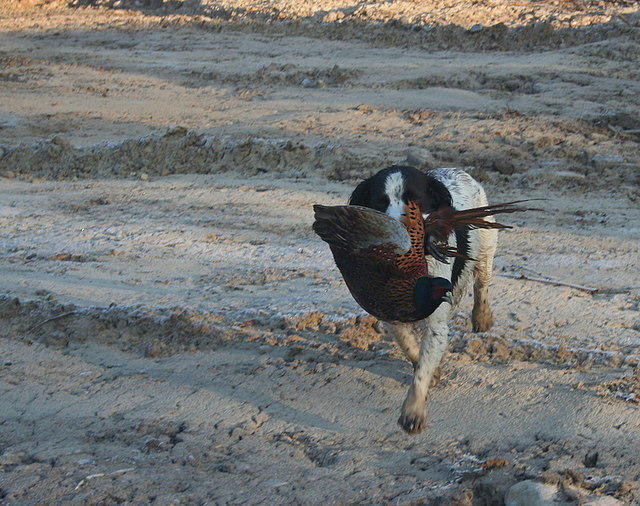
Figure: A waterside retrieve. Des Colhoun, Wikimedia Commons[4]

After a walk through grass or a trip to the water, take a moment as you unclip the leash. Gently lift each ear flap to look at its underside and the ear opening. Part the longer hair along the ear edges, behind the legs and around the feet with your fingers to find grass or a tangle just starting to form. Regular checks help you learn what your dog's ears usually look like. Redness, an unusual smell or pain when an ear is touched are reasons to have a veterinarian examine it. [1]
Set aside time each week to brush the whole coat, removing loose hair and dirt. Gently work through tangles with a slicker brush or metal dog comb. The hair around the feet, head and neck and beneath the tail may need tidying, a job a professional groomer can help with. As you check the feet, look at the nails. Regular trimming keeps them from growing long enough to make walking or running painful. Brush the teeth often with dog toothpaste. On a rainy weekday, the person who takes the dog out also needs time afterward to ease a knot out of the ear feathering. [1]
If you're getting a puppy from a breeder, ask about both parents. Hip and elbow dysplasia and some eye conditions occur in English Springer Spaniels. Ask which screenings each parent had and have the breeder show you the corresponding records. They tell you which risks were assessed before breeding. Your puppy's movement and eye health still need attention as it grows. For everyday life, picture the whole outing, from the moment someone picks up the leash to the moment the dog gives back the toy and settles beside someone who has time to check those grassy ears. [1]