At a cat or dog checkup, the vet often asks for a fecal sample to screen for intestinal parasites. On 7 November 2026, Parasites & Vectors published a U.S. study: researchers ran 1,013 dog and cat fecal samples through each of three methods and compared how many positives each method found.[1]
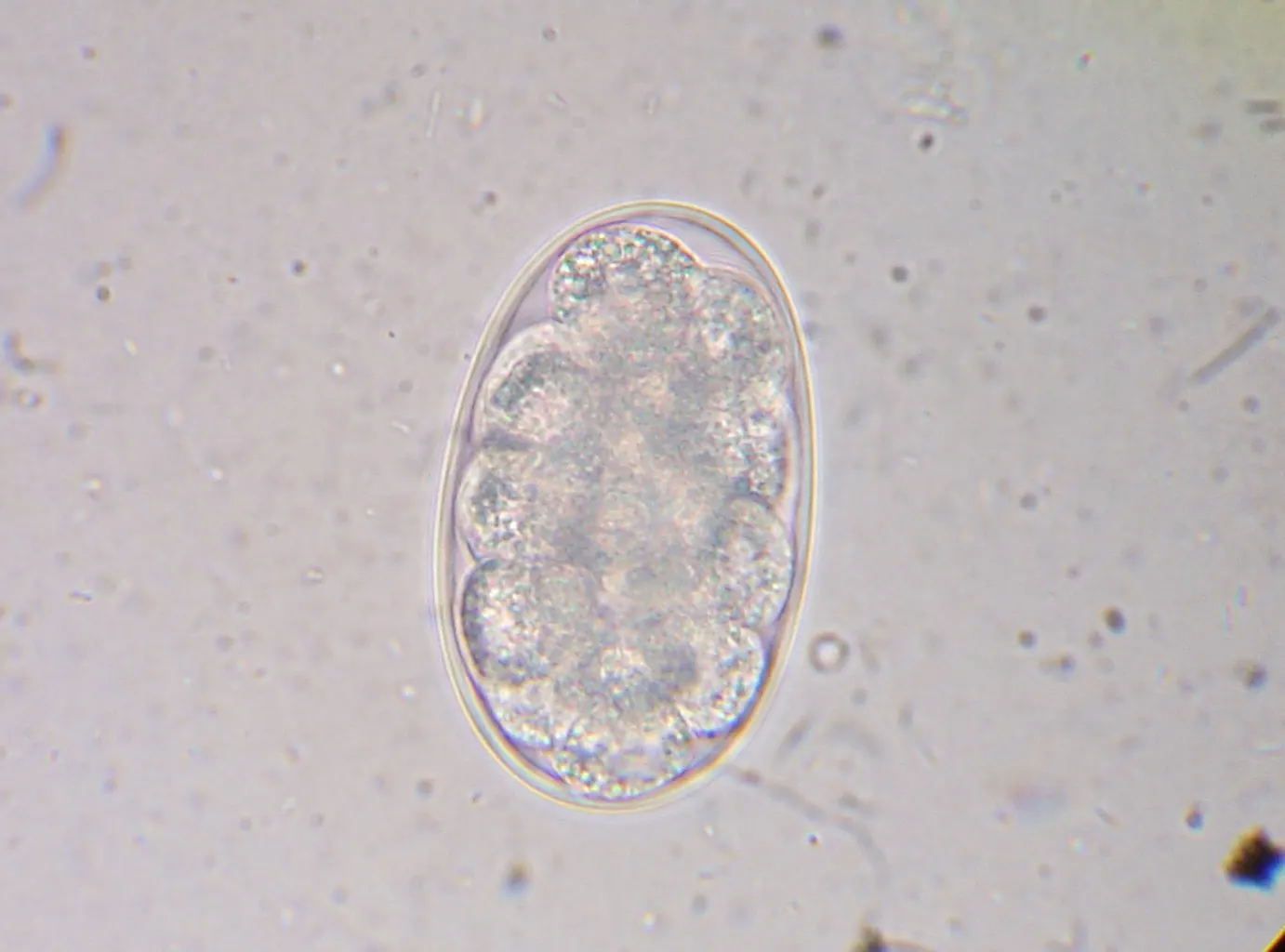
Figure: Microscope photo of a canine hookworm egg, illustrating one kind of target centrifugal flotation looks for. Not an original figure from the 2026 paper. Source: Joel Mills, Wikimedia Commons. License: CC BY-SA 3.0. Changes: converted to WebP and width-limited only.

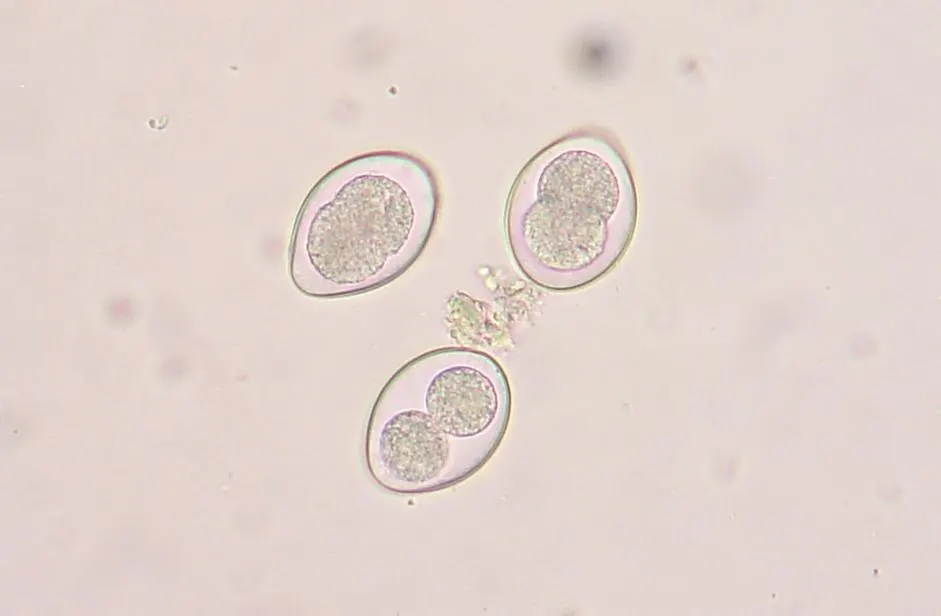
Figure: Microscope photo of coccidia oocysts, another common target in fecal microscopy. Not an original figure from the 2026 paper. Source: Joel Mills, Wikimedia Commons. License: CC BY-SA 3.0. Changes: converted to WebP and width-limited only.

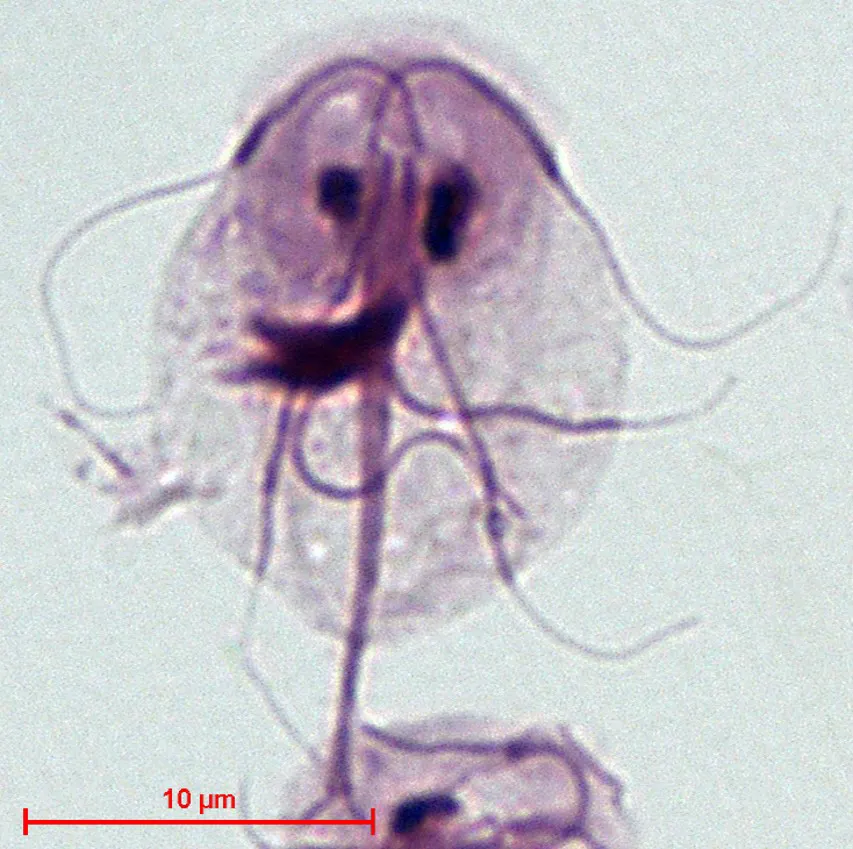
Figure: Microscope photo of a Giardia trophozoite; the scale bar is from the original image. It only illustrates one kind of protozoan fecal exams may encounter—not an original figure from the 2026 paper, and not a report layout for antigen testing or qPCR. Source: Stefan Walkowski, Wikimedia Commons. License: CC BY-SA 4.0. Changes: converted to WebP and width-limited only; original scale bar retained.

What the three methods are
The study compared three tests:[1]
- Zinc sulfate centrifugal flotation: the traditional microscope method—float eggs, oocysts, and similar forms out of feces, then examine them under the microscope.
- Fecal antigen testing: immunoassays that detect specific antigens parasites release.
- qPCR panel: detects parasite DNA; the panel used in the study included 20 qPCR assays.
The starting point is that detection and identification of parasites in feces still rest mainly on these three laboratory principles. In the background, the authors note that intestinal parasites are common in owned dogs and cats in North America and are an important cause of clinical disease, especially in puppies and kittens.[1]
Results: qPCR found the most positives
Samples were collected in May and June 2025 as a convenience set. Methods were compared pairwise, and each sample was also summarized as “parasite detected / not detected.”[1]
| Test method | Samples with parasites detected |
|---|---|
| qPCR panel | 276 |
| Fecal antigen testing | 110 |
| Centrifugal flotation | 66 |
Taken together, the three methods detected parasites in 29.62% of samples. By the authors’ statistics, qPCR detected twice as many parasite targets as antigen testing and flotation combined, and four times as many as flotation alone; looking only at the six parasite targets antigen testing can cover, qPCR still found 1.6 times as many. The gap was larger for mixed infections: qPCR found 3.8 times as many co-infections as the other two methods combined.[1]
The authors conclude that for every parasite class, the qPCR panel had higher detection rates and is suitable as a screening method for intestinal parasites in dogs and cats.[1]
Context to keep in mind when reading this study
Who did the research. The qPCR assay used was Antech Diagnostics’ commercial product KeyScreen GI Parasite PCR; Antech is part of Mars Petcare Science & Diagnostics. The paper states that the study received no external funding—all work, materials, and medical writing were funded internally by Antech; 12 of 14 authors were affiliated with Antech or its Canadian subsidiary, and the other two were from Colorado State University College of Veterinary Medicine. The authors declare no conflicts of interest.[1]
What was compared. The study compared the three methods pairwise on how many positives each found.[1] Finding more positives means qPCR was more “sensitive” in this sample set; what any one positive means for a particular cat or dog, and whether treatment is needed, still depends on the veterinarian’s reading of clinical signs and other tests.
How the samples were obtained. The 1,013 samples were a convenience sample, collected over two months in early summer 2025.[1]
What this means for pet owners
At a pet checkup, fecal testing may use different methods, and clinics and labs differ in what they choose. When you get a fecal report, you can ask which method was used and which parasites it covers. If flotation is negative but the pet has ongoing diarrhea, you can discuss with the vet whether a different method is worth repeating.
References
- Jimenez Castro PD, Leutenegger CM, Vasilatis D, et al. Comparison of gastrointestinal parasite detection methods in fecal samples from dogs and cats in the United States: qPCR, coproantigen immunoassays, and centrifugal flotation. Parasites & Vectors. 2026. doi:10.1186/s13071-026-07735-0