The Kai Ken takes its name from the Kai district in what is now Japan’s Yamanashi Prefecture. Hunters took these medium-sized dogs into the surrounding mountains after deer and wild boar. Their brindle coats helped them blend into the woods, and their strong legs carried them up slopes in pursuit of game. The American Kennel Club (AKC) describes Kai Ken climbing trees and swimming across rivers on the hunt. That history is worth remembering on a woodland walk. A stream or a steep bank may mark the edge of the trail for you. For a dog following an animal, it may be the next part of the route.[1][2]
The Kai Ken is one of Japan’s six native dog breeds. The AKC lists it in the Miscellaneous Class. Seen standing in profile, the dog is slightly longer in body than it is tall at the shoulder. Its legs are sturdy, with particularly well-developed hocks on the hind legs. The upright triangular ears tilt slightly forward, and the thick, high-set tail curls over the back or rises in a sickle shape. From the front, it is easier to see the broad forehead and the muzzle, which tapers toward the nose but retains some thickness.[1][2]
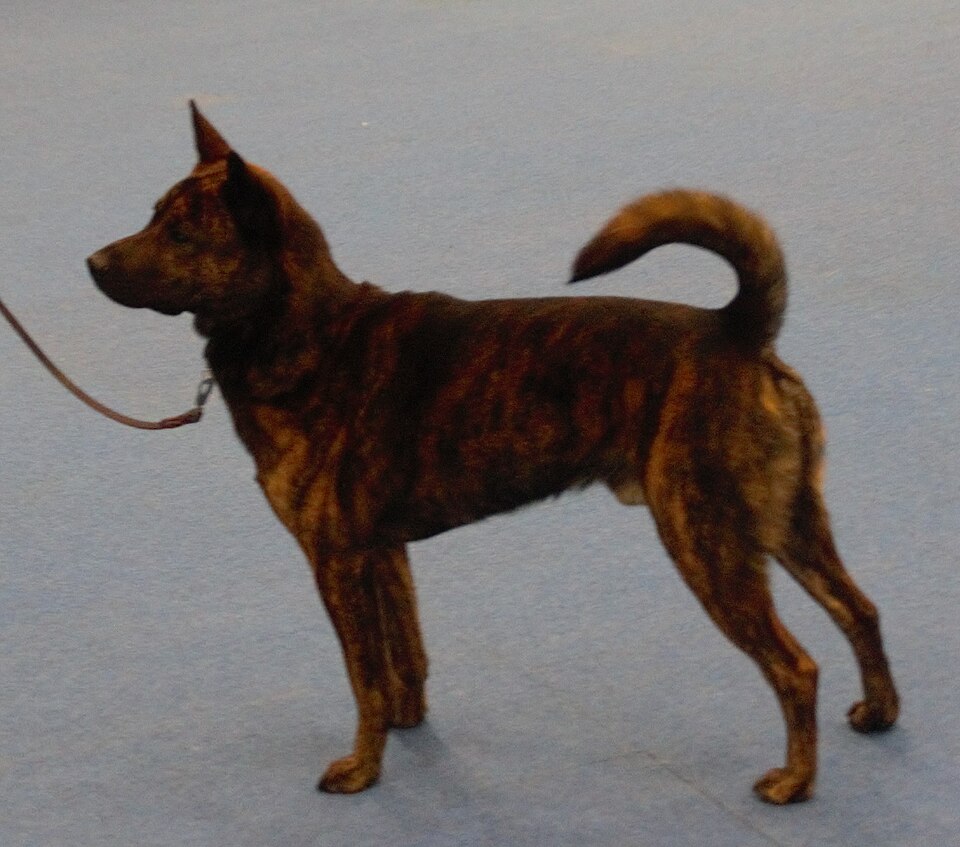
A Kai Ken stands in profile. Canarian, Wikimedia Commons[4]

The Kai Ken’s stripes have earned it the nickname “tiger dog.” Its coat comes in black brindle, medium brindle and red brindle, with variation in the shade and distribution of the stripes. In the photograph below, the red brindle male’s face and chest look dark in the light, while the reddish brown shows clearly along his ribs and hind legs. A puppy can give quite a different impression. Many Kai Ken look black at birth and develop visible stripes as they grow. In some dogs the pattern continues to change over their first five years.[1][3]

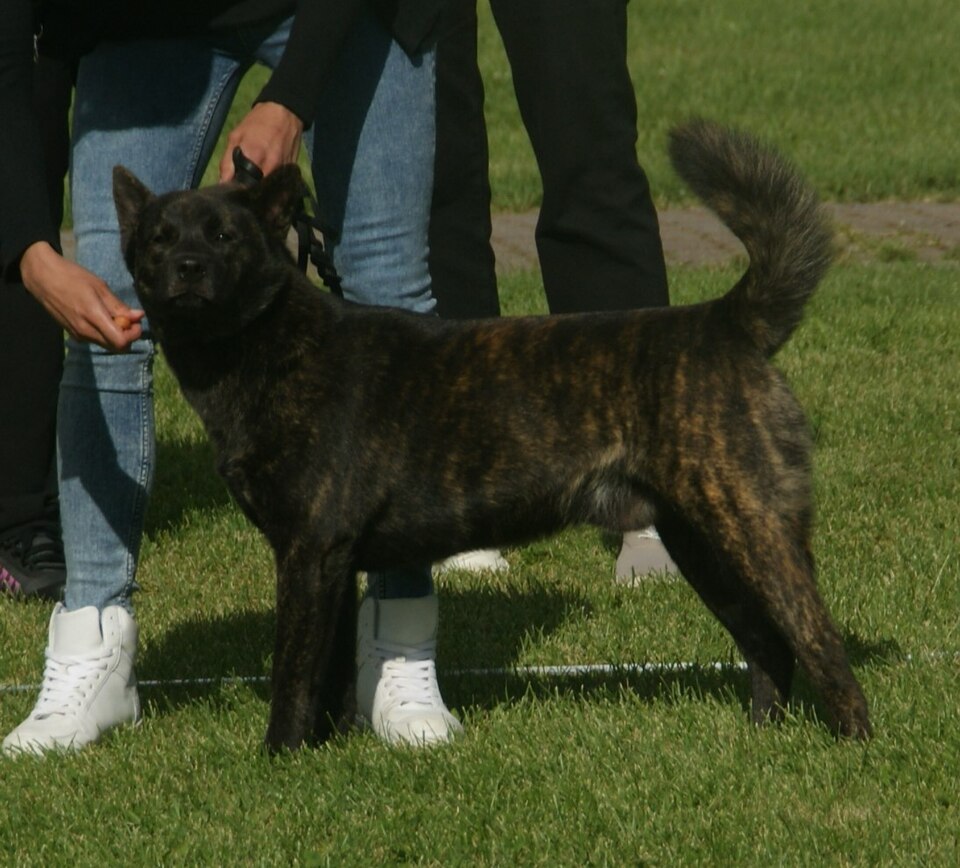
This male Kai Ken has a red brindle coat. Canarian, Wikimedia Commons[3]
Check where the dog could run
When choosing a place for exercise, look along the route a dog might take. A lawn that runs into bushes with a path on the other side is open ground, even when there are no people or cars in sight. Because Kai Ken have a strong instinct to pursue prey, the AKC advises keeping them on leash wherever there is no fence. For an off-leash run, choose a fully enclosed yard or exercise area. Check that the gate latches and walk the fence line for gaps before unclipping the leash. A dog that usually stays close to the family can cover ground quickly when a small animal darts away.[1]
The AKC describes the Kai Ken’s exercise needs as moderate. It needs activity every day and something to occupy its mind. Even without a fenced field nearby, there is plenty to do on a walk. Take a quiet route on leash, pause while the dog sniffs the grass, then turn together to explore another stretch. A fenced space is a good place for games that involve sprinting and changing direction. The balance of walks, running and mental exercise can follow the dog’s age, stamina and interest that day.[1]
Teach your Kai Ken to check in
Kai Ken can form close bonds with family members and learn quickly. They also make their own decisions about what deserves their attention. The AKC recommends early socialization and reward-based training. One exercise that fits naturally into a walk is teaching the dog to look at you when it hears its name. Start at home with few distractions. Say the name once and reward the dog as soon as it turns toward you. Then try it on leash in a quiet outdoor spot. After the reward, let the dog go back to sniffing. Checking in can become part of the fun without bringing the walk to an end.[1]
If you live in an apartment, think through an ordinary workday. Who has time for a morning walk? Who can take the dog out again during the day or play a game after dinner? The AKC suggests several walks spread through the day and indoor activities such as hide-and-seek, rolling a ball along the floor or learning a new trick. For hide-and-seek, one family member can hide in another room and call the dog. Once the dog finds them, someone else can take a turn. A small home has room for that kind of play, and a dog with a yard still needs someone to play with. A Kai Ken that routinely gets too little activity may start chewing things around the house.[1]
Brush more often as the undercoat sheds
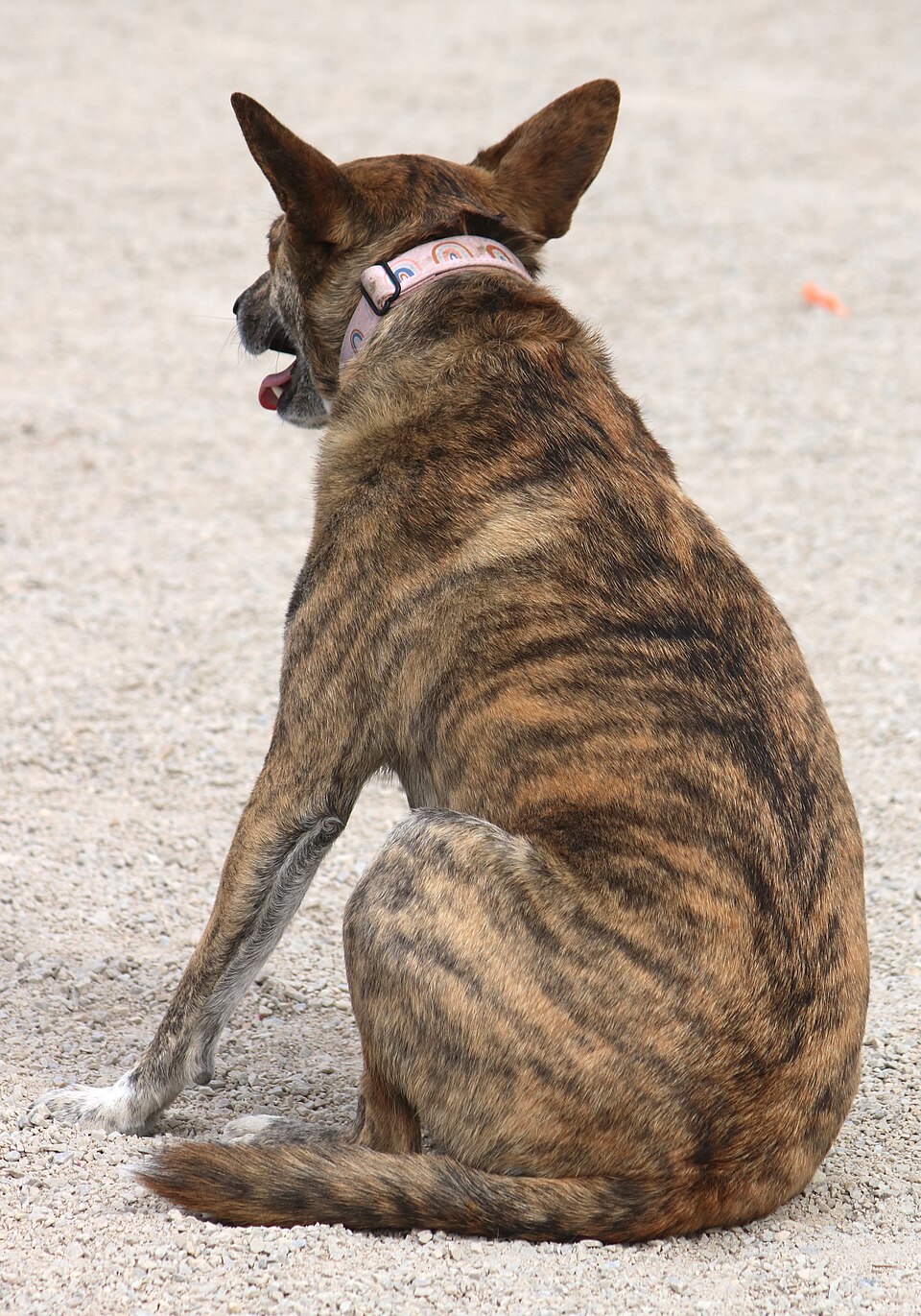
Brindle stripes cross the Kai Ken’s shoulders and back. claralieu, Wikimedia Commons[5]

Seen from behind, the stripes spread across the dog’s shoulders. Beneath that visible surface lies a second layer that also needs brushing. The Kai Ken has a medium-length double coat with a harsh outer coat and a soft, dense undercoat. For much of the year, occasional brushing and a bath when dirty are enough to keep the coat clean. The undercoat usually sheds heavily twice a year. Brush more often during those periods and bathe the dog as needed to help loosen the dead hair. Those seasonal changes give a family a better idea of when grooming will take time than a fixed bathing schedule would.[1][2]
Brushing also provides a regular opportunity to handle the dog’s paws and ears. From puppyhood, briefly lift a paw or look inside an ear flap and reward the dog for staying relaxed. Trim the nails regularly to keep them from growing long and splitting, check the ears for wax and debris, and brush the teeth regularly. Each of these tasks has its own rhythm, even when the dog comes home clean from a walk.[1]
Before bringing a puppy home, set aside time to discuss its family health history. The AKC’s Kai Ken profile mentions allergies, slipping kneecaps (patellar luxation) and seizures. Ask the breeder about both parents. What checks has each dog had? Can you see their knee evaluations? Have any relatives had allergies or seizures, and what records are available? The parents’ records help explain which risks the breeder considered when planning the litter. If your own dog develops symptoms, a veterinarian can assess them in light of that dog’s history and examination.[1]
References
-
[1] American Kennel Club. Kai Ken.
-
[2] Fédération Cynologique Internationale. KAI. FCI-Standard N° 317. English edition, February 9, 2017.
-
[3] Canarian. Kai Ken red brindle 2.jpg. August 23, 2020.
-
[4] Canarian. File:Kaikendog5.jpg.
-
[5] claralieu. File:Kai Ken Reference -3.jpg.