A dog sees something fall into a thicket. It remembers the general direction, but once it reaches the spot, it still has to find what fell. That was familiar work for the Curly-Coated Retriever in nineteenth-century England. Gamekeepers relied on these dogs to bring back game from dense cover and cold water. The job took stamina for the run or swim and persistence when the bird disappeared from view. At home, an old toy gives you a way to keep both parts of the retrieve alive. Give the dog a chance to run out, then lower its head and search.[1]
Seen from the side, the Curly-Coated Retriever stands tall, with a level back and a chest that reaches roughly to the elbows. The belly rises slightly toward the hind legs. Look along the shoulders and back for the breed’s most distinctive feature. Small, tight curls lie close together against the body and extend onto the tail. The coat protects the dog in water and thorny cover while leaving its outline easy to see. The breed standard recognizes two colors, black and liver, both with the same working coat.[1]
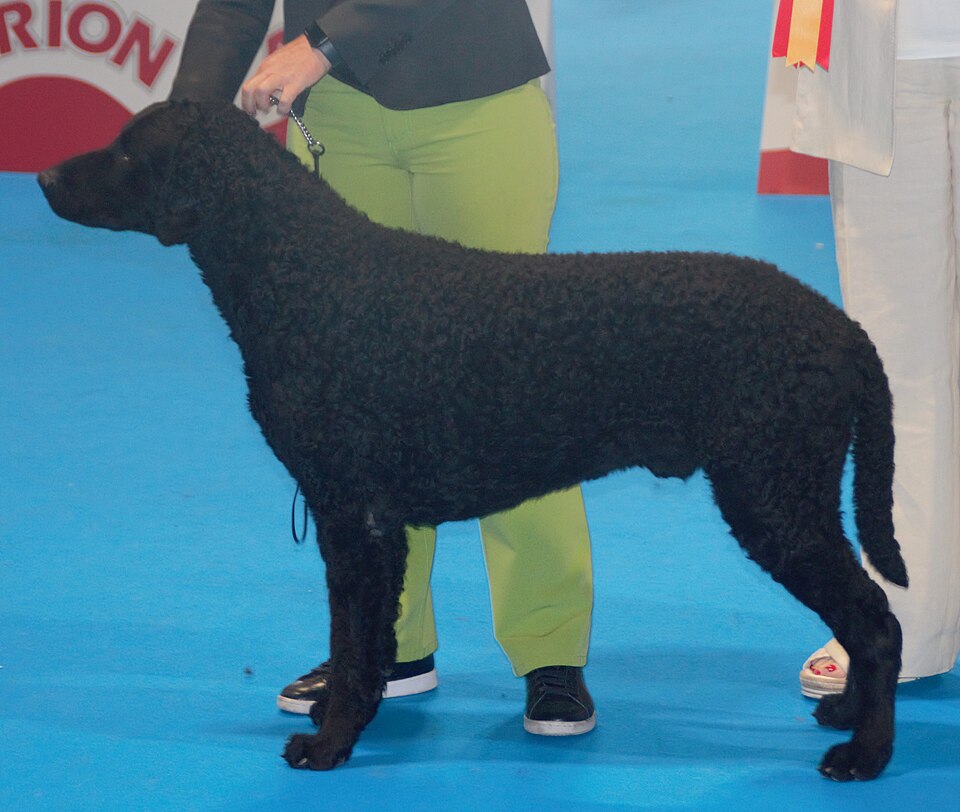
A black Curly-Coated Retriever shows its deep chest in profile. Canarian, Wikimedia Commons[4]

Up close, look for where the curls stop. Short, smooth hair covers the forehead, the bridge of the nose and the cheeks. The head tapers toward the nose in a long wedge. Curls appear again along the edges of the hanging ears, where they can be a little looser than on the back. On the liver-colored dog below, follow the line from the outer corner of the eye toward the base of the ear to see where the texture changes.[1][2]

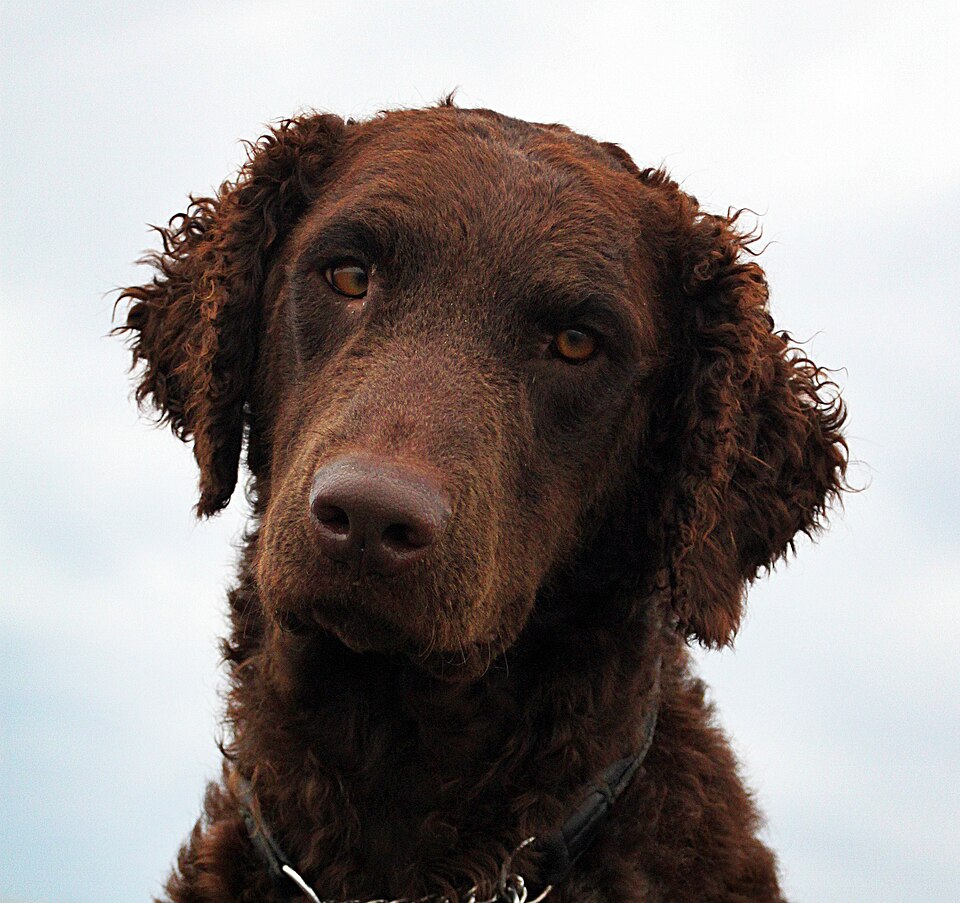
The smooth facial coat meets curls at the ears. Naturialae, Wikimedia Commons[2]
Two ways to find the same toy
A Curly-Coated Retriever can work steadily for a long time and still tire of repeating the same exercise. The American Kennel Club (AKC) recommends making the task clear and keeping training interesting. Try this on a familiar, fenced patch of grass. Let the dog watch you place a toy a short distance away. Walk back to the dog before giving the cue to search. When the dog finds the toy, play together for a moment. Once the sequence is familiar, place the toy beside a tuft of grass. The dog can remember where to look but has to get close to spot it. The run is about the same length both times. What changes is the problem the dog gets to solve.[1]
Vary the hiding place and keep the cues consistent. If several people take turns with the dog, agree on a word that means “go find it” and another that calls the dog back. Watch what happens at the tuft of grass. If the dog circles a few times and looks back at you for help, leave a little more of the toy in sight next time so the search ends in a find. If the dog already knows the game and loses interest as you set up another round, put the toy away and carry on with your walk. A familiar cue tells the dog when to go and leaves it room to work out where to look.[1]
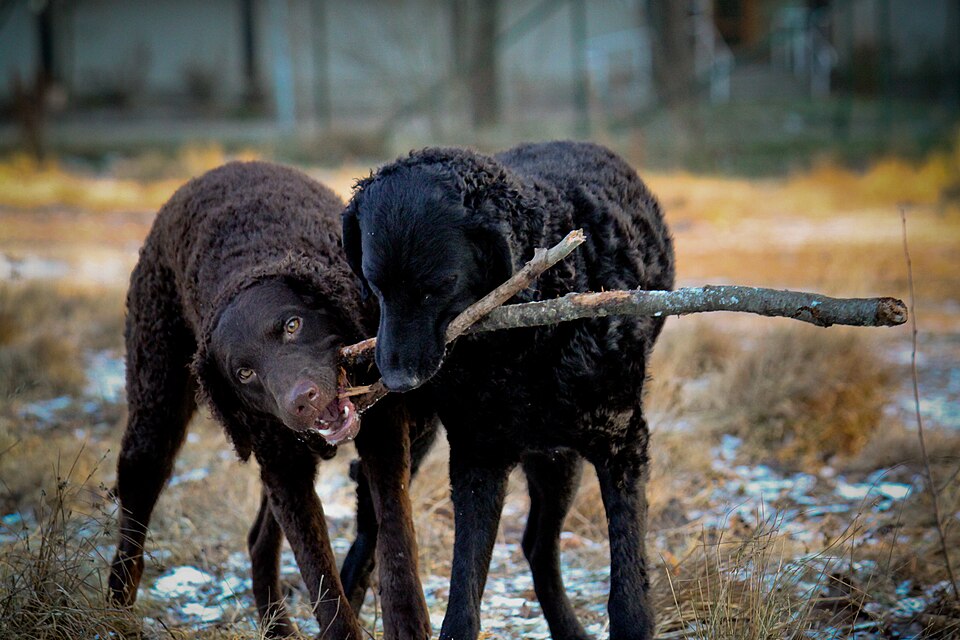
Curly-Coated Retrievers come in liver and black. Mattias Agar, Wikimedia Commons[5]

Making room for exercise on a workday
A weekend outing is easy to picture. To see how a Curly would fit into your household, plan an ordinary workday. Who can take the dog for a morning walk? Who has time in the evening to go somewhere the dog can run and search? On a day when you can’t get to the field, where can you walk close to home? Walks can anchor the routine, with retrieving games along the way and a swim when conditions allow. Adjust the amount to the dog’s age, condition and interest. You can spread activity across the day instead of trying to fit it all into one game of fetch.[1]
There is some flexibility in the size of the home. The AKC describes a dog that can settle quietly indoors when it gets enough exercise outside and has company at home. Look for the longest gap in your household’s schedule. How much time passes between the last person leaving and the first coming back? A lawn gives the dog space, but it still spends that stretch alone. A smaller home can work if someone can reliably take the dog out and is happy to have it rest nearby afterward.[1]
A Curly can be affectionate and playful with people it knows, yet hang back to watch a stranger. If you often have visitors, practice a routine for arrivals. Teach the dog to go to a familiar spot when a family member calls it there. Once guests have settled into their seats, give the dog time to approach. A specific cue makes it easier for everyone to recognize and respond when the dog does what they asked. If you’re interested in formal field training later, watch a session first. Seeing how a trainer helps a dog that has lost track of a retrieve can help you decide whether to join.[1]
Letting the curls air-dry
After an outing, you can usually leave the close curls as they are. The breed has no undercoat, and brushing a dry coat can separate the curls and leave them frizzy. To bring back their shape, dampen the coat and let it air-dry. Frequent shampooing is unnecessary for this. Set aside a little grooming time for regular nail trims, too. The routine changes when the dog sheds. A metal-toothed grooming rake can help remove dead hair that has come loose. Females may have a more pronounced shed about every six months.[1]
Health questions before bringing a Curly home
If you’re getting a puppy from a breeder, ask which health checks each parent has had and whether you can see the reports. The AKC lists hip evaluations, cardiac exams and examinations by a veterinary ophthalmologist. It also lists DNA tests for exercise-induced collapse, glycogen storage disease type IIIa and a form of progressive retinal atrophy. Match each report to the parent it belongs to and the condition it covers. That tells you which breeding risk the result can shed light on. As your puppy grows, its own development and health will guide how much exercise to give it.[1]
Everyone who takes the dog out alone should know the way to the nearest emergency veterinary clinic. The Curly is deep-chested, and the AKC draws attention to the risk of gastric dilatation-volvulus, in which the stomach expands and twists. One sign to remember is repeated retching with nothing coming up. The dog may also drool, seem restless or develop a swollen belly. If you see signs that suggest this condition, call an emergency vet and take the dog in immediately, even if its belly doesn’t look swollen. Daily exercise is something you can adjust as you get to know your dog. The route to emergency care is worth learning before it comes home.[1][3]
References
-
[1] American Kennel Club. Curly-Coated Retriever
-
[2] Naturialae. File:Curly coated retriever.JPG. Wikimedia Commons.
-
[3] American College of Veterinary Surgeons. Gastric Dilatation-Volvulus
-
[4] Canarian. File:Curlycoatedretrieverblack2.jpg. Wikimedia Commons.
-
[5] Mattias Agar. File:Curly coated retriever 7.jpg. Wikimedia Commons.