The German Wirehaired Pointer’s bristling beard once served a practical purpose in the undergrowth. Nineteenth-century German hunters wanted one dog that could search tall grass and dense woods, then take to the water to retrieve game. The work called for a dog that could cover ground, push its face into brush and find its way back to its handler with what it had found. To picture how that dog might fit into your family today, think through an ordinary outing. Who would enjoy walking alongside the dog, giving it something to do along the way and tending to its coat when you get home? [1]
Start with the whole dog. The German Wirehaired Pointer is medium-sized and muscular, with a deep chest, a strong back and straight forelegs. Its build leaves it room to move nimbly. In the photograph of Sola sitting in the snow, follow the forelegs up to the outline of the chest, then look at how the ears hang close to the sides of the head. The harsh outer coat is long enough to protect the skin while still showing the lines of the body. Underneath, the winter coat is dense. It grows much sparser in summer. [1][3]

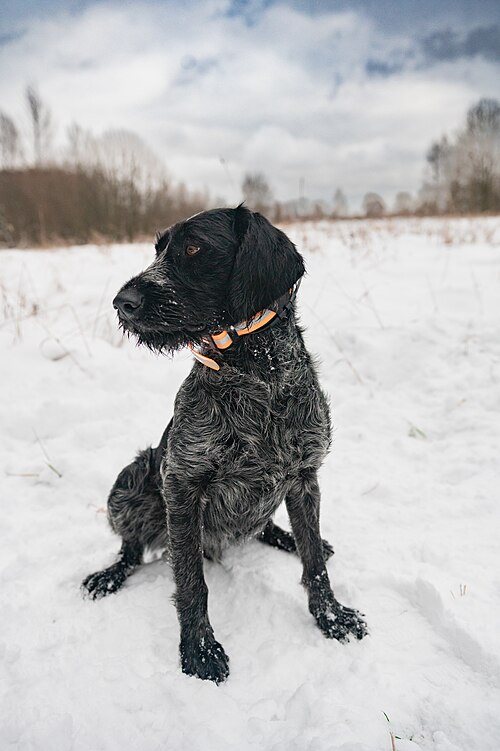
Sola sits with both forelegs in view. Kseniya-nosenko and BILUSHI VASILISA, Wikimedia Commons[3]
Look more closely at the face of the dog in the show photograph. The dark brown ears hang against the cheeks. A tuft of hair stands out above each eye, and pale bristles extend around the muzzle and down to the chin. The eyebrows and beard help protect the eyes and face when the dog pushes through thorny cover. Farther back, the outer coat lies closer to the body and keeps out wind and rain. Both parts of the coat suited the same outdoor work. [1][4]

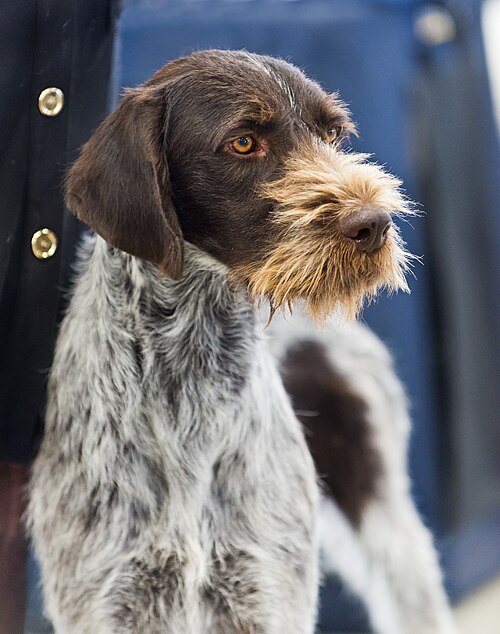
Wiry brows and a beard frame the face. SheltieBoy, Wikimedia Commons[4]
Give the Dog a Job on the Walk
A day’s worth of bathroom breaks leaves much of this dog’s energy unspent. The American Kennel Club (AKC) describes the German Wirehaired Pointer as an energetic sporting dog and recommends regular daily exercise, including long walks and play with its owner. A family that already likes hiking has one advantage: someone enjoys spending time on the trail. The more revealing day to picture is a working Tuesday. Even when a trip to the country is out of reach, who has time for an unhurried walk and a stop to play? [1]
Take a familiar toy along. In a quiet, safe spot, let the dog watch you set it in a patch of grass, then invite the dog to find it. When it picks up the toy and turns toward you, call it back and play together for a moment before putting the toy away and walking on. For the first few tries, choose a spot close enough for both of you to see the toy. Once the dog understands the game, try a different hiding place. Now the dog has a reason to put its nose down and search, and a reason to look up and find you again. Families who enjoy working together this way can explore tracking, obedience or agility. [1]
German Wirehaired Pointers learn quickly and like to investigate things for themselves. A clump of grass beside the path may hold more interest than the toy in your hand. To practice coming when called, start on leash in familiar surroundings with few distractions. Say the dog’s name once. When it turns, step back a few paces to invite it closer, then promptly offer a reward it enjoys. Once that feels familiar, try a stretch of path with more scents. If the dog finds it hard even to turn toward you, put a little more distance between you and the distraction. Early socialization and puppy classes can give everyone in the family a common starting point for practice. [1]
A yard gives you somewhere handy to practice together. If everyone lets the dog out in the morning and returns in the evening, even a generous yard offers little in the way of company. These dogs value time with people, and long stretches alone can lead to behavior a household finds difficult to live with. Before bringing a dog home, think back to a recent workday. When would the longest stretch alone have started and ended? Who could have come home in the middle, and who could have taken over in the evening? Those questions matter even in a family that spends its weekends hiking. [1]
From Beard to Chest with a Comb
After a walk through grass, run your fingers through the hair around the muzzle, under the chin and down the chest to feel for bits of vegetation. The front view shows where to look. The beard fans out on either side of the nose, and the longer hair under the jaw meets the coat on the neck and chest. Part the hair to see what it has caught. Set aside time once a week to go over the whole dog with a comb and a slicker brush to lift out dirt and loose hair. For a family that goes out often, the routine falls naturally into two parts. Pick out what came home from today’s walk at the door, and give the whole coat a thorough brushing each week. [1][5]

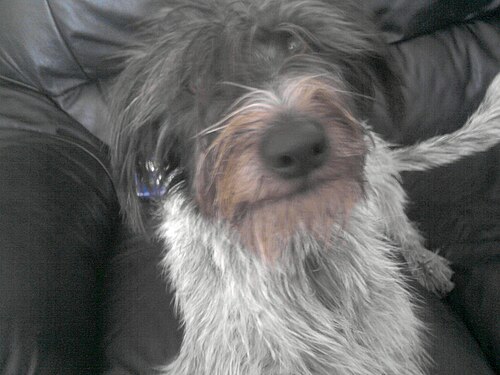
The beard meets the coat on the chest. Rossy1988, Wikimedia Commons[5]
When you reach the base of an ear, gently lift the flap and look underneath. Check the ears regularly. When they need cleaning, use soft gauze and a canine ear cleaner your veterinarian recommends. Look at the paws next. Long nails can make walking and running uncomfortable, and even a dog that covers plenty of ground needs regular nail trims. Brush the teeth often with dog toothpaste. At a checkup, ask your veterinarian about parasite prevention suited to your dog. Putting these tasks on the calendar gives everyone a clearer idea of the care that fits around the walks. [1]
If you plan to get a puppy from a breeder, allow time to look through both parents’ health records. The German Wirehaired Pointer Club of America recommends hip and elbow evaluations along with thyroid, eye and heart screening. Ask to see the reports for the sire and dam separately. Check which dog each report identifies, what was examined and what the result was. Each finding tells you something specific about the parent tested. Once the puppy comes home, its own veterinary examination can help you assess how it moves, its current condition and what activity suits it. [1][2]
Pick a route you would happily walk on a workday. Where could the dog stop to search for something? Where could you practice calling it back to your side? Picture arriving home, too, right down to where you would hang the leash and keep the comb. If that stretch of time together sounds like something your family would look forward to, there is room in your day for a German Wirehaired Pointer’s curiosity, stamina and fondness for company. [1]
References
-
[1] American Kennel Club. German Wirehaired Pointer Dog Breed Information.
-
[2] German Wirehaired Pointer Club of America. Breed health screening recommendations.
-
[3] Kseniya-nosenko. German Wirehaired Pointer Sola.jpg. 2024.
-
[4] SheltieBoy. AKC German Wirehaired Pointer Dog Show 2013.jpg. 2013.
-
[5] Rossy1988. German wirehaired pointer.jpg. 2011.