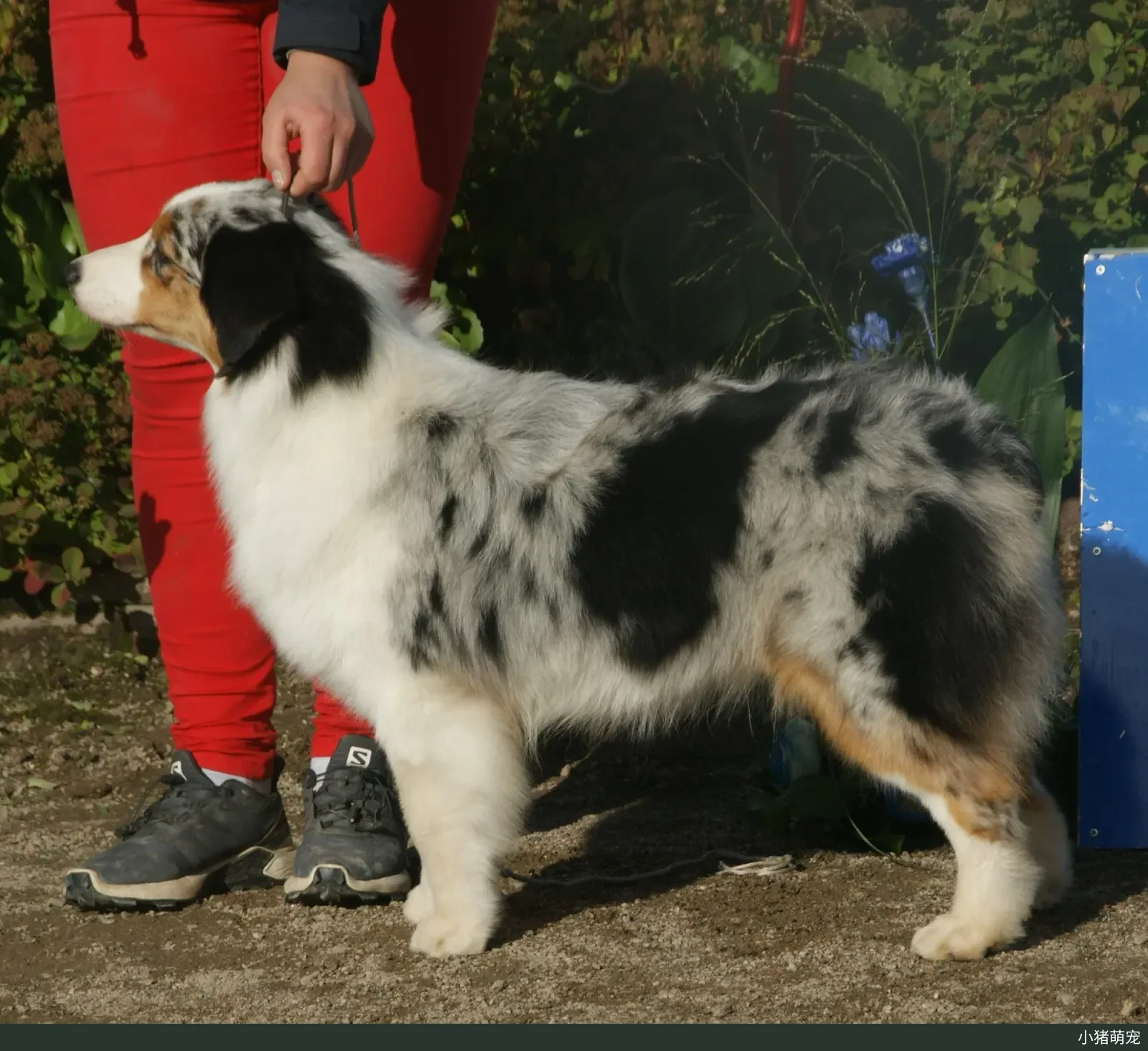
A blue merle female Aussie. Photo: Canarian; source: Wikimedia Commons; license: CC BY-SA 4.0

The Australian Shepherd (often “Aussie”) carries Australia in its name, yet was fixed as a working dog on ranches in the American West. It is smart and high-energy, with varied coat colors; some individuals also have heterochromia—one blue eye and one brown. Bringing an Aussie home means more than admiring the looks: plan for daily exercise and training, and learn ahead about MDR1 drug sensitivity plus hip and eye screening.
The Name and American Ranch History
Per an AKC breed-history article updated in August 2026, although called “Australian,” the Aussie was developed in western U.S. states such as California, Colorado, Wyoming, and Idaho to tend large flocks of sheep. Mid-19th-century demand for mutton and wool after the California Gold Rush and the Civil War brought many sheep—and herding dogs—west. Some Merinos came from Australia, and contemporary newspapers mentioned herding dogs that arrived with the ships. Americans coined “Australian Shepherd”; locals in Australia did not use that name for them. Later the label was applied to nearly all merle herding dogs.
Earlier ancestry is disputed. VCA Animal Hospitals breed materials adopt the story that Basque shepherds brought herding dogs to the U.S. via Australia; AKC’s article treats the Basque role as still contested and cites a 2017 Cell Reports canine genome study: Aussies sit with Collies, Shetland Sheepdogs, and Border Collies in a “British rural” clade, supporting mainly British herding-dog origins. In the American West, Aussies did more than sheep—VCA notes they also handled cattle well. After World War II they rose with Western culture and equestrian sport, often seen at rodeos, horse shows, and in film. The AKC recognized the breed in 1993 in the Herding Group as its 135th recognized breed; the Fédération Cynologique Internationale (FCI) registers the country of origin as the United States, formally recognized in 2007 as breed number 342.
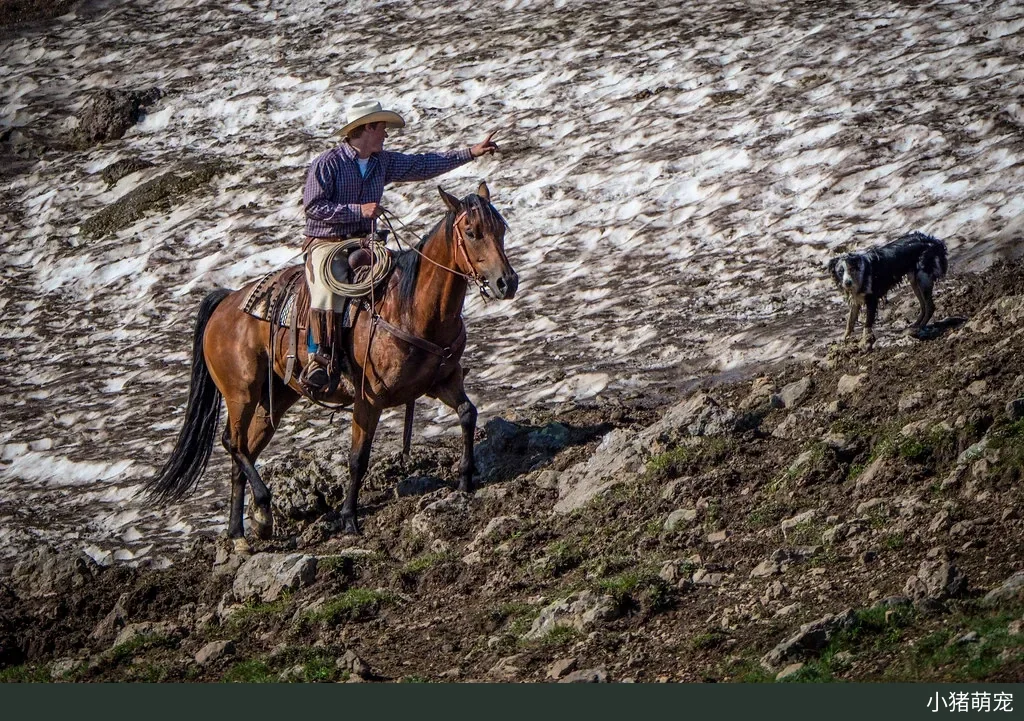
Original caption: On July 10, 2018, ranch hand Kyle Conlin and his Aussie move cattle to pasture in Montana’s Gravelly Mountains (Beaverhead-Deerlodge National Forest). Photo: Preston Keres, USDA; source: Flickr; license: Public Domain Mark 1.0
Size, Coat Color, and Heterochromia
Under the current AKC breed standard (approved May 14, 1991; effective January 1, 1993), the Aussie is a medium dog of moderate bone, slightly longer than tall; ideal height at the withers is 20–23 inches (about 51–58 cm) for males and 18–21 inches (about 46–53 cm) for females. VCA gives a weight range of about 40–65 lb (about 18–29 kg) and a lifespan of 12–15 years. The coat is medium length, straight or slightly wavy, weather-resistant, with undercoat that varies with climate. The standard recognizes four colors: blue merle, black, red merle, and red, with or without white markings and copper points, none preferred over another; merles usually darken with age. The tail is docked or naturally bobbed, not over 4 inches. The AKC breed page notes docking was not for looks but a past ranch practice to reduce injury or mark identity.
What people often remember is the eyes. The AKC standard is generous on eye color: brown, blue, amber, and any variation or combination—including flecks and marbling. So one blue and one brown eye, or blue and brown mixed in the same eye, all conform. UC Davis Veterinary Genetics Laboratory (VGL) notes that blue and partially blue eyes often travel with the merle gene; breeding two merles can produce “double merle” (M/M) puppies, often with excess white and possible hearing and eye defects, so merle-to-merle matings are discouraged. When choosing a puppy, ask about both parents’ colors and genetic testing.
Exercise, Training, and Grooming
The AKC breed page calls the Aussie a high-energy athletic dog that needs a lot of daily exercise: at least an hour or two running in a securely fenced large yard, and long walks or hikes with the owner; once skeletal maturity is reached, it can be a solid running partner. The AKC’s ideal is to give it “a job”—herding, or sports such as obedience, herding trials, agility, and diving. Households without a yard can follow VCA’s advice: one long walk, a good run, or high-intensity play daily, plus games and trick training for mental work. Know also that Aussies are wired to “herd”—birds, other dogs, even children may be treated as stock to gather.
On training, the AKC stresses early socialization and obedience as “musts”: one of the most common reasons Aussies enter rescue is that owners never channeled that drive through training. They bond deeply with family and may over-guard the home; long periods alone can lead to destructive behavior. The upside is that they are smart and loyal and learn quickly. VCA recommends reward-based training with treats, praise, and play, and notes that quick learners also bore easily; working-bred dogs are usually more driven. The AKC standard describes an even temperament with little quarreling, and some reserve at first meeting. Grooming is relatively easy: weekly brushing usually suffices; during coat blow, use an undercoat rake every few days to remove dead hair; bathe only as needed and trim nails regularly.
Drug Sensitivity and Genetic Health Screening
Washington State University (WSU) College of Veterinary Medicine materials show that about 50% of U.S. Aussies (including Mini Aussies) carry an MDR1 gene mutation. The gene helps “pump” certain drugs out of the brain—like a drain at the brain’s door; when the pump fails, drugs can accumulate and cause severe or fatal reactions. Among problem drugs listed by WSU, the antidiarrheal loperamide (Imodium) causes neurotoxicity at ordinary antidiarrheal doses—mutant dogs should avoid it entirely; acepromazine, butorphanol, maropitant, and some chemotherapy agents need dose adjustment. Ivermectin is case-by-case: WSU notes that heartworm preventives such as Heartgard at labeled doses have been deemed safe by the U.S. FDA; other formulations still need veterinary advice. The only way to know an individual’s status is genetic testing (cheek swab). When taking an Aussie to the vet, volunteer the breed and test results; medication decisions follow veterinary judgment.
The United States Australian Shepherd Association (USASA, the AKC parent club) lists common health concerns including hip and elbow dysplasia (evaluated by X-ray), several hereditary eye diseases (iris coloboma, cataracts, retinal detachment, progressive retinal atrophy), collie eye anomaly (CEA), and degenerative myelopathy. USASA notes that AKC Canine Health Foundation CHIC certification for Aussies requires hip, elbow, and eye exams. On cataracts, UC Davis VGL describes an HSF4 mutation in Aussies linked to hereditary cataracts: carriers are about 17 times more likely to develop bilateral cataracts than non-carriers, and dogs with two copies often progress faster and may go blind in early adulthood; not every carrier develops disease, and other causes also produce cataracts.
Day to day, three steps help: before getting a puppy, review parental hip/elbow evaluations, eye exams, and genetic tests; schedule regular physicals and eye checks; watch for limp, difficulty rising, cloudy or white eyes, or poor vision in the dark, and seek care promptly. This article only summarizes public sources and cannot replace veterinary diagnosis.
References
-
American Kennel Club. Official Standard of the Australian Shepherd (approved 1991-05-14, effective 1993-01-01)
-
American Kennel Club. Australian Shepherd Dog Breed Information
-
Denise Flaim, American Kennel Club. Australian Shepherd History: Behind the Breed’s Herding Heritage (updated 2026-08-18)
-
Fédération Cynologique Internationale. AUSTRALIAN SHEPHERD (342)
-
VCA Animal Hospitals. Australian Shepherd
-
Washington Animal Disease Diagnostic Laboratory, Washington State University. MDR1 in Dogs
-
United States Australian Shepherd Association. USASA Health & Genetics Program
-
Veterinary Genetics Laboratory, UC Davis. Hereditary Cataracts (Australian Shepherd Type)
-
Veterinary Genetics Laboratory, UC Davis. Merle
-
小猪萌宠 · Welcome to my pet planet