When selecting a family companion dog, many are drawn to the Boxer's sculpted musculature, trademark furrowed brow, and commanding guardian stance [1]. Consistently ranked among the most popular breeds in the American Kennel Club (AKC) Working Group, the Boxer seamlessly merges an alert protective instinct with a clownish, high-spirited zest for play—often characterized by canine experts as having a serious work ethic wrapped around a permanent puppy heart [1, 2]. However, welcoming a medium-to-large, high-energy working dog into the home is never a decision to make on looks alone; the Boxer's unique anatomy, explosive exercise requirements, and intense need for human companionship establish distinct demands on an owner's daily routine, living environment, and training commitment [1]. Carefully evaluating their physical dimensions, energy levels, household compatibility boundaries, and care costs is essential before deciding whether this dynamic breed truly matches your lifestyle.
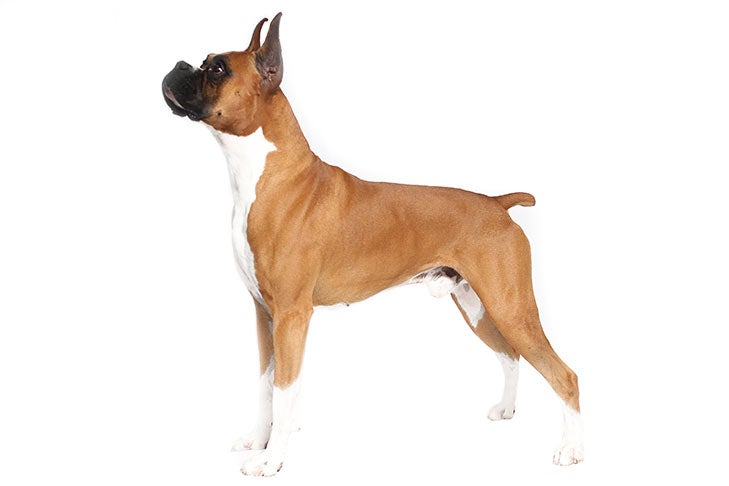
The Boxer displays a classic medium-to-large, compact muscular frame with dark eyes and a rich fawn short coat. Image source: American Kennel Club (AKC)[2]; official breed standard showcase.
Physical Size and Coat Grooming Requirements
In terms of skeletal proportions and conformation, the Boxer is a medium-to-large breed engineered for strength and agility [1, 2]. According to the AKC official breed standard, adult males stand between 23 and 25 inches (58.4 to 63.5 cm) at the shoulder and weigh between 65 and 80 pounds (29.5 to 36.3 kg) [1, 2]. Females are slightly more compact and refined, standing 21.5 to 23.5 inches (54.6 to 59.7 cm) and typically weighing roughly 15 pounds less than males (around 50 to 65 pounds / 22.7 to 29.5 kg) [1, 2]. They possess a short, square back, a deep chest, and well-defined muscle contours visible under a tight coat, moving with a smooth, powerful gait with forward reach and drive [2]. Their head structure is unmistakable: a blunt muzzle, an undershot lower jaw, and expressive wrinkles across the forehead give the Boxer its distinctive look of keen, alert curiosity [1, 2].
When it comes to grooming and coat maintenance, the Boxer is a remarkably low-maintenance breed [1]. The coat is short, shiny, and lies close to the body, appearing in rich fawn (ranging from light tan to deep mahogany red) or brindle (black stripes across a fawn background), typically accented by a black mask and crisp white markings on the chest, legs, or face [1, 2]. Boxers are naturally fastidious self-groomers with minimal dog odor, requiring baths only when outdoor activities warrant one [1, 2]. Weekly brushing with a rubber curry brush or hound glove is generally all that is needed to remove loose hairs and promote healthy skin oils [1, 2].
However, a low-maintenance coat does not eliminate the need for detailed daily hygienic care, particularly regarding teeth and nails [1]. Due to their slightly brachycephalic jaw structure, Boxers have crowded teeth that can easily accumulate plaque, making tooth brushing multiple times a week—or ideally daily—essential for preventing tartar buildup and periodontal disease [1, 2]. Even more critical is nail care: Boxers naturally use their front paws to explore and interact during play, and their nails grow rapidly [1]. Unless nails are trimmed weekly to keep them short and smooth, they can affect proper foot posture and inadvertently scratch family members or furniture during exuberant greetings [1].
Temperament and Energy: An Enduring Athletic Spirit
The Boxer exhibits a multifaceted personality: they are both steadfast, watchful guardians and fun-loving family companions who retain puppy-like enthusiasm throughout their adult lives [1, 2]. Descended from the historical Bullenbeisser (a heavy big-game hunting dog of medieval Germany) and refined with English Bulldog bloodlines, Boxers inherit acute alertness and a powerful drive to explore and pursue [2]. The breed's English name is said to derive from their habit of standing on their hind legs and sparring with their front paws like human boxers during play or defense [2]. Within the family circle, Boxers demonstrate deep devotion and warmth, often leaning against their owners or curling up close, showing remarkable empathy toward household dynamics [1, 2].
Yet this vibrant spirit also translates into substantial daily energy and high physiological excitability [1]. They are true athletes, far from suited to a lifestyle consisting merely of a five-minute stroll around the block [1, 2]. Young Boxers are especially exuberant and springy, often greeting family or visitors with spirited vertical leaps [1, 2]. If a household cannot provide sufficient daily aerobic exercise and structured mental engagement, unexpended energy can morph into frustration, leading to destructive chewing, indoor pacing, or persistent barking [1].
Mental Stimulation and Early Training: Banishing Monotony
Boxers rank high in working dog problem-solving ability and possess an inherent eagerness to bond with their handlers [1, 2]. However, high intelligence does not equate to blind subservience—Boxers are independent thinkers who quickly tire of repetitive, rote obedience drills [1, 2]. Effective Boxer training hinges on variety, enthusiasm, and positive reinforcement: breaking sessions into short, lively intervals infused with tug games, fetch, or scent work [1, 2]. Utilizing high-value treats and playful rewards produces the best results, whereas harsh verbal reprimands or physical corrections can severely damage their trusting, sensitive nature [1, 2].
Early puppy socialization and foundation manners represent non-negotiable milestones for any Boxer owner [1, 2]. Given their robust physique and athletic momentum, Boxers must learn impulse control from an early age, especially basic greeting etiquette such as keeping 'four paws on the floor' and sitting calmly when people approach [1, 2]. Broad exposure during puppyhood to varied people, novel sounds, and unfamiliar environments calibrates their natural guarding instincts, enabling them as adults to distinguish welcome guests from actual threats [1, 2]. For owners interested in canine sports, the energetic Boxer excels across agility, competitive obedience, search and rescue, and certified therapy dog work [1, 2].
Household Compatibility: Children, Seniors, and Space Constraints
Boxers have a long-standing, well-earned reputation for being wonderful with children, displaying remarkable patience, tolerance, and an innate protective tenderness around family youngsters [1, 2]. However, AKC breed specialists emphasize that this affinity has distinct physical caveats: Boxers are often ill-suited for homes with unassisted toddlers or frail elderly individuals [1, 2]. This advisory is not rooted in aggression, but in sheer physics and kinetic energy—a 70-pound Boxer launching an exuberant, affectionate greeting can easily knock down a toddler or cause a hazardous fall for an older adult with fragile balance [1, 2].
In multi-dog households, Boxers generally cohabitate best with dogs of the opposite sex [2]. Same-sex rivalries, particularly between two unneutered males, can emerge, requiring structured pack leadership and proactive handling [2]. When venturing outdoors in public spaces, Boxers should remain on leash at all times unless enclosed in a secure run [2]. Their strong prey drive means that a darting squirrel or small animal can trigger an instantaneous sprint that will easily catch an unprepared handler off guard [2].
Regarding living arrangements, the optimal setting for a Boxer is a home with a securely fenced yard where they can sprint safely every day [1, 2]. Apartment or condo living is possible, but it demands strict owner discipline to provide at least 60 to 90 minutes of dedicated outdoor exercise and mental challenges daily [1, 2]. Furthermore, a fenced yard must never be treated as an excuse to leave a Boxer outside alone: Boxers are intensely social pack animals, and long-term backyard isolation readily triggers severe separation anxiety and neurotic behavioral issues [1, 2].
Climate Sensitivities and Essential Health Screenings
From a physiological standpoint, Boxers possess a critical vulnerability: they have very low tolerance for extreme heat and bitter cold, making them strictly indoor companions who should never be housed in an outdoor kennel [2]. Due to their brachycephalic facial structure, their shortened airways limit heat exchange efficiency through panting, leaving them prone to rapid heat exhaustion and fatal heatstroke in hot, humid weather [2]. Conversely, their single short coat offers virtually no insulation against freezing temperatures [2]. Boxer homes must maintain temperature-controlled indoor spaces, and vigorous summer exercise should be scheduled strictly during the cool hours of early morning or late evening [2].
The average lifespan of a Boxer is 10 to 12 years [2]. To safeguard longevity and minimize the risk of serious hereditary conditions, the AKC and the American Boxer Club recommend that prospective puppy buyers verify comprehensive health clearances on both parent dogs [2, 3]. Top priorities include cardiovascular evaluations for Subaortic Stenosis (AS) and Boxer Cardiomyopathy (Arrhythmogenic Right Ventricular Cardiomyopathy, or ARVC) using 24-hour Holter monitoring and echocardiograms [2, 3]; orthopedic certification for hip dysplasia [2]; DNA screening for Degenerative Myelopathy (DM) [2]; along with routine thyroid testing and vigilance regarding breed susceptibility to cancers [2, 3].
Family Fit Checklist
Based on key AKC assessment criteria, evaluate whether a Boxer matches your household using this practical checklist [1, 2]:
- Ideal Match: Active adults or families who enjoy jogging, hiking, and outdoor recreation; households with school-age children who understand how to interact with large, energetic dogs; homes with a securely fenced yard or owners committed to 60–90 minutes of daily exercise; and handlers eager to invest in early positive training who desire a loving, velcro-like guardian [1, 2].
- Reconsider or Proceed with Caution: Homes with unsteady toddlers or frail seniors; sedentary owners seeking a quiet lapdog; households where the dog will be left alone all day without interaction or dog-walking support; owners unwilling to manage enthusiastic jumping and bouncy play; or living situations lacking air conditioning where an owner intends to keep the dog outdoors [1, 2].
References
-
[1] Erickson, M. (2025-03-19). Is the Boxer the Right Dog Breed for Your Lifestyle?. American Kennel Club.
-
[2] American Kennel Club. Boxer Dog Breed Information. AKC Official Breed Standard.
-
[3] American Boxer Club. Boxer Health and Breed Care Guidelines. American Boxer Club Official Health Portal.