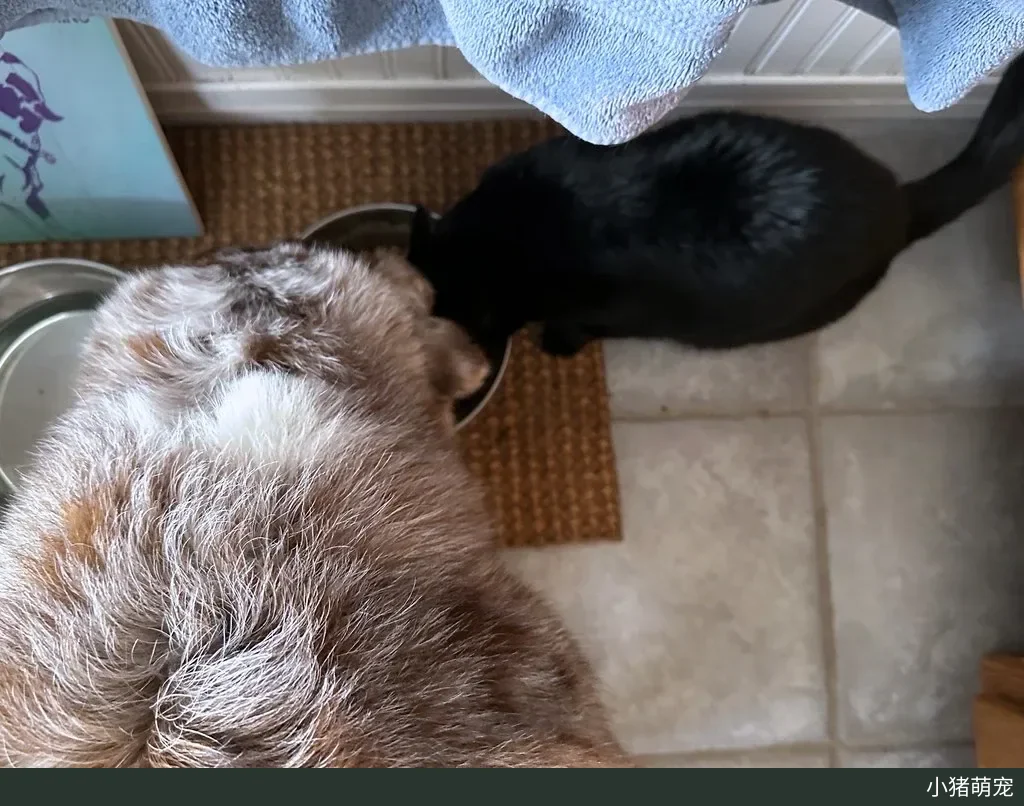
A dog and a black cat eating side by side (photographed April 2023). Photo: Alan Levine (cogdogblog); source: Flickr; license: CC0 1.0.
On 15 October 2026, pet-food trade media PetfoodIndustry reported that this year’s hot, dry European summer cut yields of several crops: French grain maize output is forecast at nearly half last year’s, and EU soybean yield forecasts sit 15% below the five-year average. Analysts interviewed said pet food is more likely to face rising ingredient costs, specification swings, and origin switches than widespread shortages—and that overall impact remains hard to quantify.
Heat waves and the pet-food supply chain
The piece is titled “Europe’s heat wave sends a warning to pet food makers,” by Vladislav Vorotnikov. It is not about a single product failure but a deeper shift: plant proteins, starches, and fiber ingredients common in pet food, and the forage and livestock behind meat ingredients, all depend on what the fields produce. The report opens by saying the heat wave has not yet caused major chaos in the pet-food supply chain, but the real effects may be “below the surface.”
Peter Alexander, Chair of Global Food Systems at the University of Edinburgh, explains in the report that extreme weather has usually had limited impact on pet-food supply chains: weather disasters are often regional, rarely simultaneous worldwide, and typically push commodity prices far less than systemic shocks such as surges in energy or fertilizer costs. What differs in 2026 is that crops across multiple European countries were hit at once, so the industry has begun to worry about wider knock-on effects.
Tate & Lyle supplies functional ingredients to pet-food and feed companies; sustainability director Anna Pierce said climate-related supply disruption has moved from a “distant theoretical risk” to a reality firms must actively manage. Per the report, after France’s 2022 drought the company diversified sourcing of waxy maize as well as stevia and citrus-derived inputs, and holds strategic inventory; acreage in its European regenerative agriculture program nearly tripled. Tate & Lyle’s website figures: the French maize project enrolled 4,000 acres in 2025 and expanded to 11,000 acres in 2026. Separately, the European Pet Food Industry Federation (FEDIAF) said it could not comment on this year’s extreme-weather impact on the sector.
Official sources for the yield data
EU figures in the report come from the European Commission Joint Research Centre’s (JRC) MARS crop monitoring. On 28 September 2026 JRC announced that, as of September, yield forecasts for several EU summer crops were clearly below the 2021–2025 five-year average: soybeans −15%, green maize for silage −14%, sugar beet −11%, grain maize −8%, potatoes −7%. JRC explained that this summer had unusually many days above 35°C and “tropical nights” not below 20°C, compounded by severe rain deficits, forcing accelerated crop development; in the hardest-hit areas maize matured up to three weeks early, so kernels, tubers, and ears were smaller and fewer. Winter crops mostly finished growth before peak heat, with yields near average.
JRC also flagged two points. First, some fields were damaged so badly they were abandoned as not worth harvesting, so total production losses for several summer crops are expected to exceed the yield decline. Second, grassland growth fell sharply in summer and nearly stalled in places; with silage maize also down, feed supply in the hardest-hit areas dropped sharply, and some livestock producers cut herd size.
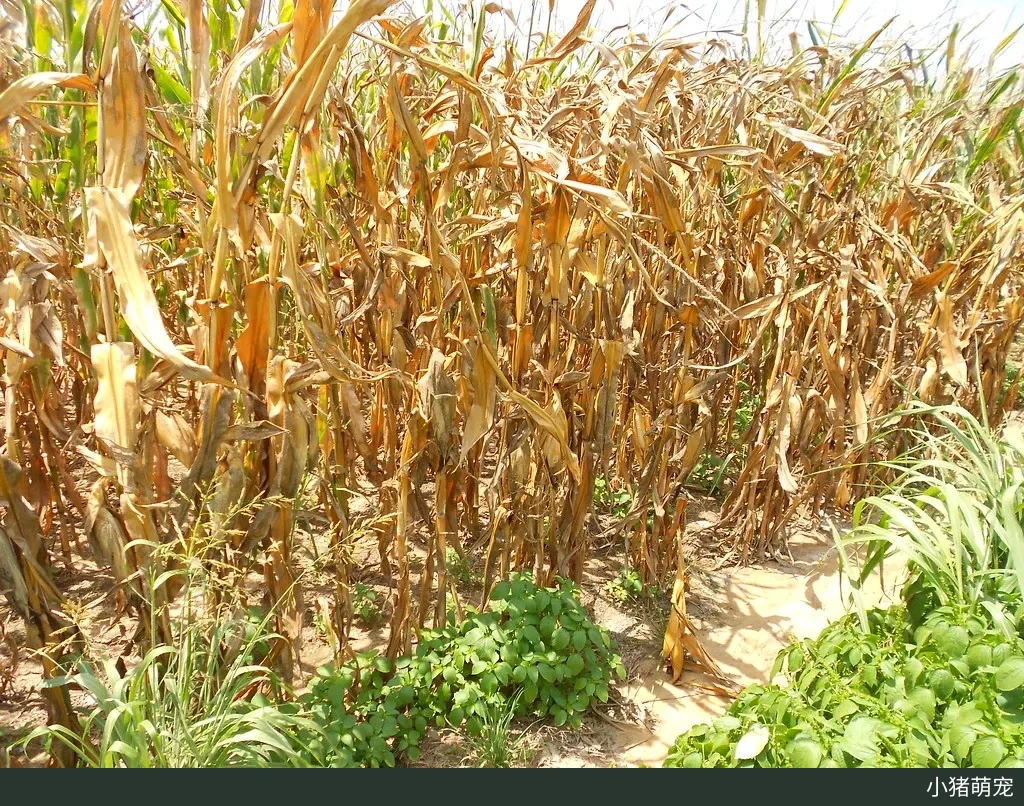
Drought-stressed maize near the Tennessee–Kentucky border, western United States, 26 July 2012. Not a 2026 European photo—used only to show how maize looks under heat and drought. Photo: CraneStation; source: Flickr; license: CC BY 2.0.
French maize figures come from Agreste, the French agriculture ministry’s statistics arm. Per AFP and La France Agricole, Agreste’s 13 October monthly report cut the 2026 grain maize (including seed) production forecast to 7.284 million tonnes, versus 13.936 million in 2025—nearly halved. Both yield and area fell: national average yield about 6.3 tonnes per hectare, down 27% year on year and the lowest since 1990; planted area down 28%, including about 150,000 hectares of poorly performing fields diverted to silage. Business Recorder (via AgriInsite) reported that this production forecast is the lowest in French agriculture ministry records since 1980. PetfoodIndustry’s “among the lowest levels in nearly 50 years” broadly matches these official estimates.
Implications for pet food and pet owners
Nandini Roy Choudhury, senior analyst at Future Market Insights, expects this heat’s impact on pet food to be “clear but uneven,” mainly on plant protein, starch, and fiber ingredients. Her view is that manufacturers are more likely to face higher procurement costs, ingredient-spec volatility, and origin changes than widespread stockouts; how hard each firm is hit depends on formula, contracts, and reliance on European suppliers. The report also notes that products that emphasize local sourcing or depend on one specific ingredient have less room to adjust.
Meat ingredients face indirect risk. Choudhury notes that reduced grass and forage is stressing livestock; over time that may affect cost and supply of animal-origin ingredients, but the degree depends on production and slaughter timing—“this should not be read as an immediate, blanket shortage of meat ingredients.” That aligns with JRC’s observations of forage decline and some producers cutting herds.

Drought-affected grazing land in Briones Regional Park, California, USA, 24 July 2015; rancher Ned Wood looks over yellowed hills. Not a 2026 European photo—used only to show drought’s effect on pasture. Photo: Lance Cheung / U.S. Department of Agriculture (USDA); source: Flickr; license: Public Domain Mark 1.0.
At the home food bowl, the practical takeaway is: if your pet’s food depends on European ingredients or European origins, you may later see price adjustments or changes in formula or ingredient origin; interviewed analysts do not expect mass stockouts, so there is no need to rush to stockpile. If a usual food changes formula and you need to switch, transition gradually. The American Animal Hospital Association (AAHA) suggests about a 7-day transition for dogs—start by replacing 25% of the old food with the new, then raise the share as accepted; cats are more sensitive to form, smell, and texture, and transition may take up to 40 days—switching textures (e.g., dry to wet) may take one to two months.
Data limits and unknowns
These numbers need context. JRC data are per-hectare yield forecasts, not confirmed production losses, still less a measure of how much less raw material pet-food plants can obtain—Choudhury stresses this herself. Agreste figures are likewise estimates revised monthly with harvest progress: in September French grain maize was estimated around 8.1 million tonnes, cut in October to 7.284 million; final numbers may still change.
PetfoodIndustry’s reporting rests mainly on expert and company interviews: trade body FEDIAF declined comment, and the piece gives no pet-food price or brand-impact data; Tate & Lyle describes its own responses; Future Market Insights offers an analyst outlook. Choudhury frames 2026 as a seasonal supply shock within a longer rise in climate risk; if next year’s harvest improves, some shortages may ease. Whether the coming El Niño brings new shocks, Alexander says the scale is unclear, and international grain markets do not yet appear to price in severe outcomes. Whether, when, and how far European yield losses reach brands Chinese pet owners usually buy was not covered in the materials checked for this article.
References
-
Vladislav Vorotnikov. Europe’s heat wave sends a warning to pet food makers. PetfoodIndustry, 2026-10-15.
-
European Commission Joint Research Centre. European agriculture hit hard by exceptionally hot and dry summer. 2026-09-28.
-
AFP. Sécheresse et canicules: la récolte de maïs encore revue à la baisse. France 24, 2026-10-13.
-
Maïs, tournesol… Les estimations de rendement n’en finissent pas de baisser. La France Agricole (citing Agreste report of 2026-10-13).
-
France cuts maize, sugar beet forecasts to new lows. AgriInsite (republishing Business Recorder), 2026-10-14.
-
Tate & Lyle. Regenerative agriculture. Undated page.
-
American Animal Hospital Association. Tips and Timelines for Transitioning Your Pet to a New Food. 2021.