The World Cat Federation (WCF) lists the German Longhair under its German name, Deutsch Langhaar, with the breed code DLH. A side view of a cat standing naturally is a good place to start. Find the shoulder, chest and hip, and you can trace the long rectangle of the body beneath the coat. The WCF standard describes a large, muscular cat with a full, rounded chest and a strong neck. The hair on the chest can hide the tops of the forelegs. Look farther down and you can see the medium-length legs and large, firm, round paws, with tufts between the toes. [1]
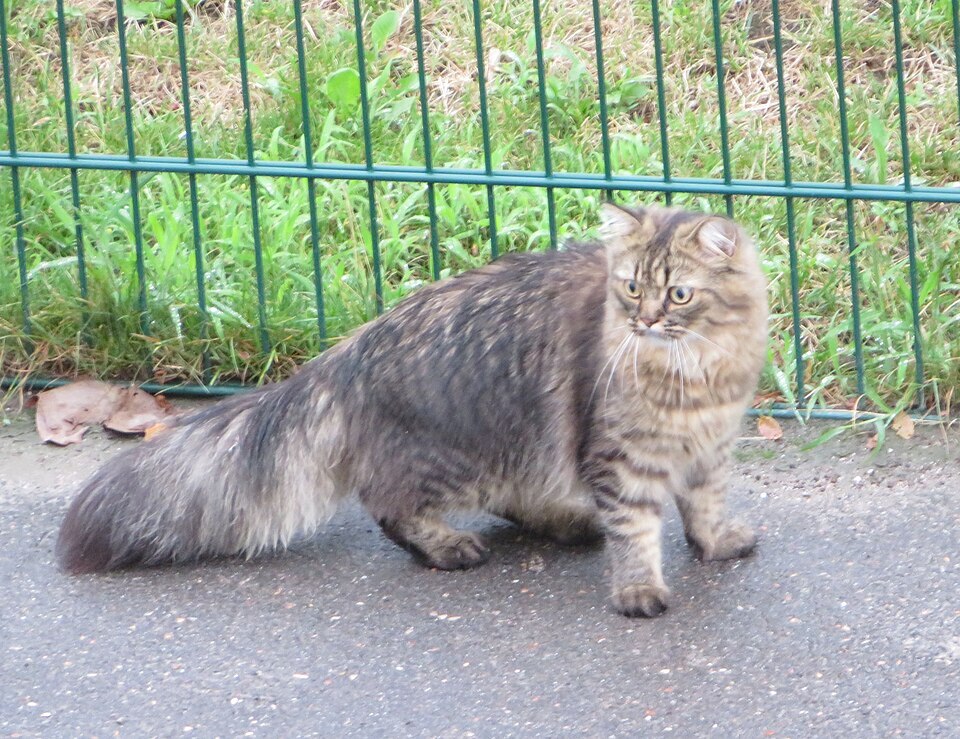
Figure: The body in profile. Sciencia58, Wikimedia Commons[5]

Seen head-on, the hair fanning out on either side of the neck can make the face look round. Start at the high, rounded cheeks and follow them down to the blunt muzzle and broad chin. Together they give the head a trapezoidal outline, a little longer than it is wide. The ears sit well apart and tilt slightly outward, with broad bases and rounded tips. The large, oval eyes are also wide-set and slightly slanted. Turn to a side view for the detail a portrait can hide: a gently curved profile leading to a broad nose with a slightly convex bridge. [1]
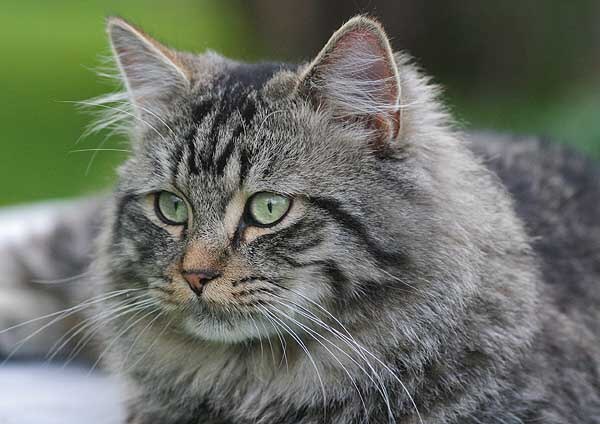
Figure: The German Longhair’s head from the front. Sirasan, Wikimedia Commons[6]

Where the hair grows gives the coat much of its character. A ruff circles the neck, and the backs of the hind legs carry full breeches, the feature the standard calls “Knickerbockers.” The long hair has a silky sheen, with an undercoat beneath it. The WCF particularly favors a coat that parts naturally along the spine. On the standing tabby, the outstretched tail draws the eye. Its long hairs make its dimensions hard to judge in a photograph. The standard describes the tail itself as medium in length, broad at the base and tapering to a slightly rounded tip. [1]
Compare the tabby portrait with the white cat resting below. On the tabby’s face, your eye tends to follow the stripes. On the white cat, you can follow the sweep of the ruff from cheek to chest. The WCF accepts every coat color in this breed. Across colors, the same features are worth looking for: the proportions of the standing body, the line from cheek to muzzle and the distribution of hair over the neck, back and hind legs. A reclining cat gives a good view of the ruff. The chest and legs are easier to see once the cat stands. [1]
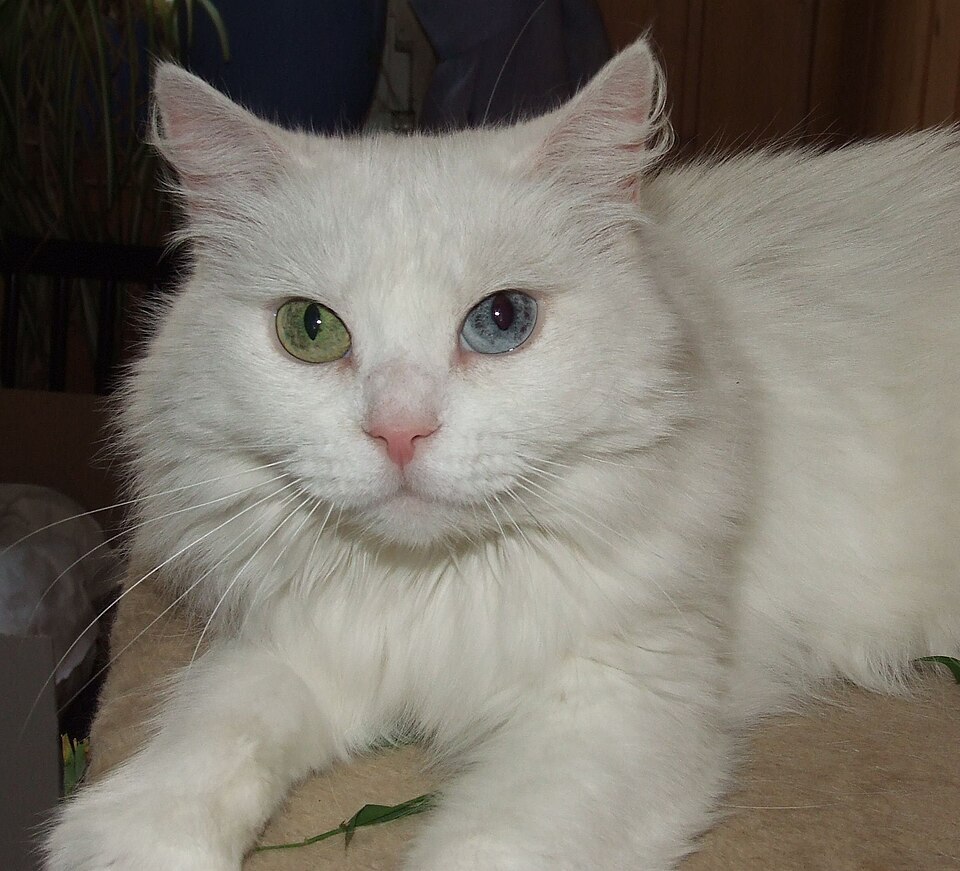
Figure: The white cat’s ruff. Angora2000, Wikimedia Commons[7]

When choosing a grooming spot at home, think about how the cat can walk up to it and how it can leave. Lay a familiar, nonslip mat on a patch of floor where the cat already likes to pause. Sit to one side and leave the way ahead clear. Keep its hiding place available for undisturbed rest. The Feline Veterinary Medical Association identifies positive, predictable contact with people as a need shared by indoor cats. At the mat, that means the cat can see your hand and comb approaching and can get up and leave, even if you have only combed one side. [2]
Let the cat sniff the comb when it comes over. Try a few gentle strokes on a shoulder where it usually enjoys touch, then pause. If it stays relaxed or turns back toward you, continue on the side it offers. If it shifts away or gets up, withdraw both hand and comb. Sometimes a cat that rubs against your leg just wants to sit beside you. Leave room for that kind of visit, too. When several people share its care, agreeing to pause at the same signals makes grooming predictable whoever holds the comb. [2]
VCA Animal Hospitals recommends daily grooming for silky, long-haired coats. A long-toothed metal comb can lift out loose hair and ease apart small tangles. The back is within easy reach, but it is easy to miss the hair behind the ears, under the forelegs and in those full breeches. Wait for the cat to shift and expose one of these areas, then gently part a small section. Ease off if the comb catches and pulls the skin. Remembering which side held a tangle gives you a place to start next time without having to roll the cat over. [2][3]
Follow the routes your cat uses through the house. Is there a quiet place where it can settle and watch people come and go? From there, can it reach water, a litter box or a place to stretch and scratch? In a home with several cats, crouch down and look along the passages between furniture and through doorways. A gap that looks wide from above may be easy for one cat to block. Spacing resources apart and keeping routes open gives each cat more choice about where to go and what to do. [2]
For a different kind of company, put the comb away and draw a toy across a clear stretch of floor. Move it in starts and stops like small prey. Give the cat time to crouch, watch and chase, then let it pounce and catch the toy. Notice which movement makes it look up or which corner tempts it to follow. The association’s play guide suggests rotating toys according to the individual cat’s interests. Some enjoy a change, while others keep choosing a favorite. What held this cat’s attention last time is a good starting point for the next game. [4]
Knowing the coat also helps you describe changes to a veterinarian. Perhaps mats keep forming on a patch of back the cat used to groom, or it pulls away whenever you touch the same spot. Note where this happens, when it began and whether the cat can still turn to lick the area. Joint pain can make that movement difficult for an older cat, and a veterinarian can assess its skin and mobility together. Leave extensive, tight mats to a professional. Never slip scissors underneath them. If the skin beneath a mat looks red or irritated, contact your veterinarian. [3]
References
-
[1] World Cat Federation. Deutsch Langhaar (DLH). Updated January 17, 2022.
-
[2] Feline Veterinary Medical Association. New Feline Veterinary Medical Association Position Statement Reimagines Life for Indoor Cats. August 28, 2025.
-
[3] Courtney Barnes, Ryan Llera, Tammy Hunter and Cheryl Yuill. Grooming and Coat Care for Your Cat. VCA Animal Hospitals.
-
[4] Feline Veterinary Medical Association. Playing With Your Cat. Cat Friendly Homes.