In a photograph from a herding trial, several sheep move left along the edge of a wood. Behind them, a Bergamasco Sheepdog faces the flock, its legs almost hidden by the long coat hanging from its sides. The breed has worked with shepherds for centuries in the Bergamo region of northern Italy. Up in the Alps, shepherds relied on these dogs to move sheep across rocky slopes and to guard the flock. The thick coat that makes a Bergamasco so easy to recognize today sheltered the dog from wind and cold and offered some protection against predators.[1][2]

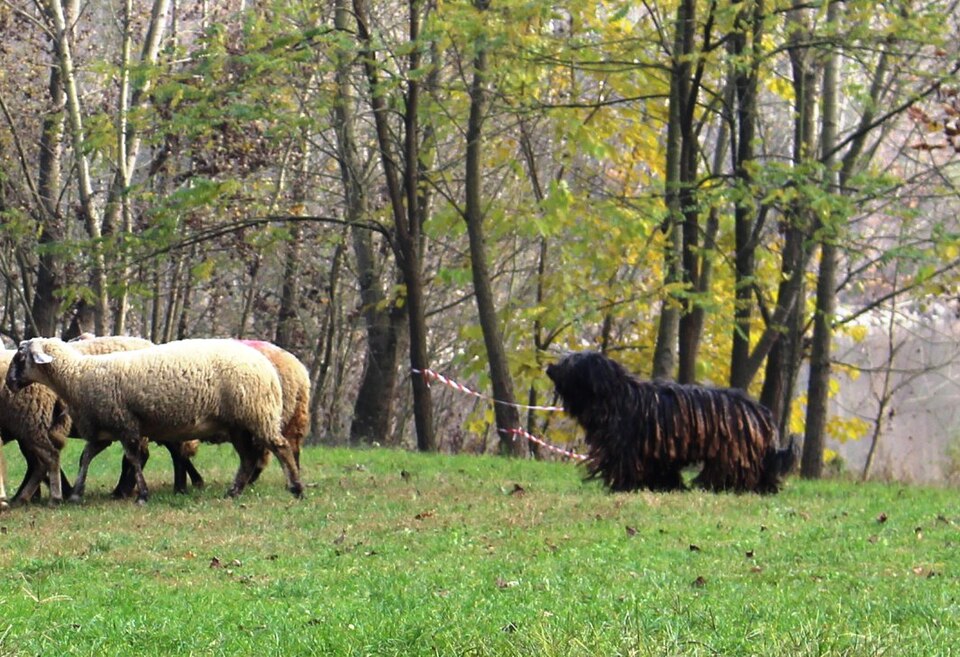
A Bergamasco works sheep at a herding trial. Marchetti Maria Emilia, Wikimedia Commons[2]
To make out the dog’s build beneath all that hair, look for the shoulders, the line of the back and the feet. The Bergamasco is compact and muscular, with a body slightly longer than its height at the shoulder. Long hair falls forward from the broad head and can cover the eyes. Along the dog’s sides, individual hairs interweave into broad, overlapping pieces of felt. Breed guides call these pieces flocks. In the photograph on the grassy slope, you can pick out the finer hair that falls across the face and the thick, flat flocks hanging over the front legs.[1][3]

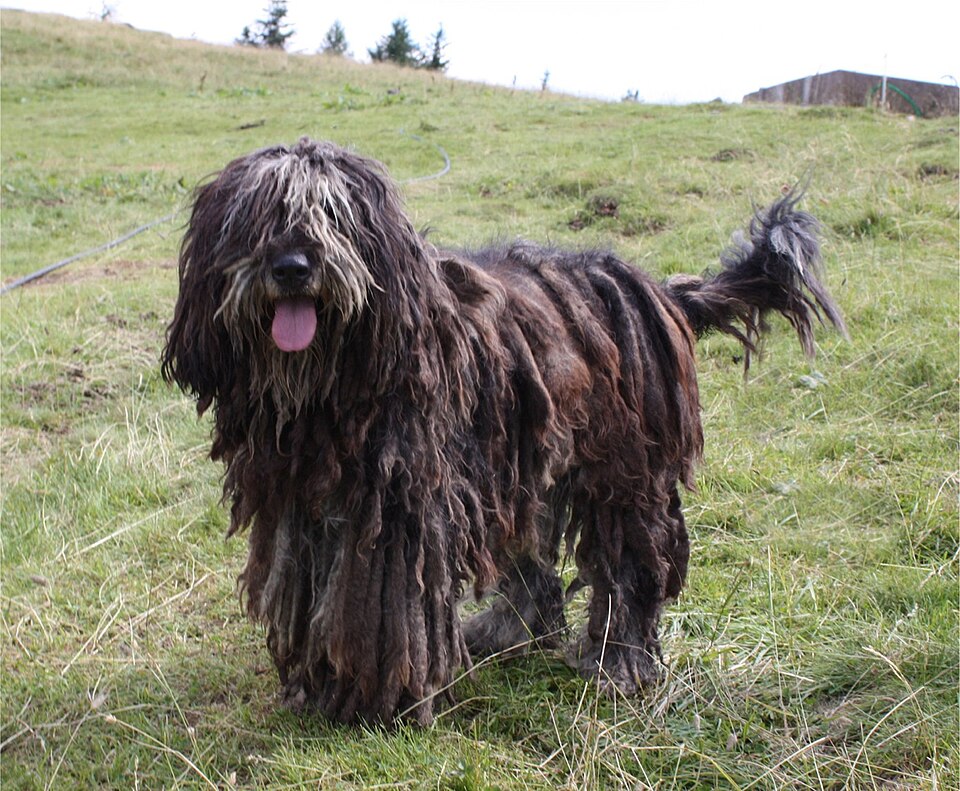
A Bergamasco stands on a grassy slope. Luigi Guidobono Cavalchini (Josephine06), Wikimedia Commons[3]
If you are thinking of bringing home a puppy, there are two kinds of time to set aside. The first is part of every day. A dog bred to work alongside a shepherd enjoys having someone join in its activities. The second comes as the puppy grows. A mature Bergamasco’s body coat needs little brushing, but it takes hands-on care to get from soft puppy fluff to the flocks in the photographs. Meeting only adult dogs makes it easy to overlook the stage when the coat takes the most work.[1][4]
Where does time outdoors fit into your day?
The American Kennel Club (AKC) describes the Bergamasco’s daily exercise needs as moderate. A brisk walk, a hike or a game of fetch can all suit the dog. Start with something your household already enjoys. If you like walking, choose a route you and the dog can comfortably cover together. If you have access to a safe open space, you might play fetch there and walk home. Even a large yard offers only part of what the dog enjoys if its family’s role ends at opening the door.[1]
Picture an ordinary workday. Who can take the dog out in the morning? Who will still have time for a walk or a game after work? A weekend hike is a good outing together, and the weekday walks need a place in the schedule too. Let the individual dog’s age, stamina and response guide how far you walk and how fast you play. For a breed accustomed to working in the mountains, a walk together can begin right at the front door.[1]
On a mountainside, a shepherd needed a dog that could cooperate and still use its own judgment. That independence carries over into training at home. To teach a Bergamasco to wait at the door, try practicing when the entrance is quiet. Agree on one short cue for everyone to use. Have one person give it, reward the dog as soon as it pauses, then invite it outside. The dog can connect the pause with what happens next, and the family can see which part it has learned without several people calling instructions at once.[1]
A Bergamasco is usually attentive to its family and may watch a stranger for a while before approaching. If guests or children’s friends often visit, give the puppy time to practice calm greetings. Start with one visitor who knows the plan. Let the dog watch from a comfortable distance and come closer when it is ready. A puppy class can also introduce new people, places and sounds a little at a time. The patience you develop here will come in handy when the coat starts to change.[1]
How to feel the first flocks forming
A young puppy usually comes home with a soft coat that you can brush gently and regularly. Around the first birthday, you may begin to feel coarser hairs and woolly growth among the puppy hairs. The Bergamasco Sheepdog Club of America’s illustrated coat guide shows a dog of about a year whose coat still looks fairly smooth. A hand passed through it can already feel clumps beneath the surface. Watch for the puppy coat beginning to shed and feel for the different textures starting to knit together. In some dogs, that change comes several months earlier.[4]
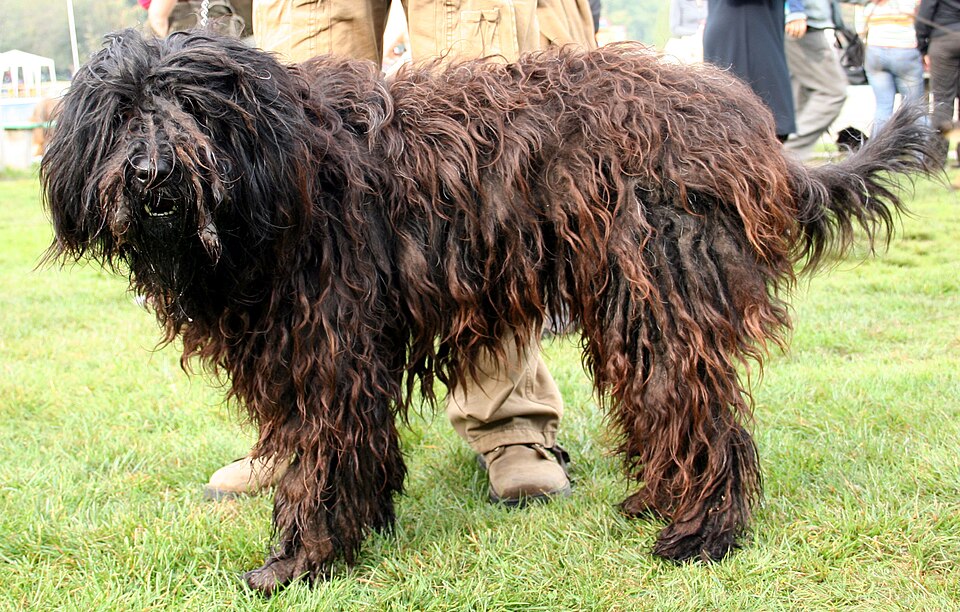
Flocks hang from a Bergamasco’s back and legs. Pleple2000, Wikimedia Commons[5]

When the first clumps form, put the brush aside for the body coat and use your fingers to ease neighboring clumps apart. While the puppy coat is still shedding, keep the separation shallow. Once that coat has come out and you can feel where the clumps divide naturally, follow those divisions with your fingers, leaving each flock thick enough to hold together. For a first attempt, ask a breeder familiar with the coat to show you one section on the dog. Feel the thickness of that flock before moving on to the rest. The AKC notes that the first thorough separation can take several hours. You can spread the work over a few evenings.[1][4]
Newly divided flocks can join up again. The breed club recommends checking them weekly for about six months. Once the flocks mature, gently ease two apart. You should be able to see the skin in the gap where air can reach it. Leave the felted hair within each flock intact and concentrate on keeping neighboring flocks separate. When you bathe the dog, allow time for the coat to dry all the way through. The surface of a long, thick flock can feel dry while the inside is still damp. The AKC gives two or three baths a year as a general guide for adults. Nails also need regular trimming.[1][4]
Which health records should you ask to see?
When you visit a breeder to ask about a litter and see the adult dogs’ coats, ask for the screening records for both parents. The AKC breed page lists a hip evaluation, an elbow evaluation and a DNA test for the common variant associated with degenerative myelopathy. The first two reports assess the dog’s joints. The DNA report concerns a particular genetic variant. Match the dog identified on each report to the litter’s sire or dam so you know exactly what each parent was screened for. These records tell you about the parents. An individual puppy’s lifelong health cannot be predicted from a single report.[1]
If you can meet a puppy and an adult together, ask the person who cares for them to part two flocks on the adult’s side. Then feel the coat in the same spot on the puppy. The difference under your hand gives you a sense of the next year or two. First comes gentle brushing, then separating the developing flocks by hand, then checking them once they have formed. Think about learning that work alongside the walks and games you can share each day. It is a way to picture life with the sheepdog whose unusual coat first caught your eye.[1][4]
References
-
[1] American Kennel Club. Bergamasco Sheepdog.
-
[2] Marchetti Maria Emilia. File:Classe 3 Devis3.jpg. Wikimedia Commons.
-
[3] Luigi Guidobono Cavalchini (Josephine06). File:Ortensia di Valle Scrivia.jpg. Wikimedia Commons.
-
[4] Bergamasco Sheepdog Club of America. The Coat.
-
[5] Pleple2000. File:Bergamasco l573.jpg. Wikimedia Commons.