The domestic pigeon (Columba livia) has lived beside humans for at least 5,000 years, making it one of the oldest domesticated birds on Earth. Because feral flocks are such a familiar sight on city plazas, people often assume keeping a companion pigeon at home is simple. In reality, pigeons neither cling vertically like parrots nor stay content inside a small cage. Welcoming one well means preparing for flat-footed cliff-ledge housing, lifelong pair-bonding behavior, safe daily flight, varied grain nutrition, and disciplined wet-cleaning routines that protect both birds and people.
Cliff Dwelling Ancestors and Millennia of Domestication
Both domestic breeds and urban feral populations descend from the wild rock dove (Columba livia), native to Europe, North Africa, and southwestern Asia. Wild rock doves avoid dense tall forest and instead nest on sea cliffs, rocky gorges, and cave ledges near open grasslands or farmland. Across its huge global range, the 2025 IUCN Red List assessment lists the species as Least Concern, and it is not listed under CITES. A typical wild-type bird weighs around 359 grams, wearing bluish-gray plumage with glossy green and purple neck iridescence, two crisp black wing bars, and a dark tail band. Millennia of selective breeding have produced more than 200 to 300 domestic breeds and color morphs, ranging from blue-bar and checkered patterns to white King pigeons and fantails.

Figure: A wild rock dove on a sea cliff in Scotland showing classic blue-bar wings and iridescent neck feathers. william_stephens, Wikimedia Commons

Three natural instincts carry straight from sea cliffs into a companion bird's daily life. First, pigeons are ground-walking granivores that forage on open terrain for seeds, grains, and occasional greens or small invertebrates, walking with a steady head-bobbing gait and flying along direct paths. Second, they are intensely site-faithful, orienting back to a home roost using solar cues, magnetic sensitivity, and visual landmarks—which is why ledges and high buildings substitute neatly for wild cliffs. Third, they form lifelong monogamous pairs that can breed throughout the year: the male gathers nest material, the female lays roughly two eggs, both parents incubate for 18 to 19 days and raise squabs cooperatively, and both vigorously defend their nesting territory.
Planning Social Pairing, Flat Space, and Safe Flight
Social structure is the first practical decision. Pigeons are deeply social and territorial around what they treat as home. A single indoor pigeon left alone for most of the day often grows restless or lonely, whereas one bonded tightly to a person may treat its owner as a mate—bow-cooing, preening, demanding constant company, or laying eggs if female. For households away at work, keeping a compatible pair fits pigeon biology better, provided introductions are gradual. Because resident pigeons defend their cage aggressively, a newcomer needs its own adjacent enclosure and duplicate dishes, baths, and rest bricks during supervised shared out-of-cage time; only an established mated pair should share a single cage. To avoid unwanted breeding, keepers either omit nesting boxes or replace real eggs with dummy eggs.
Housing must match a flat-footed cliff walker rather than a climbing parrot. RSPCA housing standards and pigeon rescue group Palomacy both emphasize horizontal length and width over cage height, along with solid flat flooring lined with washable mats or paper—never bare wire mesh bottoms, which injure feet and block natural ground foraging. Flat shelves or box perches around 30 centimeters square allow walking, lounging, and courtship far better than narrow dowels. Indoors, a large dog-crate-style home base (at least about 107 cm wide by 69 cm deep by 76 cm high for one bird or a bonded pair) works only when paired with daily supervised indoor flight in a bird-proofed room with covered glass windows, turned-off ceiling fans, and no roaming predators.

Figure: Flat-footed pigeons prefer broad ledges and shelves over thin perches and thrive on calm social companionship. Flocci Nivis, Wikimedia Commons

Where outdoor space permits a walk-in aviary or loft, the structure must stay dry, well ventilated, sheltered from harsh weather, and thoroughly secured against hawks, cats, rodents, and contact with wild birds. Releasing domestic companion pigeons for casual free-flying outdoors is generally unsafe: many fancy and utility breeds such as white King pigeons lack predator wariness and strong escape flight, exposing them to raptors, traffic, loss, and infectious diseases carried by feral flocks.
Feeding, Bathing, Avian Diseases, and Zoonotic Hygiene
A balanced diet combines varied pigeon grains and legumes with formulated avian pellets, chopped leafy greens, fresh daily water in heavy flat-bottomed ceramic crocks, and mineral grit plus calcium (especially crucial for laying hens). Because indoor companions burn fewer calories than free-living birds, free-choice feeding can lead to obesity; measured meals and scattered foraging trays keep weight and behavior healthy. Pigeons also love shallow water baths, and placing the bath inside a wider waterproof tray contains splashes while helping settle feather dust.
Sound biosecurity starts with quarantining new arrivals and preventing contact with wild birds. The Merck Veterinary Manual highlights several key pigeon conditions: trichomoniasis or canker (Trichomonas gallinae), which produces yellow-white caseous plaques in the mouth, throat, or crop and causes swallowing difficulty and weight loss; avian chlamydiosis (Chlamydia psittaci), which may cause conjunctivitis, rhinitis, or green watery droppings yet frequently remains subclinical in pigeons; mosquito-borne pigeon poxvirus lesions on unfeathered skin or oral mucosa; and pigeon paramyxovirus type 1 (PPMV-1), associated with diarrhea, neurological signs such as head tilt or circling, and acute mortality. Lethargy, fluffed plumage, oral plaques, ocular or nasal discharge, or balance changes warrant prompt avian veterinary evaluation rather than home guesswork.
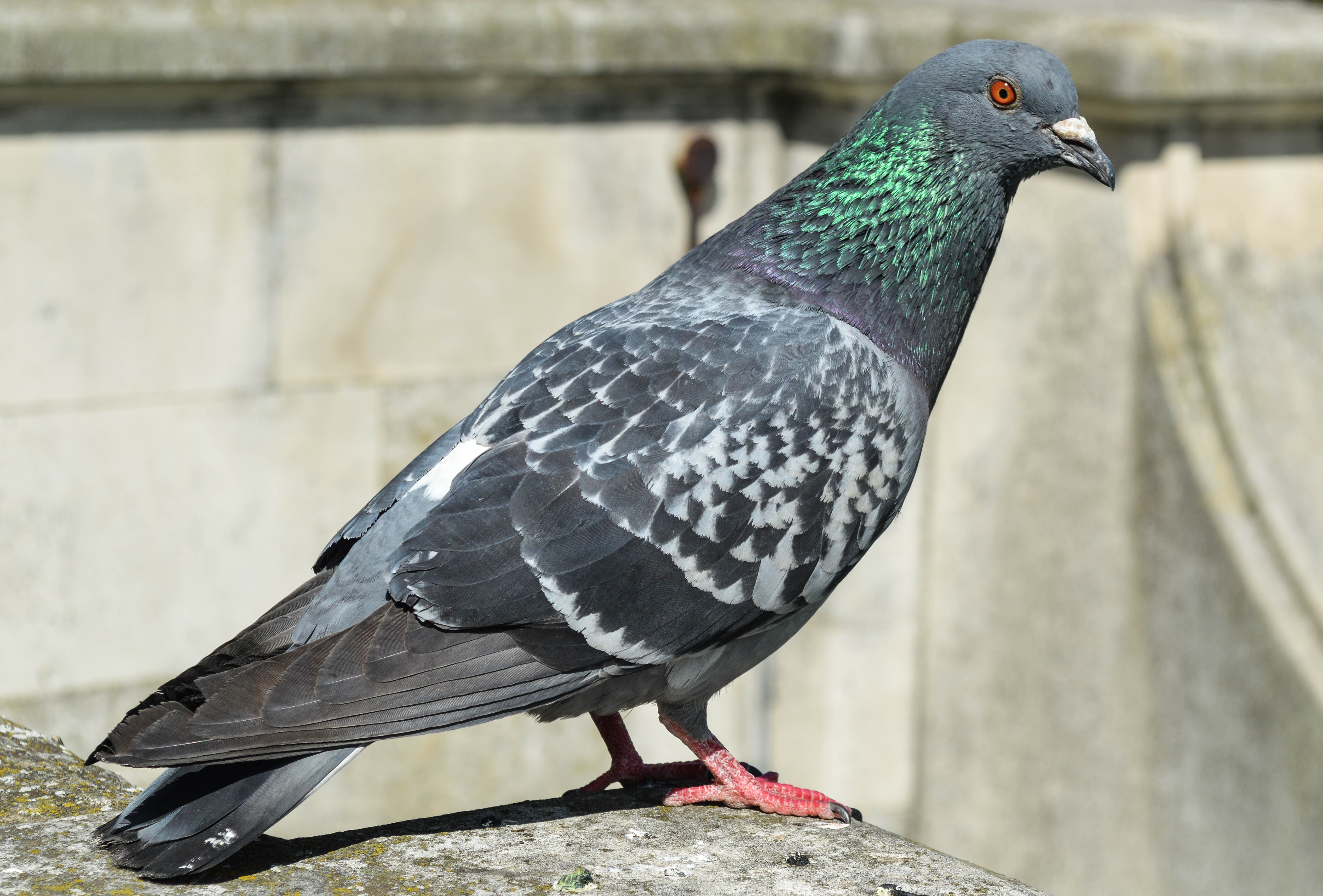
Figure: Clear eyes, clean nostrils, and smooth plumage are basic daily health checkpoints when caring for domestic pigeons. Lewis Hulbert, Wikimedia Commons

Public health agencies take a measured view of zoonotic risk: casual contact with healthy, cleanly housed pigeons rarely harms healthy adults, but airborne dust from dried droppings and feather dander requires real respect. Known hazards include psittacosis (Chlamydia psittaci), environmental fungal infections such as cryptococcosis (Cryptococcus neoformans) and histoplasmosis (Histoplasma capsulatum, linked primarily to large aged accumulations of droppings mixed with soil), rare severe PPMV-1 pneumonia documented in immunosuppressed patients, and non-infectious hypersensitivity pneumonitis (pigeon breeder's lung) triggered by chronic inhalation of avian proteins. Following CDC prevention steps keeps exposure low: never dry-sweep or dry-vacuum droppings; mist surfaces with water or disinfectant first, clean daily so droppings never accumulate, wash hands thoroughly with soap and water after bird or cage contact, maintain strong room ventilation or HEPA air filtration, and wear gloves and a suitable mask if dealing with heavy buildup.
Who Fits Companion Pigeons and When to Reconsider
Companion pigeons thrive with people ready for a commitment lasting a decade or far longer—while wild rock doves average around six years, well-cared-for captive pigeons commonly live 10 to 25 years, with extreme captive longevity reaching 35 years in demographic databases. Ideal keepers have space for a spacious flat-floored enclosure plus daily indoor flight (or a secure outdoor aviary), steady wet-cleaning habits, reliable ventilation, access to an avian veterinarian, and confirmation that local municipal ordinances and housing rules permit keeping pigeons. Always obtain birds through legal adoption or reputable captive breeders, never take wild birds, and never release domestic pigeons outdoors if circumstances change.
Conversely, pigeons are not a good match for households with severely immunocompromised family members or people with asthma, bird-dander allergies, or a history of hypersensitivity pneumonitis without medical clearance. Homes where dogs or cats cannot be reliably separated from flight spaces, apartments or neighborhoods prohibiting pigeons, or keepers unwilling to manage daily feather dust and wet cage sanitation should pass. When housing, hygiene, and social needs are built in from day one, domestic pigeons can settle into calm, deeply bonded household companions.
References
- Animal Diversity Web: Columba livia (common pigeon)
- BirdLife International (2025), IUCN Red List Assessment: Columba livia
- RSPCA Research Animals Department: Pigeons Good Practice for Housing and Care
- CDC: Preventing Psittacosis
- CDC NIOSH: Related Infectious Disease Risks (Cryptococcosis and Psittacosis)
- Merck Veterinary Manual: Avian Chlamydiosis
- Merck Veterinary Manual: Parasitic Diseases of Pet Birds
- Palomacy Pigeon and Dove Adoptions: How to Welcome Pigeons Into Your Life
- Kuiken et al. (2018), The Journal of Infectious Diseases: Zoonotic Infection With Pigeon Paramyxovirus Type 1