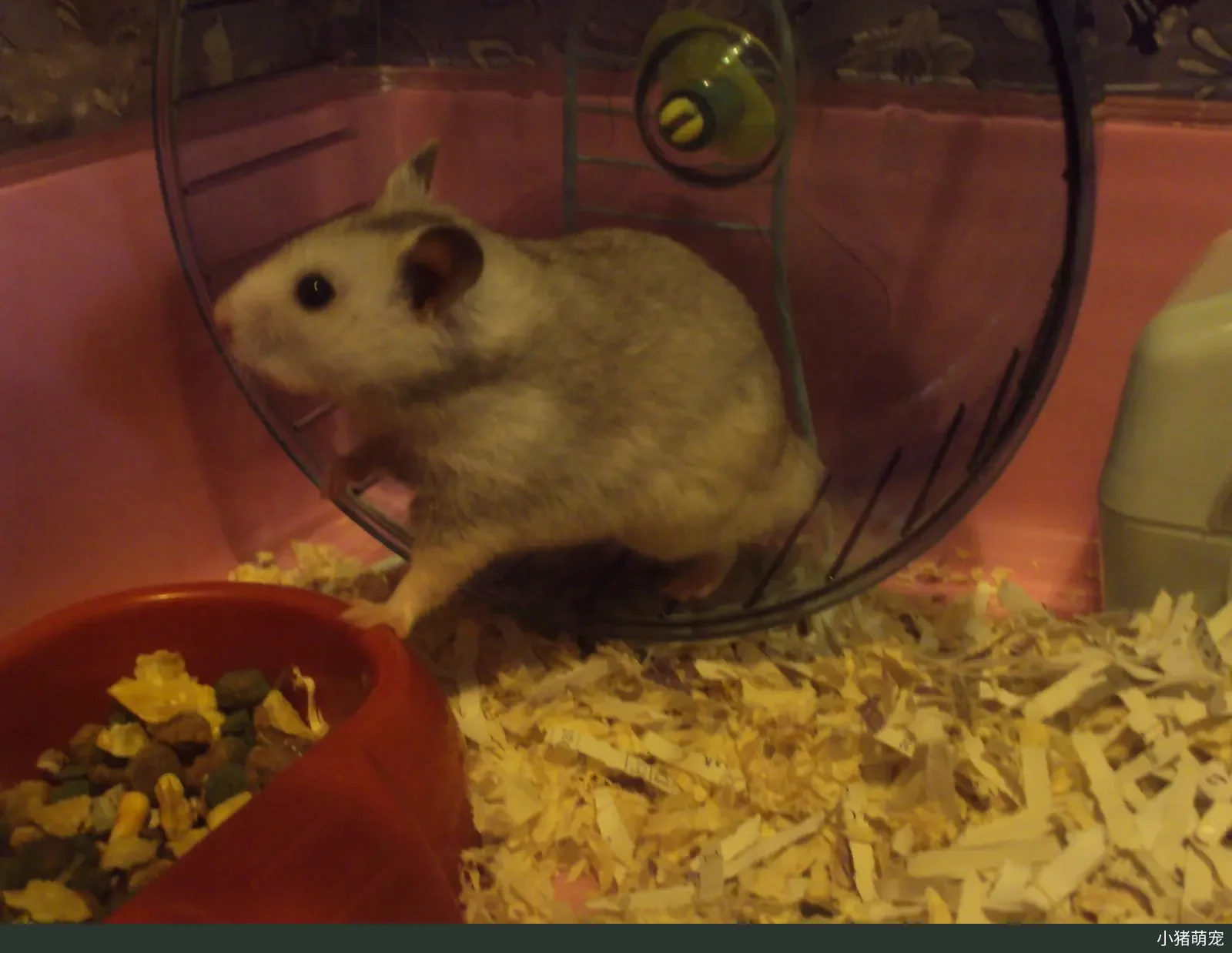
A Syrian hamster; the photographer described it as just finished exercising and about to eat. Photo: Daikorax, source: Wikimedia Commons, license: CC BY-SA 3.0.
The Syrian hamster, also called the golden hamster, is one of the most common pet hamsters. It is native to arid regions of northern Syria and southern Turkey; wild populations are listed as Endangered by the IUCN, while pet golden hamsters all come from long-term captive breeding. It is naturally solitary, digs burrows, and hoards food, needing a spacious enclosure, deep bedding, and a balanced diet. Drawing on veterinary manuals, animal-welfare organizations, and field research, this article covers habits, husbandry, health, and regulatory points.
Natural habits
The Syrian hamster (Mesocricetus auratus) has a very small wild range, only in arid areas of northern Syria and southern Turkey. Researchers say today’s laboratory and household golden hamsters descend from a sibling pair bred in 1930. In other words, nearly all pet golden hamsters come from the same tiny founding population.
They are classic solitary animals. Researchers observing wild individuals in southern Turkey found them living dispersed with almost no social activity. Both the RSPCA and PDSA warn that Syrian hamsters should be housed alone; forcing two together easily leads to fights and injury, sometimes fatal.
The English word hamster comes from German hamstern, “to hoard.” A Syrian hamster’s cheek pouches can hold food amounting to about half its body weight at once, to be carried back to the nest. Incisors grow lifelong and need chewing to wear down. As prey animals, they are sensitive to unfamiliar sights, sounds, and smells, and duck into a burrow when startled.
Activity patterns hold an interesting finding: lab golden hamsters are almost only active at night, but a 2008 Biology Letters field study found that 12 wild females in southern Turkey came above ground almost only by day—concentrated between 6–8 a.m. and 4 p.m. to about 7:30 p.m.—with average daily surface activity of only about 87 minutes. Researchers suggest this avoids nocturnal predators such as owls and midday heat. The study watched only spring females; captive animals are usually still most active in the evening and at night, so try not to wake them for play during the day.
On lifespan, the RSPCA says they generally live to about two years, some longer; PDSA and Blue Cross give a range of two to three years and note that larger Syrian hamsters usually outlive dwarf hamsters somewhat.
Husbandry and diet
How large a cage should be is, PDSA admits, still short on solid evidence; it cites the German veterinary animal-welfare association (TVT) minimum: floor area 100×50 cm, and bigger is better. Blue Cross likewise recommends no less than 100×50 cm and 50 cm high. Small cages common in pet shops often fall short. PDSA also prefers a single-level large-floor cage over multi-level tall ones, because hamsters have poor vision and easily fall from heights.
Bedding must be deep enough to dig: Blue Cross suggests at least 20 cm, PDSA no less than 25 cm. Paper bedding, dust-free aspen or spruce shavings, and soft hay can be mixed; dusty ordinary shavings, scented bedding, and printed newspaper should not be used. Cotton-like “hamster fluff” and similar loose fibers can tangle limbs and cause intestinal blockage if eaten—avoid them. The cage floor should be solid, not wire mesh, to protect feet. Provide a dim, large enough nest box for sleeping and food storage.
The wheel must be large enough with a solid running surface so the back stays level while running: PDSA suggests a minimum diameter of 30 cm for Syrian hamsters; Blue Cross gives 27–32 cm. Many wheels that come with cages are too small; long-term use can injure the spine.

A Syrian hamster on grass stuffing dandelion leaves into its cheek pouches—how they carry and hoard food. Photo: Peter Maas (cropped and edited by Miss-Sophie), source: Wikimedia Commons, license: CC BY-SA 2.5.
Place the cage somewhere quiet, away from direct sun and drafts; PDSA suggests room temperature 18–21°C. If too cold, a hamster may enter a hibernation-like “torpor,” and pet hamsters’ fat reserves are not enough for long periods without eating—that is dangerous. The RSPCA also notes that TVs, computer screens, vacuum cleaners, and running water may produce ultrasound humans cannot hear, which stresses hamsters; light on/off times in the room are best kept roughly consistent each day.
Diet should center on a nutritionally balanced hamster pellet. PDSA advises against seed mixes alone, because hamsters pick the sugary parts and leave the high-fiber ones, which over time can lead to dental problems and obesity. Each day you can add one or two teaspoons of washed vegetables, and occasionally a little fruit, nuts, cooked egg, or mealworms as treats. The RSPCA especially warns that grapes and rhubarb can be toxic to rodents—do not feed them. Scatter pellets in the cage or bury them in bedding so the hamster can forage. Clean drinking water must always be available; check the bottle daily for leaks or blockages. Change food gradually; sudden diet changes or stale food can upset the gut.
Common health problems
Diarrhea is common in hamsters, often called “wet tail.” The Merck Veterinary Manual (updated September 2026) notes that a serious cause of diarrhea in young hamsters is proliferative ileitis from Lawsonia intracellularis; stress from transport, crowding, surgery, illness, or diet change raises risk, with wet fur around the tail, dull demeanor, reduced appetite, and weight loss. Especially important: some antibiotics disrupt hamster gut flora and can cause severe diarrhea or death—never medicate a hamster yourself; follow a veterinary prescription.
Incisors grow lifelong; overgrowth can leave a hamster unable to eat, drooling, and losing weight, and may lead to facial abscesses. Subcutaneous abscesses often follow fight bites or scratches from sharp cage objects. Hair loss has many causes—rubbing on bars, protein deficiency, mites, fungal infection (ringworm), or hormonal or kidney issues; mites are especially common in older males. Syrian hamsters have a dark scent gland on each flank, symmetric, not itchy, and stable in size—normal anatomy, nothing to worry about.
Older Syrian hamsters may also develop atrial thrombosis (often with congestive heart failure), amyloidosis, and polycystic disease. These are mostly hard to cure and rely on veterinary supportive care. Rapid breathing, wheezing, or purple skin or gums mean seek care promptly.
Eye proptosis is an emergency, often linked to rough handling or scruffing the neck—see a vet immediately. PDSA suggests cupping the hamster with both hands from the sides, preferably sitting on the floor so a jump does not cause a hard fall; do not grab it while sleeping.
Zoonoses also matter. The Merck Veterinary Manual lists diseases hamsters can pass to people, including lymphocytic choriomeningitis virus (LCMV), ringworm, salmonellosis, pseudotuberculosis, tularemia, and tapeworm. LCMV mainly comes from contact with wild rodents or their droppings and is especially dangerous for pregnant people. Keep hamsters away from wild rodents and wash hands carefully after feeding and cage cleaning—the simplest effective protection. Conversely, the RSPCA notes hamsters easily catch human cold viruses; when you have a cold, minimize contact.
Conservation status, law, and ethics
The Syrian hamster’s situation is paradoxical: pet golden hamsters are everywhere, while wild kin are not doing well. The IUCN Red List (Kennerley and Middleton assessment, version 2022-1) lists it as Endangered (EN). Pet golden hamsters, however, all come from long-term captive breeding; keeping pets does not directly deplete wild populations.
On international trade, the Syrian hamster is not on the CITES Appendices: in the version valid from 5 March 2026, Rodentia covers only a few groups such as Chinchillidae, Muridae, and Sciuridae—no Cricetidae species. Domestically, the 2021 List of National Key Protected Wild Animals lists only beaver and giant squirrel among Rodentia, not hamsters. Local rules on pet keeping may differ; follow the latest requirements from the competent local authority.
Emphatically: do not release or abandon. The Syrian hamster is not a native Chinese species. Article 60 of the Biosecurity Law of the People’s Republic of China provides that no unit or individual may, without approval, introduce, release, or discard alien species; under Article 81, violators may be ordered to catch or recover them within a time limit and fined between 10,000 and 50,000 yuan. For the animals themselves, the RSPCA says pet hamsters should be kept indoors; outdoor cold is dangerous for them.
Finally, a few ethics notes. Hamsters need large cages and deep bedding, and when sick a vet who sees exotics—time and cost are not as light as the “small pet” image suggests. The RSPCA holds that caring for a hamster is too much responsibility for a child and should fall to adults; PDSA also suggests children, under adult supervision, mainly offer treats and gentle strokes rather than constant carrying. Before deciding to keep one, be sure you can provide proper care for the next two to three years—no forced cohabitation, no casual breeding.
References
-
Antinoff N. Disorders and Diseases of Hamsters. Merck Veterinary Manual (Pet Owner Version), updated September 2026.
-
RSPCA. Hamsters (accessed 2026-10-17; page not dated).
-
RSPCA. Creating the right home for your hamster (accessed 2026-10-17).
-
RSPCA. What to feed hamsters (accessed 2026-10-17).
-
PDSA. Hamsters as pets, published December 2024.
-
Blue Cross. Hamster care (accessed 2026-10-17).
-
Gattermann R, Johnston RE, Yigit N, et al. Golden hamsters are nocturnal in captivity but diurnal in nature. Biology Letters, 2008, 4(3): 253–255.
-
Kennerley R, Middleton K. Mesocricetus auratus. The IUCN Red List of Threatened Species 2022. e.T13219A107411865.
-
National Forestry and Grassland Administration, Ministry of Agriculture and Rural Affairs. Announcement No. 3 of 2021 (List of National Key Protected Wild Animals), 1 February 2021.
-
Standing Committee of the National People’s Congress. Biosecurity Law of the People’s Republic of China, adopted 17 October 2020, effective 15 April 2021.