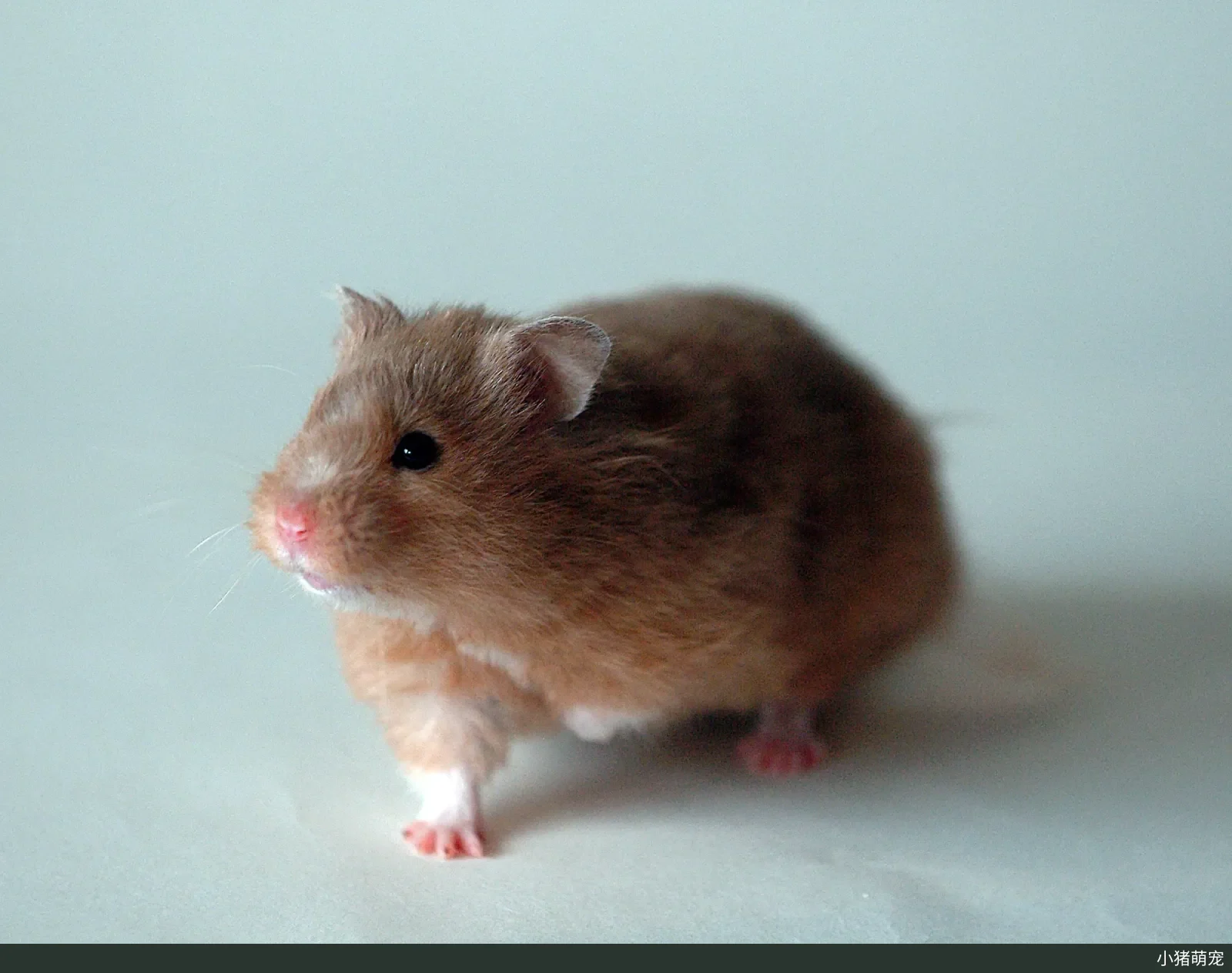
A golden Syrian hamster. Photo: Adamjennison111 (English Wikipedia); source: Wikimedia Commons; license: CC BY 2.5

The Syrian hamster (golden hamster, Mesocricetus auratus) has a wild home range only in a small area of northern Syria and southeastern Turkey. Most of today’s pet and laboratory stock descends from a single litter captured near Aleppo in 1930. As adults they prefer to live alone and need a spacious cage, deep bedding, and a suitably sized wheel. Drawing on veterinary manuals and animal-welfare sources, this article covers care essentials, foods to avoid, common illnesses, and what to know before buying.
Wild range and the laboratory population’s origins
The Syrian hamster was formally described by British naturalist G. R. Waterhouse in 1839; the type locality is Aleppo, Syria. Its wild range is narrow, with records only around Aleppo and in southeastern Turkey. Gattermann and colleagues surveyed northern Syria in September 1997 and March 1999 and reported in 2001 that the main range is the Aleppo plateau, about 10,000–15,000 square kilometers; in the occupied burrows they checked, each held only one adult, with depths of 36–106 cm (mean 65 cm). Most burrows were dug in farmland, not the rocky steppe or scrub slopes often described in the literature. The Mammal Diversity Database (MDD) lists the species as Endangered (EN) on the IUCN Red List.
Almost all golden hamsters seen today come from the same litter. The Merck Veterinary Manual records that in 1930 a litter of eight was collected near Aleppo; four escaped, one male killed a female, and only one male and two females remained. Their descendants were sent to Europe and the United States for research and later entered homes. A review in Laboratory Animal Medicine (2015) notes that parasitologist Saul Adler introduced the golden hamster to the laboratory while seeking an experimental host for Leishmania; descendants of that stock first reached the United States in 1938. Wild bloodlines have been added only sparingly since: twelve animals were imported from Syria to the U.S. in 1971, and animals captured during the 1997–1999 surveys founded a new breeding colony in Germany.
Solitary nature and cage setup
Syrian hamsters must be housed one per cage. The Royal Society for the Prevention of Cruelty to Animals (RSPCA) notes that wild adult Syrians generally occupy one burrow each, and that Syrians and Chinese hamsters should not be kept together; the UK charity Blue Cross likewise says hamsters do not need companions—most species are solitary by nature and fight if housed together. The Merck Veterinary Manual adds that females are usually aggressive toward other hamsters, and a non-estrous female may even kill a young male. Bite wounds from fights readily become subcutaneous abscesses. So “buying a second one so it won’t be lonely” is not kindness; it puts the animal at risk of injury.
Bigger cages are better than smaller ones. Blue Cross recommends a floor area of at least 100×50 cm and a height of 50 cm for a Syrian; the German veterinary animal-protection association (TVT) 2014 golden-hamster guidance gives the same minimum of 100×50×50 cm (length × width × height). Hamsters dig; both organizations recommend at least 20 cm of diggable bedding, and TVT suggests mixing in hay and straw (about one-third each) so tunnels are less likely to collapse. The Merck Veterinary Manual further notes that 40–80 cm of bedding can improve Syrian hamster welfare. The floor should be solid—wire bases injure feet—and bar spacing should be under 1 cm to prevent escapes. Suitable bedding includes dust-free paper, wood pulp, or hemp; most wood shavings and sawdust are hard on the airways (aspen is acceptable). Nest material can be good-quality hay or shredded paper; avoid “hamster cotton” that pulls into fine strands—it can tangle limbs and cause gut problems if eaten.

A Syrian hamster diving into bedding; digging is instinctive. Photo: Madison Roy; source: Wikimedia Commons; license: CC BY-SA 4.0

A wheel is the main way Syrians burn energy, and size matters. Blue Cross recommends a 27–32 cm diameter wheel for Syrians; the test is that the back stays level when running, without the head tipping up. Wheels that come with cages are often too small and can injure the spine with long-term use. TVT requires a diameter greater than 25 cm, with a closed running surface and rear wall to avoid pinching. Replace wheels with spokes or mesh; the Merck Veterinary Manual (pet-owner edition) notes that injuries often occur when a leg catches in a wire wheel or wire cage. Complex clear tubing and hamster balls are also discouraged: tubes ventilate poorly and are often too narrow for Syrians; in a ball the animal cannot choose its direction and may be hurt if it rolls off a table or step.
Nocturnal schedule and daily feeding
At home, Syrian hamsters are usually nocturnal. Blue Cross warns that a hamster disturbed or startled by day may bite; make sure it is fully awake before handling. The RSPCA suggests cleaning the cage while it is awake, not while it sleeps by day; dim the room at roughly the same time each night, and keep it away from ultrasonic sources such as TVs, computer screens, vacuum cleaners, and running water. Wild behavior differs: a 2008 Biology Letters study by Gattermann and colleagues found laboratory golden hamsters strictly nocturnal, while twelve wild females tracked in southern Turkey emerged almost only by day, mainly at dawn and dusk. The authors suggest this may avoid nocturnal predators such as owls and midday heat. For keepers the takeaway is practical: respect the animal’s home schedule and do not wake it by day for play.
Feed mainly a complete hamster pellet diet. The Merck Veterinary Manual notes that wild Syrians are omnivores eating greens, seeds, fruit, and animal matter, but pets should get a balanced pellet diet rather than only a mixed seed mix, which they will pick over, leaving pellets behind. PetMD suggests pellets make up about 90% of the daily ration; the UK veterinary charity PDSA recommends one or two teaspoons of washed vegetables, fruit, or herbs daily, with occasional nuts, a little cooked egg, or mealworms as treats. Syrians have a wide muzzle; Merck advises placing pellets on the cage floor rather than in a hopper, and the RSPCA likewise suggests scattering or hiding food so foraging remains rewarding. Fresh water should always be available; the RSPCA recommends valve-free sipper tubes, and Merck warns Syrians can chew through glass sippers—use stainless steel. Keep hamsters in a warm indoor room; the RSPCA notes cold can send them into a torpor-like state, and pet hamsters do not have fat reserves for long periods without food.
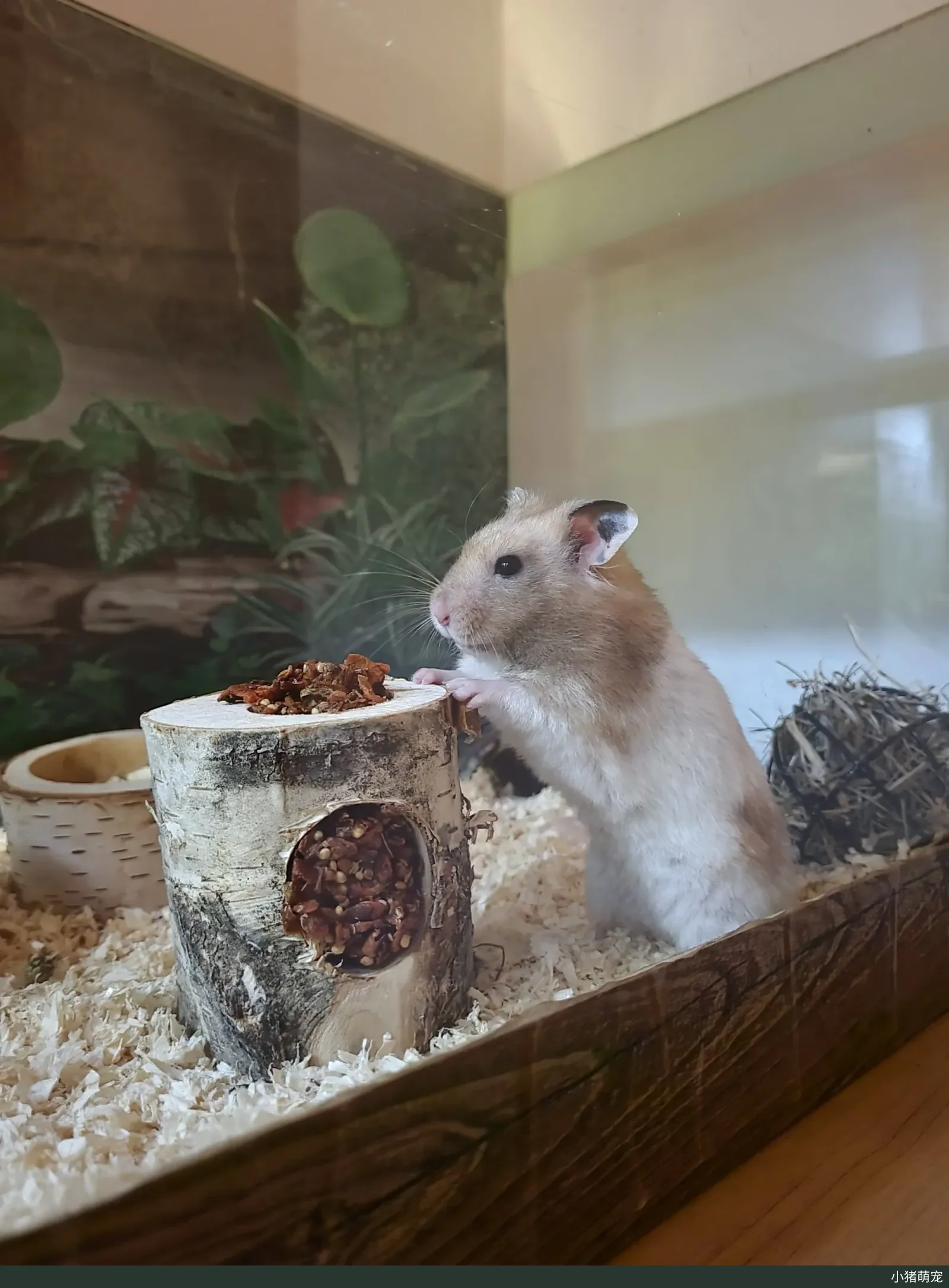
A golden hamster in its enclosure watching a newly offered snack. Photo: Patrik Čech; source: Wikimedia Commons; license: CC BY-SA 4.0

Some foods should not be fed. The RSPCA warns that grapes and rhubarb may be toxic to rodents. PetMD’s avoid list includes almonds, cherry pits, apple seeds and other fruit pits, and tomato leaves; remove seeds and pits before offering fruit. Peppers and citrus may upset the gut, and the tough strings in celery stalks pose a choking risk. On citrus, PDSA notes newer research is mixed and still advises against feeding until the evidence is clearer. Human processed foods, sugary snacks, and treat sticks bound with molasses or honey are unsuitable; hamsters gain weight easily (Blue Cross). Change diets gradually; sudden diet shifts or spoiled food can cause diarrhea. When unsure whether a food is safe, ask a veterinarian first.
Lifespan, common illnesses, and buying notes
Syrian hamsters do not live long: the Merck Veterinary Manual says 2–3 years, Blue Cross about 2–3 years, and the RSPCA usually at most two years, with some living longer. In old age, Merck lists common problems including atrial thrombosis (which may show as rapid breathing, irregular heartbeat, or purple skin or gums), hepatic and renal amyloidosis, kidney inflammation, and lymphoma. Watch weight, water intake, and demeanor; feel regularly for new lumps, and seek care early if anything seems wrong.
“Wet tail” is the common name for hamster diarrhea, from wet fur around the tail caused by loose stool. It names a symptom, not a single cause. The most serious form is proliferative ileitis from Lawsonia intracellularis; Merck calls it the most important intestinal disease in Syrians aged 3–10 weeks, with high mortality. Early literature records outbreak mortality of 50%–90%, often death within 48 hours of signs. Stress from transport, crowding, surgery, illness, and diet change makes diarrhea more likely; common signs include wet tail fur, lethargy, poor appetite, and weight loss. At the first loose stool or soiled hindquarters, contact a veterinarian at once (RSPCA); TVT stresses never to withdraw water during diarrhea. Isolate sick animals from healthy ones. Treatment usually includes fluids and veterinary antibiotics, but Merck (pet-owner edition) also warns that some antibiotics disrupt hamster gut flora and can trigger fatal diarrhea—so do not dose on your own.
Before buying or adopting, confirm the source and local rules. Blue Cross suggests adopting from a rescue, or buying from a pet shop or responsible breeder; young should not leave the mother before six weeks of age. Source reliability also matters for human health: Merck records that hamsters can carry lymphocytic choriomeningitis virus (LCMV); several large human outbreaks in the late 1970s in the United States traced to hamsters from a single supplier. Infected hamsters often look healthy, and the virus is especially dangerous for pregnant people and those with weakened immunity. Wash hands after handling hamsters or cleaning cages. Rules vary widely: Queensland, Australia, lists hamsters among prohibited pets, with penalties for violations; Hawaii bans private introduction or possession of hamsters. Elsewhere, follow current agriculture, biosecurity, or animal-management rules. The RSPCA also reminds keepers that the law requires proper care, which adults must oversee—it cannot be left entirely to children.
References
-
Frohlich J. Hamsters. Merck Veterinary Manual (Professional Edition), updated July 2026. https://www.merckvetmanual.com/exotic-and-laboratory-animals/rodents/hamsters
-
Antinoff N. Disorders and Diseases of Hamsters. Merck Veterinary Manual (Pet Owner Edition), updated September 2026. https://www.merckvetmanual.com/all-other-pets/hamsters/disorders-and-diseases-of-hamsters
-
Miedel EL, Hankenson FC. Biology and Diseases of Hamsters. Laboratory Animal Medicine, 3rd ed., 2015. https://pmc.ncbi.nlm.nih.gov/articles/PMC7158296/
-
Gattermann R, et al. Notes on the current distribution and the ecology of wild golden hamsters (Mesocricetus auratus). Journal of Zoology, 2001, 254: 359–365. https://doi.org/10.1017/S0952836901000851
-
Gattermann R, Johnston RE, et al. Golden hamsters are nocturnal in captivity but diurnal in nature. Biology Letters, 2008, 4(3): 253–255. https://pmc.ncbi.nlm.nih.gov/articles/PMC2610053/
-
Mammal Diversity Database. Mesocricetus auratus • Syrian Golden Hamster. https://www.mammaldiversity.org/taxon/1002208/
-
RSPCA. Hamsters. https://www.rspca.org.uk/adviceandwelfare/pets/rodents/hamsters
-
RSPCA. Creating the right home for your hamster. https://www.rspca.org.uk/adviceandwelfare/pets/rodents/hamsters/environment
-
RSPCA. What to feed hamsters. https://www.rspca.org.uk/adviceandwelfare/pets/rodents/hamsters/diet
-
Blue Cross. Hamster care (reviewed 30 March 2023). https://www.bluecross.org.uk/advice/hamster/hamster-care
-
Tierärztliche Vereinigung für Tierschutz (TVT). Merkblatt Nr. 156: Heimtiere – Goldhamster, July 2014. https://www.hamsterwelfare.com/wp-content/uploads/2021/04/TVT-MB_156_Heimtiere_Goldhamster__Juli_2014_.pdf
-
PDSA. Hamsters as pets. https://www.pdsa.org.uk/pet-help-and-advice/looking-after-your-pet/small-pets/hamsters-as-pets
-
Childree A (reviewed by Witherell M). What Can Hamsters Eat? PetMD, updated 23 July 2024. https://www.petmd.com/exotic/what-can-hamsters-eat
-
Queensland Government. Keeping exotic animals as pets in Queensland. https://www.qld.gov.au/family/family-and-parents/government/pets/keeping-exotic-animals-as-pets-in-queensland
-
Hawaii Department of Agriculture. Animal Guidelines – Plant Industry Division. https://dab.hawaii.gov/pi/pq/import-program/animal-guidelines/