The Havanese takes its name from Havana, the capital of Cuba, where these members of the bichon family were household companions. The American Kennel Club (AKC) places the breed in its Toy Group. To recognize a Havanese, watch how the tail rests over the back when the dog stands, then watch those first few steps. Beneath the long coat is a small, sturdy dog with a light, springy stride. It’s tempting to quicken your own step at the sight. On a walk together, though, let the dog beside you set the pace.[1][2]
An adult Havanese stands about 8½ to 11½ inches (22–29 cm) at the shoulder. The AKC lists a weight of 7–13 pounds (3.2–5.9 kg). Measure to the top of the shoulder blades. Going by the top of the head or the tips of the fluffy coat can make the dog look taller. In profile, the distance from the point of the shoulder to the buttocks is slightly greater than the dog’s height, and the back rises gently from the shoulders toward the rump. The tail is set high and arches forward, its long plume falling over the back or to one side. In the first photograph, the coat almost covers the paws and hides the legs, but the plume is easy to pick out.[1][2]
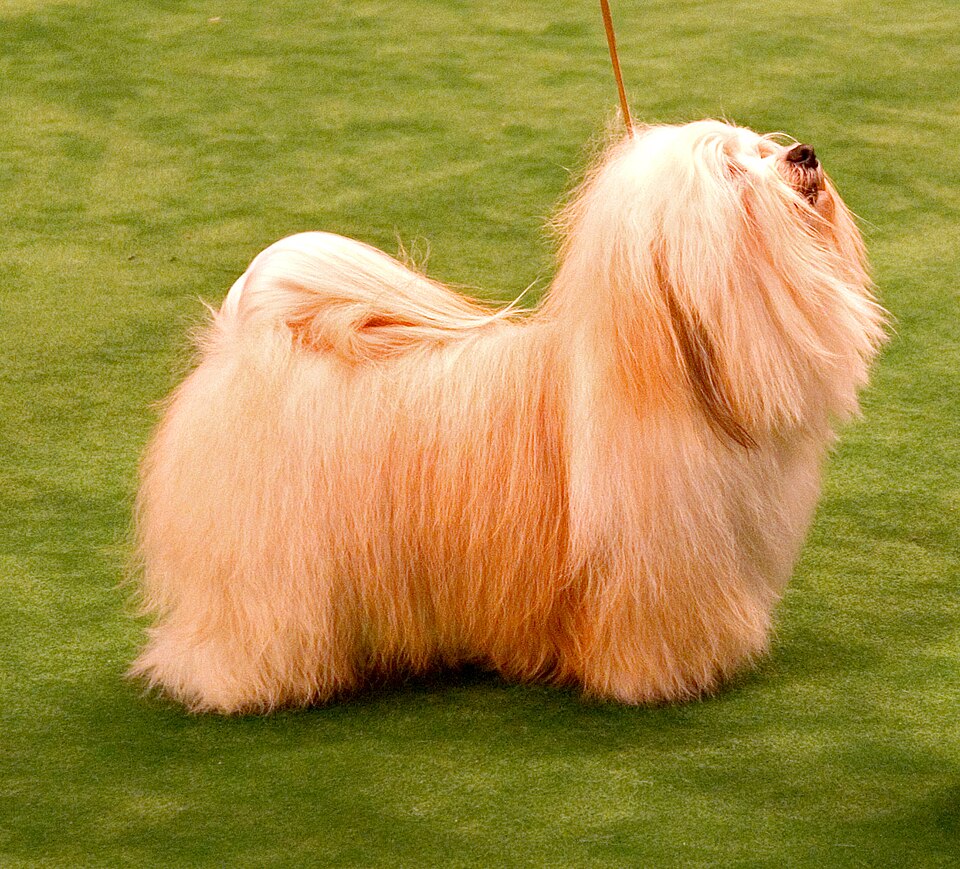
A standing Havanese carries its tail over its back. audrey_sel, Wikimedia Commons[4]

When should you turn back on a walk?
The AKC describes the breed’s exercise needs as moderate. A brisk daily walk together, play in the yard or a game that gives the dog room to run indoors can all provide exercise. For your first walks, choose a route where you can turn around at any point. Think of the far corner as somewhere you might get to. Let the dog settle into a natural stride and watch how comfortably it keeps up. Even a dog that sets off eagerly needs energy for the trip home. If it’s panting and struggling to stay alongside you, stop for a rest and bring the outing to an end.[1]
A Havanese can live well in an apartment, and a family with a yard still needs to make time for the dog. These dogs enjoy doing things with people and often find it hard to spend hours alone. Think through an ordinary workday. Who takes the dog downstairs in the morning? How long is the house usually empty in the afternoon? Who can come over on days you get home late? A long weekend walk still leaves that weekday afternoon to account for. Even in a small home, a schedule that allows for walks together and a game when you get back gives the dog several ways to stay active.[1]
For a rainy-day game indoors, crouch down and look at the route from the dog’s height. The gap between two dining chairs might be wide enough to run through and lead straight into a kitchen doorway where someone is carrying hot food. Choose a stretch of nonslip floor with a clear space at the far end. A child can sit at one end and roll a toy along the floor while an adult supervises. If the dog comes back for another turn, keep playing. If it wanders off, leave the way back to its bed clear. The child gets to play with the dog, and the dog gets to choose where to go with all four paws on the ground.[1]
Practicing a wait at the door
Havanese are usually eager to respond to people and can be sensitive to a harsh voice. The moment before you go out offers a chance to practice. Place a mat a few steps from the door. When the dog steps onto it, offer praise or a tiny treat right away. Once the mat is familiar, practice touching the door handle while the dog stays in place. If the dog rushes over as soon as you touch the handle, make the next attempt easier. Reach partway toward it and reward the dog while it’s still on the mat. When someone picks up a bag or bends to put on shoes, everyone can see where the little dog is before the door opens.[1]
Give the dog a choice when meeting someone new, too. While a puppy is getting used to unfamiliar faces and places, start somewhere quiet and let it watch from beside someone it knows. If it approaches, the visitor can offer a quiet greeting. If it steps back, give it more room. With a dog small enough to lift even in adulthood, it’s tempting to scoop it up and put it in a guest’s arms. Let it cover those few steps itself and you can see how close it feels comfortable getting. That gives you a starting point for the next meeting. If you use treats, count the small portions everyone in the household hands out toward the dog’s food for the day.[1]
Making time to comb a long coat
Havanese come in many colors. Look at the different shades around the ears, across the back and on the chest of the sable dog below. The side view also shows where the tail plume falls. The breed standard describes a long double coat with a soft, light texture and a gentle wave. When the hair settles back into place after a walk, the surface can look smooth even where strands have tangled underneath. If you like this length, allow time to comb through it daily.[1][2]
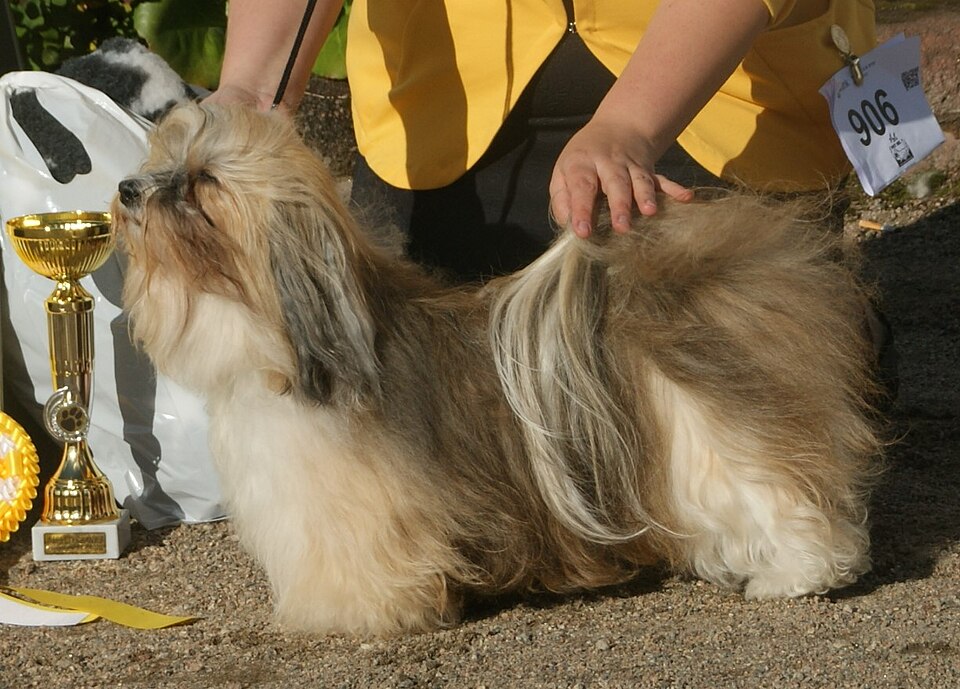
A sable Havanese shows several shades of coat. Canarian, Wikimedia Commons[5]

Choose a quiet time in the evening when you can both settle down. Let the dog rest comfortably against your leg and work through one small section at a time with a soft brush or comb. If the teeth catch, pause. Separate a few strands at a time so the comb doesn’t pull on the skin. With a dog that’s new to your home, a few gentle strokes are a good beginning. As the dog grows comfortable with the comb, it will be easier to work through the whole coat. If a long coat needs more time than your evenings allow, a shorter trim can make daily grooming quicker. Bathe the dog as needed.[1]
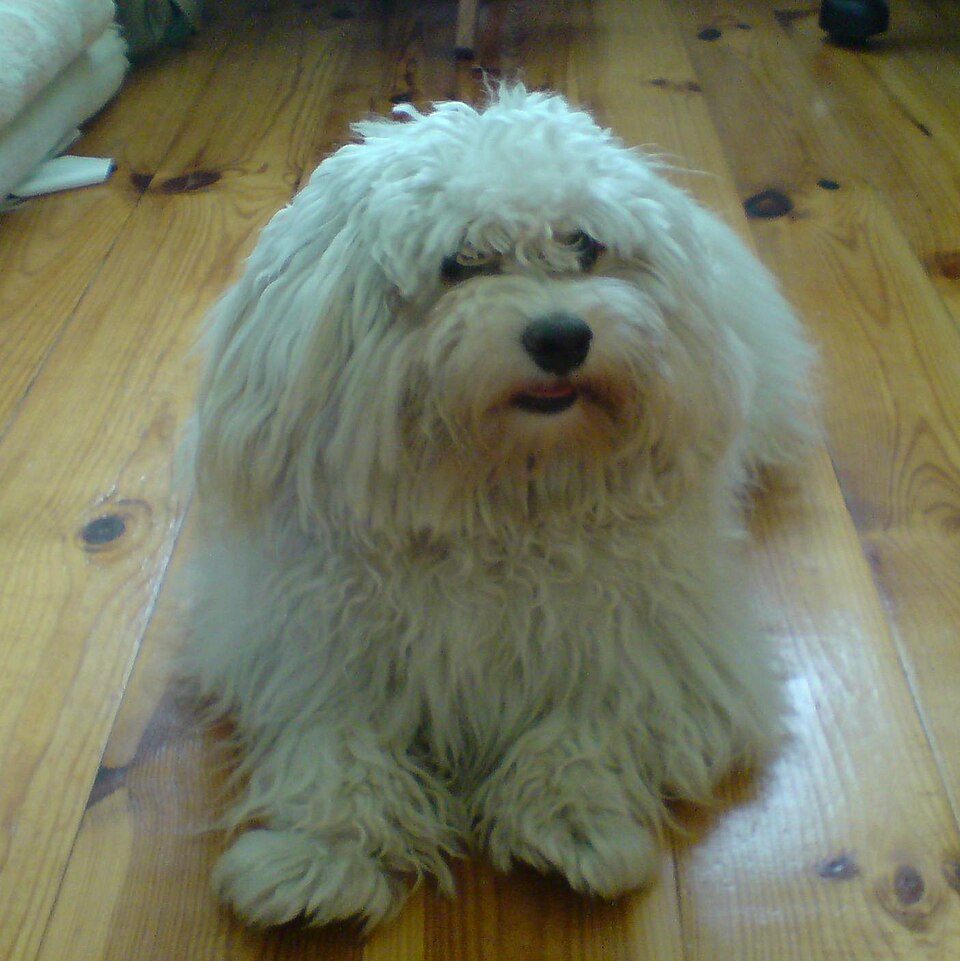
Long hair frames a white Havanese’s face. Bagienny, Wikimedia Commons[6]

Seen from the front, the hair at the corners of the eyes is particularly noticeable on a pale dog. As you groom the face each day, gently wipe the eye corners to reduce tear staining on the light hair. The ears fold down under a covering of long hair. Lift each ear flap regularly and look for wax or debris. When it needs cleaning, gently wipe the visible inner surface of the flap with slightly damp gauze. The daily grooming session is a convenient time to look after the face and ears, well before staining becomes obvious.[1][2]
Before bringing home a puppy, take time to look at the parents’ health records. Eye disease, hip problems and kneecaps that slip out of place are concerns in the breed. In its 2025 health statement, the Havanese Club of America lists three screenings for a Canine Health Information Center (CHIC) number. They are an annual eye exam, a hip X-ray and a kneecap evaluation. Ask the breeder to show you the date and result of each examination under each parent’s name. Those records help you understand the puppy’s family history. If your own dog develops a persistent limp or is reluctant to put weight on a leg, have a veterinarian examine it. Walking a familiar route together gives you a chance to notice when its stride changes.[1][3]
References
-
[1] American Kennel Club. Havanese Dog Breed Information.
-
[2] American Kennel Club. Official Standard of the Havanese.
-
[3] Havanese Club of America. HAVANESE CLUB OF AMERICA., INC HEALTH STATEMENT. March 11, 2025.