Hunters on South Carolina’s Wateree River once used a wooden boat that came apart in three sections. A hunter could paddle one section on its own, with just enough room for one person and a compact dog. Those close quarters helped shape the Boykin Spaniel. The dog had to fit aboard, push through cover to flush birds once ashore, and swim out to retrieve them. A family today can do without the boat, but two qualities those hunters prized still matter at home. A Boykin has the stamina to keep going and enjoys working alongside a person. [1][2]
A full-length view tells you more about a Boykin than a glimpse of a brown face framed by long ears. The dog standing beside the snow has sturdy legs, waves in the brown coat along its back, and longer hair on its ears than on its face. The Boykin is a medium-sized spaniel. The breed standard gives an ideal adult height of 15½ to 18 inches (about 39 to 46 cm) for males and 14 to 16½ inches (about 36 to 42 cm) for females, measured from the ground to the highest point of the shoulder blades. A Boykin has a solid body, enough leg for a good stride, and webbing between its toes. That build suited both the boat ride and the work that followed. [2][3]
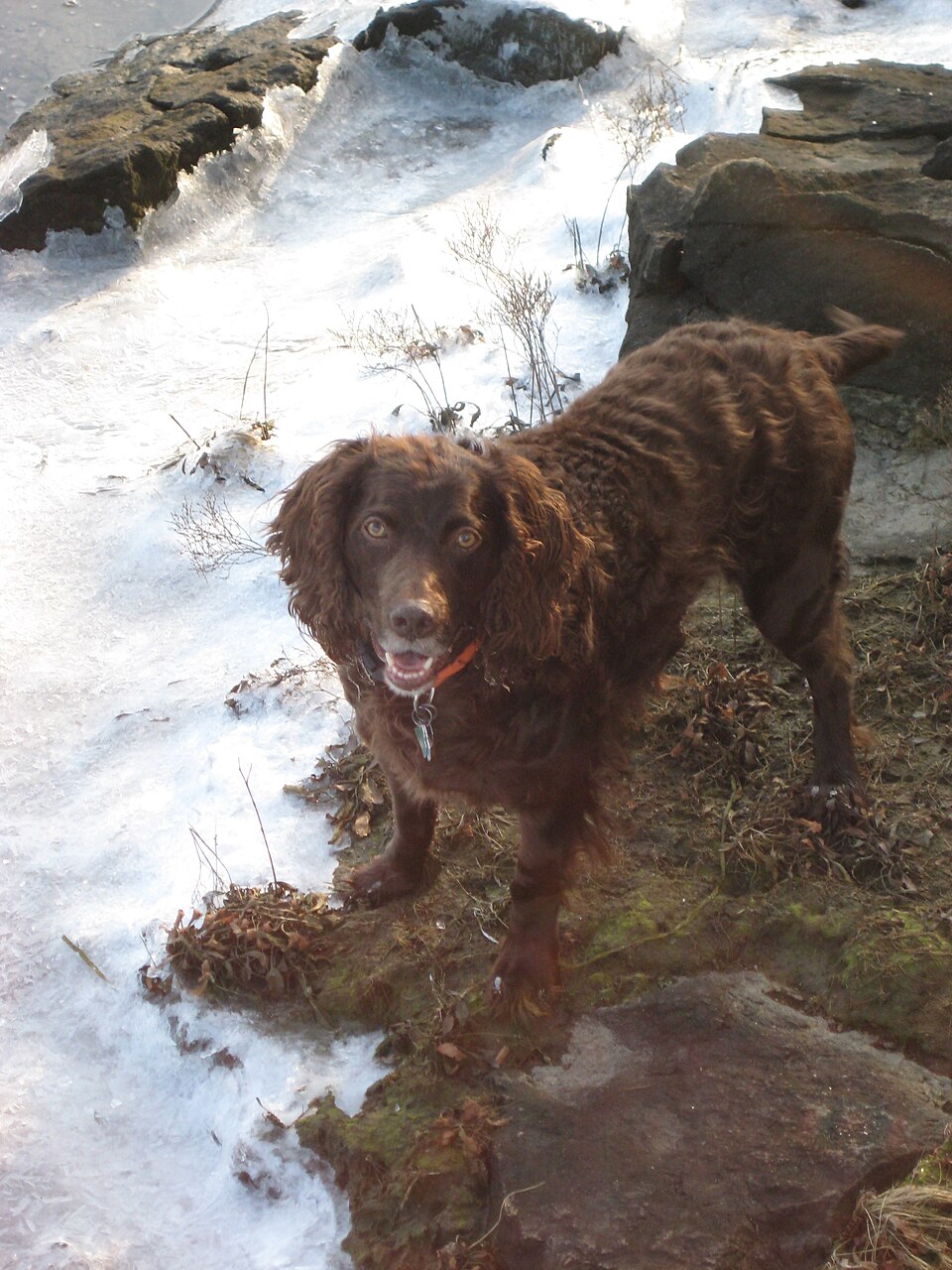
The Boykin Spaniel has a compact, sturdy build. Sarah and Jason, Wikimedia Commons[5]

Plan for an ordinary Wednesday
If weekends at the lake are what drew your family to the breed, take a look at Wednesday’s schedule. The American Kennel Club (AKC) describes Boykins as having moderate to high energy and needing plenty of exercise every day. Long walks and play sessions with someone in the family are two ways to provide it. Which outing, morning or evening, leaves time to take the long way home? Who can take the dog, and who can step in when it rains or work runs late? If weekdays allow only a quick trip outside, even a lively weekend leaves much of the dog’s week unaccounted for. [1][2]
There’s plenty to do on dry land. Walk part of a familiar route, then stop somewhere quiet and safe. Let your dog watch you set a favorite toy a short distance away and give a cue to find it. Once the dog finds the toy and brings it back to you, start another round. The walk gives the dog room to stretch out its stride. The game gives it a reason to keep track of where you are and what you’ll ask next. Families who enjoy learning together might also try tracking, obedience or agility. A good choice is something this particular dog enjoys and someone in the family will want to keep doing. [1][2]
Teach the return first
Chasing a retrieve can catch a spaniel’s interest right away. At home, try teaching the second half of the game first. Call your dog to you in a quiet room and give a small reward as soon as it reaches you. Once the dog knows the cue, use it after a toy search. Keep the toy close enough that you can reward the dog promptly when it turns back and comes to you. If something farther away takes up all its attention, shorten the distance again. The same cue comes in handy at the end of a walk, when it’s time to put the toy away and leave the field together. [1]
Boykins generally enjoy company and can be gentle around the house. The Boykin Spaniel Society records that early working dogs lived indoors with their families. Think through the parts of your own routine a dog could share. Who would take a puppy to class? Who could help it get used to visitors and other dogs a little at a time? Would everyone use the same word to call it back, whoever was holding the leash? A family with a yard has the same things to consider. Opening the back door gives a Boykin room to move. Going out with it to find a toy gives the two of you something to do together. [1][2]
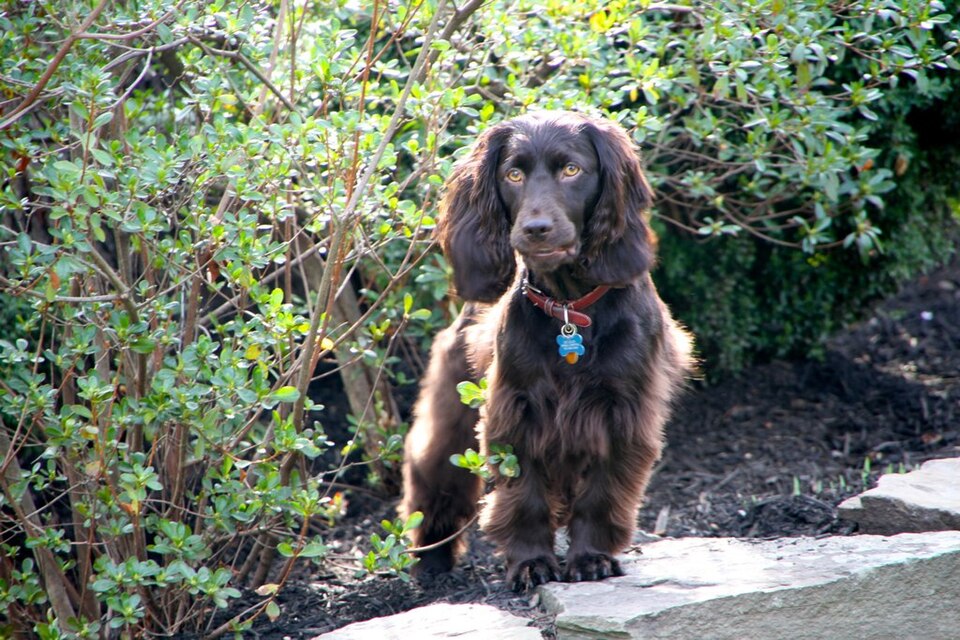
Feathering fringes the chest and legs. jetsonphoto, Wikimedia Commons[6]

Finish a swim with an ear check
After a walk through grass, run your fingers through the longer hair on the chest and legs to feel where bits of grass have caught. The Boykin has a medium-length coat with feathering on the ears, chest, legs and belly. The hair along the back can lie fairly flat or form waves or curls. A weekly brushing lifts out dirt and loose hair, with a bath when needed. As you work down to the feet, check the nails too. Overlong nails can make walking and running uncomfortable, something that matters as soon as the dog heads out again. [1][3]
After a swim, save a little time for the ears. In the close-up, both long ears hang against the cheeks. Facing the dog, you can see only the outside of each flap. When your dog is calm, gently lift one flap and look at the underside and the opening of the ear canal, then check the other ear. Doing this during regular brushing helps you learn what your dog’s ears usually look and smell like. A change is easier to spot after a swim or a bath when you know what’s usual. Even when the hair feels dry, lift the flap for a look underneath. [1][4]
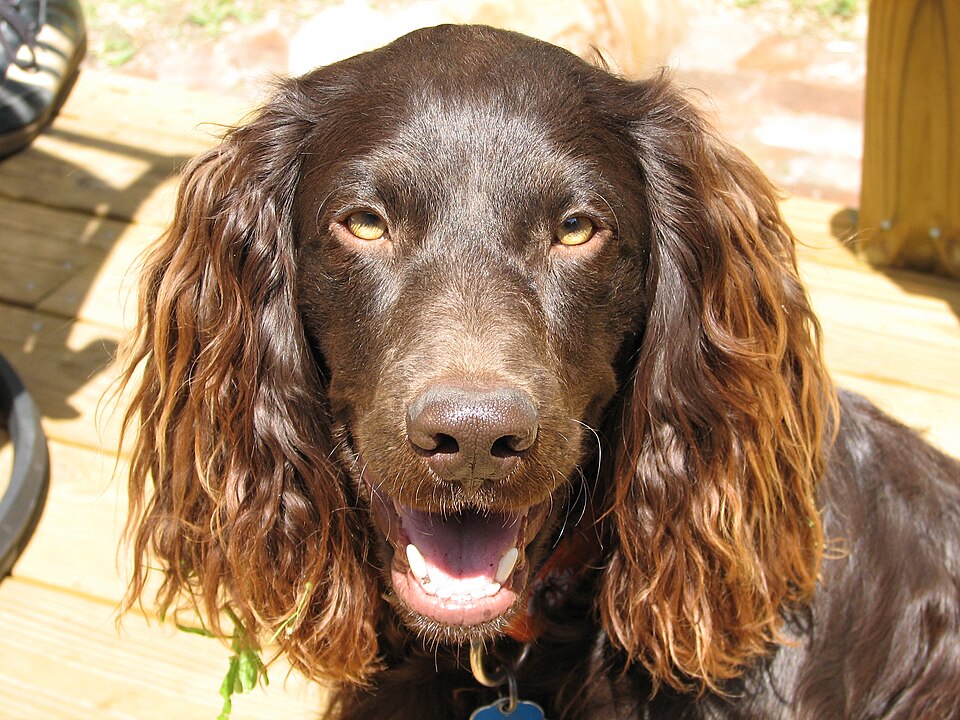
The ears hang close to the cheeks. Flatscaster, Wikimedia Commons[7]

You can look after every swim. If the ears are clean and your dog is comfortable, that’s the end of the check. When cleaning is needed, use soft gauze and the ear cleaner your veterinarian has chosen for your dog, following the technique they’ve shown you. Leave cotton swabs in the box because they can push debris deeper into the canal. If lifting the flap hurts, or the ear looks red or swollen, stop and contact your veterinarian before cleaning. When planning a swimming trip, allow a few minutes for this part of getting back on shore. [1][4]
If you’re considering a puppy, take one specific question to the breeder. Can you see the screening records for each parent? The AKC lists hip, kneecap and eye evaluations, along with DNA tests for exercise-induced collapse (EIC) and Collie eye anomaly (CEA). The joint and eye reports tell you what the examiner found in that dog. Each DNA report addresses a particular inherited condition. Matching the dog’s identity and the test name on each report tells you more than hearing that both parents are strong runners. Once your dog is home, its age, physical condition and response to outings will help you judge how far to walk and whether it enjoys the water. [1]
References
-
[1] American Kennel Club. Boykin Spaniel.
-
[2] Boykin Spaniel Society. The Boykin Spaniel.
-
[3] American Kennel Club. Official Standard for the Boykin Spaniel. Effective April 2, 2019.
-
[4] VCA Animal Hospitals. Ear Cleaning and Administering Ear Medication in Dogs.