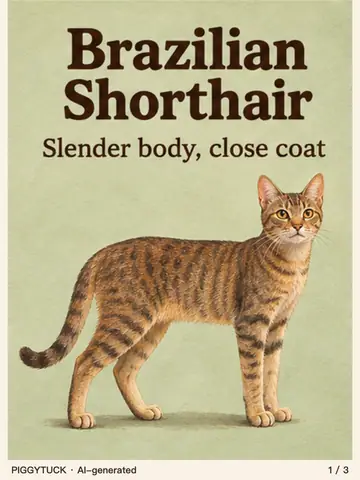
The Brazilian Shorthair (BSH) has a medium-sized, muscular yet slender body, medium-length legs with slightly rounded paws; a firm neck that is not heavily muscled; and a medium-to-long tail that is not broad at the base and tapers slightly.[1] The head is small to medium, a moderate wedge longer than broad, with a slightly curved profile and a firm chin and lower jaw; ears are large, taller than the base is wide, set high and tufted; eyes are large and rounded, set about 1.5 eye-widths apart, with colour matching the coat.[1] The coat is short, glossy, and close-lying, silky, with no undercoat; all colours and patterns except pointed colours are recognised, and any amount of white is allowed.[1] The WCF allows novice-class entry for the breed only in Brazil.[1] The sections below move from morphology to coat and daily life, then indoor needs and health questions, without dressing generic cat advice as breed-unique proof.
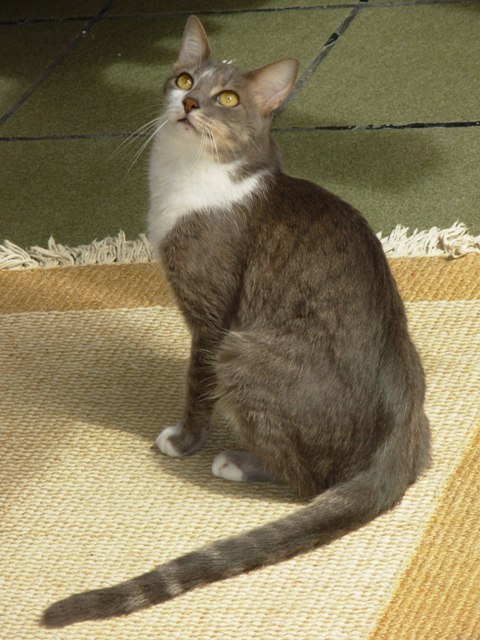
Figure: Brazilian Shorthair sitting on a rug. J.Jazz, Wikimedia Commons[4]

How associations name and describe the type
The Confederação de Felinos do Brasil (CFB) calls the breed Pêlo Curto Brasileiro and presents it as Brazil’s only internationally recognised native breed, with WCF as the international recognising body; it names Paulo Samuel Ruschi as the key promoter behind the effort.[2] CFB’s published padrão aligns with the WCF English sheet: a healthy, slightly slender, quick, elegant overall look; medium, non-compact body; firm medium-length legs; medium-to-long tapering tail; small-to-medium wedge head longer than broad; large high-set tufted ears taller than the base; rounded eyes about 1.5 eye-widths apart; medium-to-large nose with a light curve; firm neck; strong chin; short, silky, close-lying coat without undercoat.[2] Faults include abnormal or knotted tails, a marked nasal stop, undercoat, and a compact body; many known colours are accepted, excluding pointed types; temperament is listed as active, gentle, and friendly—an association description, not a promise about one cat.[2] On the WCF scale, head and tail together score 35 points, body 30, colour and pattern 15, coat texture 10, and eyes and condition 5 each, so head–tail and body outweigh a single colour when identifying the type.[1]
In practical observation: medium length rather than cobby build, legs not stubby, a tapering medium-to-long tail, a wedge rather than an extreme round face, large high-set tufted ears, wide-set round eyes, and a short glossy coat without thick undercoat are the clues easiest to check against photos.[1][2] Excluding pointed colours means Siamese-style mask-and-points should not be treated as within the recognised colour range for this standard.[1] Barring novice classes outside Brazil also signals that WCF show pathways for this breed relate to its Brazilian registration context; Check the registry relevant to the cat when looking up the rules.[1]
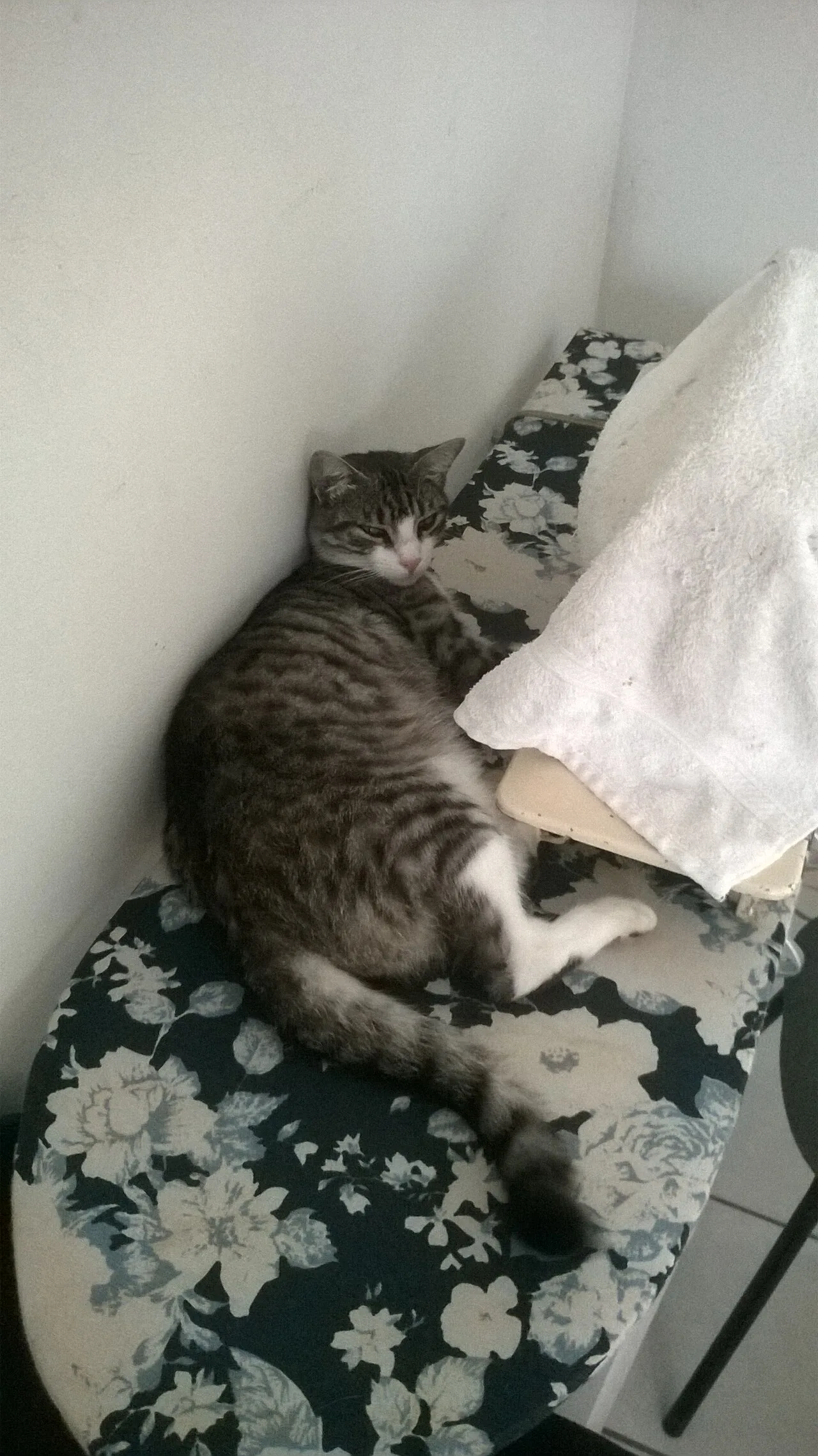
Figure: Grey tabby Brazilian Shorthair on an ironing board. Torcedor Mateense, Wikimedia Commons

Coat care and household interaction
Brush the short, silky coat to remove loose hair. Choose a brush and frequency that suit the cat’s seasonal shedding and skin.[1] Shedding seasons may need slightly more combing, but do not escalate bathing or harsh cleaners just to chase show-ring gloss; sudden oiliness, redness, or extra scratching should prompt a parasite or allergy check first. Bathing, nail trims, ear cleaning, and dental care remain general feline husbandry; morphology text alone cannot prove one routine is uniquely effective. On interaction, CFB’s “active, gentle, friendly” line is a population-level sketch: suitability for multi-cat homes, children, or long alone time has to be judged case by case, not inferred from ear tufts or a wedge head.[2] Brief, calm handling of paws, ear rims, and the mouth area in kittenhood often beats a sudden adult nail-trim battle; that is common husbandry practice, not a breed-unique trial result.
Most urban companions live indoors. The Feline Veterinary Medical Association’s 2025 indoor-cat position statement stresses that “safer indoors” is not enough: physical and emotional needs must be met equally, and meeting essential environmental needs helps reduce distress, behaviour problems, and stress-related medical issues.[3] It centres five pillars: a safe place; multiple, separated key resources (food, water, litter, rest and vantage points); opportunity for play and predatory behaviour; positive, consistent, predictable human–cat interaction; and an environment that respects smell and other senses.[3] For a type associations describe as slender and quick, sturdy vertical space, rotating chase toys, and dispersed rest spots fit those pillars better than mealtime-only contact—this is a general indoor-cat framework, not a Brazilian Shorthair–specific trial result.[1][3]
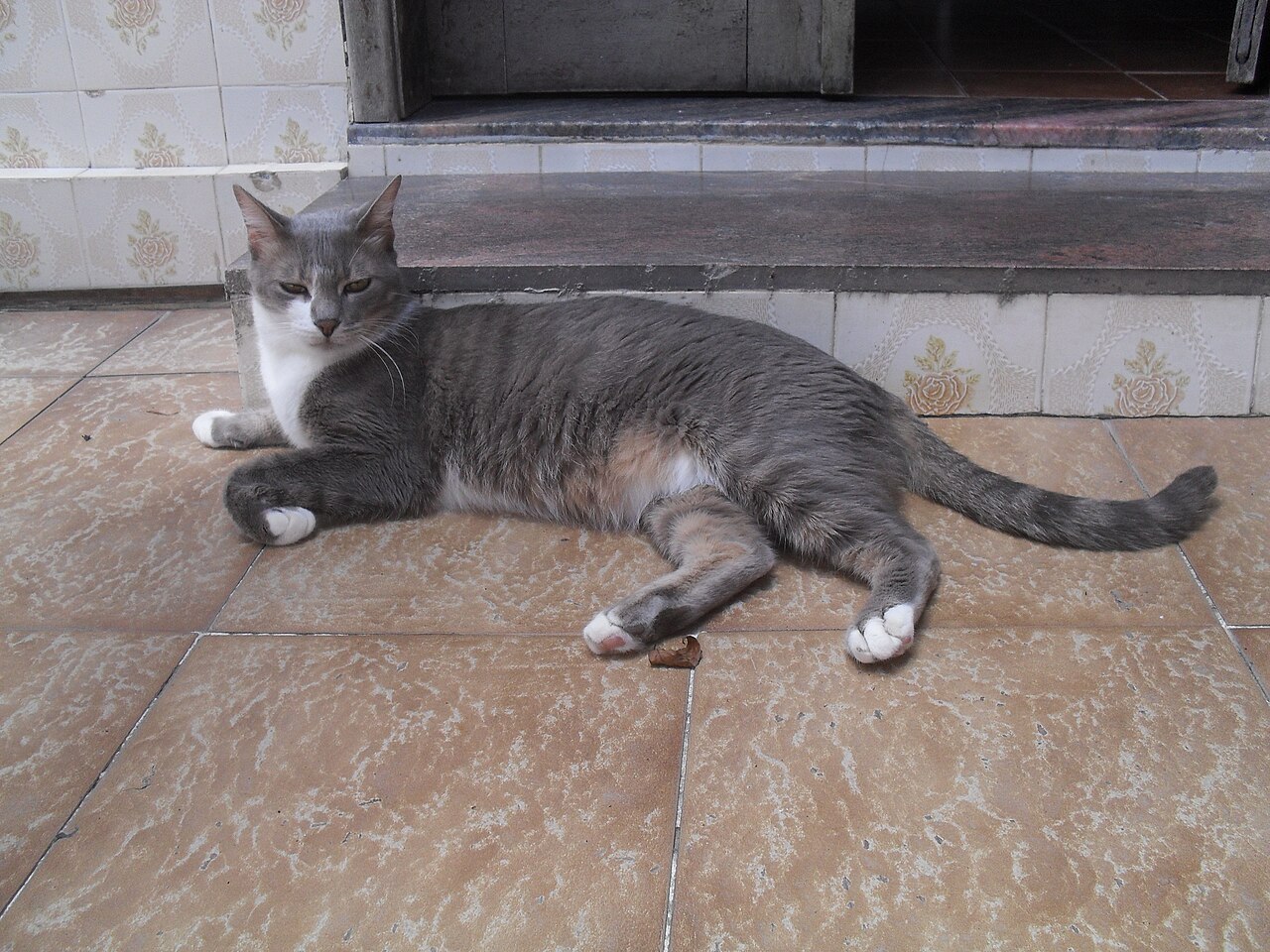
Figure: Brazilian Shorthair on patio tiles. J. Jazz, Wikimedia Commons

How to ask health questions
A sleek coat alone cannot tell you whether a cat has a heart, urinary, or weight problem. Ask about health separately from appearance.[1][2] Checkable practice is to ask breeders or rescues about related health history, prior exams and imaging, and local veterinary routine; after arrival, follow vaccine, parasite, body-condition, dental, and ear plans, with further tests when indicated. The five indoor pillars may reduce stress from resource conflict and boredom, but they do not replace clinical judgement.[3] Appetite, thirst, urination, breathing, or activity changes warrant a veterinary visit—not self-diagnosis against a show score sheet.
To identify the Brazilian Shorthair, prioritise medium slender build, high-set large ears, a close-lying coat without undercoat, and the exclusion of pointed colours; to live with one, plan light grooming, the five indoor pillars, and individual veterinary follow-up. Observe the cat’s own habits to help adjust activity, grooming, and the daily routine.
References
-
World Cat Federation. Brazilian Shorthair (BSH) breed standard (2010-01-01). https://wcf.de/pdf-en/breed/BSH_en.pdf
-
Confederação de Felinos do Brasil. Padrão da raça / Pêlo Curto Brasileiro. https://www.cfelinosbrasil.org/padrao.php
-
Feline Veterinary Medical Association. Meeting the Physical and Emotional Needs of Indoor Cats (position statement news, 2025-08-28). https://catvets.com/news/2025-indoor-cats-position-statement/
-
Wikimedia Commons. File:Gato pelo curto brasileiro.JPG. https://commons.wikimedia.org/wiki/File:Gato_pelo_curto_brasileiro.JPG