The Field Spaniel’s original job called for changes of pace. The dog would cover ground alongside a hunter, then work through thick vegetation to find hidden birds and flush them into flight. It needed the stamina to keep moving and the initiative to pick up a scent on its own. An everyday walk can still make room for both. On one stretch, you and your dog can stride out together. On another, let the dog put its nose down and set the pace. [1]
The breed originated in England, where a fashion in the show ring once got in the way of its work. As Field Spaniels drew attention at dog shows in the late nineteenth century, breeders favored dogs so long in body and low to the ground that they had trouble working in the field. In the late 1960s, breed enthusiasts brought Cocker and Springer Spaniel lines back into the breed to restore more balanced proportions. In a Field Spaniel today, look at how the length of the legs leaves room beneath the chest and belly for the dog to move. [1]
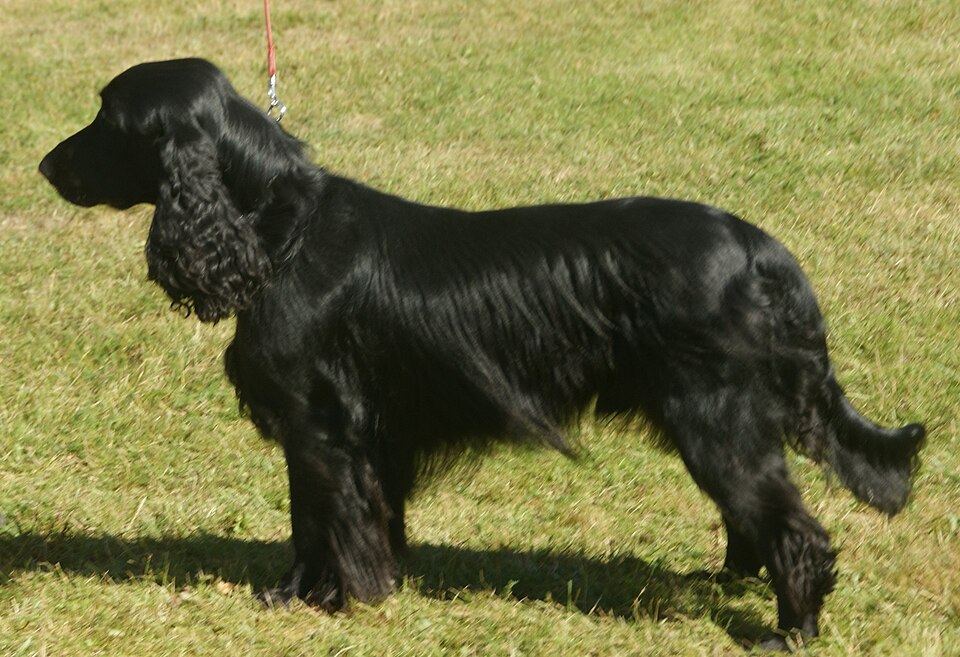
A Field Spaniel stands in profile. Canarian, Wikimedia Commons[2]

In the photograph of the black male, follow the outline from the neck over the shoulders and along the back, then look at where the front legs meet the ground. The Field Spaniel is a medium-sized dog. The American Kennel Club (AKC) gives a typical shoulder height of 17 to 18 inches, or about 43 to 46 centimeters. The chest is deep, the back is level, and the distance from elbow to ground roughly equals the depth of the chest. The long hair under the belly can make the dog look lower than it is. The elbow gives you a clearer point of reference. The long ears hang close to the cheeks, set slightly below eye level, with particularly noticeable feathering at the ends. [1][2]
Two paces on the same walk
The AKC includes regular exercise and opportunities to use the mind among the Field Spaniel’s everyday needs. Look for a route with a level stretch where you can walk briskly, followed by a patch of grass where dogs are allowed to linger. On the first stretch, give your dog room to lengthen its stride beside you. At the grass, slow down and allow enough slack in the leash for the dog to follow an interesting scent back and forth. It may double back several times over the same small patch. If it’s a good place to stop, count those return trips as part of the walk when you decide how much time to allow. [1]
To turn a search into a game you both understand, bring a small, familiar toy. Choose a quiet spot and let your dog watch you place the toy a few steps away in short grass. Say “find it” once. When the dog walks over and touches the toy with its nose, praise it there and play together for a moment. For the first few tries, finding the toy is all you ask. Once your dog knows where to look when it hears the cue, move the toy to the edge of the grass with part of it still showing. The dog now has a little more searching to do while staying just as close to you. [1]
Field Spaniels enjoy solving problems and are sensitive to your tone and timing. If the game stalls, notice where it stalled. A dog still watching your hand may need to see you put the toy down again in plain sight. A dog that reaches the toy and leaves it on the ground has found it. Reward the find, and teach the dog to bring it back another time. If several people take turns walking the dog, agree on what “find it” means. When a nose touch earns praise today but tomorrow the dog must deliver the toy to someone’s hand, the same cue comes with two sets of rules. [1]
Where does the walk fit on a workday?
An ordinary day of work, grocery shopping and school pickups tells you more about the fit than the distance you could hike on a weekend. Who has time for the morning walk? Who can wait by the grass in the evening while the dog finishes searching? Who can take over if someone works late? In town, a familiar walking route and someone who can go along regularly can make this routine possible. If you have a yard, you can set out a toy before you bring the dog out to find it. Field Spaniels enjoy doing things with their family, and they enjoy quiet time afterward. Back indoors, let the dog settle beside you. [1]
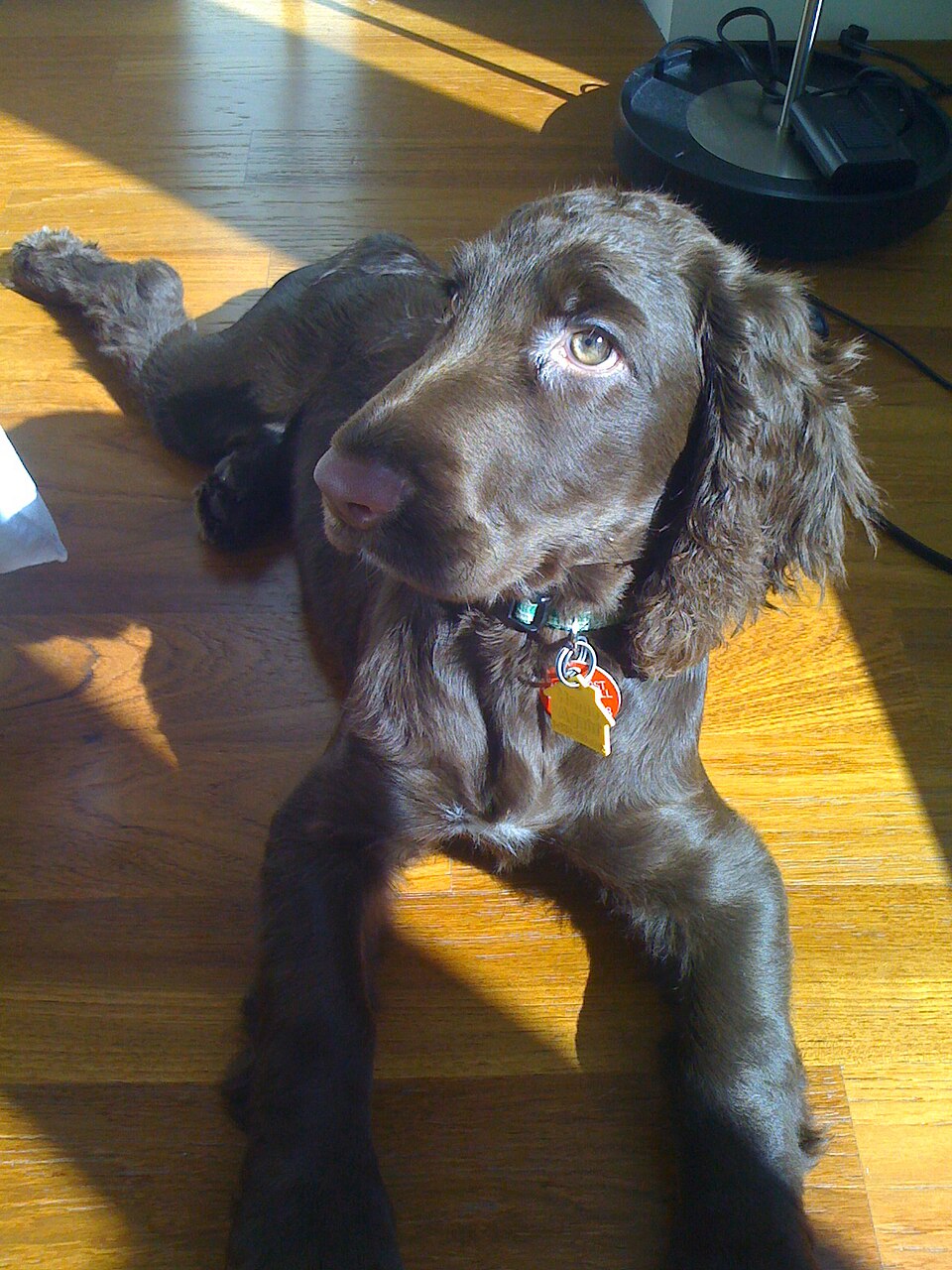
A liver-colored Field Spaniel lifts its head. RishiBali, Wikimedia Commons[3]

If you’re bringing home a puppy, leave time for early socialization. Meeting a neighbor can be part of an easy outing. Give the puppy a chance to watch from a comfortable distance, then let the two greet each other briefly if the puppy chooses to approach. Use what you see to plan the next walk. How long does this particular dog walk comfortably beside you? After a passerby goes by, can it turn its attention back to a familiar game? Those observations can help you decide how far to go next time and how busy a route to choose. [1]
Check the feathering after a walk
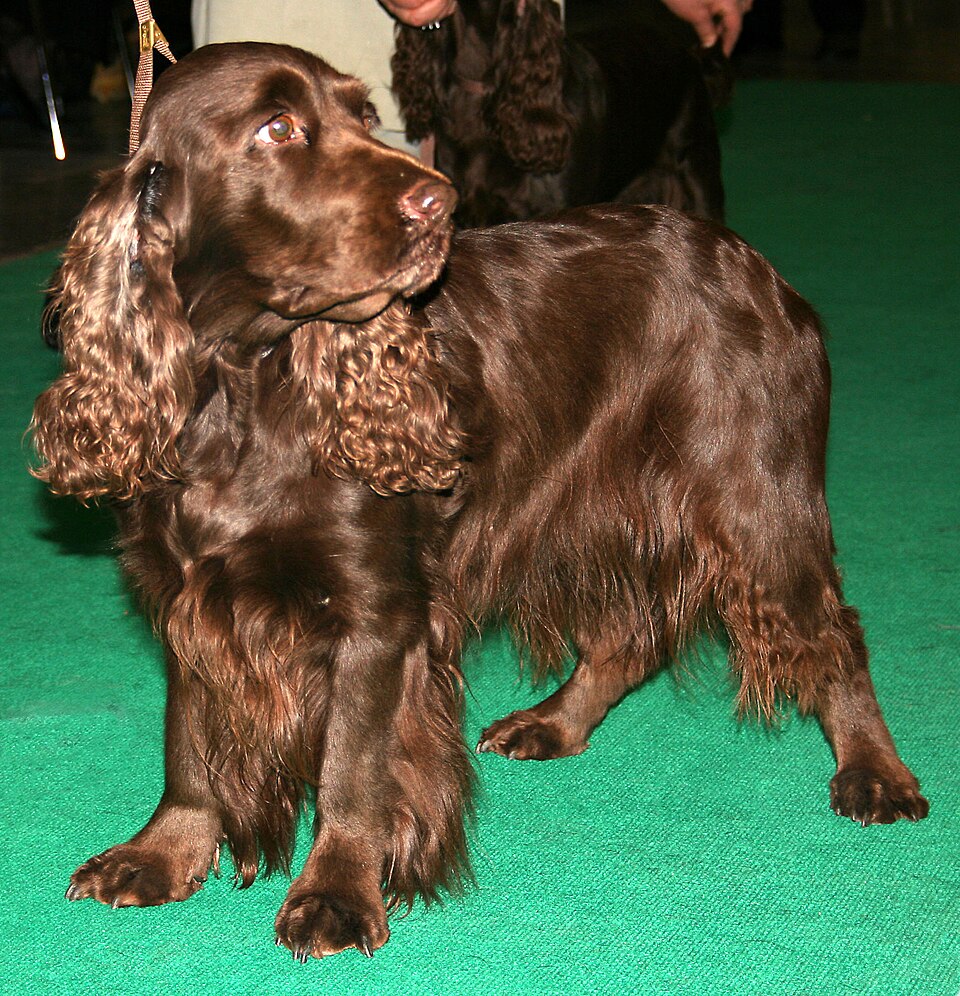
Feathering fringes the ears and legs. Pleple2000, Wikimedia Commons[4]

On the dog standing on the green carpet, the coat lies close along the back. It grows longer at the ear tips, on the chest and belly, and down the backs of the legs. After a walk through grass, run your fingers through those places and gently pick out any bits that have caught. The Field Spaniel has a single coat. The AKC recommends brushing it weekly and following with a comb. Gently lift each ear to reach the hair that usually rests against the cheek. This also gives you a chance to check the ear regularly for redness, swelling or discharge. A light trim around the head and feet as needed leaves the rest of the coat at its natural length. [1][4]
Two other parts of care run on different schedules. Brush your dog’s teeth frequently with toothpaste made for dogs. A convenient time might be after a walk, once the dog has settled. Ask about family health records before you bring a dog home. Ask the breeder for both parents’ hip evaluations, veterinary ophthalmologist examination results and screening results for autoimmune thyroiditis. Read each report to see which dog it belongs to and which examination it records. For a concern about your own dog, such as repeated head shaking or ear scratching, or a limp that persists, describe what you’ve seen to your veterinarian so they can examine the dog. [1]
Before you decide, walk the route you expect to take every day. Where can you pick up the pace? Where can you stop long enough for a search? Once you get home, how much time will you have to comb the grass out from beneath a long ear? If even a busy day has room for that pause while your dog follows a scent, a Field Spaniel’s old working skills can find a place in your daily life.
References
-
[1] American Kennel Club. Field Spaniel Dog Breed Information.
-
[2] Canarian. File:Field-black3.jpg. Wikimedia Commons, 2021.
-
[3] RishiBali. File:Field Spaniel In Liver Color.jpg. Wikimedia Commons, 2011.
-
[4] Pleple2000. File:Field spaniel 581.jpg. Wikimedia Commons, 2006.