The American Staffordshire Terrier, or AmStaff, traces its ancestry to Britain. In the mid-19th century, people brought Staffordshire terriers to the United States, where breeders gradually developed a larger dog. The American Kennel Club (AKC) accepted the breed for registration in 1936 under the name Staffordshire Terrier. Today, the AKC has separate breed standards for the American Staffordshire Terrier and Britain’s Staffordshire Bull Terrier.[1]
In the full-body photograph below, follow the line of the neck down to the chest and see how far the chest extends between the front legs. An AmStaff stands about 17 to 19 inches (43 to 48 cm) at the shoulder. It has a deep chest, a solid body, and legs that look well able to carry its weight. The skull is broad, with pronounced cheek muscles, a well-defined lower jaw, and dark, round eyes set wide apart. Standing still, the dog looks powerful. In motion, it has a light, springy step. One skill worth practicing on walks is getting this strong, quick dog to turn with you when you call, even when something has caught its interest.[1]
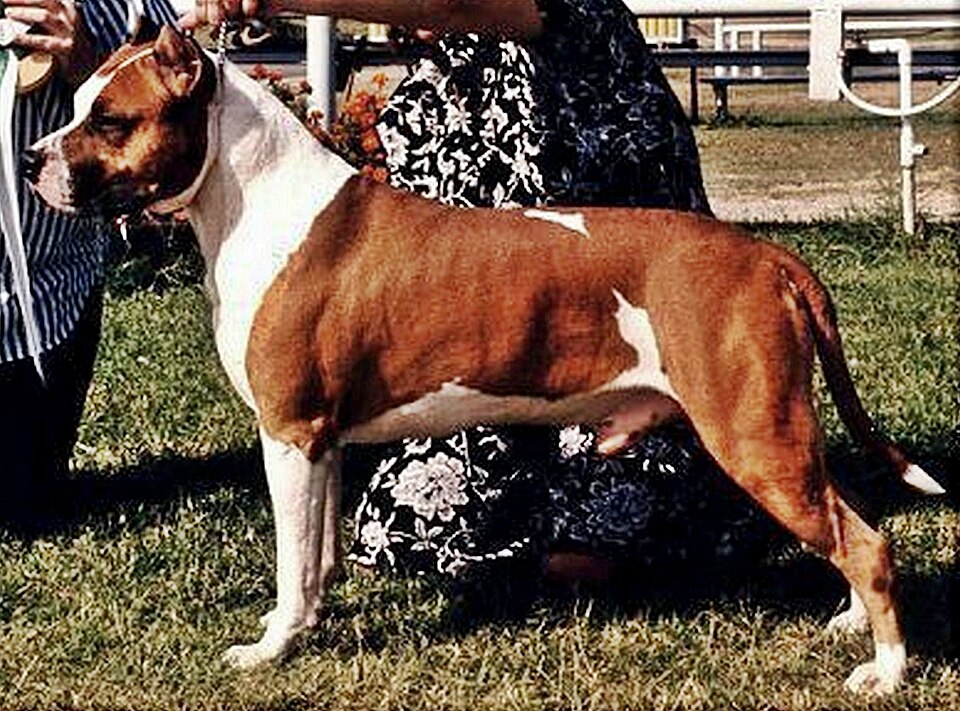
图:An American Staffordshire Terrier in profile. Gigi Sager, Wikimedia Commons

Make coming back part of the game
AmStaffs enjoy running and figuring out what someone is asking them to do. The AKC makes a point about yards that matters when planning a typical workday. A dog that spends the whole day outside alone misses out on an activity it values: playing with its family. Look for time when you can give the dog your attention. On the morning leash walk, practice a few turns together. In the evening, set aside a stretch of playtime when the dog can run out, come back to you, and start another round.[1]
Try this with a favorite toy in a securely fenced area. Roll the toy just a few paces. When your dog reaches it, take a step or two backward and call. Praise the dog as soon as it turns toward you. When it gets back, offer a second toy in trade and start the game again. Coming when called now leads to another chase. Once that sequence is familiar, ask for a brief “wait” before you roll the toy. If your dog is watching something in the distance, move to a quieter spot next time and shorten the roll so it’s easier to hear the call and respond.
Let your dog’s response that day guide the activity. If it enjoys searching for things, work a short toy hunt into the walk. A dog that watches your hand signals closely might enjoy obedience training. Agility is another sport AmStaffs take part in. For a puppy just starting out, waiting a moment or walking a few steps with you is enough to practice. To give an adult a fresh challenge, try turning the other way or hiding the toy a little farther off. The time your family can spend with the dog and the tasks that still hold its interest will tell you more about what to do tomorrow than a daily mileage target based on breed alone.[1]
How can a household with two dogs give each one space?
An AmStaff can have a mind of its own, and its strength is especially apparent when it gets excited. Puppy training classes are a good place to start, alongside gradual introductions to people, other dogs, and different surroundings. At home, pick one routine everyone can handle the same way, such as opening the yard gate. Each person gives the same “wait” cue. Once the dog pauses, the person holding the leash opens the gate and walks through with it. Give chewing and digging an outlet, too. Put tempting belongings away and offer a suitable chew toy. When you pass a freshly dug flower bed, lead the dog to its usual play spot before you start a game.[1]
If you already have a dog, work out where each dog can rest and exercise separately. The AKC cautions that even a well-socialized AmStaff may show aggression toward other dogs and should never be left alone with one unsupervised. At home, a door that closes securely can give each dog its own area, with water and a comfortable place to rest on both sides. Settle the dogs separately before you go out. Do the same when you’re home but a phone call or cooking will occupy your attention. A practical way to assess your setup is to picture one person taking one dog for a walk. Can the other settle comfortably in its own space? The size of the yard tells you little about that.[1]
Include the feet in the weekly grooming routine
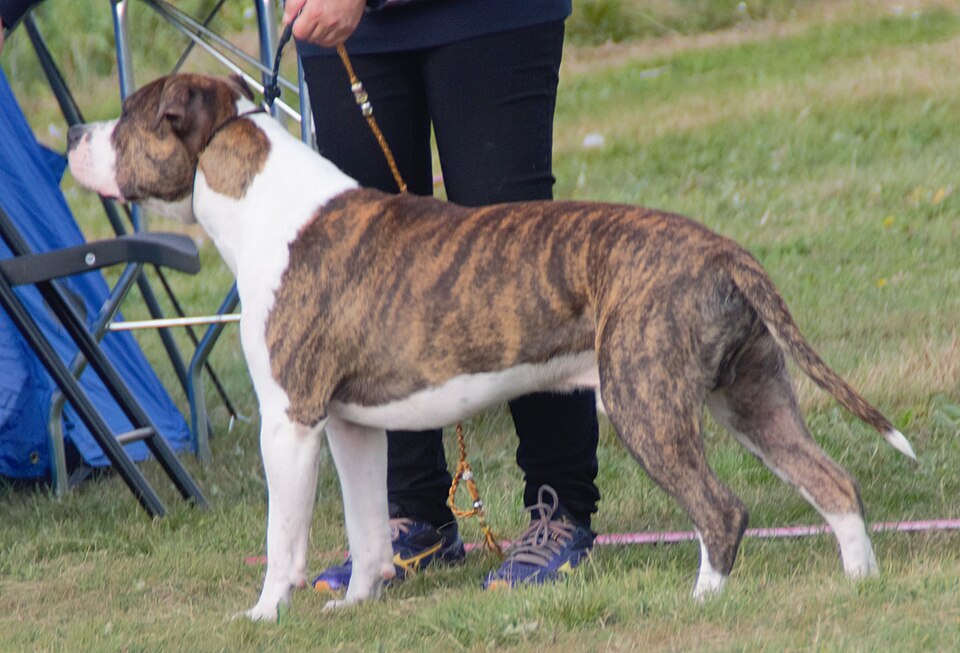
图:Brindle markings down the hind legs. Canarian, Wikimedia Commons[3]

Compare the two dogs standing in profile on the grass. One has brindle stripes, the other broad patches of reddish brown and white. On both dogs the hair lies close, so you can see the outline of the shoulders and thighs. The AmStaff’s coat is short, stiff, and glossy. Once a week, brush in the direction the hair grows with a soft-bristled brush to lift away dirt and debris and spread the skin’s oils over the coat. Give the dog a bath when it gets particularly dirty outside or develops a noticeable odor. As you brush, take a look at the skin. If one patch stays red or your dog keeps scratching it, note where it is and how it changes so you can show your veterinarian.[1]
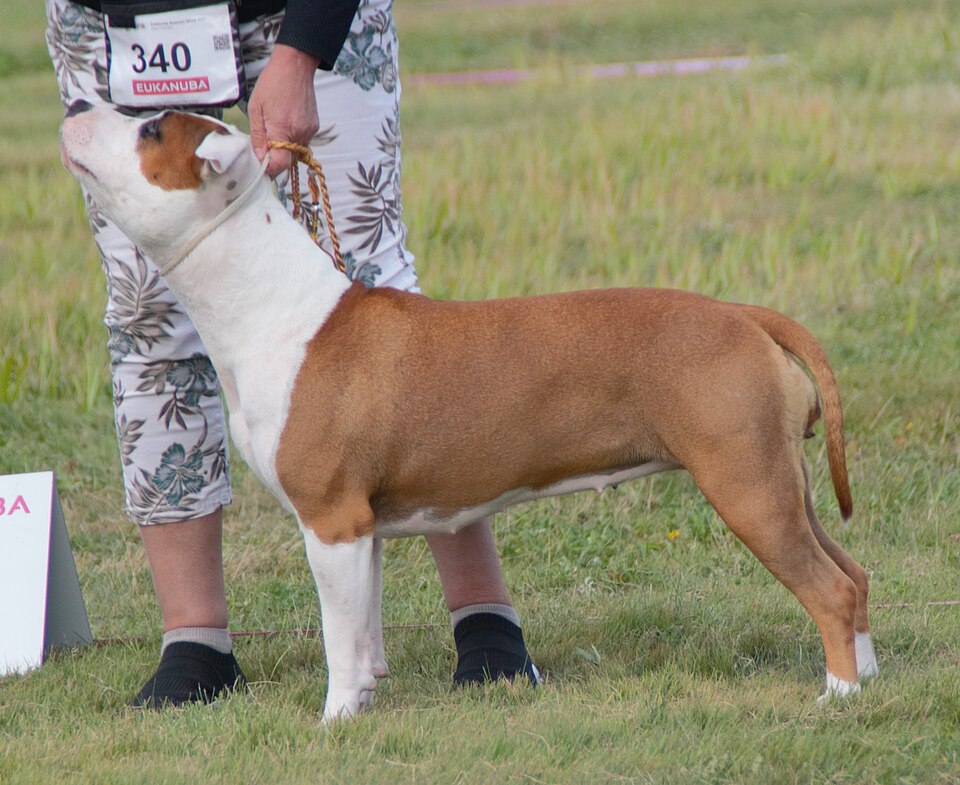
图:A close-fitting red-and-white coat. Canarian, Wikimedia Commons[4]

The feet that carry your dog on every outing deserve a look when you groom the coat. While the dog is relaxed, check the nails on all four paws and trim them regularly. Overlong nails can hurt and make walking and running difficult. Make time for ear checks and frequent toothbrushing as well. If several people use treats to practice waiting or coming back, set aside the day’s training treats in advance. When you hand the leash to the next person, pass along the treats that are left. That way, everyone can keep track of what the dog has eaten and account for those rewards when adjusting meals.[1]
Before bringing home a puppy, ask the breeder to show you both parents’ hip, cardiac, and thyroid evaluations, along with their DNA test results for neuronal ceroid lipofuscinosis 4A (NCL4A). The AKC breed profile lists all four screenings. Hereditary cerebellar ataxia causes a progressive loss of coordination, with signs often first appearing between three and five years of age. The parents’ records help you understand inherited risk. With your own dog, get to know its usual stride and how it turns during play. If a dog that once turned easily starts losing its balance repeatedly or falls when it shakes its head, stop the game, note when you first saw the change, and contact your veterinarian for an assessment.[1]
