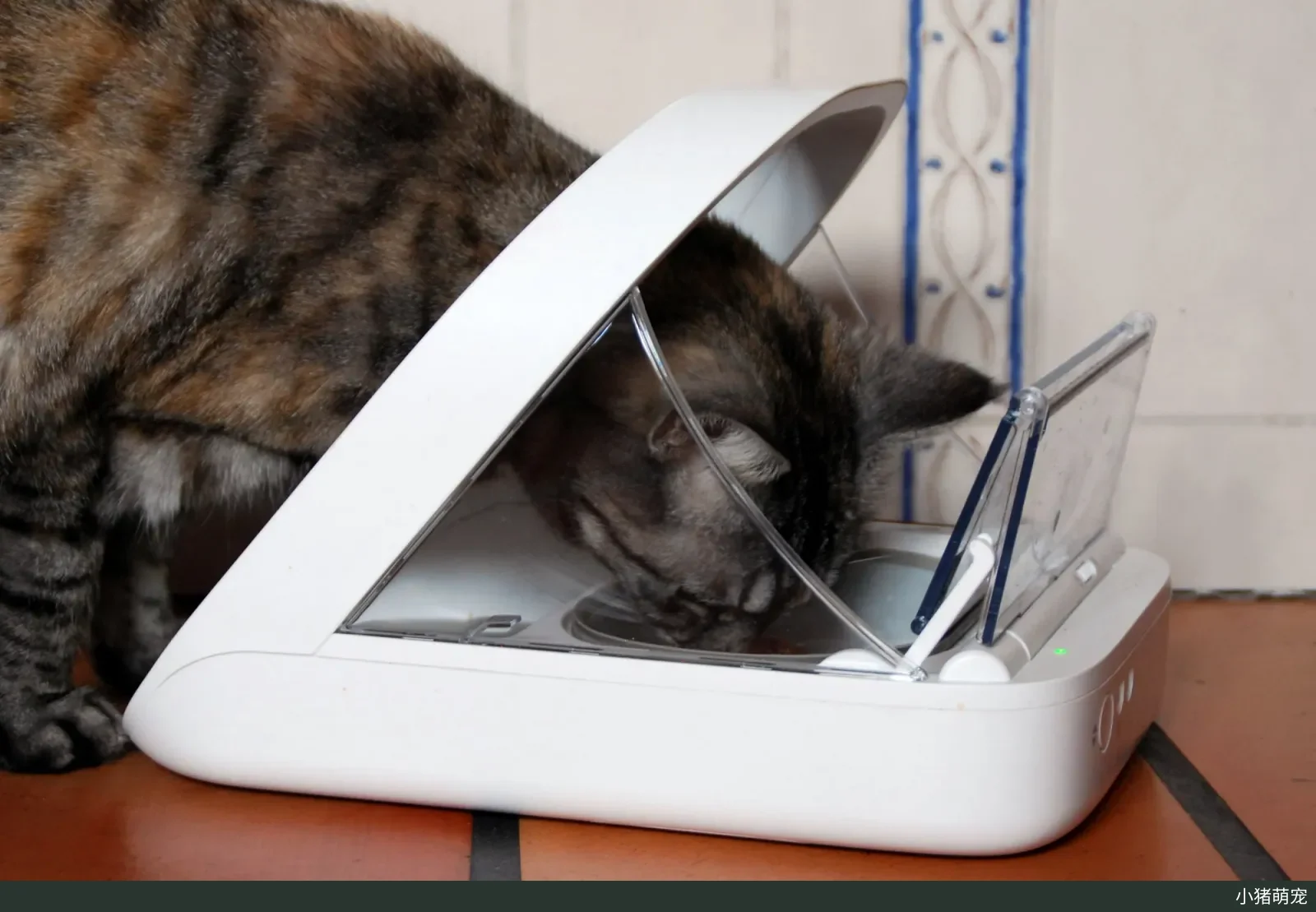
An automatic feeder that identifies pets with RFID chips. Photo: Giraldillo; source: Wikimedia Commons; license: CC BY-SA 4.0.
On 16 October 2026, trade media PetfoodIndustry published a piece saying the pet feeding technology segment is growing, with products focused on “easy scheduling of multiple meals” and AI-enhanced features. The main support in the publicly available portion is a June 2025 blog from market-research firm GMI—not independent research. For pet owners, smart feeders can save hassle, but they do not replace daily observation and veterinary advice.
What the report covers
On 16 October, U.S. pet-food trade outlet PetfoodIndustry ran editor Lindsay Beaton’s article “Pet feeding technology segment grows, convenience a goal.” The subtitle states the core claim: today’s feeding tech centers on two things—making it easy for owners to schedule multiple daily meals, and adding AI-enhanced features.
The piece first sketches the broader pet-tech backdrop: pet trackers have been around for years; collars, tags, and cameras can log activity and even estimate calories burned; smart cameras let owners who are at work or traveling “check in” on pets at home. From there the author turns to feeding.
One caveat: we could read only the subtitle and the first two paragraphs; the rest of the body was not available. Whether the article later gives market size, brand cases, or survey data is unknown, and this piece does not speculate.
Tracing the cited source
In the public portion, the only clearly cited external source is Global Market Insights (GMI). The article calls it a June 2025 GMI “report” and quotes: “Imagine a dog’s collar alerting you to health changes before symptoms appear, or a cat’s smart feeder adjusting portions based on real-time activity data.”
We traced that sentence to GMI’s blog post “Tech Tails: How AI and Wearables Are Changing Pet Parenting,” by Mariam Faizullabhoy, published 4 June 2025. It is a trend commentary with no sample, methods, or data sources—closer to industry observation than peer-reviewed research, and not a methods-documented market report. The quoted line itself is an “imagine” scenario, not a product test result.
On feeding devices, the GMI blog says modern feeders can dispense on a schedule, control portions, customize feeding for dietary limits, and sync with phone apps for meal reminders and low-food alerts. It argues such devices help especially with senior pets and owners who travel often, but offers no outcome data.
One of the few checkable figure sets in the blog is attributed to the American Pet Products Association (APPA). Checking APPA’s 26 March 2025 press release: about 94 million U.S. households had at least one pet in 2024, versus 82 million in 2023. GMI wrote this as “2025,” which does not match the original year. Those figures also count pet-owning households—they do not show how many smart feeders sold or how many people use them.
Practical meaning for pet owners
If you work long hours, travel often, or have a cat that needs small frequent meals, a timed or smart feeder can help. The American Association of Feline Practitioners (AAFP) 2018 consensus statement on feline feeding recommends splitting a cat’s daily ration into several small meals across 24 hours, and notes that automatic feeders “can also help.”
The same consensus also raises points worth thinking through before buying:
- It cannot hunt for the cat. Automatic feeders usually do not meet cats’ foraging and hunting drives. Where possible, pair them with puzzle feeders (food-dispensing toys), or hide part of the ration around the home.
- Dispensed is not the same as eaten. Owners should confirm the cat actually gets an appropriate amount—especially in multi-cat homes.
- Weigh regularly. Body weight and condition need regular monitoring, especially for seniors, chronically ill cats, and cats with special needs; daily calorie targets can be set with a veterinarian.
That consensus is about cats; for dogs, ask a veterinarian directly about feeding schedules.

A tabby cat batting a clear puzzle feeder ball with its paw as kibble rolls out of the holes—matching AAFP’s foraging-style feeding advice. AI-generated illustration.
The GMI blog itself lists risks: devices may fail or lose sync with apps and the cloud, delaying reminders, losing data, or disrupting scheduled meals; how pet location, behavior, and health data are stored, shared, and owned still has regulatory gaps; premium AI collars and automatic litter boxes often cost hundreds of dollars.
Think of a smart feeder as a punctual cafeteria attendant—meals arrive on time, but it will not notice that your cat has been eating less lately, or that a tooth hurts. Real health judgment still depends on your observation and veterinary exams.
Limits and open questions
- Only part of the original was readable. Whether “growth” in the headline means sales, product count, or users is not quantified in the public portion.
- The cited source is thin. Public support rests on a GMI blog—trend commentary from a market-research firm, not independent research, and without checkable methods.
- Estimates differ widely. PetfoodIndustry did not cite the following two reports; they are listed only to show that “how fast growth is” depends on who measures and how: Morgan Reed Insights’ June 2026 report abstract estimates about 11.8% CAGR for automatic and smart feeders over 2026–2035; SkyQuest’s December 2025 report abstract gives 16.2% CAGR for 2026–2033. Both are paid reports; we saw only abstracts.
- Little evidence on health outcomes. Among materials checked for this article, no study showed that smart feeders improve pet health; claims such as “AI adjusts portions” or “early disease alerts” mostly come from vendors or market firms.
References
-
Lindsay Beaton. Pet feeding technology segment grows, convenience a goal. PetfoodIndustry, 2026-10-16.
-
Mariam Faizullabhoy. Tech Tails: How AI and Wearables Are Changing Pet Parenting. Global Market Insights blog, 2025-06-04.
-
American Pet Products Association. The American Pet Products Association (APPA) Releases 2025 State of the Industry Report. Press release, 2025-03-26.
-
Sadek T, Hamper B, Horwitz D, Rodan I, Rowe E, Sundahl E. Feline feeding programs: Addressing behavioural needs to improve feline health and wellbeing. Journal of Feline Medicine and Surgery, 2018 (AAFP consensus statement).
-
Morgan Reed Insights. Automatic and Smart Pet Feeder Market - Industry Analysis, Size, Share, Growth, Trends, and Forecast 2026-2035. Report abstract page, 2026-06.
-
SkyQuest. Automatic and Smart Pet Feeder Market Size, Share, and Growth Analysis - Industry Forecast 2026-2033. GII report abstract page, 2025-12-15.