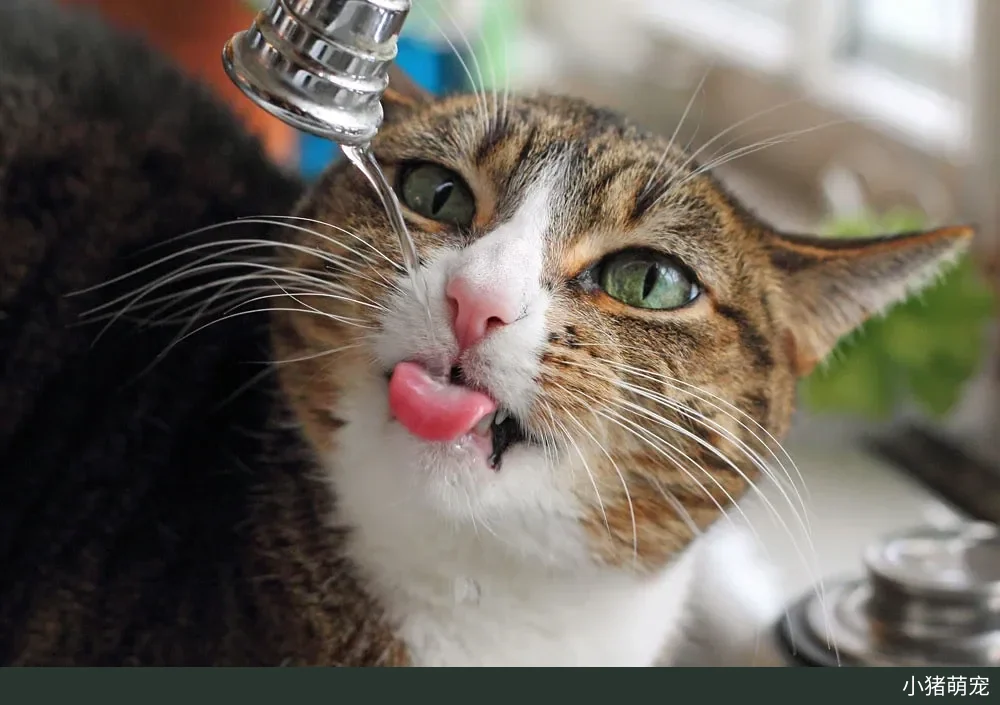
A tabby licking water from a faucet—“hydration” is one of the directions this trend roundup names. Image: Teresa Boardman (TBoard), from Flickr, license CC BY 2.0.
On 13 October 2026, U.S. industry outlet PetfoodIndustry published a top-10 trends roundup for cat-supplement product development: cats still hold a small share of the pet-supplement market but are forecast as the fastest-growing segment; cat owners want products designed for cats, that cats will eat, and backed by research done in cats. Figures in the piece mostly come from market reports, industry surveys, and company questionnaires—not new clinical studies.
Coverage: summary of the ten trends
The article was written by PetfoodIndustry reporter Lisa Cleaver; the page byline date is 13 October 2026, matching the RSS date. It is not a new study release but a trend roundup for supplement makers: the author cites Packaged Facts research director Shannon Landry, Nextin Research (part of MarketPlace) VP Nicole Hill, Kingdom co-founder and chief science officer Ravi Sheth, and certified animal nutritionist and herbalist Terri Grow, distilling 10 trends. Much of Landry’s and Hill’s data aligns with the same author’s 8 June coverage of talks at the 2026 NASC (National Animal Supplement Council) annual meeting. The piece also previews that the magazine’s November 2026 issue will continue analyzing cat supplements in the new Supplement Watch column.
The ten trends fall roughly into three groups. On demand: cat owners feel like “second-class citizens” in the pet market—most supplements are dog-only or dog-and-cat; they live closely with cats and notice health changes more easily, yet visit clinics less than dog owners, so supplements are seen as a non-prescription, lower-cost option. On product: interviewees stress repeatedly that “a cat is not a small dog”—cats decide whether to eat by combining odor, texture, shape, temperature, and taste, so soft chews, lickable stick packs, mix-ins, and pour-ons get attention; Hill ranks “hydration-focused, lickable daily wellness supplements for indoor cats” among the most watchable directions for the coming year. On category and evidence: digestive health ranks high in demand; oral care, senior cats, and calming are seen as underserved opportunities; Sheth expects “clinical evidence generated in cats” to become a baseline bar for new products.

An owner hand-feeding a cat a small treat; several interviewees stress that whether the cat will eat it is central to cat-supplement design. Image: freestocks.org, from Flickr, license CC0 1.0 (public-domain dedication).
Data sources and definitions
We traced key figures in the piece; where primary sources could be found:
- Market share and growth: “Dogs accounted for 77% of the 2025 pet dietary supplements market; cats’ CAGR to 2031 is 9.5%—the fastest-growing segment,” from the Mordor Intelligence report summary page (page shows last update 11 September 2026). That is a commercial forecast; full methods and data require paid access.
- Rising use: “Cat-owner supplement use rose from 20% in 2018 to 34% in 2024” traces to the American Pet Products Association (APPA) 2025 Dog & Cat Report released 24 June 2025, from its national pet-owner survey asking about “vitamins or supplements for the cat”—a 70% rise over six years; multivitamins were most common, then prebiotics/probiotics and digestive products. APPA’s prior August 2024 report gave 32%, so the figure updates with each survey wave. On mixers or toppers, the APPA 2025 report shows 19% of cat owners had purchased them—up 138% from 2018—broadly matching the original “from 8% to 19%.”
- Three “usage” rates are not directly comparable: Nextin’s 17% (cat owners who bought supplements in the past 12 months; 32% for dog owners) comes from two surveys totaling 2,414 U.S. cat and dog owners; Packaged Facts’ “about 20% of cat owners currently buy supplements” comes from its January–February 2026 survey of about 1,500 pet owners. For the same idea—“share of cat owners using supplements”—three organizations get 17%, about 20%, and 34%; differences come from wording, time window, and sample—do not blend them when reading.
- Digestive health: “46% of cat owners want gut or digestive benefits from cat food” comes from a Cargill cat-owner survey released 6 May 2024, sample 1,068 cat owners in the U.S., U.K., France, and Germany. Note the question was about cat food, not supplements, and Cargill itself sells postbiotic ingredients for cat food. The original’s claim that “GI upset is one of the main reasons for vet visits with cats” is Sheth’s statement without a cited source; Grow’s remark that “half of a leading e-commerce top-ten cat supplements are GI” names neither platform nor date—we could not verify.
- Emotion and care data: figures such as 91% of cat owners treating the cat as family, 60% fully indoor, more than half of households having a cat aged 7+, and more than one-third of cat owners saying the cat has anxiety all come from a Packaged Facts survey presented at the 2026 NASC meeting; the raw questionnaire is not public.
Relevance for cat owners
For ordinary cat owners, the piece is more like a “shelf preview”: more products labeled specifically for cats may appear, with forms shifting from tablets toward soft chews, stick-style lickables, and mix-in powders, with claims clustered on hydration, gut, oral, senior, and calming. One point worth remembering: cats and dogs differ greatly in physiology and taste; dog-and-cat formulas may not suit cats and may not get cats to eat them.
But “market trend” is not “product works.” The article discusses what consumers want to buy and how makers should respond; it does not assess any product’s efficacy or safety. Sheth also acknowledges that cats have long been neglected in companion-animal clinical research, and that much evidence claimed to benefit cats actually comes from dog studies. When choosing, look for research done in cats—not just ingredient names.
The label “supplement” itself does not mean efficacy review. In the U.S., for example, FDA’s Center for Veterinary Medicine states clearly that the Dietary Supplement Health and Education Act does not apply to animals; there is no “dietary supplement” regulatory category for animal products, and so-called pet supplements are classed by intended use as “food” or “new animal drug.” The piece notes that cat owners treat supplements as a way to visit clinics less; Landry’s June talk also pointed out that cats are skilled at masking health problems. Persistent vomiting, soft stool, or clear changes in drinking or urination should first be checked by a veterinarian; when a cat already has chronic disease or is on medication, discuss long-term supplements with a vet before starting.
Limits of the coverage
Limits of the report are clear. First, sources are industry-heavy: interviewees are from market research firms, related companies, and independent nutrition consultants; consumer surveys cited come from ingredient suppliers; market size comes from paid commercial reports—all commercially linked to the conclusion that “cat supplements are worth investing in.” Second, data are almost all U.S. (the Cargill survey also includes the U.K., France, and Germany) and cannot be applied directly to Chinese cat households. Third, most surveys’ questionnaire design, sampling methods, and margins of error are not public; we only see summary figures in press releases or conference coverage. Fourth, the “top 10 trends” are the author’s synthesis from interviews, not sales statistics; Hill’s optimism about hydration lickables is also personal judgment. Also, the original hero image is labeled as DALL-E–generated, not a photograph.
So the piece is useful for seeing where the cat-supplement market is heading, but not as a buying guide. Whether a cat needs a supplement, and which kind, still depends on that cat’s health and veterinary judgment.
References
-
Lisa Cleaver. Top 10 trends shaping cat supplement product development. PetfoodIndustry, 2026-10-13.
-
Lisa Cleaver. Cat supplement market poised for growth as ownership trends shift. PetfoodIndustry, 2026-06-08.
-
Lisa Cleaver. 4 pet supplement consumer segments to watch. PetfoodIndustry, 2026-06-08.
-
Mordor Intelligence. Pet Dietary Supplements Market - Size, Share & Trends 2026 - 2031. Page updated 2026-09-11.
-
American Pet Products Association. The American Pet Products Association (APPA) Releases 2025 Dog & Cat Report, Revealing a New Era of Pet Ownership. 2025-06-24.
-
American Pet Products Association. The American Pet Products Association (APPA) Releases 2024 Dog and Cat Owner Insight Report. 2024-08-06.
-
Today's Veterinary Business. More Americans Say ‘Yes’ to Cats. 2025-07-07.
-
Cargill. Pet owners say their cat’s health is top of mind and well worth it. 2024-05-06.
-
U.S. Food and Drug Administration. Animal Foods & Feeds. Accessed 2026-10-17.