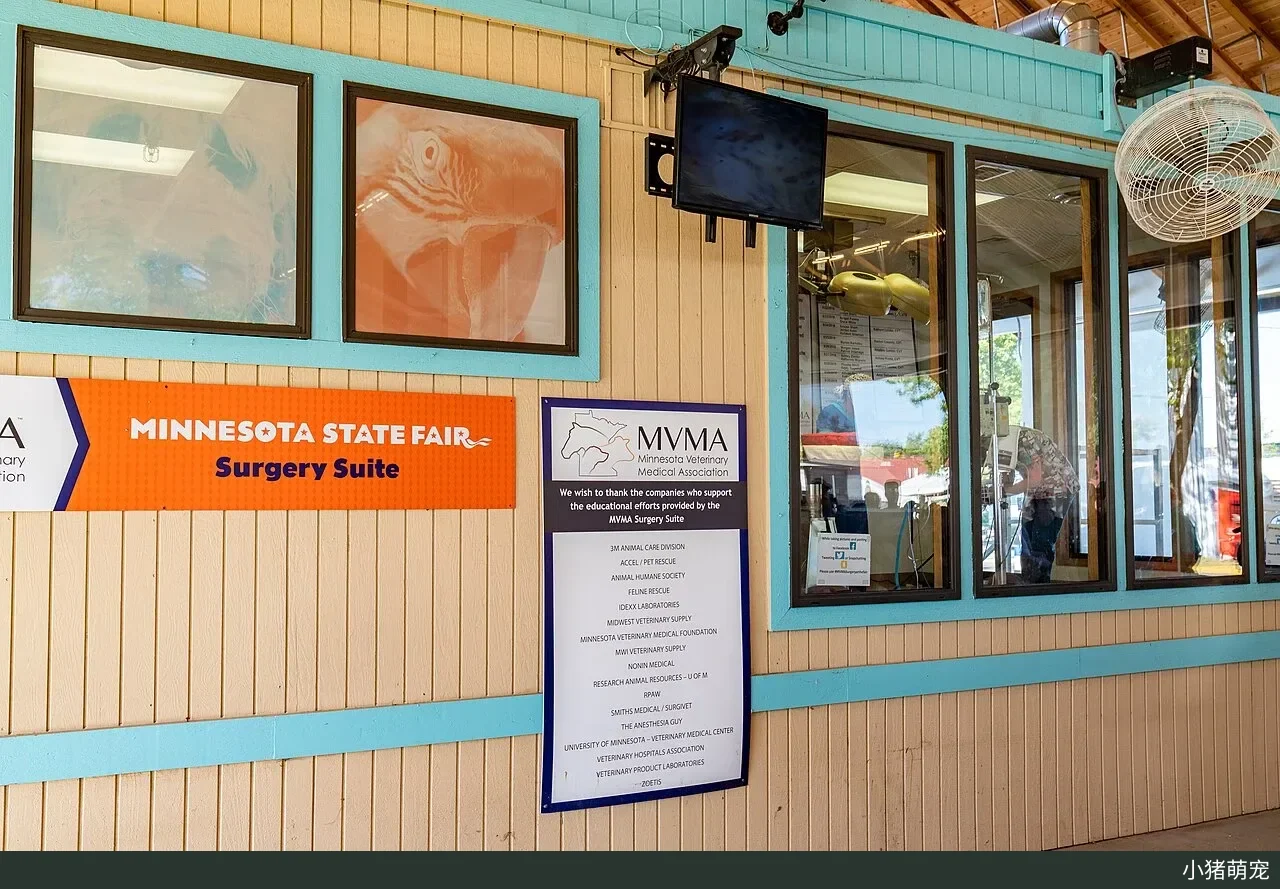
Spay/neuter surgery suite set up by the Minnesota Veterinary Medical Association (MVMA) at the state fair, where veterinarians perform sterilizations in front of fairgoers (photographed August 2019). Photo: Tony Webster, source: Wikimedia Commons, license: CC BY 2.0.
On 22 September 2026, Nashville nonprofit veterinary clinic Pet Community Center published a primer on “high-quality, high-volume spay/neuter” (HQHVSN): using standardized workflows to offer affordable sterilization for large numbers of cats and dogs and reduce accidental breeding. The original post listed no research citations; tracing the claim shows veterinary-industry guidelines and safety data from more than 110,000 surgeries at a single clinic, while evidence that the model reduces shelter intake is mixed.
PCC’s advocacy: from after-the-fact rescue to prevention
The piece appeared in the “Vet Talk” column on the Pet Community Center (PCC) blog, titled “Vet Talk: High-Quality High-Volume Spay/Neuter.” The page shows only “Sep 22,” with no year; combining the RSS date with the blog list order (it sits above several posts from June, April, and February of the same year) points to 22 September 2026. The page we retrieved showed no byline.
It opens with familiar scenes: stray dogs roaming yards, shelters with every kennel full, community cats outdoors with litters. The author treats pet overpopulation as a global problem driven by delayed sterilization and by veterinary care that is hard to get and expensive. Long-standing responses have leaned toward “after-the-fact rescue”—shelters, rescue groups, animal control, even euthanasia. The article argues for shifting to “prevention”: HQHVSN makes sterilization and basic preventive care accessible, reduces unintended litters, and in turn reduces animals entering shelters and homeless pets, easing the load on shelters and communities.
PCC describes itself as Nashville’s first nonprofit veterinary clinic, started by animal-welfare volunteers in 2011, with a spay/neuter clinic opened in June 2014 and a move to a new South Nashville site in January 2023, using income-based sliding fees. Services center on vaccines, microchips, and sterilization; the website states it does not treat sick or injured animals. In an Ohio State University College of Veterinary Medicine offsite-elective listing, PCC says it is a member of the ASPCA Spay/Neuter Alliance and an HQHVSN clinic; that alliance sits under the American Society for the Prevention of Cruelty to Animals (ASPCA) and trains about 800 sterilization-related professionals a year. This Vet Talk post is short public education from the organization and cites no studies or data; it ends with “learn more,” but the page we retrieved had no further expansion.
Industry guidelines and research evidence
“HQHVSN” is not a term coined by this clinic. The Association of Shelter Veterinarians (ASV) formed a working group in 2006 and published the first veterinary medical care guidelines for spay-neuter programs in the Journal of the American Veterinary Medical Association (JAVMA) in 2008, with a second edition on 15 July 2016. The guidelines define HQHVSN as efficient, accessible, targeted sterilization of large numbers of cats and dogs while meeting or exceeding standards of veterinary care, to reduce surplus breeding and related euthanasia. They cover pre-operative assessment, anesthesia, surgery, post-operative care, and operations—for example requiring analgesia before skin incision for every sterilized animal, and planning for animals that still need pain relief after discharge. The guidelines also state they were built from published evidence and expert opinion; the article itself was not peer-reviewed.
“Does high volume mean lower quality?” is the most common outside worry about such clinics. A 2017 retrospective study by Julie K. Levy’s team at the University of Florida in The Veterinary Journal reviewed sterilization records for 71,557 cats and 42,349 dogs at one Florida high-volume clinic operating under ASV guidelines from 2010–2016. Within 24 hours of the first sedative or anesthetic dose, 34 cats and 4 dogs died—about 3.3 per 10,000 surgeries (0.03%); cat risk was about five times dog risk, and female risk more than twice male risk. The authors judged this lower than prior private-practice reports, possibly because animals were generally young and healthy and the team specialized long-term in a few procedures.
On the core claim that “sterilization reduces shelter animals,” the evidence is more complex. White, Jefferson, and Levy (2010) in the Journal of Applied Animal Welfare Science (JAAWS) analyzed two publicly funded sterilization programs: after New Hampshire’s program, shelter cat intake and euthanasia fell significantly, but the decline seemed to have begun before the program, and dog numbers did not fall; in Austin, Texas, coverage areas saw slower growth in cat and dog intake and euthanasia than non-covered areas. The authors called for prospective studies of different models’ effects and costs.
PCC’s website also lists its own results: as of October 2026 checks, more than 150,000 animals served and 76,669 sterilizations completed, with a claim that Nashville shelter intake has fallen more than 50% since the 2011 launch. Those figures are self-reported, and city shelter data move with many factors; they cannot be read as the sterilization clinic’s effect alone.
Practical notes for pet owners
If a low-cost sterilization clinic is nearby, do not assume quality is discounted merely because it is “cheap and high-volume,” but do ask: whether the clinic follows ASV guidelines, what pre-op checks are done, how analgesia is provided, what happens if pain relief is still needed after discharge, and whom to contact if something goes wrong post-op. ASV guidelines require discharge instructions to tell owners they can contact the clinic with post-op problems, and to arrange pathways for complications and emergencies in advance.
On timing, ASV guidelines suggest owned pets ideally wait until 4 months of age or older so vaccines can be given on schedule and immunity established, while strongly recommending sterilization before sexual maturity because delay often leads to unintended pregnancy. Juvenile animals destined for adoption may be sterilized as early as about 6 weeks. These are general recommendations for sterilization programs; for an individual pet’s breed, size, and health, still decide with a veterinarian.
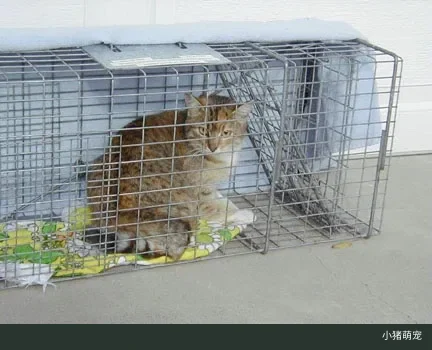
A community cat sterilized through a trap–neuter–return (TNR) program recovers in a trap before release at the capture site; the tipped right ear shows it has been sterilized. Ear tipping is the community-cat sterilization mark recommended in ASV guidelines. Photo: FelineAvenger (Silicon Valley Friends of Ferals), source: Wikimedia Commons, license: CC BY-SA 3.0.
The guidelines also recommend a uniform permanent mark that an animal has been sterilized: owned cats and dogs get a short green tattoo line on or beside the abdominal incision; community cats have about one-third of one ear tip removed. So if an adopted cat or dog has a thin green line on the belly, or you see a street cat with a flat ear tip in the neighborhood, it likely already has been sterilized—no need to panic.
Also, these clinics usually offer only preventive services. PCC, for example, does not treat sick or injured animals, and its elective listing notes a lack of diagnostic equipment. Everyday illness, chronic disease, and emergencies still need a full-service animal hospital.
Limits of the evidence and unknowns
When reading this primer, keep a few points in mind:
- The original post is advocacy: PCC supplied no data or references; causal claims such as “reduces shelter animals” are institutional opinion.
- The guidelines are expert consensus: the ASV guidelines were not peer-reviewed; the current edition dates from 2016; the ASV website says a working group is revising them, and a new edition has not yet been published.
- Safety data come from a single clinic: the Levy study counted only deaths within 24 hours at one Florida clinic; deaths after discharge may have gone unreported by owners, and non-fatal complications were not assessed; the authors acknowledge that generalization to other clinics is unclear.
- Population effects are hard to attribute alone: shelter numbers also reflect local policy, adoption, and economic conditions; existing studies are mostly retrospective comparisons with mixed results.
- Regional differences: the research and organizations above are U.S.-based; clinic credentials, prices, and free-roaming animal management elsewhere differ and cannot be copied wholesale.
References
-
Pet Community Center. Vet Talk: High-Quality High-Volume Spay/Neuter. Page shows Sep 22 (RSS date 2026-09-22).
-
Pet Community Center. About Us. Checked 2026-10-17.
-
Pet Community Center. Services & Pricing. Checked 2026-10-17.
-
The Ohio State University College of Veterinary Medicine. Pet Community Center, TN | Offsite Electives. Checked 2026-10-17.
-
ASPCA. ASPCA Spay/Neuter Alliance. Checked 2026-10-17.
-
Griffin B, Bushby PA, McCobb E, et al. The Association of Shelter Veterinarians’ 2016 Veterinary Medical Care Guidelines for Spay-Neuter Programs. Journal of the American Veterinary Medical Association. 2016;249(2):165–188.
-
Association of Shelter Veterinarians. Spay/Neuter Programs. Checked 2026-10-17.
-
Levy JK, Bard KM, Tucker SJ, Diskant PD, Dingman PA. Perioperative mortality in cats and dogs undergoing spay or castration at a high-volume clinic. The Veterinary Journal. 2017.
-
White SC, Jefferson E, Levy JK. Impact of Publicly Sponsored Neutering Programs on Animal Population Dynamics at Animal Shelters: The New Hampshire and Austin Experiences. Journal of Applied Animal Welfare Science. 2010;13(3):191–212.