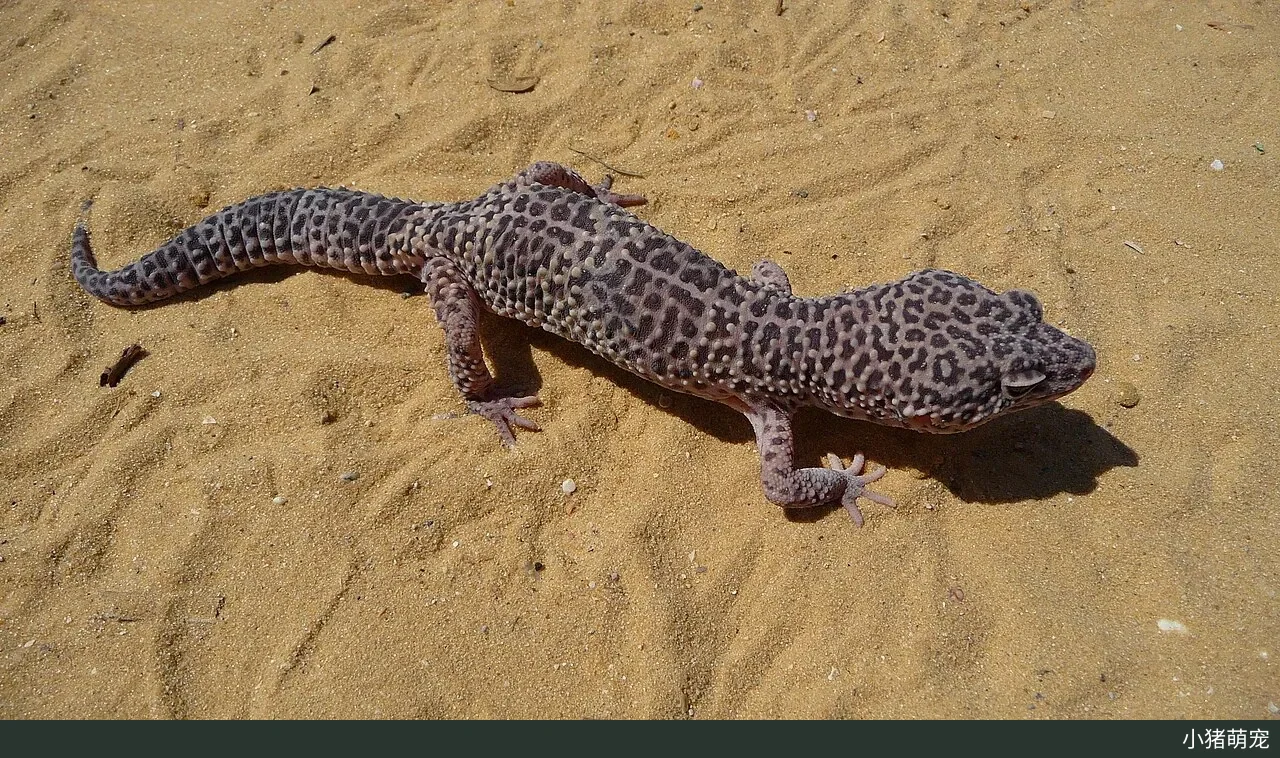
Leopard gecko (Eublepharis macularius). Photo: George Chernilevsky, 2009; source: Wikimedia Commons; license: public domain.

The leopard gecko (Eublepharis macularius) is a small terrestrial lizard native to arid zones from South Asia to West Asia. Captive breeding is widespread, and it is a common entry-level reptile pet. It needs a dry enclosure with a warm–cool gradient and a diet of mainly live insects with calcium supplementation; lifespan can reach 10–20 years. Drawing on veterinary and animal-welfare sources, this article covers habits, housing, diet, common health problems, and legality and ethical notes.
Classification, range, and habits
The leopard gecko belongs to the genus Eublepharis in the eyelid-gecko family Eublepharidae (order Squamata). The IUCN Red List records extant range in Afghanistan, India (Jammu and Kashmir, Punjab, Rajasthan), Nepal, and Pakistan; presence in Iran is uncertain. Habitats include scrub, grassland, rocky areas, and desert, up to about 2,500 m elevation. Unlike most geckos, it has movable eyelids and lacks adhesive toe pads—only small claws—so it is not good at climbing smooth vertical surfaces.
Adult length figures are often 20–25 cm; VCA gives a range of 12–25 cm, and Belfast Zoo records weight up to 80 g. The tail stores fat and can be autotomized if grasped or startled, then regenerates. On activity rhythm, zoo materials describe it as nocturnal and the RSPCA as crepuscular; both note that by day it mostly hides under rocks or in burrows to escape heat. On lifespan, VCA writes 10–15 years and the RSPCA up to 20. Leopard geckos do not need companions—the RSPCA recommends solitary housing; VCA also warns that males are territorial and fight when housed together. Some individuals enter a brumation-like state in cooler months, eating less and sleeping more, but body weight should not drop markedly.
Housing
Enclosure size is where the two sources differ most: the RSPCA recommends at least 60 cm long, 40 cm high, and 30 cm deep for a single adult, and larger is better; VCA considers about a 10-gallon (about 38 L) container acceptable for one animal, height at least 15 cm, with a mesh lid for escape prevention. When space allows, prepare to the larger standard. Place hides at both ends so the gecko can choose temperature and still feel secure; also provide a waterproof-bottom “humid hide” lined with damp sphagnum to aid shedding. Spot-clean feces as seen; the RSPCA recommends a monthly deep clean of the whole enclosure and furnishings with a reptile-safe disinfectant.
Reptiles regulate body temperature through the environment, so the enclosure needs a warm–cool gradient: the RSPCA suggests a warm zone of 28–30°C and a cool zone of 24–26°C, all heat sources on thermostats, with daily checks of both ends using digital thermometers; heat can be off at night, but supplemental heat is needed if room temperature falls below 18°C. VCA’s daytime ambient temperature is about 30°C, with nights tolerable down to 21°C, and warns against heat rocks that can cause localized burns—keep heat lamps at least 15 cm away. Humidity should run dry; the RSPCA suggests about 30%–40% in the cool zone. On UVB, the RSPCA recommends a 2%–5% UVB tube so the UV index falls from about 0.7 at the basking spot to 0 in shade, on 12 hours a day; VCA says UVB is not essential but recommended. Red-eyed morphs may be more sensitive to bright light—ask a veterinarian first. On substrate, VCA advises against coarse sand, corncob, or crushed walnut shell because accidental ingestion can block the gut; reptile carpet or paper towels are options. The RSPCA considers a mix of about half organic soil and half fine sand acceptable for healthy adults in good conditions, but juveniles should start on non-loose substrate.
Diet and supplements
Leopard geckos eat live, moving invertebrates. In captivity, captive-bred crickets can be the staple, with dubia roaches, silkworms, locusts, mealworms, and similar; waxworms are high in fat and should be fed only sparingly. The RSPCA advises feeder insects no larger than the gecko’s head, and remove uneaten live insects promptly so they do not bite the gecko. Feeding frequency differs slightly: VCA suggests every 1–2 days for juveniles and 2–3 times a week for adults; the RSPCA suggests daily for juveniles and every other day for adults, with regular weighing.
Captivity cannot match the nutritional variety of the wild, so extra supplementation is needed: gut-load feeder insects with nutritious feed 24–48 hours before offering, then dust insects with a thin layer of calcium powder just before feeding; VCA recommends phosphorus-free calcium, while the RSPCA recommends a vitamin-and-calcium combined supplement used per label to avoid excess. Keep a small dish of pure calcium powder available for self-licking, plus a shallow water dish with fresh water changed at least daily.
Health, hygiene, and legality
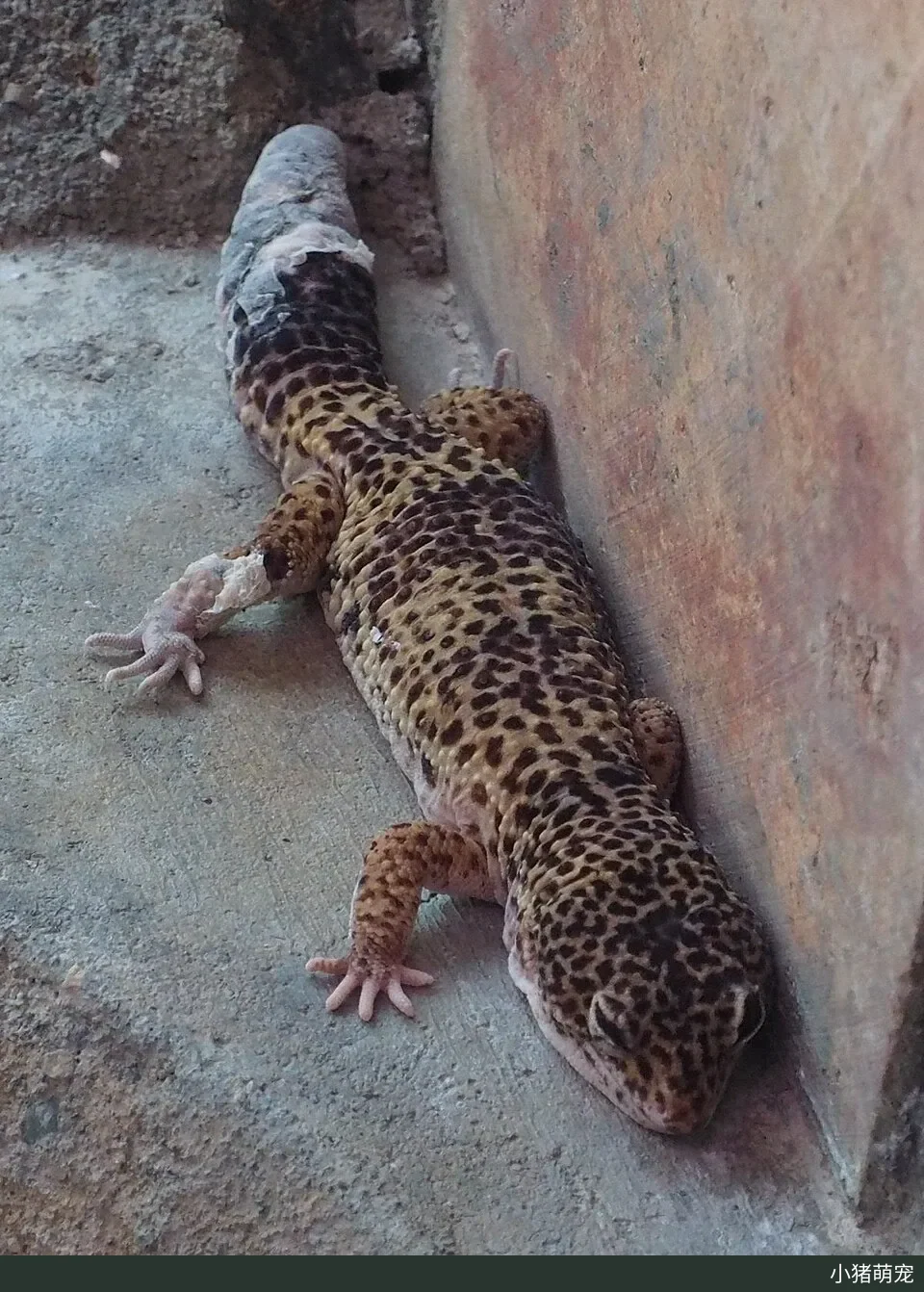
A leopard gecko at Sendai Yagiyama Zoological Park; the original filename notes the photo was taken after shedding. Photo: Kinori, 2016; source: Wikimedia Commons; license: CC0 1.0.

Health signs listed by the RSPCA include: clear eyes and active movement; belly not pressed to the ground except when resting; a thick tail when well nourished; relatively dry feces made of dark feces plus white urates. Common problems include: metabolic bone disease, often from lack of UVB leading to vitamin D3 deficiency and poor calcium absorption, which can show as muscle twitching, swollen limbs, fragile bones, or permanent deformity; incomplete sheds, with retained skin wrapping toes and risking toe loss—do not peel by force; gut blockage from swallowed substrate, often a sign of temperature, water, or nutrition problems; adult females that may lay infertile eggs even without a male and need a moist nest box or risk egg binding. Abnormal feces or constipation with weight loss also warrant attention. When handling, support with both hands so all four feet have purchase—never pinch the tail, because loss of the tail depletes fat stores. The above is for day-to-day observation only and cannot diagnose an individual; seek a reptile-experienced veterinarian promptly if anything looks wrong.
On zoonoses, the U.S. Centers for Disease Control and Prevention (CDC) notes that reptiles often carry Salmonella in the gut even when they look healthy; enclosures, water, and equipment can all harbor the bacteria. The CDC advises against keeping reptiles in homes with children under 5, adults over 65, or people with weakened immune systems; wash hands with soap and running water after contact with the gecko, feeders, and equipment, and do not bring husbandry items into the kitchen or wash them in the sink used for food.
On conservation and legality, the IUCN assessed the leopard gecko on 7 August 2019 (published 2021) as Least Concern with a stable population trend, but recorded uses include pets and display animals; Belfast Zoo also notes habitat destruction from mining and quarrying, the pet trade, and local traditional medicine as threats. In the CITES Appendices valid from 5 March 2026, Eublepharidae lists only the genus Goniurosaurus—the leopard gecko is not included. Not being on CITES does not mean keeping or selling is legal everywhere; this article did not check every country or region’s rules. The CDC advises checking local law and rental rules before buying. Ethically, choose captive-bred animals with clear provenance (the RSPCA notes UK leopard geckos are all captive-bred); do not collect wild individuals or release pets, which can harm native wildlife. The RSPCA is cautious about the exotic-pet trade overall and reminds keepers to confirm they can cover lifetime care and costs before acquiring one.
References
-
Rich, G. (DVM). Leopard Geckos: Care and Feeding. VCA Animal Hospitals. Page undated; accessed 2026-10-24. https://vcahospitals.com/know-your-pet/leopard-geckos-care
-
RSPCA. Leopard gecko. Page undated; accessed 2026-10-24. https://www.rspca.org.uk/adviceandwelfare/pets/other/leopardgecko
-
Papenfuss, T., Shafiei Bafti, S. & Sharifi, M. 2021. Eublepharis macularius. The IUCN Red List of Threatened Species 2021: e.T164745A1072324 (assessment date 2019-08-07). https://dx.doi.org/10.2305/IUCN.UK.2021-3.RLTS.T164745A1072324.en
-
CITES. Appendices I, II and III, valid from 5 March 2026. https://cites.org/sites/default/files/eng/app/2026/E-Appendices-2026-03-05.pdf
-
U.S. Centers for Disease Control and Prevention. Reptiles and Amphibians | Healthy Pets, Healthy People. 2026-01-13. https://www.cdc.gov/healthy-pets/about/reptiles-and-amphibians.html
-
Belfast Zoo. Leopard gecko. Page undated; accessed 2026-10-24. https://www.belfastcity.gov.uk/zoo/our-animals/reptiles/leopard-gecko
-
Piggy Tuck Pets · Welcome to my pet planet