The leopard gecko is a small terrestrial reptile pet that is mainly ground-active and often out at dawn and dusk; spots and a thick tail are common features of its look. Living with one means maintaining a suitable temperature gradient, hide spaces, and a diet of live insects over the long term, and budgeting for reptile veterinary care. This entry covers husbandry preparation and the bounds of health observation; before purchase you still need to check local regulations and the animal’s source.
Species traits and habits
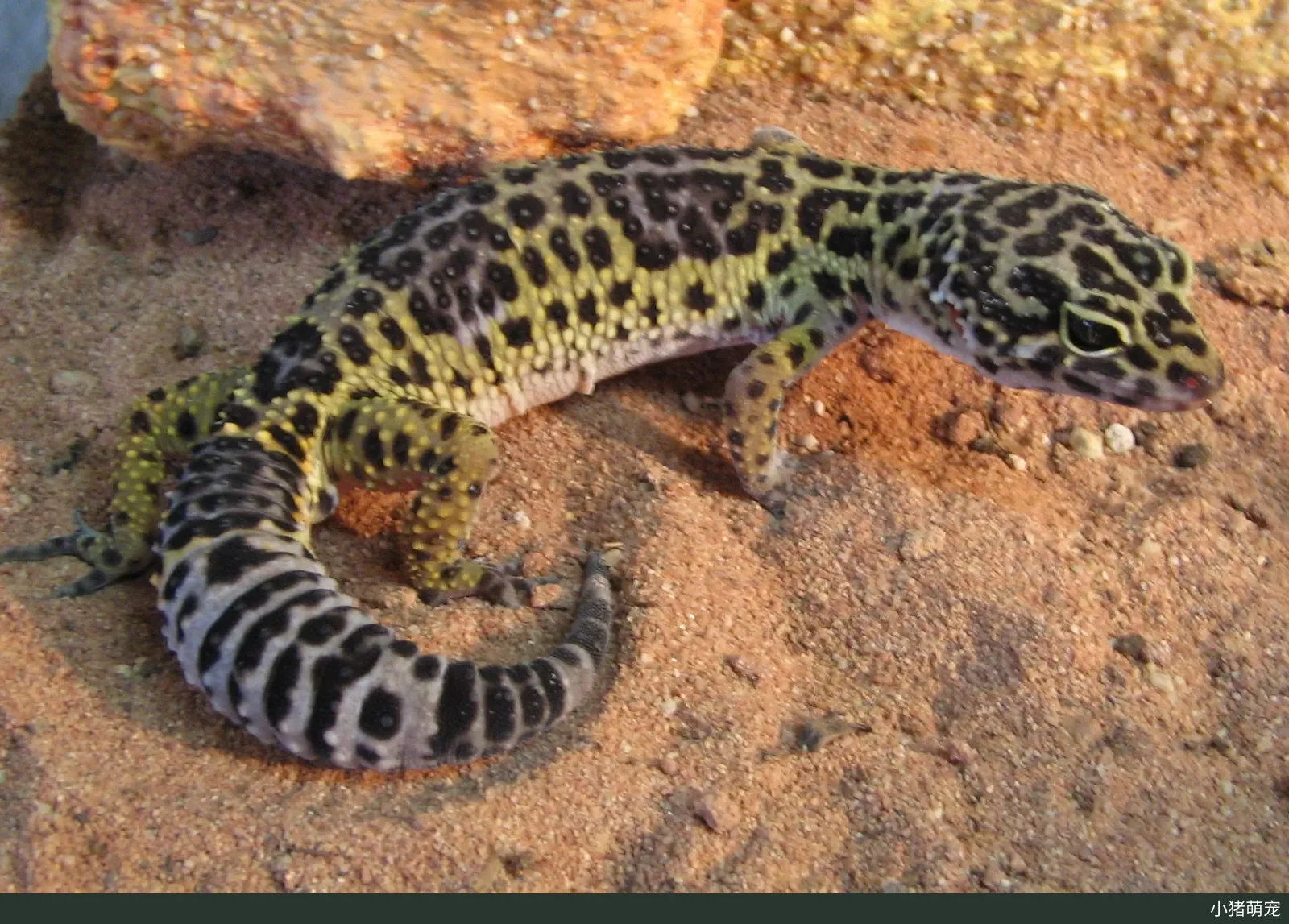
The leopard gecko (Eublepharis macularius) is a small lizard and a reptile; the scientific name appears in the Merck Veterinary Manual[3]. The RSPCA[1] describes it as adapted to dry scrub, mainly terrestrial, and often active at dawn and dusk. Spots and a thick tail are common features; captive-bred animals come in different color morphs, and morphs do not mean a different species. The organization recommends housing them singly; when handling, support the limbs, and do not chase, grab, or pull the tail.
Housing
The enclosure should be escape-proof, ventilated, and easy to clean, with hides at both the warm and cool ends and a separate locally humid hide. Per the RSPCA guide[1], the basking area should be 28–30°C and the cool end 24–26°C; those are targets for different zones, not a single constant for the whole tank. Heat sources should connect to a thermostat and be guarded, and temperatures should be checked with a thermometer every day. UVB should be set from measured irradiance that accounts for distance, screen-lid shading, and the animal’s height, while leaving shade; lights go off at night. Professional guides do not fully agree on space, night temperature, and UVB; read the full guidance before setup, and have a reptile veterinarian assess the equipment.
Diet and health observation
The staple diet is a variety of appropriately sized live feeder insects. Per the VCA veterinarian-authored guide[2], gut-load feeder insects with quality food for at least 24 hours before offering, and dust them lightly with calcium powder before feeding; offer clean water in a shallow dish and change it daily. Supplement type, frequency, and vitamin D3 dose must be set for lighting, age, and condition; do not stack multiple products on your own. Watch appetite, activity, elimination, and shedding every day, and record weight regularly. The RSPCA[1] warns: do not forcibly pull stuck shed from toes or around the eyes, and seek care for ongoing weight loss, abnormal elimination, or limb problems. Wash hands before and after handling the animal and its equipment. This article cannot diagnose disease from a single sign and does not provide self-medication plans.
Source, legality, and care responsibility
Before deciding to keep one, assess whether you can sustain equipment running costs, feeder insects, cleaning, and reptile veterinary care long term. Prefer documented, traceable captive-bred animals or suitable adoption channels; refuse wild-caught animals of unclear origin; do not abandon pets out of boredom or release them into the wild. These are this article’s care and ethics recommendations. Legality depends on location and the specific circumstances of keeping, trade, transport, or import/export; this article has not assessed current requirements where the reader lives and cannot conclude that keeping them is “generally legal.” Before obtaining an animal, verify with the local authority using the accurate species name, and keep source and transaction records.
References
-
RSPCA: How to care for a leopard gecko. Organization source text; no publication date stated; consulted 26 October 2026. Supports habits, housing, and day-to-day health observation; UK-specific statements are not extrapolated as law elsewhere.
-
Gregory Rich, DVM / VCA Animal Hospitals: Leopard Geckos: Care and Feeding. Page marked last updated 19 August 2024; first publication date unknown; consulted 26 October 2026. Veterinary education content supporting diet and nutritional supplementation; its space, UVB, and feeding-frequency advice differ from the RSPCA’s, and this article does not merge them into one set of parameters.
-
Merck Veterinary Manual: Common leopard gecko (Eublepharis macularius). Page does not state a publication date; consulted 26 October 2026, used for the name and insectivorous nutrition background.
-
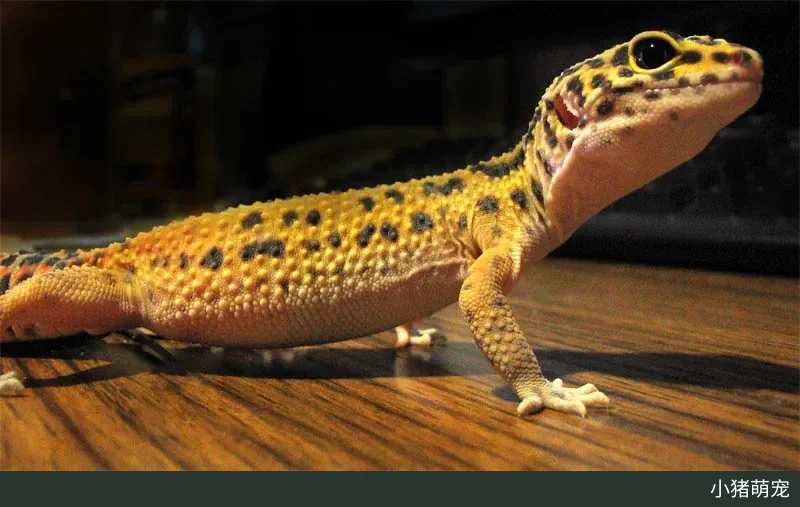
Photo credits and licenses: lead image by Kerstin Franke (Tinie), from the Wikimedia Commons file page, used under CC BY-SA 3.0; body photo by Iterat (English Wikipedia), from the Wikimedia Commons file page, used under CC BY-SA 3.0. Both images show appearance and posture only and are not models of adequate housing.
-
Piggy Pets · Welcome to my pet planet

