On Hungarian pastures, the Komondor’s job was to stay with the sheep, watch approaching animals and drive off predators such as wolves. Its thick white cords helped it blend in with the flock. They also sheltered it from harsh weather and gave it a layer of protection in a fight. That work still shapes daily life with a Komondor. You have a dog accustomed to judging for itself who is approaching, and a coat that needs hands-on care from an early age.[1]
The one-year-old female in the side view gives you a good look at the dog beneath the coat. Her cords are still short enough to see daylight beneath her belly and make out the shape of her legs. The Komondor is deep-chested and heavily boned. The breed standard sets the minimum height at the shoulder at about 70 cm for adult males and 65 cm for females. Males commonly weigh 45 kg or more, females 36 kg or more. A full coat can hide where the body ends and the legs begin, yet the dog moves with an easy, ground-covering stride. Allow room for a dog of that size and strength when you picture walking it on leash, getting it into the bath or taking it through the front door.[1][2]

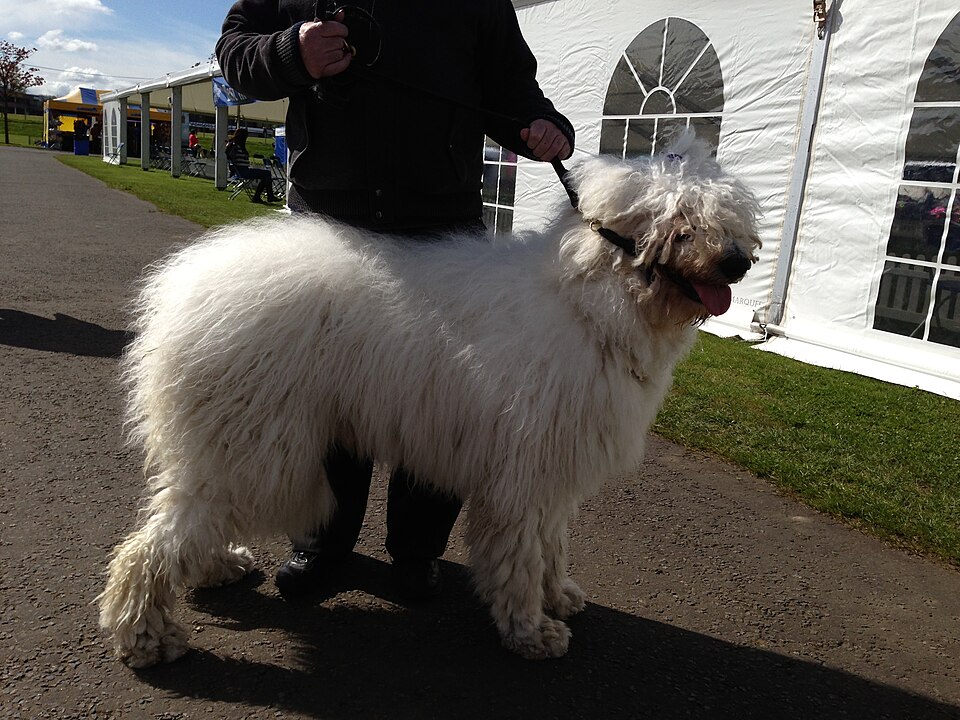
A one-year-old female Komondor stands in profile. Sagaciousphil, Wikimedia Commons[2]
Where can a Komondor run freely?
When choosing a place for exercise, start at the gate. A yard where the fence is secure, the gate latches and you know which dogs are inside gives a Komondor room to stretch out and run. Leash walks and play with dogs it already lives with also provide regular exercise. The difficulty with an off-leash dog park is that several unfamiliar dogs can run up at once. A flock guardian accustomed to watching its surroundings may meet that approach warily. Even if there’s a wide stretch of grass near home, consider how much say you’ll have over the distance between dogs.[1]
Picture the route you would take on an ordinary weekday. Once you leave the building, is there a stretch where you can settle into a walk? If an exuberant dog comes toward you, is there room to step aside and let your dog follow you past? If the fenced yard is only an option on weekends, someone still needs to take the weekday walks. Let the dog in front of you help you plan the next outing. Notice where it wants to explore and how far away another dog can be while yours still responds when called. Use that to decide how far to go and where to turn back.[1]
The same guarding instinct can show up at the front door. A Komondor that is affectionate with family may keep its distance from a stranger. Early socialization and training can start with a routine your household will actually use. When the bell rings, one person calls the dog over while another answers the door. Practice the recall when the house is quiet, then ask someone the dog knows to help you rehearse a calm arrival. Puppy classes also give the dog practice responding to its handler around people and other dogs. If you often have visitors, agree on who will take charge of the dog before the door opens.[1]
The first cords form close to the skin
In the close-up of a one-year-old male, the hair on his forehead is still fluffy, while short curls hang on either side of his muzzle. A young Komondor can have both textures at once. Part the soft ends and you may find short cords already forming near the skin. The coarser, wavy or curly outer hair catches the soft undercoat, and the two gradually felt together. Compare the young dog’s coat with the long cords swinging apart as the adult dog strides out. That length takes time to grow. What matters during grooming is whether neighboring cords have started to join into a sheet at their roots.[1][3][4]


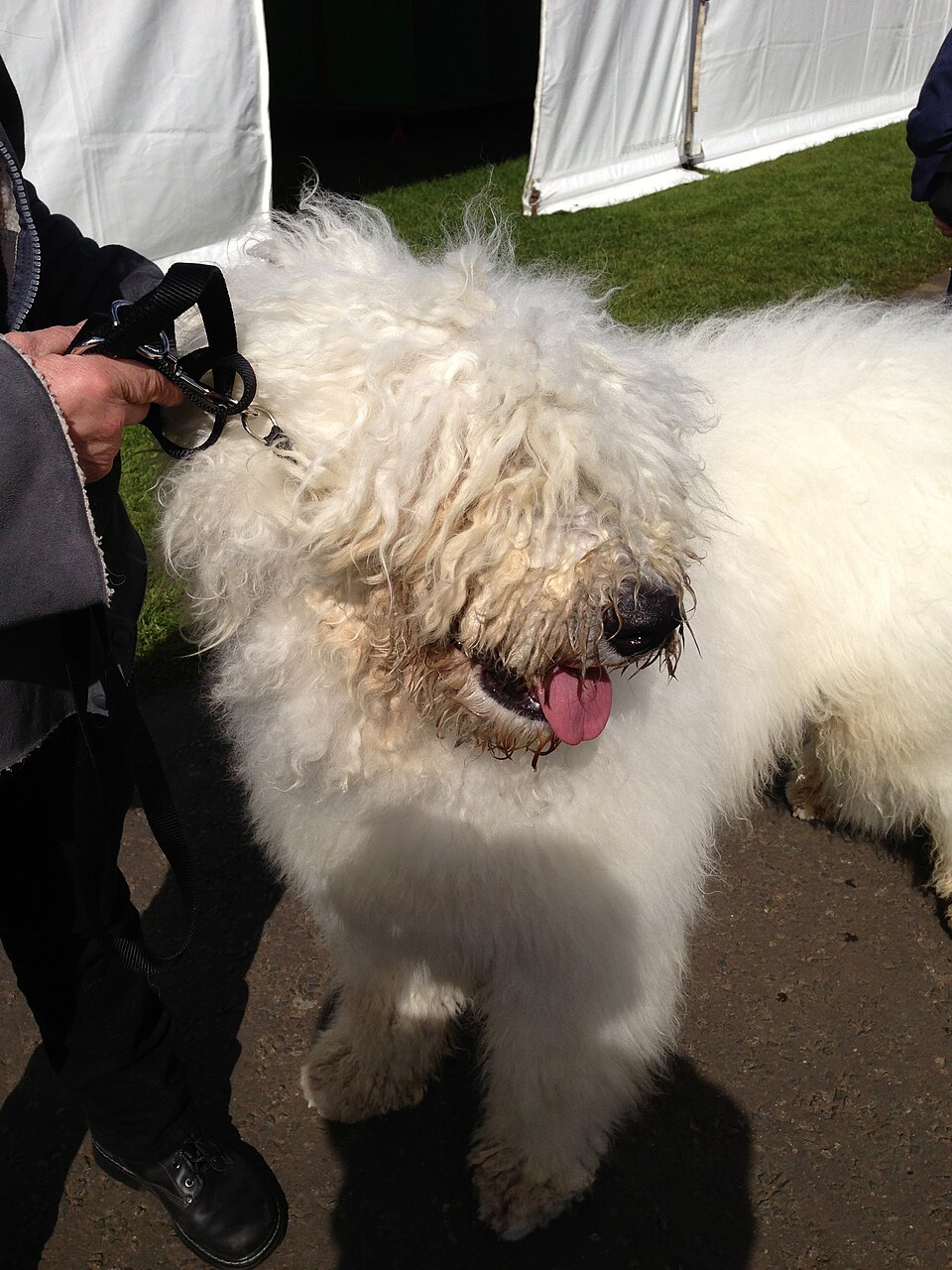
Short curls frame a one-year-old male Komondor’s muzzle. Sagaciousphil, Wikimedia Commons[3]
When you find a flat clump, gently part the loose ends so you can see where the hair grows from the skin. A breeder quoted by the American Kennel Club (AKC) describes starting to separate these clumps by hand when they appear at around nine or ten months. Each section grows from a patch of skin roughly the size of a US quarter, about 2.5 cm across. Keep the hair within each section together so that it can grow into a single cord. If you plan to keep your dog’s coat corded, ask a groomer familiar with Komondors to show you on your own dog where one section ends and the next begins.[1]
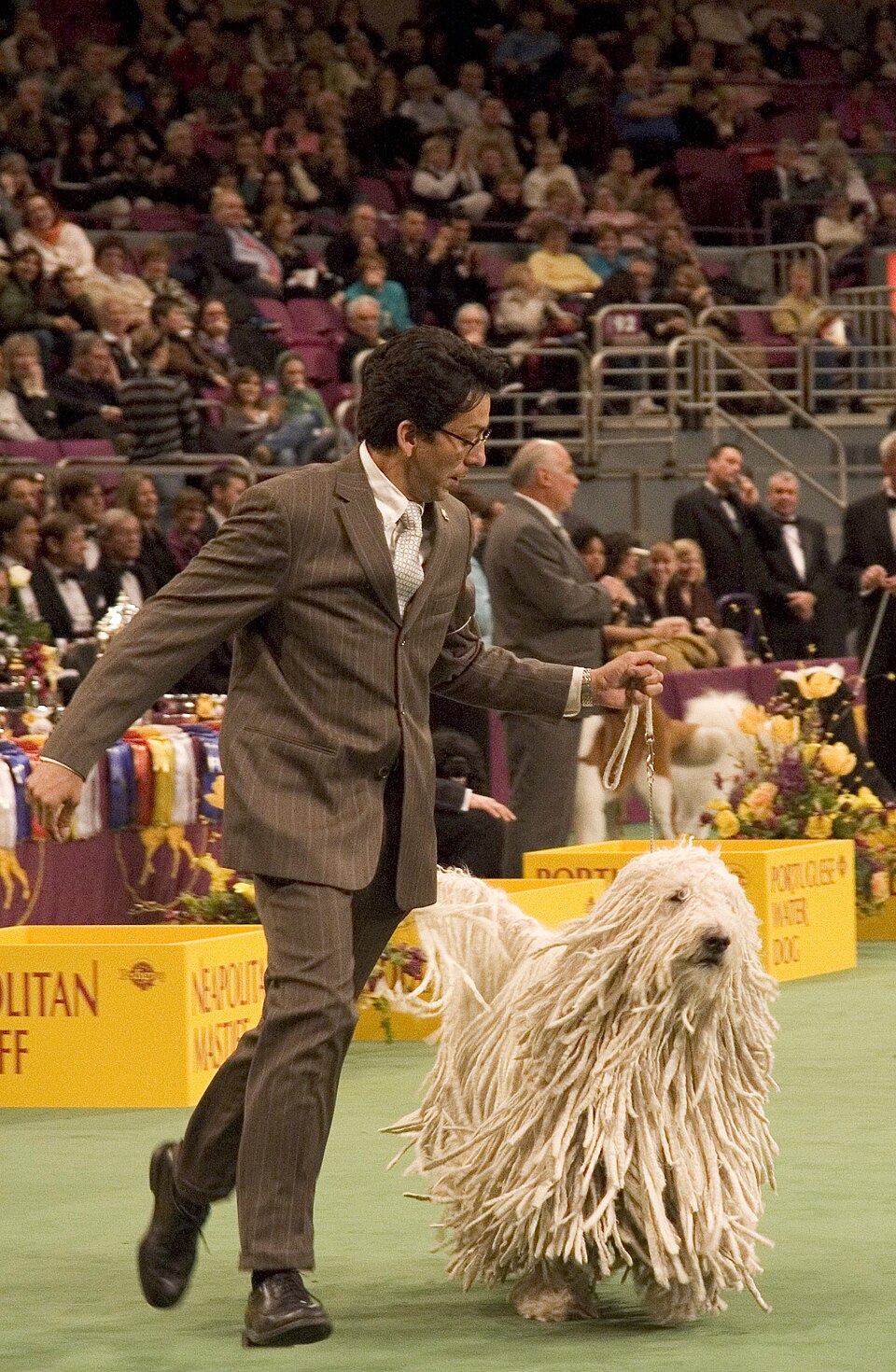
An adult Komondor’s cords swing with each stride. whartonds, Wikimedia Commons[4]
Once the cords grow thick, the longest part of a bath comes after the rinse. The breeder washes the coat with diluted shampoo, rinses it thoroughly, then squeezes water from the cords by hand and blots them with towels. Air needs to keep moving through the coat. In this breeder’s routine, a fan runs overnight. Shampoo left behind or moisture lingering inside the cords can leave an odor. Part a few of the thick cords and feel inside to check that they have dried all the way through. When thinking about your home, consider both the size of the bathroom and where a large dog can rest comfortably while its coat dries.[1]
What health concerns should you know about before bringing a Komondor home?
When talking to a breeder about a puppy, ask to see the hip evaluations and eye examination records for both parents. Look for each dog’s name and the examination it received. The AKC breed page also lists a dentition exam, a check of the teeth, among the recommended tests. These records tell you which screenings the parents have had. Your puppy’s checkups, exercise as it grows and care if symptoms appear will depend on its own health.[1]
With a deep-chested dog such as a Komondor, everyone in the household should recognize one sign that calls for an immediate trip to an emergency vet. The dog may suddenly retch again and again without bringing anything up. It may also drool, seem restless or develop a swollen belly. A stomach that expands rapidly can also twist, and the dog’s condition can deteriorate quickly. If you see these signs, call an emergency veterinary clinic and head there immediately. Before bringing the dog home, find out which clinic takes emergencies at night and work out how you’ll transport a dog this large. Anyone looking after it should know where to go.[1][5]
To decide whether a Komondor fits your household, picture an ordinary workday. Who takes the dog out? Who does it go to when a guest arrives? Then picture bath day and count the time from separating the first clump to feeling that the last cord is dry. Between the fluffy coat of a yearling and the long cords of an adult are years of hands-on care. That’s the part of life with a Komondor your family would be taking on.
References
-
[1] American Kennel Club. Komondor Dog Breed Information.
-
[2] Sagaciousphil. 2013. File:Komondor female2.jpg. Wikimedia Commons.
-
[3] Sagaciousphil. 2013. File:Komondor male 07.jpg. Wikimedia Commons.
-
[4] whartonds. 2007. File:Komondor Westminster Dog Show.jpg. Wikimedia Commons.
-
[5] American College of Veterinary Surgeons. Gastric Dilatation-Volvulus.