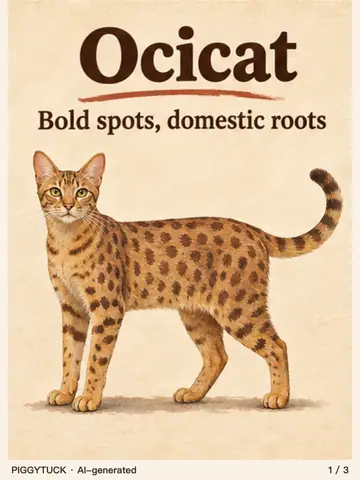
An Ocicat’s dark, thumbprint-shaped spots can bring to mind the spotted wildcats of Central and South America. The breed came from domestic Abyssinian, Siamese, and American Shorthair lines. Selective breeding gave the Ocicat its wild-looking coat.[1]
Spots, build, and breed origin
Breed history starts with Tonga, the first Ocicat, born in 1964. A breeder crossing Abyssinian and Siamese for “Aby-pointed” Siamese instead produced a spotted kitten; the breeder's daughter thought it looked like an ocelot, and the “Oci” in the name followed.[1] Tonga was neutered and placed as a pet, but a photo drew geneticist Clyde Keeler, who hoped domestic cats could mimic some vanishing spotted wild species. Breeders repeated that mating and added American Shorthair to widen the base. CFA accepted registration in 1966 and championship status only in 1987, showing how long consistent structure took. Ocicats remain common at CFA shows; the association suggests meeting adults in person before waiting for a kitten of a chosen color or sex.[1]
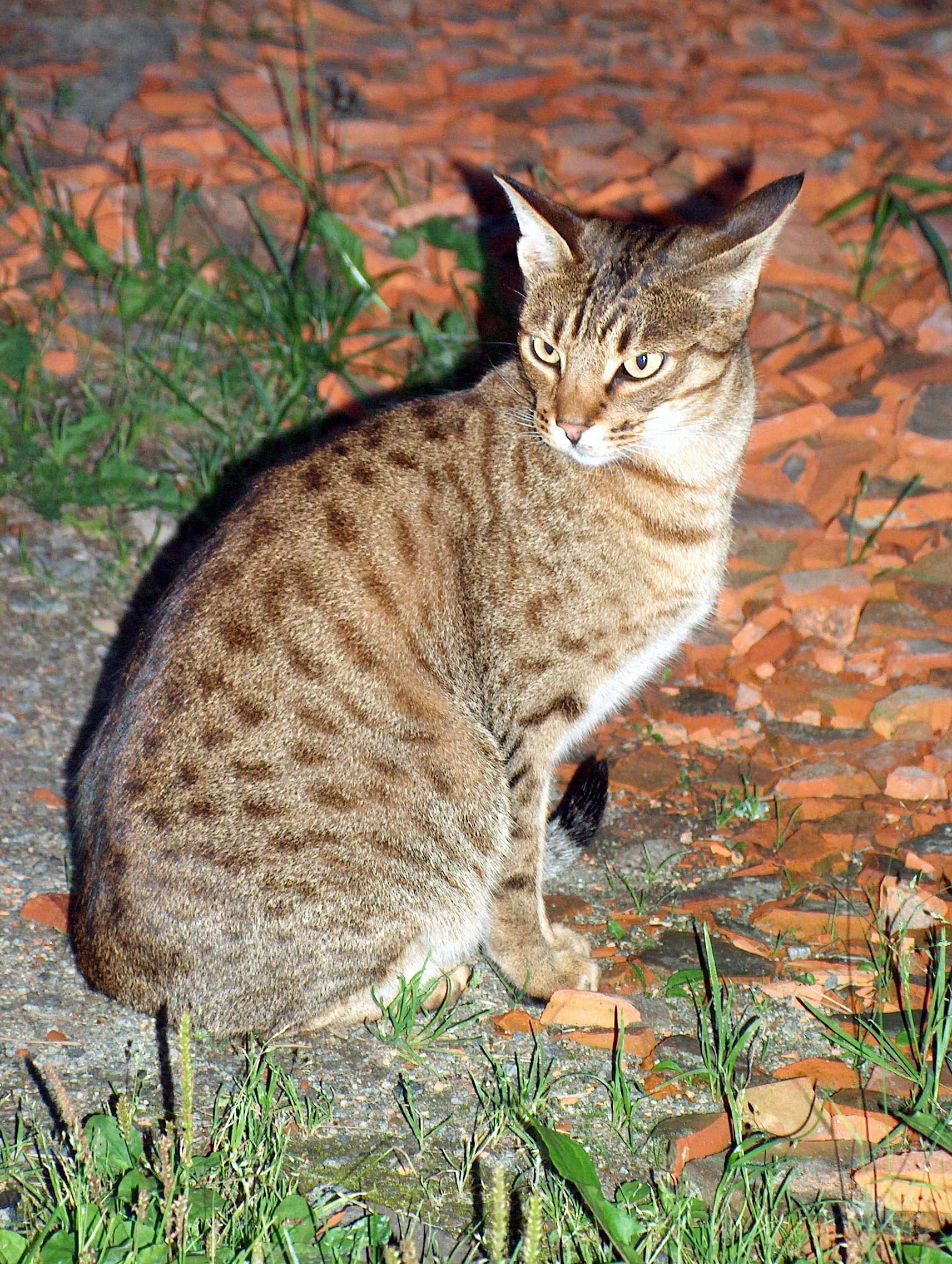
Figure: Sitting Ocicat with thumbprint spots. Tom Bjornstad, Wikimedia Commons[3]

The Ocicat is a medium-to-large, muscular shorthair that feels heavy for its size. Spots should be thumbprint-shaped and contrast with a lighter ground; shoulders, hindquarters, sides, and legs must be spotted, the belly well spotted, and an ideal side pattern suggests a bull's-eye of spots around a spot. An intricate tabby “M” marks the forehead; mascara and cheek lines frame the eyes; broken necklaces and bracelets on neck and legs are preferred the more broken they are. The head is a modified wedge with a slightly square muzzle, moderately large ears, and large almond eyes; any eye color except blue is allowed. The coat is short, close, and satiny; every hair except the tail tip is banded, and spots form where those bands align—not as paint on the surface. The tail is fairly long and medium-slim with the darkest tip. CFA accepts twelve colors; tawny, chocolate, cinnamon, and their silver versions are common.[1]
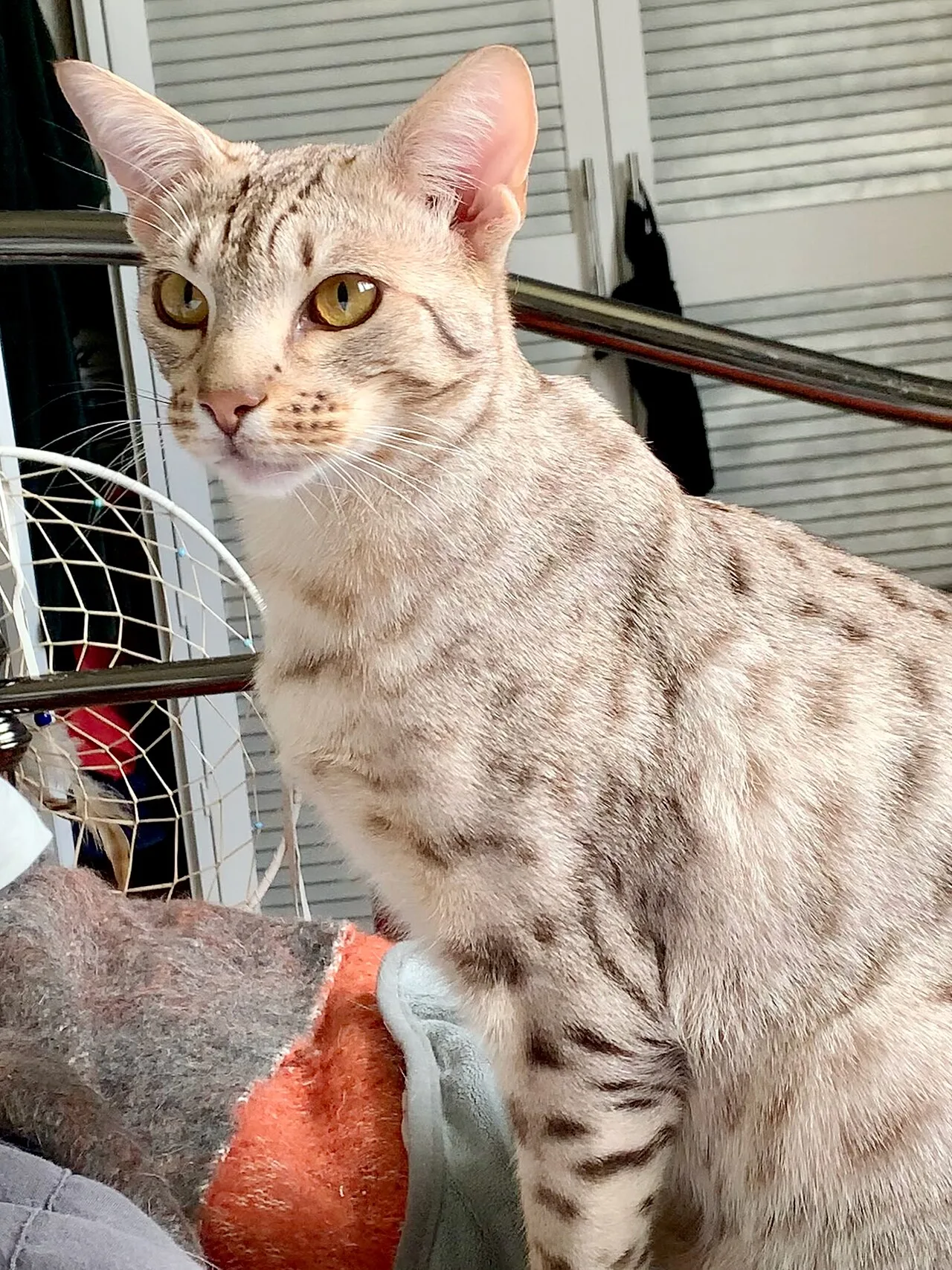
Figure: Silver-chocolate Ocicat face and spots. Trey W-M, Wikimedia Commons

Interaction, climbing, and company
Many Ocicats seek company, approach visitors, and enjoy games such as fetch. Some learn to wear a harness or travel calmly. Make time for regular interaction and see how the cat copes when left alone. Introduce other pets gradually and let the individual cat set the pace.[1]
An agile Ocicat benefits from a sturdy cat tree, a window lookout, and rotating chase toys. Some can learn to walk on a harness; start with short, controlled sessions and watch for stress. They may vocalise for attention, and how often they do so varies by cat.[1]
Coat, mouth, and routine health care
The short coat usually sheds lightly. Care stays light: a rubber brush now and then for dead hair, or a chamois wipe when shedding is minimal to add sheen. Bathing is seldom needed except for shows. Clear spots depend on coat condition and nutrition, but brushing does not replace dental care; like other house cats, Ocicats need veterinary oral checks and cleaning when advised—the wild look is not a reason to skip basics. Nails, ears, and weight belong in routine observation; an athletic build does not justify unchecked free feeding. Kittenhood is the time to habituate brushing, nail trims, and carriers so adults tolerate exams and needed heart or eye follow-up.[1]
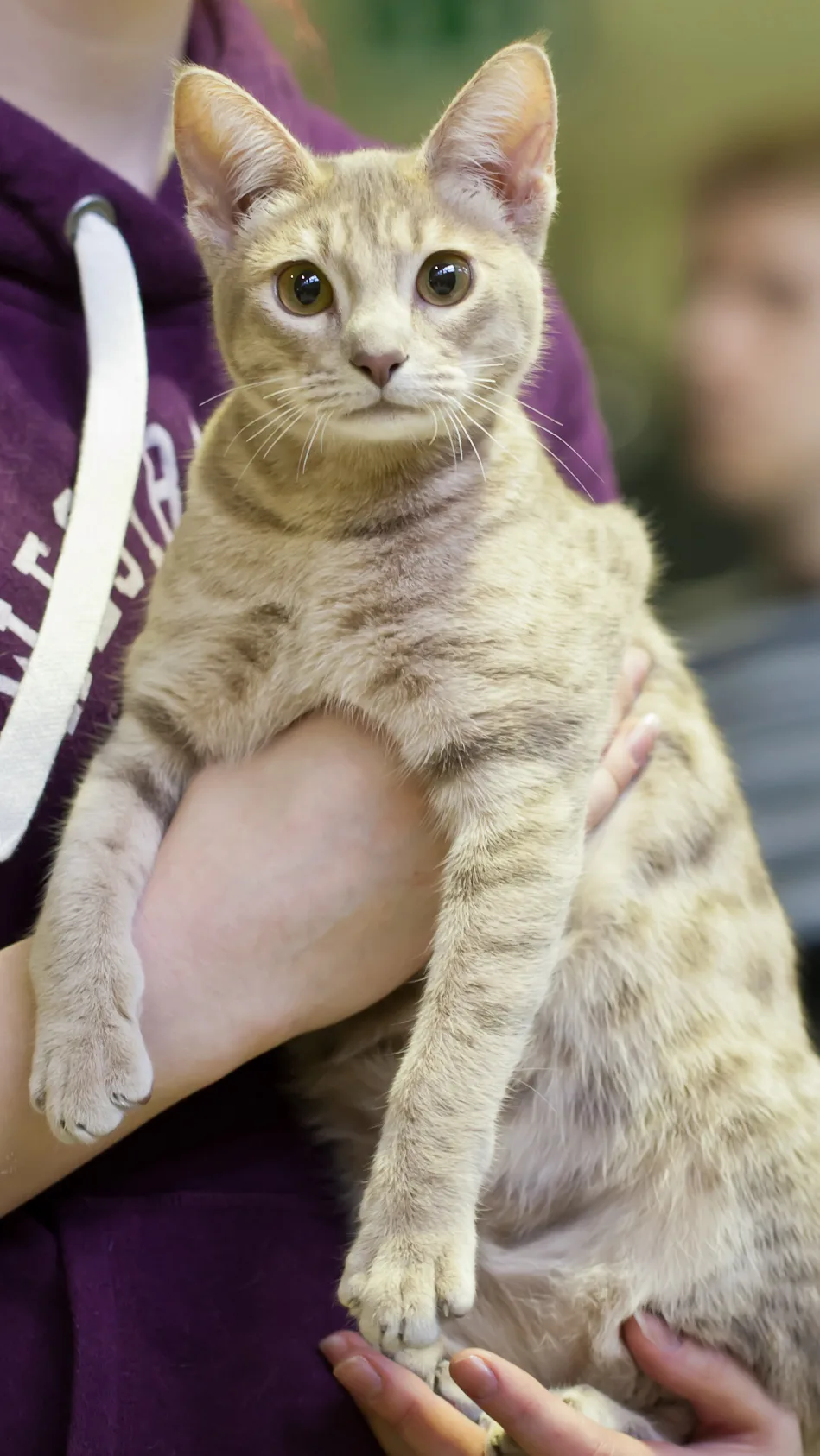
Figure: Pale Ocicat held upright showing spots. Heikki Siltala, Wikimedia Commons

Health concerns from the Ocicat’s parent breeds can still occur. Ask about family records for hypertrophic cardiomyopathy (HCM), amyloidosis affecting the kidneys or liver, and relevant genetic tests for progressive retinal atrophy.[1]
HCM thickens the wall of the left ventricle. A veterinarian can use echocardiography and rule out other causes of thickening, such as high blood pressure or hyperthyroidism. Some cats appear normal early on. Open-mouth breathing, laboured breathing, or sudden hind-leg pain or weakness need immediate veterinary attention.[2] Follow your veterinarian’s advice on routine examinations and any heart imaging.[1][2]
If the spots attract you, first confirm you can offer company, play, and vertical space, then treat coat care and veterinary follow-up as routine—not as keeping a miniature wild felid. Identification rests on thumbprint spotting, an athletic domestic shorthair frame, and short coat structure; living arrangements rest on an outgoing, trainable temperament that still dislikes long solitude. Use day-to-day observations to adjust care; individual temperament, health, and household fit still depend on real life with that cat and veterinary judgment.[1]
References
-
Cat Fanciers' Association. Ocicat. https://cfa.org/ocicat/
-
Cornell Feline Health Center. Hypertrophic Cardiomyopathy. https://www.vet.cornell.edu/departments-centers-and-institutes/cornell-feline-health-center/health-information/feline-health-topics/hypertrophic-cardiomyopathy
-
Wikimedia Commons. File:Ocicat-sitting.jpg. https://commons.wikimedia.org/wiki/File:Ocicat-sitting.jpg