The West Highland White Terrier (often called the Westie) originated in the Scottish Highlands and was once used to hunt vermin.[1] It stands about 28 cm at the shoulder, with small erect ears and a distinctive white double coat.[2] This small terrier is alert and independent; it needs walks and chances to explore, and the longer hair on the face and legs needs regular grooming.[3]
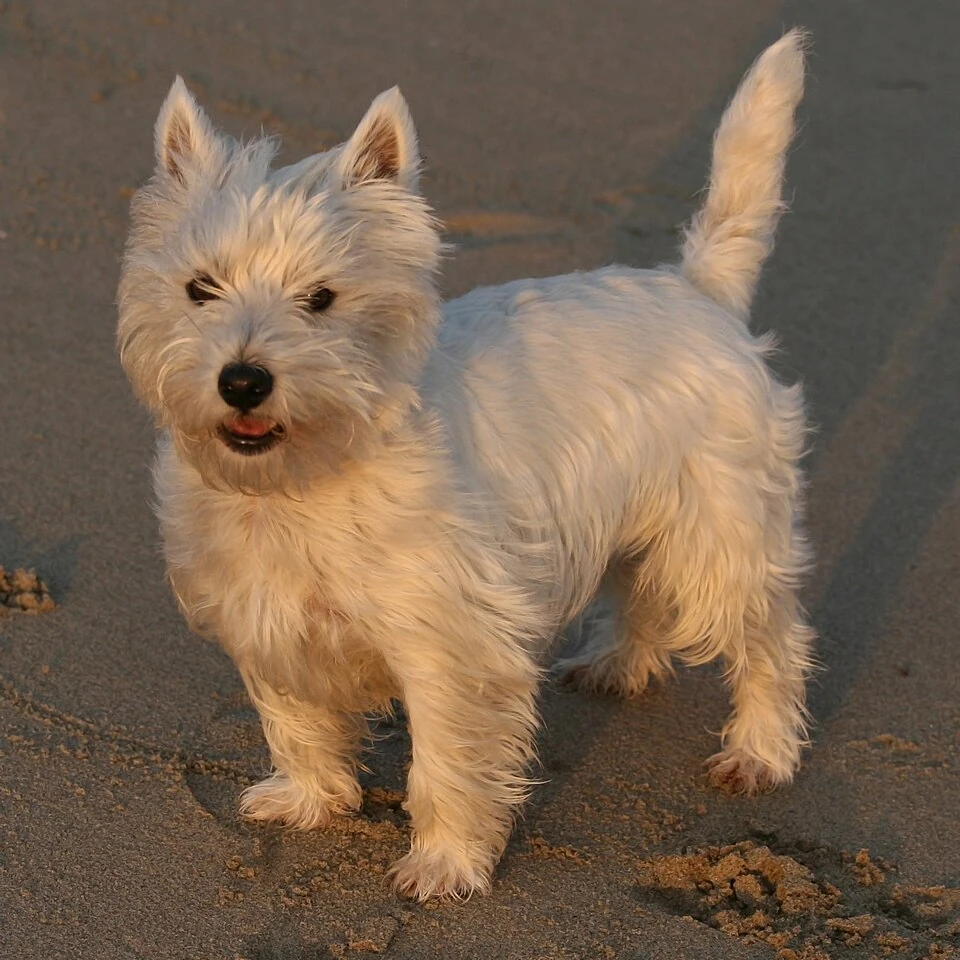
Figure: Sea breeze fans Yoshi’s facial hair aside, showing the small pointed erect ears and black nose clearly. Photo by Randy Robertson. Original · CC BY 2.0. Scaled and converted to WebP.

Origins and working habits
In the Scottish Highlands, Westies once helped clear vermin. When prey went to ground, the dog followed scent to the entrance and kept tracking underground out of sight. Digging, chasing, and barking all tie to that work. Living as companions today, some Westies still sniff repeatedly around tree roots or fence lines and may chase small animals that suddenly run.[1]
Looks and temperament
In profile the Westie is compact, with a level back, deep chest, and short, well-muscled legs. Facial furnishings are dense, yet the pointed ears still show clearly, and the nose is black. The Kennel Club breed standard uses about 28 cm as the shoulder-height reference. The white coat has two layers: a harder, straighter outer coat and a short, dense, soft undercoat next to the skin.[2]
The standard describes the Westie as alert, courageous, independent, and friendly.[2] Those traits can coexist in one dog: happy to keep company at home, yet focused on scent outdoors. Individuals differ in how they react to strange sounds, other dogs, and small animals.[1]
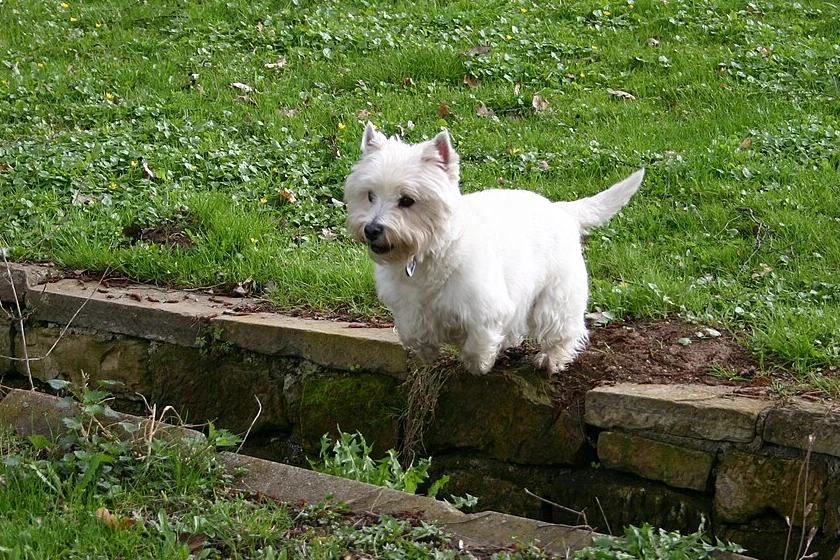
Figure: A West Highland White Terrier leaps a narrow ditch in the grass. Photo by Chri stian H.; the author has placed the original in the public domain. Cropped and converted to WebP for this article.

Exercise, training, and the home
Daily activity can be split into several walks that mix steady movement with pauses to sniff. Use a leash where there is no fence. When practicing recall, start in a quiet, safe place: call the name, reward as soon as the dog turns and approaches, then gradually add distractions.[3]
Apartment households should ask whether outdoor time can be arranged every day and how barking at hallway noise may affect neighbors. If the home already has rabbits, hamsters, or similar small pets, provide a space the dog cannot enter; even when things are usually calm, a sudden dash by a small animal can still trigger a chase.[1]
Coat care and health watchpoints
Long hair on the cheeks and legs mats easily; comb several times a week, working through small sections gently. After rainy walks, dry the feet and check the skin between the toes, watching for repeated licking or chewing of one spot.[3]
The UK VetCompass team reviewed primary-care records for 2,058 West Highland White Terriers in 2016: 10.6% had a record of otitis externa that year and 6.5% had a record of allergic skin disease. Those figures describe that UK sample in that year.[4] If a dog keeps scratching its ears, shaking its head, or licking its paws, see a veterinarian and describe when and where the signs started.
References
-
American Kennel Club | Why Westies like to dig, bark, and chase
-
The Kennel Club | West Highland White Terrier breed standard
-
PDSA | West Highland White Terrier exercise, training, and daily care
-
VetCompass study | West Highland White Terriers in UK primary veterinary care, 2016
-
Piggy Pets · Welcome to my pet planet