In the mountain forests of Kishu, hunters prized white dogs for a practical reason. They could keep their partners in sight through the trees. The Kishu Ken takes its name from this mountainous part of Japan, which spans present-day Wakayama and Mie prefectures. Local hunters took these dogs after deer and used them to track wild boar. Japan designated the Kishu Ken a Natural Monument in 1934. The American Kennel Club (AKC) has recorded the breed in its Foundation Stock Service (FSS) since 2005. [1][2]
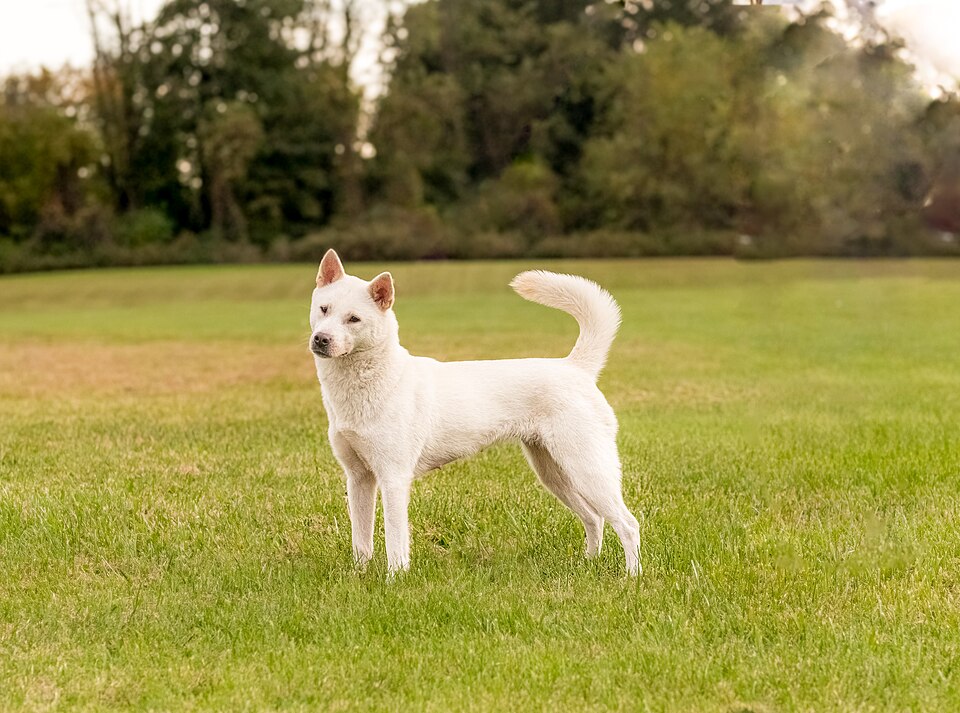
A white Kishu Ken stands in profile. Manager 67, Wikimedia Commons[4]

Seen from the side, the white dog shows the breed’s outline clearly. The body is slightly longer than the dog is tall at the shoulder, with a firm loin and well-muscled hind legs. The Fédération Cynologique Internationale (FCI) breed standard gives the ratio of shoulder height to body length as about ten to eleven. The Kishu Ken is a sturdy, medium-sized dog. Its small triangular ears stand upright and tilt slightly forward. The thick tail is set high and can curl over the back or rise in a sickle curve, as it does here. [2]
White is common, and the breed standard also lists red and sesame. Look at the male standing by the water below. Dark hairs overlay his brown coat, and a small patch of white shows on his chest. The upright ears, strong neck and high-carried tail are still easy to pick out. Taken together, the three photographs give a fuller picture of the breed than the familiar image of a white dog with a curled tail. [1][2]
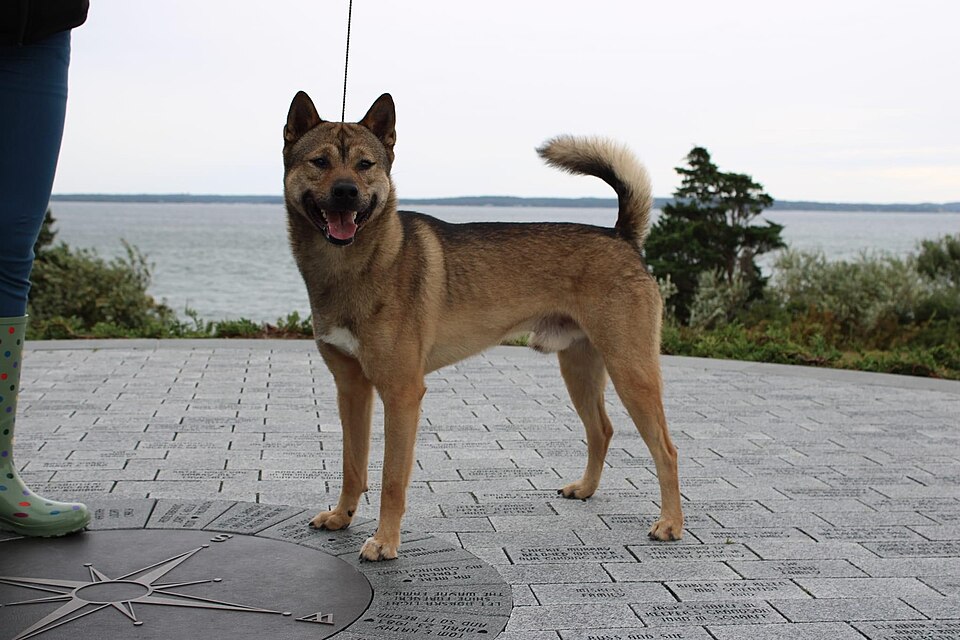
A dark-coated Kishu Ken turns toward the camera. Manager 67, Wikimedia Commons[5]

Planning walks for an ordinary workday
Outdoors, the Kishu Ken has a mountain hunting dog’s stamina and pays close attention to sights and scents. At home, the National Kishu Ken Club observes, many well-exercised dogs settle readily and can spend a long stretch on a mat. If you meet a quiet adult Kishu Ken in someone’s living room, ask the person who cares for the dog what the two of them did outdoors that day. [1][3]
The AKC describes two daily needs for a Kishu Ken: physical activity and something to engage the mind. Think through your busiest workday. Who can take the morning walk? Which route leaves time to walk at an easy pace and stop while the dog investigates a patch of grass? In the evening, who can take a different route or hide something for the dog to find? A weekend hike suits the breed’s stamina. Those ordinary weekday outings shape how the dog spends most of the week. [1][3]
One skill worth practicing on walks is checking in. Choose a quiet stretch and let the dog explore on leash. When the dog finishes sniffing and looks up at you, offer a small treat right away, then carry on walking together. The dog gets to follow an interesting scent and learns that glancing back at you pays off. Once this comes easily on familiar ground, try a slightly busier stretch. If an unfamiliar dog holds your dog’s gaze, give the two more room. Resume the exercise at a distance where your dog can turn back to you. [1][3]
Keep practice brief and give feedback promptly. Food and the chance to work with someone familiar can both motivate a Kishu Ken. If you keep repeating a cue, it is easy to miss the moment the dog gets it right. Pick one routine the whole household can teach the same way, such as waiting inside the door before a walk. One person opens the door while another holds the leash and rewards the wait. When you swap jobs the next day, keep the sequence the same. Once the dog understands, going out for the walk can itself reward the wait. The AKC recommends lively, consistent training and advises against harsh punishment. [1]
Walk the route near your home beforehand. In a narrow hallway, another dog may be only a step away when you come through the door. On a wider street, you may have room to turn early. The breed club notes that some Kishu Ken react strongly to unfamiliar dogs or other animals, and that continued practice matters especially during adolescence. When getting to know a particular dog, ask to join the usual caregiver on a short, familiar walk. Where does the dog pause to watch? How much room does the dog need to turn away with the handler? Where does the dog settle afterward? Those details help a family judge whether they have the time and space to carry on a routine that suits this dog. [3]
Reaching the undercoat during seasonal shedding
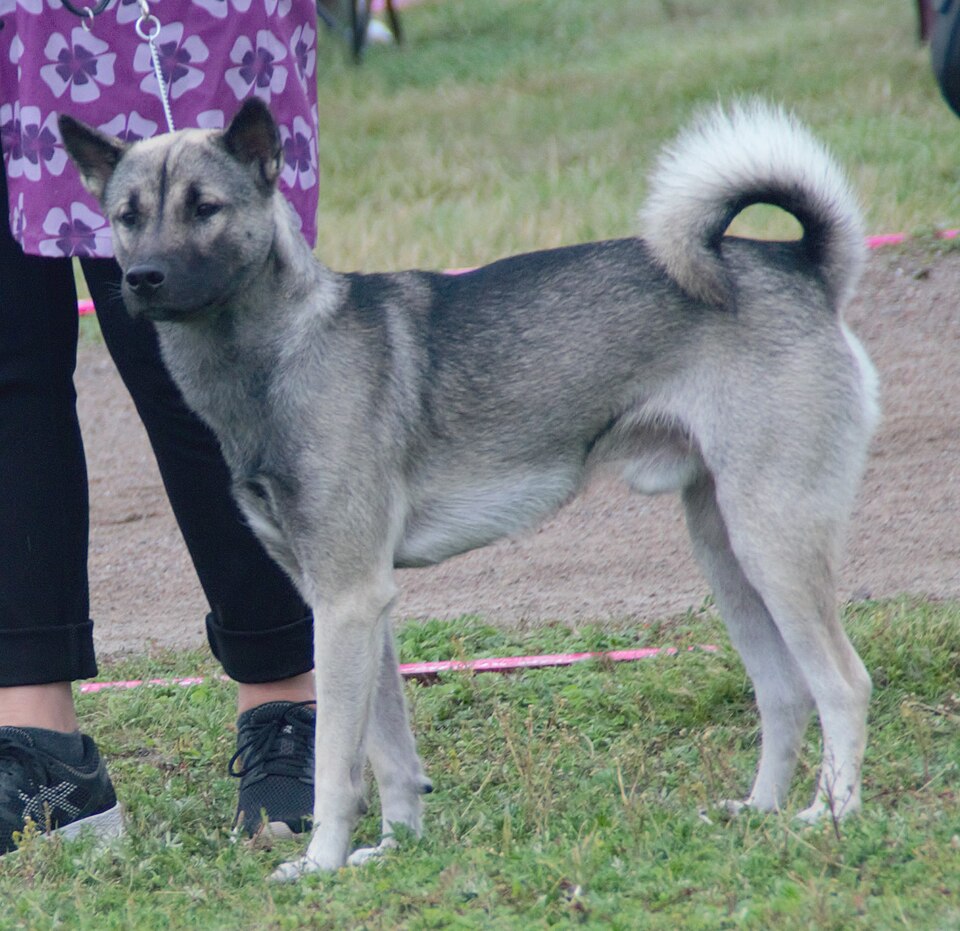
A sesame Kishu Ken carries its tail over its back. Canarian, Wikimedia Commons[6]

On the sesame dog, the hair along the back follows the outline of the body. Around the outer curve of the tail, it is visibly longer. The Kishu Ken has a straight, fairly harsh outer coat with a soft, dense undercoat beneath it. Between seasonal sheds, an occasional pass with a rubber brush or slicker helps lift loose hair. Check the nails at the same time and trim them as needed. The heavier grooming comes when the dog sheds its coat once or twice a year. At those times, a bath followed by thorough blow-drying helps release loose undercoat. As you brush, you can see where loose hair is still collecting. [1][2]
Brushing also gives you a regular look at the skin. The AKC reports environmental and food allergies in some Kishu Ken and lists autoimmune thyroiditis among the breed’s health concerns. If your dog keeps scratching or the same patch of skin stays red, note when and where it happens, what the dog has been eating and where you have been walking. Take those notes to the veterinarian. When asking a breeder about a puppy’s family history, request the parents’ kneecap, hip, elbow, eye and thyroid evaluations. Check which dog each report covers, the date and the findings. The parents’ records help you understand the puppy’s family history. A veterinarian can assess the symptoms of the dog in front of you. [1]
Before bringing a Kishu Ken home, picture next Tuesday. Who has time in the morning to wait while the dog finishes sniffing? Who can take the longer way around a crowded corner that evening? Where can the dog stretch out afterward? A family that enjoys those ordinary days has room for the Kishu Ken’s stamina and concentration outdoors, and for the quiet company of a dog resting nearby when the walk is done.
References
-
[1] American Kennel Club. Kishu Ken.
-
[2] Fédération Cynologique Internationale. FCI-Standard N° 318: KISHU. English edition, February 10, 2017.
-
[3] National Kishu Ken Club. National Kishu Ken Club.
-
[4] Manager 67. File:Katsuichime Go Tomoe.jpg. Wikimedia Commons.
-
[5] Manager 67. File:Akiyama No Roushya Koujiro.jpg. Wikimedia Commons.
-
[6] Canarian. File:Kishu-sesame2.jpg. Wikimedia Commons.