American Keuda names a Kitten Evaluation Under Direct Assessment story: literature describes Southwestern barn/semi-feral cats selected for mousing and hardiness. REFR lists AKE. Function-first local evaluation—not a show-aesthetic origin myth.[1][2]
Local colony looks
Selecting for ability rather than colour keeps coats highly variable; some observers note Mau-like bodies and belly flaps. Resemblance is observation, not a genetic certificate. Without a unified show standard, avoid one ‘ideal photo’ gate.[1]
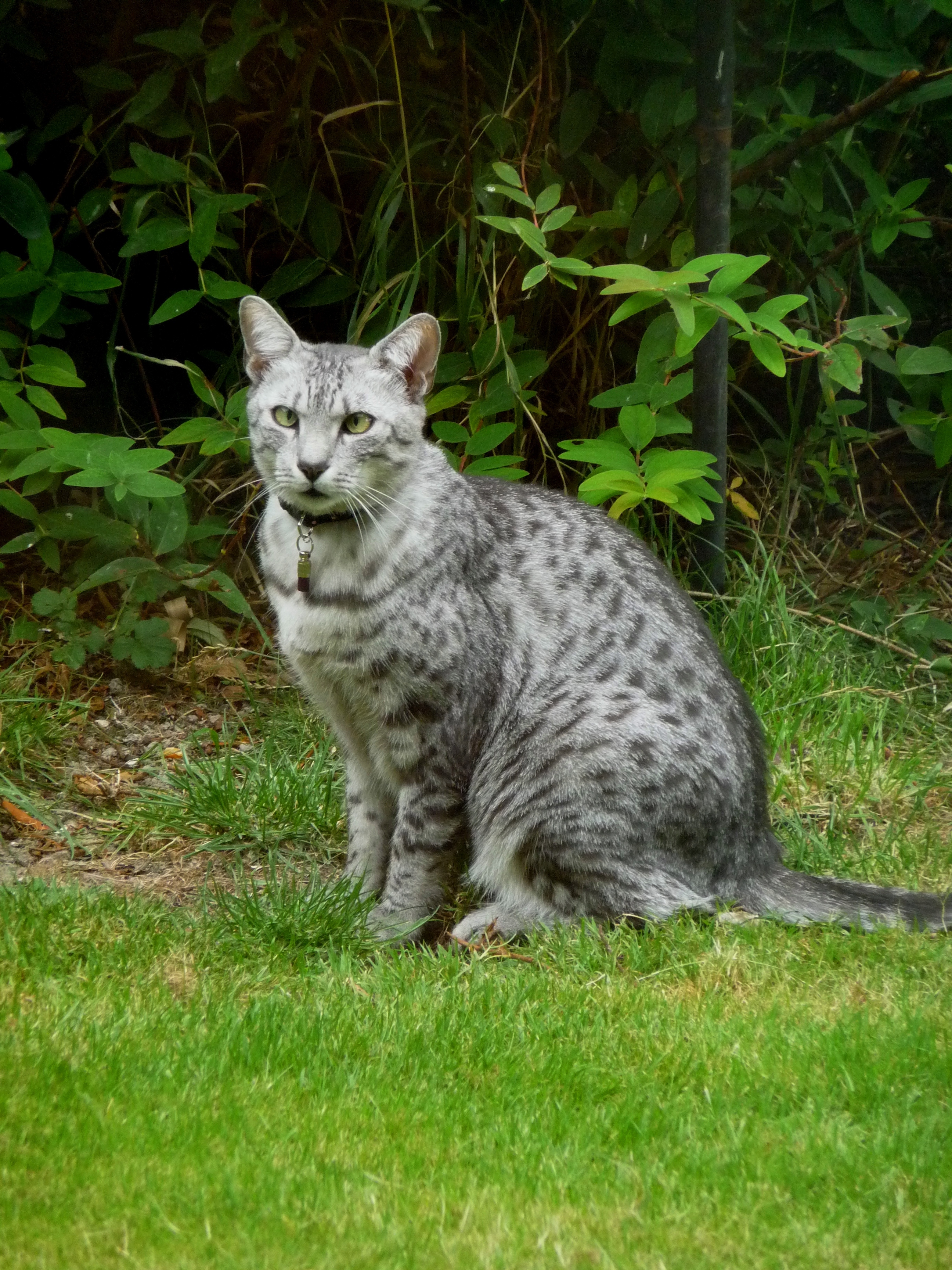
Fig: Egyptian Mau look cue; sources note resemblance without proving direct Mau blood. Lil Shepherd, Wikimedia Commons


Fig: Belly-flap/athletic cue for working-cat talk—not a registered Keuda. Drhesslen, Wikimedia Commons


Fig: Spotted domestic cue; Keuda talk stresses function over one coat recipe. Drhesslen, Wikimedia Commons

Home life
In modern homes, use five pillars—climbing, chase play, secure windows—not default free-roam hunting. Active cats need predictable interaction; ‘working cat’ labels do not skip neuter/vaccine records.[3][1]
Evidence gaps
Historical programme stories are not modern epidemiology; state missing prevalence tables. REFR listing does not imply census size. Lameness, weight loss or infection risk still follow individual veterinary paths.[1][2][3]
Local evaluation project: function-first is not wild-blood proof
The Domesticated excerpt frames American Keuda as a US shorthair barn-cat programme selecting solely for mousing, explains the acronym, keeps inbreeding low so coats stay diverse, and notes some cats resemble Egyptian Mau. REFR listing AKE only shows small-registry name acceptance—not proof the programme is active or large. Mau-like looks are not direct Mau pedigree; working-cat history is not a modern mandate for free-roaming outdoor life. Descendants in homes still need indoor five-pillar safety and enrichment—not a ranch cosplay. Keep citation numbers tied to sentences you actually read; if only an abstract was available, say so in internal notes and do not promote it to full-text evidence. A household decision list should include traceable origin, a recent exam, a budget for environment changes, and a care path when pain or elimination changes appear. Those steps fit rare breeds and local landraces alike and reduce treating association wording as a lifestyle promise. Avoid two common swaps: treating “association-allowed looks” as “proven for every home,” and treating “welfare policy raises concern” as “every similarly shaped cat is already diagnosed.” Keep source layers side by side—breed standard, indoor-environment statement, welfare policy, and the individual veterinary record—each answering a different question. If public sources lack breed-specific screening advice, say that a public prevalence/screening table was not found instead of borrowing a neighbour breed’s numbers. That is how a mid-length profile can carry both recognisable traits and executable limits. Taken together, treat the article as a three-part kit—look recognition, environment readiness, and health boundaries: check recognisable traits against association clauses, audit the home with the indoor five pillars, and return pain, lameness, elimination or skin changes to an individual veterinary path. That keeps a mid-length profile from inventing husbandry anecdotes or turning an ideal type into a promise about every cat. Add a check order: copy the association name, code and update date first, then observable coat/tail/ear/eye clauses, and only then faults and disqualifications. Turn those clauses into a look-alike checklist that never answers “is it healthy.” On environment, tick safe place, separated resources, play/predation, predictable interaction and sensory respect—and fix missing ticks. On medicine, keep vaccine/parasite records, neuter status, prior imaging/labs, and the clinic to call when something changes. If a source offers stories without records, write the gap into the adoption decision instead of filling it with adjectives. Those four steps let traits and boundaries land as household actions. Final reminder: do not pad boundaries with empty disclaimers, and do not invent first-person feeding diaries; every look claim should point back to a read standard or report sentence, and every health concern to veterinary or welfare-policy text. After nail trims, combing or litter changes, log appetite and jumping for two days so environment changes are not confused with pain signals. In multi-cat homes, do not leave the only warm spot or windowsill to the largest cat—short-legged or sparse-coated cats need alternate safe sites. Before bringing home unusual looks, ask whether local clinics can refer skin, orthopaedic or genetics questions—do not assume a boutique brand equals clinical experience. Copy the association page’s update date into household files so outdated screenshots do not settle registry arguments later. If readers keep only three lines: standards identify looks, statements govern environments, and medical records govern this one cat.