The Finnish Lapphund’s traditional job was herding reindeer for the Sámi. In Lapland, in northern Europe, its ancestors first accompanied people hunting reindeer. Later, as herders moved their animals to fresh pasture, the dogs helped steer the herds. A dog working close to a reindeer had to dodge a sudden swing of its antlers while keeping track of the herder and the rest of the moving herd. That combination is still familiar in a household Lapphund. This is a dog that can make a quick decision on its own and still cares very much where its people are and whether they are coming along. [1]
Look at the black dog standing on the grass. Follow the outline from the neck along the back and you can see a substantial body and a full tail that curls up over it. Below the long coat are sturdy legs. The Finnish Lapphund is a medium-sized herding dog that stands roughly half a metre at the shoulder. Its thick coat makes it look bigger than it is. In motion, it is light on its feet and can break from a trot into a sprint. The rounded outline of a Lapphund standing still gives little sense of how quickly the dog on the other end of a leash can move. [1][2]

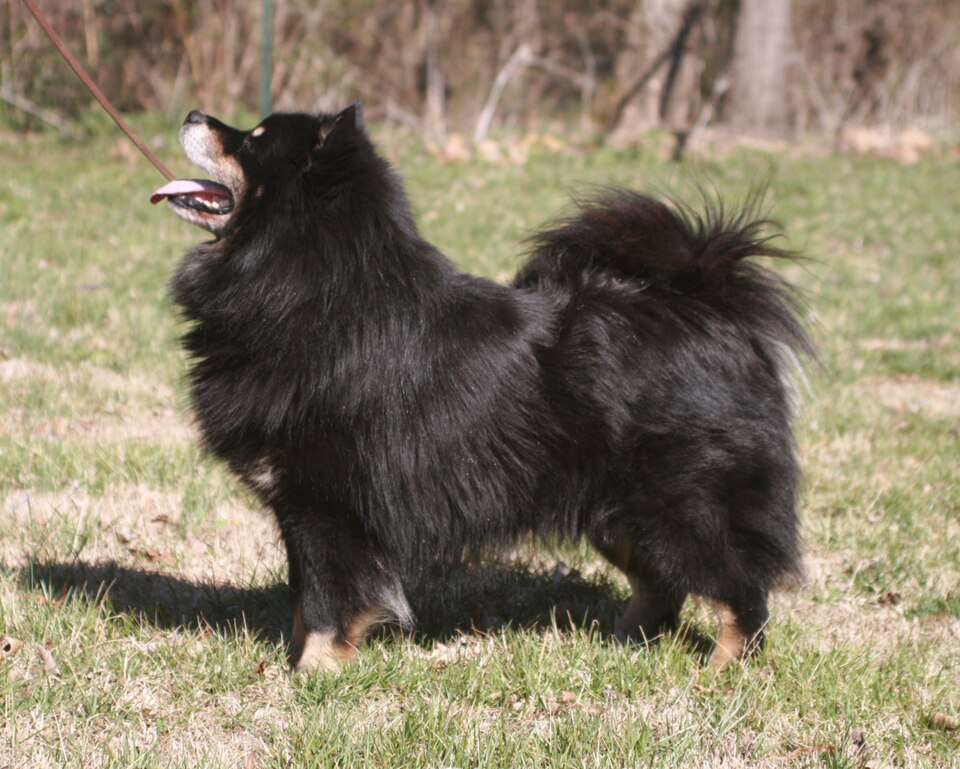
A Finnish Lapphund stands in profile. Leeza1331, Wikimedia Commons[2]
Seen head-on, the pale eyebrows of another Lapphund, Elbereth Norppa, catch the eye. Look beyond the markings to the shape of the head. It is broad, with well-spaced ears that are wide at the base and slightly rounded at the tips. The hair on the cheeks blends into a ruff around the neck. A Lapphund’s ears may stand upright or fold at the tips. Compare Norppa with the brown male pictured farther down and you can see how much facial colouring and ear carriage can vary within the breed. [1][3][4]


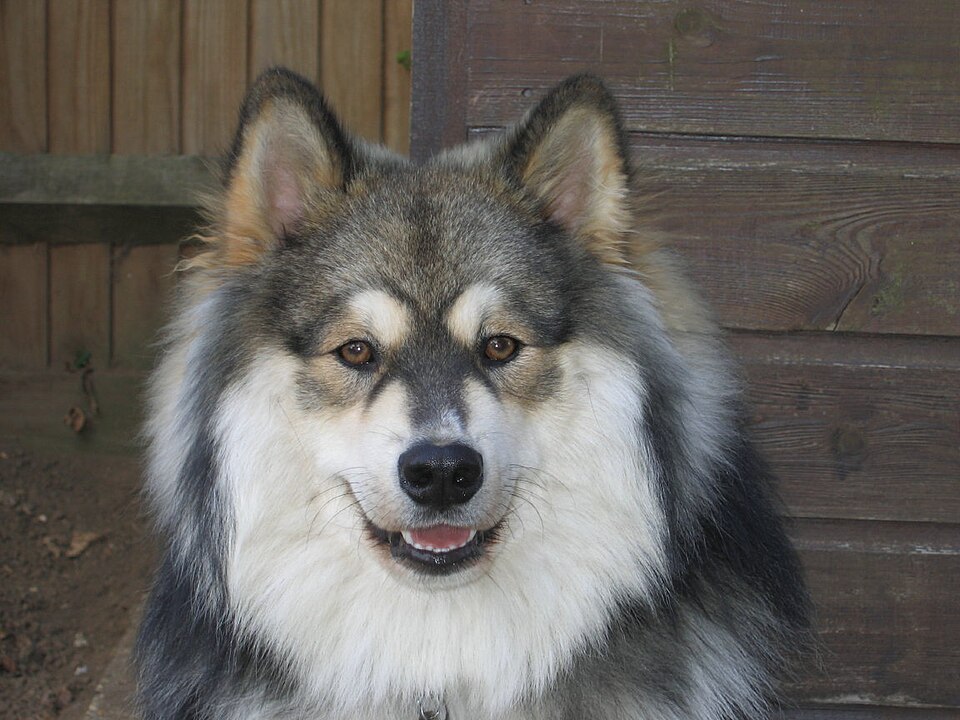
Pale markings frame Elbereth Norppa’s eyes. Apdevries, Wikimedia Commons[3]
Who goes along on the daily walk?
A dog that could keep pace with a reindeer herd may show little inclination to run around the yard alone. The American Kennel Club (AKC) describes the Finnish Lapphund’s exercise needs as moderate. A long, brisk walk with someone each day is usually enough. Half an hour of playing ball with its owner or playing with another dog it gets along with can also meet that need. What those examples have in common is a companion. When considering whether a Lapphund will fit into your home, start with who can go out on a weekday and when. That tells you more than the size of the yard. [1]
Think of a route near home that you would actually take. If you enjoy walking briskly, choose a stretch where you can keep a steady pace. If you prefer playing together, walk to a securely fenced area where you can take off the leash and bring out a ball. A dog that passes up the ball but loves to put its nose to the ground might enjoy a search game along the way. Tracking, agility and obedience are also activities Lapphunds can take part in. Start with something this particular dog enjoys and someone in the family will happily do every day. Then work out who can take over when it rains or a shift runs late. [1]
Give the dog time to look back at you
Out on a walk, a more immediate question than how far to go is what to do when something suddenly comes toward you. The AKC links the Lapphund’s pronounced startle reflex to the quick movement it once needed to dodge antlers. Suppose a cart rolls out of a doorway and your dog jumps sideways. Step aside with the dog and let the cart pass. When the dog turns to look at you again, give a familiar cue and set off together. An ordinary walk gives the dog a chance to find its bearings and fall back into step with you after a surprise. [1]
You can begin building that understanding in puppyhood. The AKC recommends gently introducing puppies to different people, places and everyday situations between about seven weeks and four months of age. A doorway the family uses often is one place to start. One person can stand with the puppy on a leash, far enough away for it to relax, while someone else opens the door and walks through as usual. When the puppy watches the person and then looks back at its handler, reward it and walk away together. Next time, try a different person or another entrance. Lapphunds learn quickly and have minds of their own. Using the same short cue helps the puppy understand what to do each time the door opens. [1]
Count the hours between walks when deciding whether the breed will suit your household. Finnish Lapphunds like to be with their families and tend to bark. Regularly spending long stretches alone can lead to behaviour that becomes difficult to live with. If your front door opens onto a shared hallway, you might put a mat a little way back from the door, somewhere the dog can still see the family. When someone passes, guide the dog to its mat to settle. If everyone is out from morning to evening, work out who can come back during the day for a walk. Even a long weekend hike leaves those weekday afternoons empty. [1]
Make time for the undercoat during shedding season
On the brown male below, the pale plume of the tail stands out against the shorter hair on the fronts of the legs. The outer coat also grows long around the neck and down the backs of the thighs. Underneath lies a short, soft, dense undercoat. To brush it, start at the dog’s side. Part a small section of the outer coat and gently brush out the loose hair beneath it, then work around the sides of the neck and the backs of the legs. Working in sections makes it easier to tell whether the brush has reached the undercoat. A single sweep from back to tail can skim right over it. [1][4]
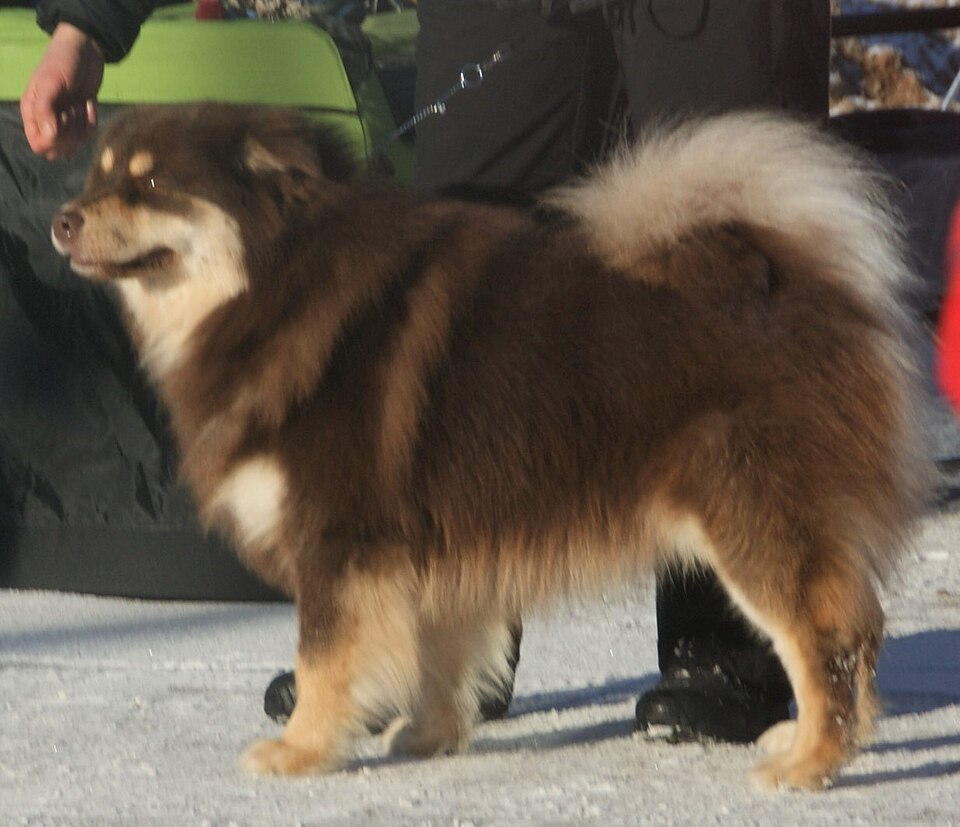
A pale tail plume rests on the brown male’s back. Canarian, Wikimedia Commons[4]
Plan on brushing once a week for much of the year and daily during shedding season. The quiet spell after a walk, once the dog has settled, is a good time for it. An occasional bath as needed is usually enough. Leave the double coat intact as the weather warms. Shaving it reduces the dog’s ability to stay cool in warm weather and warm in the cold. After brushing, take a look at the ears. Brush the teeth frequently and trim the nails regularly. Overlong nails can make each step painful for a dog whose daily pleasures include a brisk walk. [1]
Before bringing a Lapphund home, set aside time to go through the parents’ health records with the breeder. Hip and elbow dysplasia are concerns in the breed, as is progressive retinal atrophy, which gradually damages vision. Ask the breeder to show you the hip and elbow X-ray evaluations, the eye examination reports and the DNA test for a specific inherited variant. Check which parent each report belongs to. Together, the records show which screening each parent has had. If your own dog later develops a persistent limp or often bumps into objects in familiar surroundings, describe those changes to your veterinarian, who can assess the dog’s joints or vision. [1]
References
-
[1] American Kennel Club. Finnish Lapphund Dog Breed Information.
-
[2] Leeza1331. File:Janmanin Aleksanteri.jpg. Wikimedia Commons.
-
[3] Apdevries. File:Finnish lapphund Elbereth Norppa 1.jpg. Wikimedia Commons.
-
[4] Canarian. File:Finnishlapp-liver&tan.jpg. Wikimedia Commons.