Bouvier des Flandres means, roughly, “cattle drover of Flanders.” The breed belongs to the Herding Group, and cattle were at the heart of its early work. A farmer in Flanders might rely on the same dog to move a herd, haul goods by cart and keep watch over the farm. Moving cattle took strength, but it also took a dog that could keep track of the farmer while the herd was on the move. One part of that working life is well worth keeping today: a little time each day when you and your dog have something to do together.[1]
In the show photograph, let your eye travel from the Bouvier’s shaggy head along its back. The line from the shoulders is nearly level. Beneath it are a compact body, a deep chest and sturdy legs. The American Kennel Club (AKC) breed standard describes a short, broad back and a chest that reaches the elbows, along with the agility expected of a working dog. The Bouvier in the garden has shorter hair along its sides, making it easier to see where the neck and shoulders meet the body. Look at the two dogs together and you can see how much of that broad outline comes from the coat.[1]
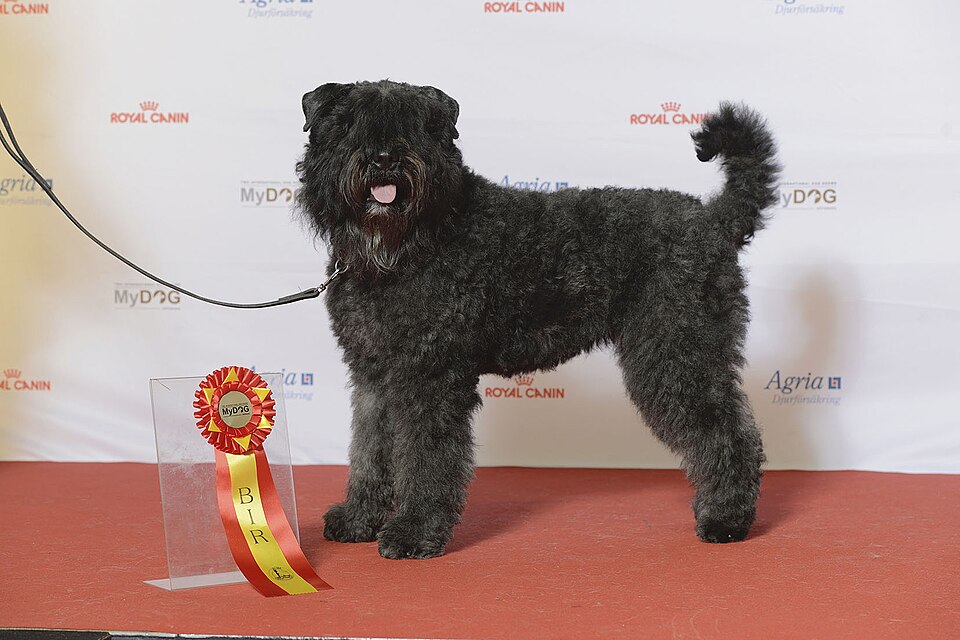
A Bouvier des Flandres stands in profile. Svenska Mässan, Wikimedia Commons

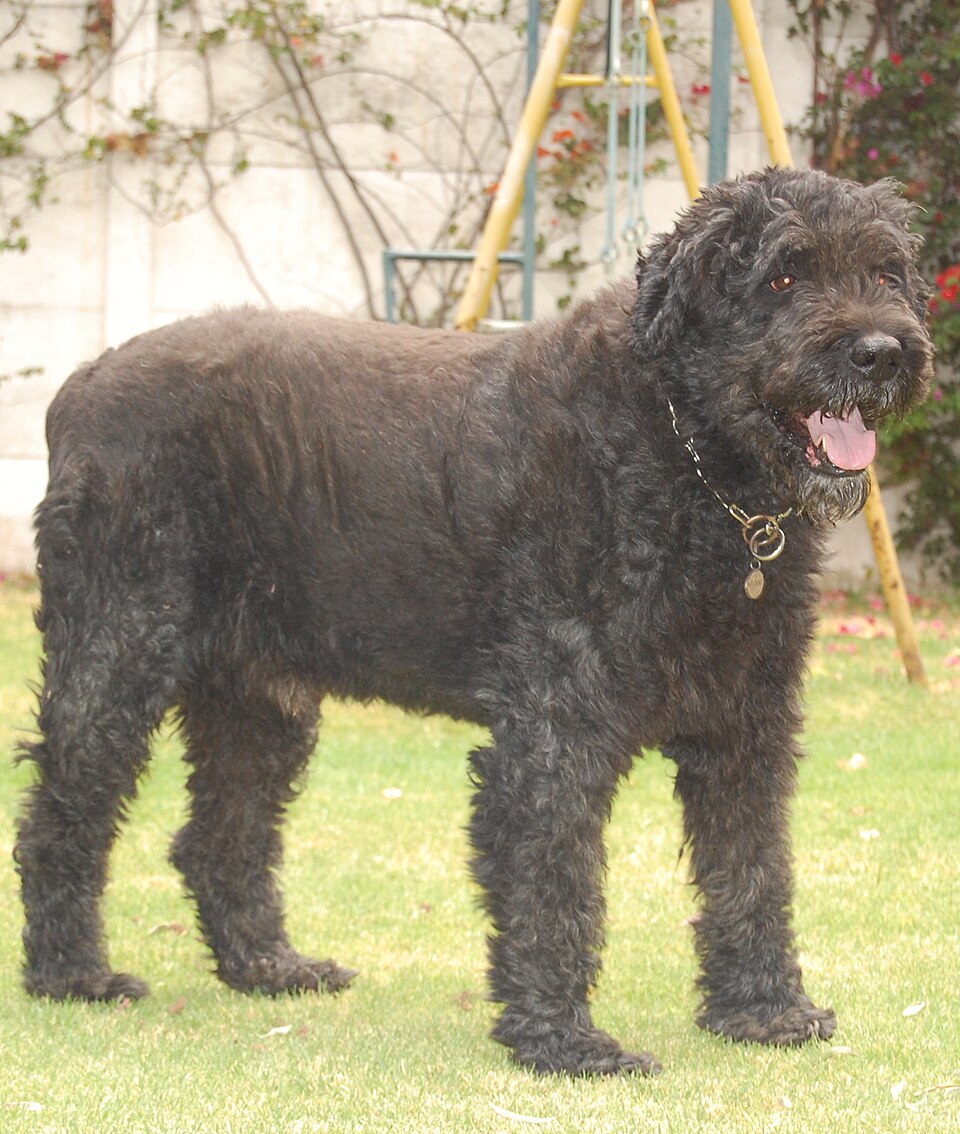
A Bouvier des Flandres stands in a garden. Vyperx1, Wikimedia Commons[5]

Start with a glance back on a walk
A city walk offers few chances to move cattle, but plenty of chances to notice a partner’s signal. The AKC describes Bouviers as willing partners in activities such as obedience and herding once they understand the task. On an everyday walk, give yours a small job at a turn: look to you to see which way you’re going. With a dog this strong, that glance can make it easier for both of you to take a fork in the path or give a pedestrian room to pass.[1]
Choose a quiet stretch of path. With your dog on leash and still beside you, say its name once. When it turns to look, give it a small reward at your side, then make the turn and carry on with the leash loose. Looking back earns the dog a treat and lets it get on with a walk it enjoys. Once it can follow you easily at a familiar corner, try another route. If something ahead holds its gaze, move farther from the distraction and try again where your dog can pay attention. You’ll know what to look for on the next turn: your dog sees you change direction and comes along.
Leave time for your Bouvier to explore, too. The AKC recommends a roomy, fenced area where the dog can stretch out and run. Let it wander and sniff, then call it back while it’s still fairly close. Reward it when it reaches you and send it off to play again. Calling partway through a game gives the dog another round to look forward to. Bouviers have a strong inclination to chase, so when choosing a place to play, walk the fence and make sure the gate latches. An inviting expanse of grass tells you little about how securely it’s enclosed.[1]
If you hike or jog, it’s easy to picture a grown Bouvier keeping you company. The first weeks with a puppy call for a different sort of outing. Bouvier puppies grow quickly, and the AKC recommends limiting strenuous exercise while they’re growing. A short walk gives a puppy plenty to do: get used to the leash, turn at the sound of its name and pause beside you when someone unfamiliar comes along. Longer runs can wait. For now, give the puppy time to take in the people, dogs and sounds along the way.[1]
Give your Bouvier a place to go when visitors arrive
Keeping watch over the farm was part of the Bouvier’s work.[1] For a large dog that notices every sound at the entrance, it helps to learn early where to go when the doorbell rings. Start while the house is quiet. Choose a mat some distance from the door, guide your dog onto it and reward it when all four paws are on the mat. Then give it a signal that it can leave. Once the spot is familiar, have one person knock softly while another walks the dog to the mat. Practice opening the door, letting a visitor in and exchanging greetings as separate steps. When the doorway gets busy, your Bouvier will have a familiar place to settle.
To see how a Bouvier might fit into your household, pick an ordinary Wednesday. Who has time for an unhurried morning walk? Who will go out after dinner to play with the dog somewhere secure? Who can take over when it rains or someone works late? Ask each person what they would say to call the dog back or ask it to wait at the door. If everyone has a different word or expects a different response, start by agreeing on the cue you’ll use most. For a dog that enjoys working with people and may take its boredom out on the furniture, the outings you can count on each week matter more than an occasional long hike.[1]
Make time each week to comb through the double coat
In the close-up, heavy eyebrows hang over the eyes, a long mustache extends from either side of the nose and a beard hangs from the lower jaw. When you pick up the water bowl, glance at that beard. It easily collects water and bits of food. On the body, a harsh outer coat and a dense, soft undercoat work together to keep out the weather. The AKC recommends brushing once or twice a week with a pin or slicker brush and a large comb. Part the coat into small sections. Brush one section open, then ease the comb through the same spot, slowing down wherever it catches.[1]
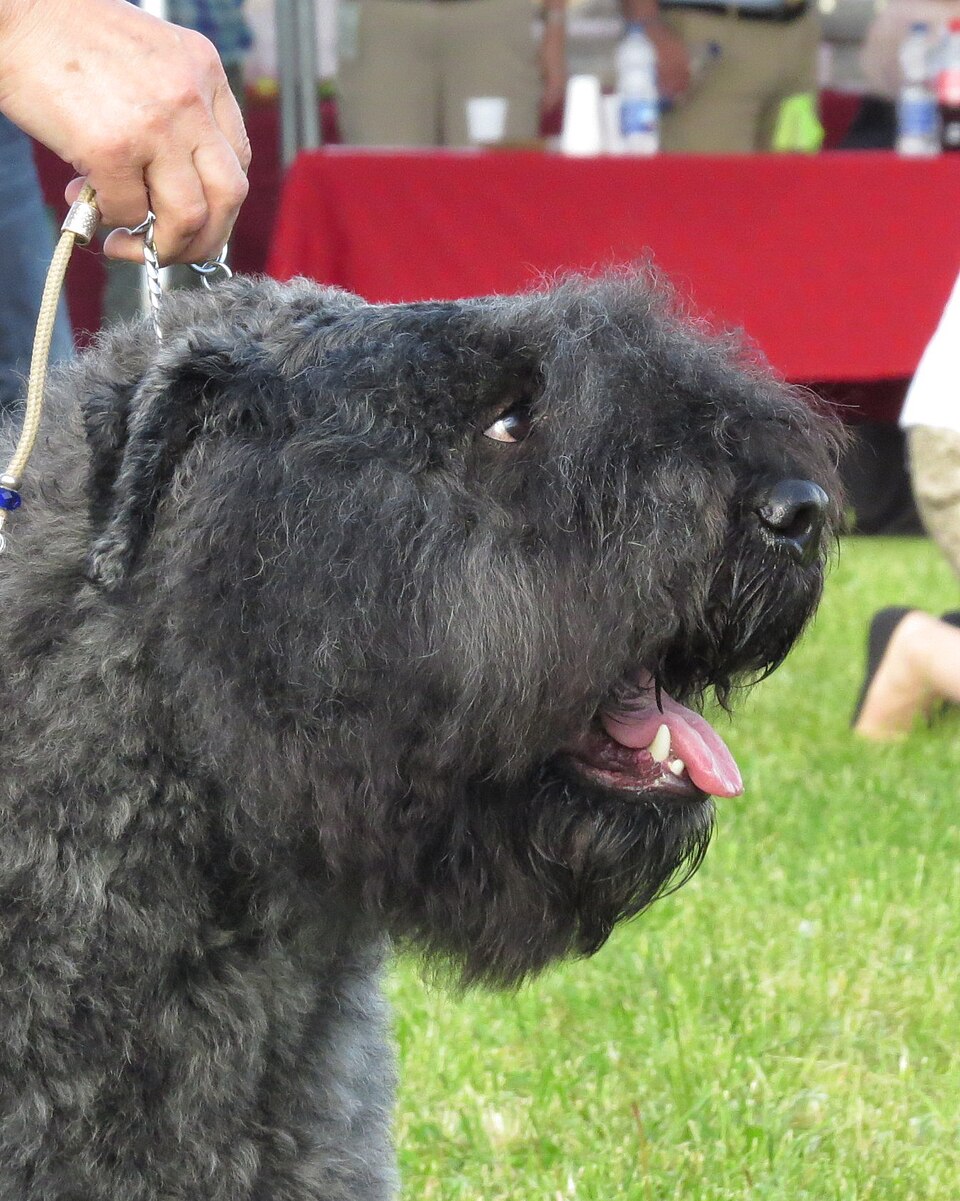
A Bouvier’s brows frame its mustache and beard. Томасина, Wikimedia Commons[6]

The teamwork you practice on walks has a place in grooming, too. Let your dog stand comfortably in good light. When it lets you rest a hand under its chin for a moment, reward it and take your hand away. Once that feels familiar, gently clean one side of the beard, working up to both sides. It’s also a chance to see the corners of the mouth. Check the paws on brushing day as well. The AKC suggests trimming the nails about every one to two weeks. Think about who at home has the patience to help your dog feel comfortable having its chin and feet handled.[1]
Which health concerns should you know about before bringing a Bouvier home?
If you’re getting a puppy from a breeder, ask to see the health records for each parent and go through the results together. The American Bouvier des Flandres Club recommends hip, elbow, heart and eye screening for both parents. The hip and elbow evaluations give information about how each parent’s joints developed. The heart and eye examinations have their own reports. Share the parents’ records with your veterinarian as family history. At your puppy’s visits, the vet can also assess how the puppy is growing, how it moves and how its own health is developing.[1][2]
Everyone who might be alone with the dog should know how to recognize one emergency. The Bouvier’s deep chest puts it at risk of bloat, in which the stomach expands and can twist. If your dog suddenly keeps retching without bringing anything up, or develops a swollen belly with signs such as drooling or marked restlessness, call an emergency veterinarian and take the dog in immediately. Anyone who walks your Bouvier should know where to take it late at night. Before it comes home, save the clinic’s number and directions on each caregiver’s phone.[1][3]
References
-
[1] American Kennel Club. Bouvier des Flandres Dog Breed Information.
-
[2] American Bouvier des Flandres Club. Health Statement for the American Bouvier des Flandres Club. June 18, 2026.
-
[3] American College of Veterinary Surgeons. Gastric Dilatation-Volvulus.
-
File:Grupp1, BOUVIERS DES FLANDRES, Rajfax Magic Maya Of Keewee (23683385663).jpg
