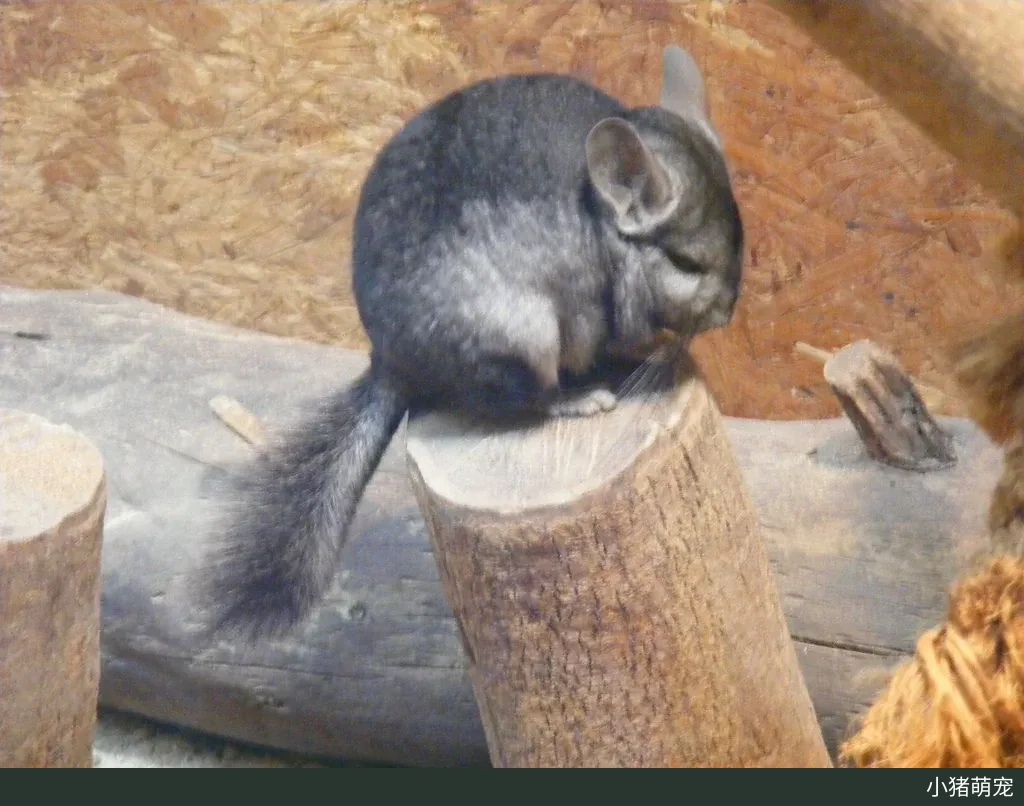
A dark gray chinchilla perched on a wooden stump in a zoo exhibit, fluffy tail hanging behind (the photographer noted Lakeland Wildlife Oasis, United Kingdom, 14 June 2011). Photo: Marie Hale; source: Flickr; license: CC BY 2.0.
Chinchillas—often called “long-tailed chinchillas” or simply chinchillas in the pet trade—are native to the Andes of South America and known for dense, soft fur and remarkable jumping power. Pet chinchillas are usually captive-bred domestic animals that can live 10–20 years; they dislike heat, need a high-fiber diet and regular dust baths, and dental disease is very common. Both wild species are Endangered on the IUCN Red List, and the entire genus is on CITES Appendix I. Before bringing one home, think through habits, costs, and legal sourcing.
Natural habits
The genus Chinchilla currently recognizes two species: the long-tailed chinchilla (C. lanigera, now often spelled C. laniger) and the short-tailed chinchilla (C. chinchilla). Per the Mammal Diversity Database maintained by the American Society of Mammalogists, the long-tailed chinchilla is restricted to Andean foothills and coastal mountains of northern Chile; the short-tailed chinchilla is confirmed in Chile, while whether wild populations remain in Argentina and Bolivia is uncertain. The Merck Veterinary Manual assigns pet chinchillas to the long-tailed species and notes that all U.S. domestic chinchillas descend from 13 individuals imported in 1927.
Wild chinchillas live on dry, sparsely vegetated rocky slopes; the Merck Veterinary Manual records elevations of about 3,000–5,000 m, with dens in caves or rock crevices. Chinchillas are social; the RSPCA notes wild colonies can exceed 100 animals, so solitary housing is not recommended. They are most active at dusk and night and like to sleep packed into tight spaces by day; hind legs are long and powerful—the RSPCA mentions jumps over 1.8 m.
As prey animals, chinchillas freeze or bolt for cover when startled. They also have a distinctive defense—“fur slip”: when grabbed they shed a large patch of fur so the predator is left holding a tuft. Domestic animals can do the same when handled roughly, fighting, or overexcited; the Merck Veterinary Manual notes new fur may take months to grow back and may differ in color. Chinchilla fur is extremely dense: the RSPCA says each follicle can produce 60–90 hairs, versus typically one in humans—one reason they were heavily hunted for fur historically.
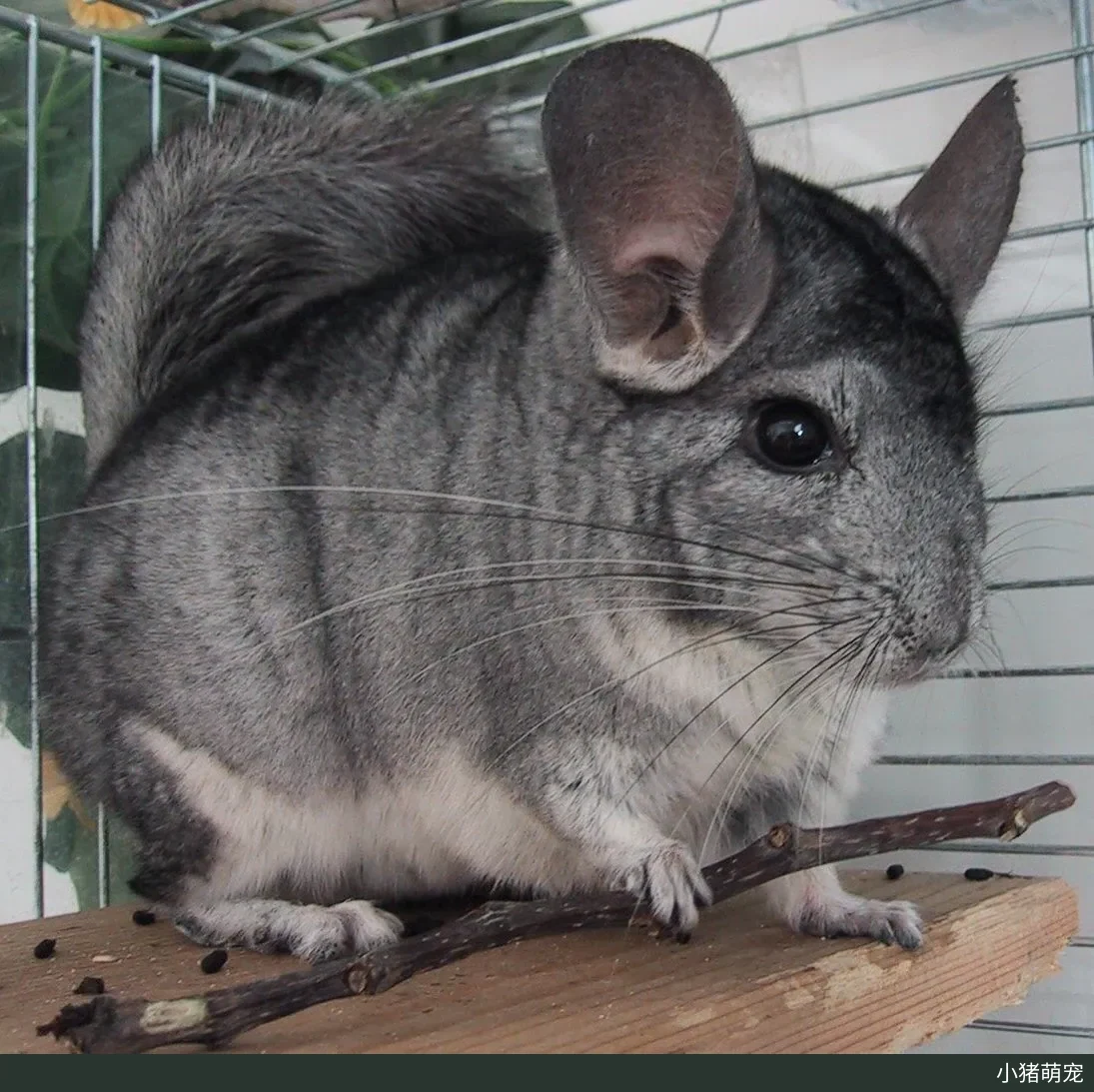
A gray pet chinchilla on a wooden board inside a cage, forepaws on a fruit-tree branch. The photographer notes pet chinchillas like to chew pear or apple branches and eat the buds first. Photo: Salix; source: Wikimedia Commons; license: CC BY-SA 3.0.

Housing and diet
Temperature is the first hurdle. Chinchillas tolerate cold better than heat: the RSPCA recommends a dry indoor space with ventilation but no drafts, ideally 10–18°C; the Merck Veterinary Manual warns that ambient temperatures above about 26.7°C, especially with high humidity, can cause heatstroke, and warm, damp conditions also mat the coat. In hot, humid summers that often means relying on air conditioning for long stretches.
Cages must be large and safe. The RSPCA recommends a spacious, sturdy wire cage or a secure room, with horizontal running space plus platforms and branches at different heights for jumping—but continuous drop distances should not exceed 60 cm. Standing long on wire flooring injures feet, so solid surfaces such as wood are needed; the Merck Veterinary Manual also warns mesh spacing must be narrow—young chinchillas often fracture tibias when hind legs catch in wide mesh. Provide hides and a nest lined with hay in a quiet spot, away from predatory pets such as cats and dogs. Supervise all out-of-cage time so they do not chew electrical cords.
Dust baths are essential. Chinchillas keep the coat healthy by rolling in fine dust; use chinchilla dust (the Merck Veterinary Manual describes pumice or aluminum silicate products). Frequency differs between sources: the RSPCA suggests offering a shallow dish of dust daily, then removing or sieving it; the Merck Veterinary Manual suggests 2–3 times a week for at most 15 minutes each time, warning that too-frequent baths can irritate eyes and cause conjunctivitis. Work out a schedule with an exotic-experienced veterinarian.
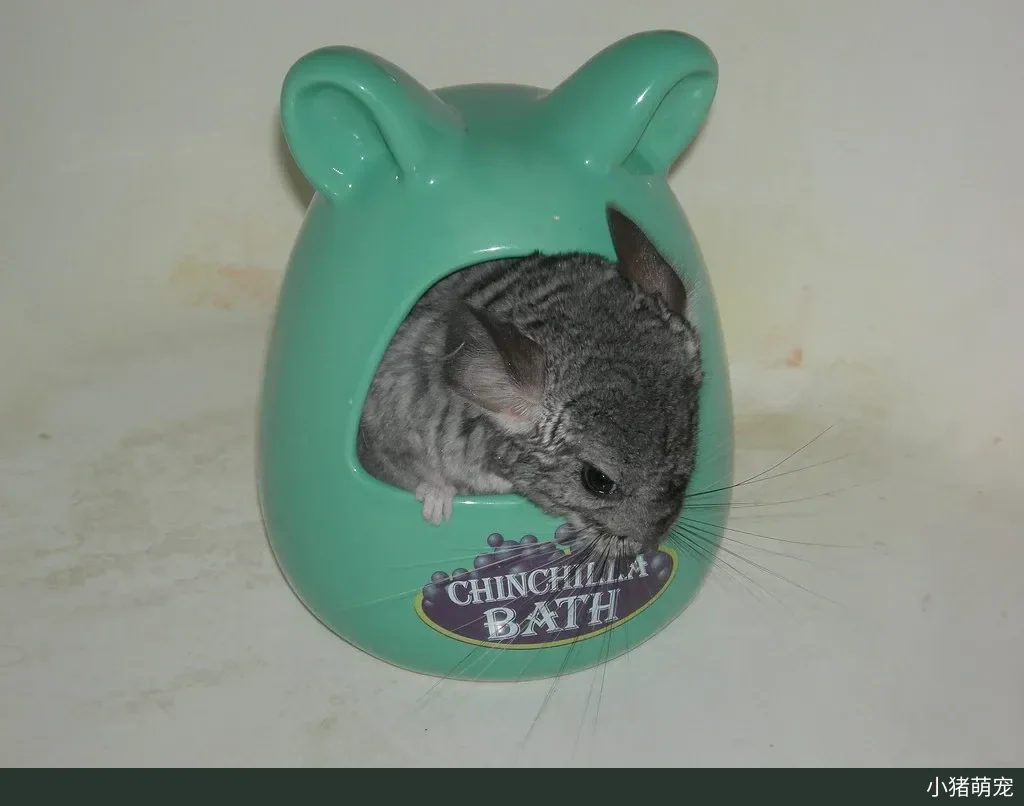
A gray chinchilla inside a green ceramic dust-bath crock labeled “Chinchilla Bath.” Photo: Arne Heggestad; source: Flickr; license: CC BY-SA 2.0.
Diet is hay-first. Chinchillas need abundant crude fiber; VCA Animal Hospitals veterinarians recommend free-choice low-calcium grass hay such as timothy or orchard grass, refreshed daily; alfalfa is high in calcium and should be only an occasional small amount. Chinchilla-formulated pellets as a supplement—about 1–2 tablespoons a day—with any diet change made gradually over several days. Do not feed seeds, nuts, or grains, or dried fruits and vegetables; treats are optional—an occasional small piece of low-calcium leafy greens or apple is enough. Change drinking water daily and clean water bottles daily. Like rabbits, chinchillas eat their own cecotropes; that is normal digestion and should not be stopped.
Common health problems
Dental disease is the most common problem. Chinchilla teeth grow lifelong; the Merck Veterinary Manual notes that at routine exams, about one-third of apparently healthy chinchillas already have occult dental disease—insufficiently abrasive diets and genetics may both contribute. Watch for reduced appetite, preferring soft food only, weight loss, fewer feces, a wet chin and forepaws from drooling, tearing, and a poorer coat. Chinchillas often hold out until disease is advanced, and awake oral exams miss about half of lesions, so veterinarians usually recommend a full oral exam under anesthesia. Plenty of hay is the basic prevention.
Digestive problems should be treated as emergencies. Like other rodents, chinchillas cannot vomit. The Merck Veterinary Manual notes constipation is more common than diarrhea; sudden diet change, low fiber, dehydration, or dental disease can reduce stool output; abrupt diet change or overeating can also cause bloat, with depression, labored breathing, and abdominal pain. Diarrhea and soft stools may relate to infection or too much fresh produce or high-carbohydrate food. Seek care promptly if eating drops or stools become fewer and smaller.
Heat and humidity readily cause heatstroke, as noted above. On trauma, tibial fractures from hind legs catching in cage mesh are common, hard to treat, and carry a guarded prognosis. Male chinchillas may develop a “fur ring”—hair wrapped around the penis; the Merck Veterinary Manual recommends checking at least four times a year. Cage mates may also fight and bite; introductions and pairing are best done with veterinary or experienced-keeper guidance.
On zoonoses, the Merck Veterinary Manual identifies Giardia as the main risk in chinchillas; dermatophytes (ringworm) can also spread to people and other animals—handwashing after contact and clean housing are effective protection. There is also reassurance: the manual notes infectious disease incidence is low in pet chinchillas, and many past reports of serious infections came mainly from fur farms.
Conservation status, legality, and ethics
Wild populations are Endangered. The IUCN Red List in 2016 moved both long-tailed and short-tailed chinchillas from Critically Endangered to Endangered (EN). A new assessment for the long-tailed chinchilla was released in April 2025; the full text was not available when this article was written—check the IUCN site for the latest category. The RSPCA notes wild chinchillas were hunted for fur nearly to extinction.
Under international treaty, the current CITES Appendices (valid from 5 March 2026) place the entire genus Chinchilla on Appendix I, with a note that “specimens of the domesticated form are not subject to the provisions of the Convention.” In other words, international trade in wild chinchillas and their products is under the strictest controls, while captive-bred domestic chinchillas fall outside the Convention’s controls.
In China, chinchillas are not native. Article 37 of the Wildlife Protection Law currently in force (revised 2022; effective 1 May 2023) provides that the national endangered-species import–export authority draws up lists of wildlife whose trade is banned or restricted by international conventions, and that wildlife on those lists is managed under the Law after approval by the State Council wildlife-protection authority; Article 40 requires approval to introduce wildlife species from abroad, and Convention-listed species also need an import–export permit. This article found no public mainland-authority reply specifically about domestic chinchillas, so obtain animals only through legitimate channels that can provide provenance and quarantine documents; do not buy animals of unclear origin or ones claimed to be “wild.” When in doubt, consult local forestry and grassland authorities.
Finally, an ethical reminder. The RSPCA notes chinchillas are timid and easily startled; most dislike petting and being held, and suit adults who enjoy watching animals more than children who want a “cuddle pet”; they are social and should not be kept alone; a 10–20-year lifespan is a long commitment. Add year-round temperature control, specialty hay and dust, and finding an exotic-experienced veterinarian—factor in those ongoing costs beforehand. If you decide to keep one, consider rescue chinchillas waiting for homes first; once you take one on, see it through—do not abandon or release it.
References
-
Frohlich J. Chinchillas - Exotic and Laboratory Animals. Merck Veterinary Manual; comprehensively reviewed May 2026, updated July 2026.
-
RSPCA. Chinchillas (page undated).
-
RSPCA. Creating a good home for chinchillas (page undated).
-
Rich G, Hess L, Axelson R. Chinchillas: Feeding. VCA Animal Hospitals (page undated).
-
CITES. Appendices I, II and III, valid from 5 March 2026.
-
CITES. Chinchilla lanigera.
-
IUCN. IUCN Red List version 2016-3: Table 7, updated 7 December 2016.
-
Jiménez J, Deane A, Salazar-Bravo J, Hurtado Materon MA. Chinchilla laniger. IUCN Red List, published 16 April 2025.
-
Mammal Diversity Database. Chinchilla laniger; Chinchilla chinchilla.
-
全国人民代表大会常务委员会. 中华人民共和国野生动物保护法, revised 30 December 2022, effective 1 May 2023.