In the mid-to-late 19th century, English gamekeepers patrolling estates at night needed a dog that could catch up with a poacher in the dark, hold the person, and wait for instructions. They crossed Mastiffs with Bulldogs to develop the Bullmastiff, known as the “Gamekeeper’s Night Dog.” The work called for strength in pursuit and restraint once the gamekeeper took over. [1]
The photograph from the Riga dog show gives a good side view of that build. Follow the line from the shoulders toward the hips and you can see how short and level the back is. Below it are a deep chest, sturdy front legs, and well-defined muscles in the hind legs. The American Kennel Club (AKC) breed standard calls for a dog that combines strength with the ability to move well. Adult males stand about 64 to 69 cm at the shoulder and weigh 50 to 59 kg. Females stand about 61 to 66 cm and weigh 45 to 54 kg. Even a family choosing a female at the smaller end of that range will have a substantial dog on the other end of the leash. [1][2]

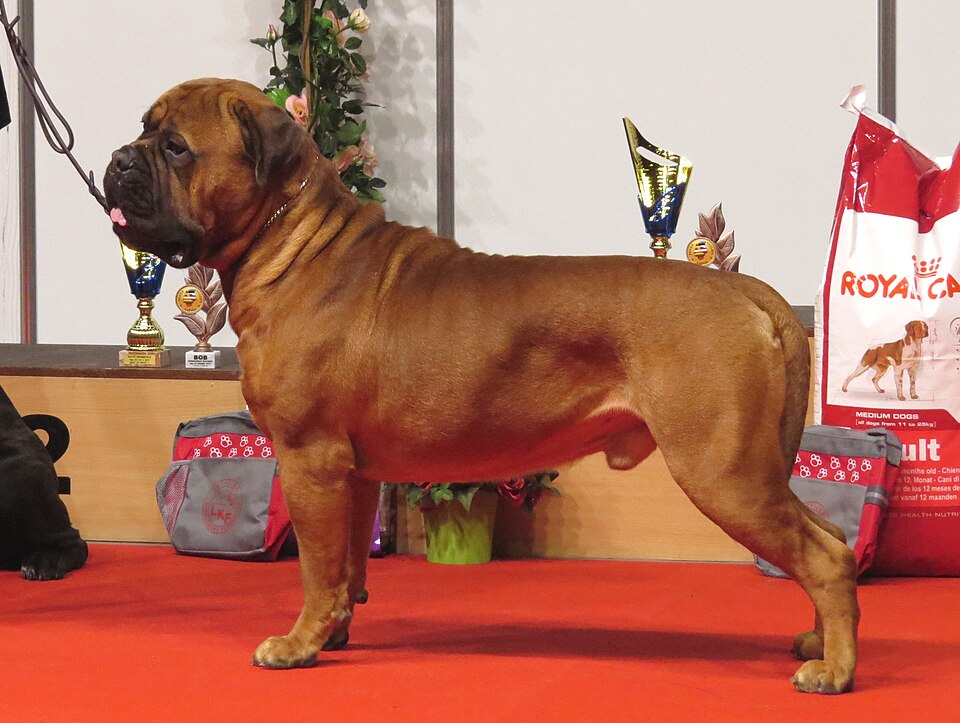
A Bullmastiff stands in profile at the Riga show. Томасина, Wikimedia Commons[2]
Brutus, facing the camera in the next photograph, shows the same build from another angle. His front legs stand well apart, with a broad chest between them. Above them are a wide head, a broad, deep muzzle, and high-set ears that fold down close to his cheeks. Together, the two views give a sense of the breed’s proportions. The handler standing behind Brutus also gives a sense of scale. If a dog this size rushes through an open door, trying to pull him back by sheer arm strength is hard on both dog and handler. [1][3]

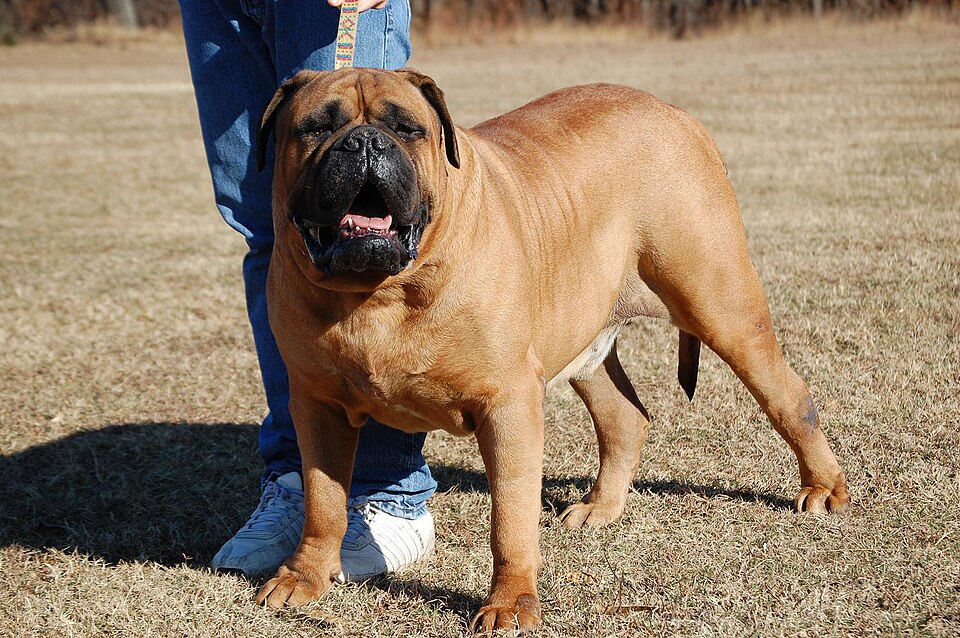
Brutus shows the breed’s broad chest and stance. MIB90210, Wikimedia Commons[3]
The walk starts at the door
A Bullmastiff can be gentle and affectionate with family and still take a keen interest in anyone coming onto the property. The AKC recommends setting rules while the puppy is small enough to guide easily and choosing rules the family can keep when the dog is grown. [1] The front door offers a chance to practice every day. Pick a quiet moment, clip on the leash with the door closed, and use a short cue such as “wait.” Reward the puppy for pausing, then give a release cue and walk out together. At first, reaching for the handle may be enough of a challenge. Once the puppy can wait through that, practice opening the door a crack, then gradually open it far enough to walk through.
The exercise is easier for a puppy to learn if the same things happen in the same order whoever opens the door. Leaving for a morning walk, accepting a delivery, and hearing a neighbor talking outside each ask something different of the dog. Start by having everyone who walks the puppy practice when the doorway is quiet. When a delivery arrives or someone needs to prop the door open to carry things, settle the dog behind another closed door first. On a walk, give the wait a clear ending. When the puppy hears the familiar release cue, the two of you can step outside.
Waiting at the door is one skill. Getting comfortable with the world beyond it takes time of its own. The AKC recommends early socialization. A puppy class gives owners a chance to introduce their dog to other dogs with an instructor present and to ask about difficulties on the leash. Take one skill home from class and practice it in a familiar hallway, then on a quiet street. Bullmastiffs can also take part in obedience and scent work. Even on an ordinary walk with an adult dog, you can pause and give the dog something to find on cue. [1]
Make time for a daily walk
Some Bullmastiffs enjoy being on the move. Others are quite happy to lie down. The AKC recommends moderate daily exercise and suggests brisk walks and outdoor play. If your family likes walking after work, that can be the dog’s outing too, with the distance adjusted to the dog’s age and pace. If your own exercise is a long run, set aside separate time for a walk. A rapidly growing puppy in particular should be able to finish an outing without having to keep up for the rest of a runner’s mileage. Before choosing a Bullmastiff, work out who can take those weekday walks and whether that person can comfortably handle a full-grown dog on a leash. [1]
If you have a yard, look at the fence from both sides. It needs to keep the dog safely inside and keep unfamiliar people and animals from wandering into the space the dog guards. [1] Walk the route you take to collect a package or put out the trash. Which gate sometimes needs to stay open? Who latches it afterward? If a delivery driver has to cross the dog’s play area to reach the door, choose another spot for packages. That leaves the dog a secure place to play even when someone comes to the house.
Check the skin as you brush
The Bullmastiff’s coat is short and dense and comes in fawn, red, or brindle. On the brindle female wearing the red collar, the dark and light stripes are especially clear along the neck and shoulder. The close coat sheds seasonally. Brush regularly to remove loose hair and bathe the dog as needed. As you brush the shoulders, neck, and chest, part the hair so you can see the skin. If a patch of hair starts thinning or the skin stays dry or oily, note where you first noticed it and how it has changed. Those details will help your veterinarian more than an extra bath. [1][4]

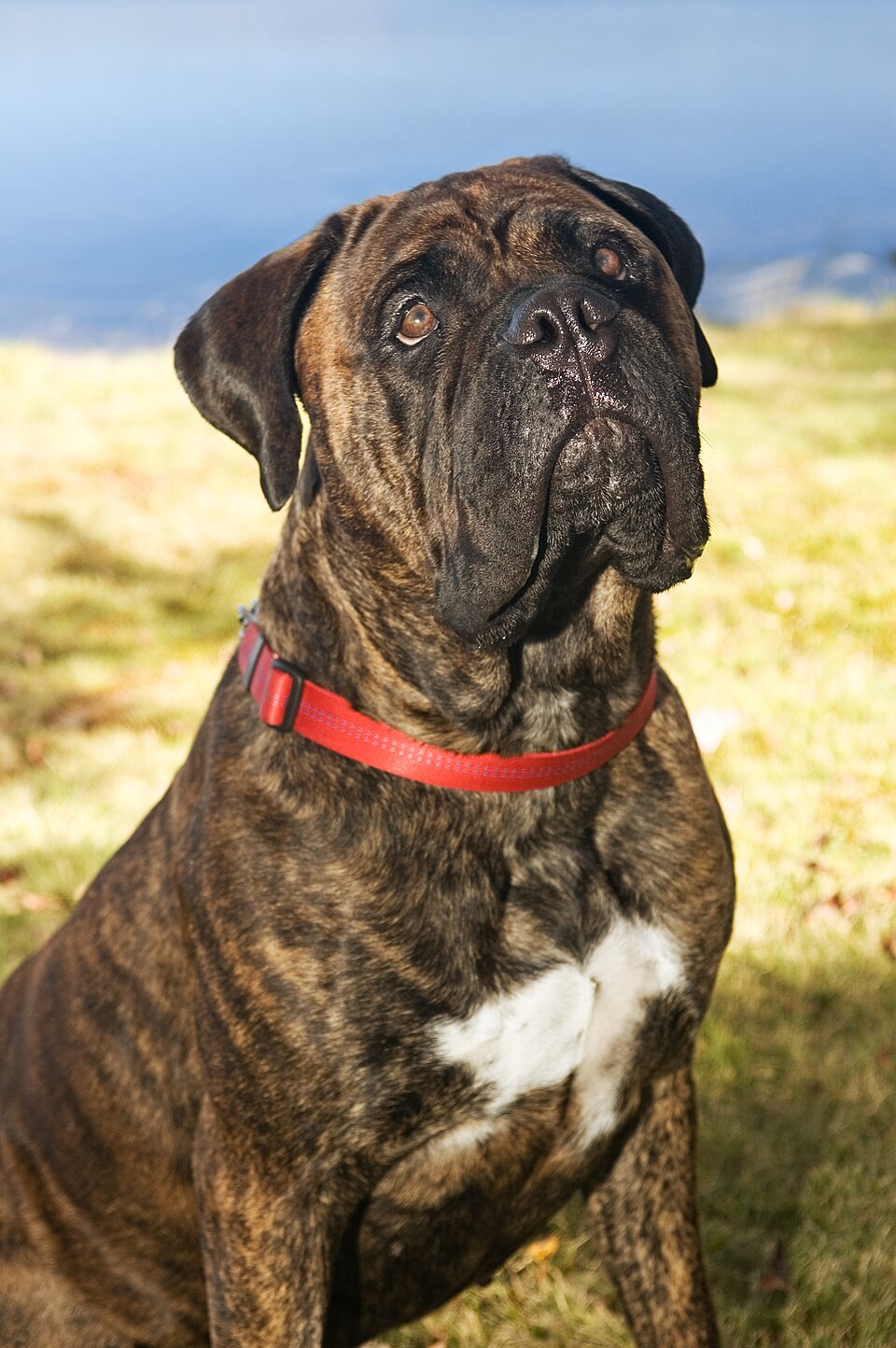
Brindle stripes run across the neck and shoulder. BootsSiR, Wikimedia Commons[4]
Before bringing a puppy home, ask the breeder to walk you through both parents’ health records. Screening for breeding Bullmastiffs covers hips, elbows, heart, eyes, and thyroid. Ask which evaluations each parent has had and look for that dog’s name on each result. For the growing puppy, the aim is steady growth while staying lean. Divide the day’s food into portions and discuss adjustments with your veterinarian as the puppy grows. The adult weight range is no reason to add an extra helping. [1]
Plan walks around mealtimes. The AKC recommends small, frequent meals for puppies. Adults can have their daily food divided into two meals, with exercise scheduled away from feeding time. [1] Bullmastiffs are at risk of bloat, in which the stomach expands. If the stomach twists, the dog’s condition can worsen rapidly. If your dog suddenly keeps trying to vomit but brings nothing up, or develops a visibly swollen belly and seems restless, call an emergency veterinary clinic and take the dog there immediately. [5] If several people share feeding and walking duties, tell the next person which meals and walks the dog has already had. Everyone who cares for the dog should know where to go in an emergency.
References
-
[1] American Kennel Club. Bullmastiff Dog Breed Information.
-
[2] Томасина. File:Bullmastiff in Riga 4.JPG. Wikimedia Commons, November 9, 2013.
-
[3] MIB90210. File:Brutus bullmastiff.jpg. Wikimedia Commons.
-
[4] BootsSiR. File:Brindle bullmastiff female.jpg. Wikimedia Commons.
-
[5] American College of Veterinary Surgeons. Gastric Dilatation-Volvulus.