After a walk through grass, part the long hair along an English Cocker Spaniel’s ears and legs and you may find bits of the walk caught there. Think back to the moment the dog lowered its nose to investigate the verge. How much time did it have to follow that scent? In England, the smaller land spaniels earned the name “cockers” for their skill at finding woodcock and flushing them from cover. Searching for birds, putting them to flight and retrieving them all called for cooperation with a hunter. A family can give that searching instinct an outlet on an ordinary walk.[1]
To recognize an English Cocker, start with the whole dog. The American Kennel Club (AKC) describes a compact sporting dog standing 15 to 17 inches at the shoulder, with a silky, medium-length coat that comes in a range of colors and patterns. When the dog lies down, the long hair on its ears can spread out on either side. As it lifts its head, the soft outline of the skull, dark eyes and ears hanging close to the cheeks come into view. The longer hair on the ears and legs is called feathering. It falls in layers that you’ll need to lift when grooming.[1]
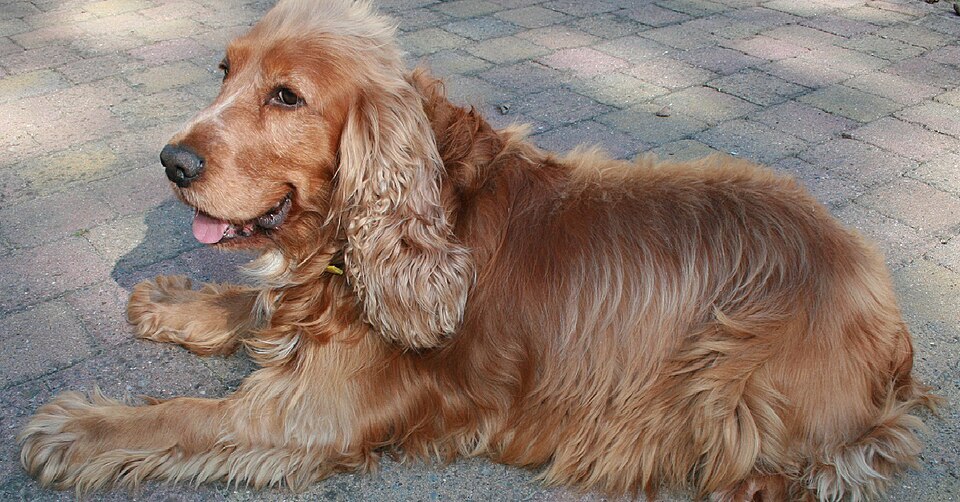
Figure: An English Cocker at rest. François SUEUR, Wikimedia Commons[2]

The name “Cocker Spaniel” can also refer to the American breed. In the early twentieth century, American breeders developed a smaller companion dog with a fuller coat, a shorter head and a more domed skull. In 1946, the AKC formally recognized the American and English cockers as separate breeds. If you’re trying to tell them apart, look at the head in profile along with the dog’s overall build. Coat color alone tells you little. The English Cocker’s history as a working bird dog also helps explain how readily a bird stirring in the grass can catch its attention.[1]
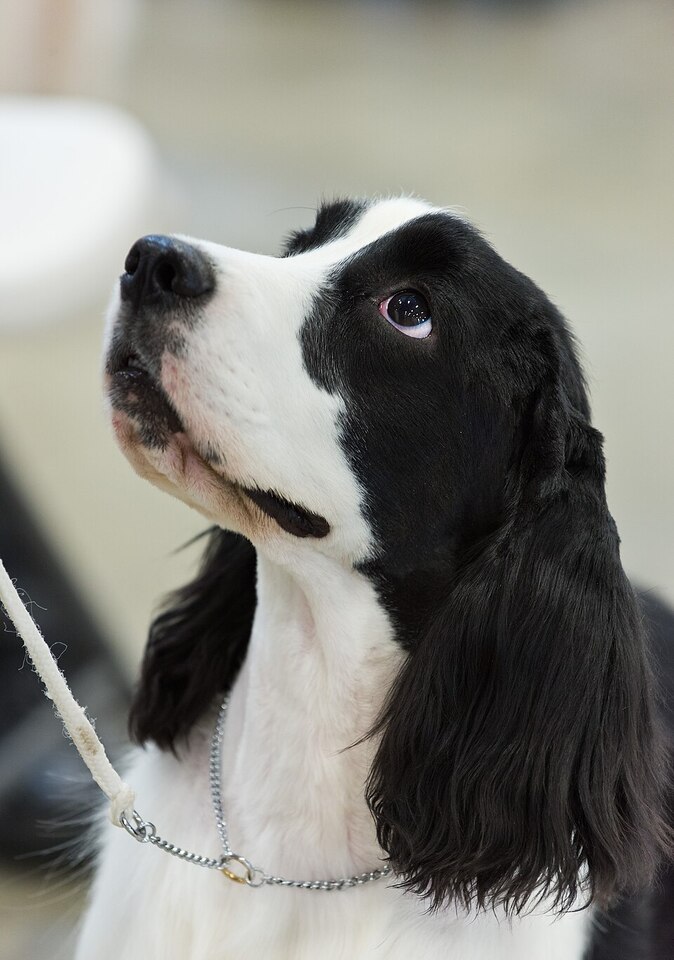
Figure: An English Cocker in profile. SheltieBoy, Wikimedia Commons[3]

An English Cocker needs daily exercise. The AKC suggests long walks, hikes together or a ball game in the yard. Picture a route you could take from your own door. Where is there room to stride out together? Where, clear of traffic, could you pause with the leash in hand while the dog works its way along a grassy edge? At the next crossing, use a familiar cue to move on together. One outing can offer sustained movement, a chance to explore and practice responding to you. Adjust the distance and pace to the dog’s age, stamina and energy that day.[1]
For a practical sense of how the breed might fit your home, consider the leash and the yard gate. English Cockers retain a strong instinct to seek out birds, so the AKC advises walking them on a leash and recommends a fenced yard. In an enclosed space, someone can throw a ball and wait for the dog to bring it back for another turn. If you have no yard, work out who will take the dog out each day and where they can walk. An English Cocker may happily curl up beside you on the sofa. Who will still enjoy taking it out after work?[1]
Practice getting your dog’s attention somewhere quiet before trying it beside a particularly interesting patch of grass. Say its name and, the moment it turns toward you, offer praise or a small treat. Then let it go back to sniffing. Once that exchange is familiar, try it where there are a few more scents. Checking in and returning to a search is a good fit for a dog bred to follow a hunter’s directions in the field. English Cockers generally enjoy working with people and respond poorly to harsh corrections. Use the same gentle, gradual approach when introducing a puppy to people, sounds and unfamiliar places.[1]
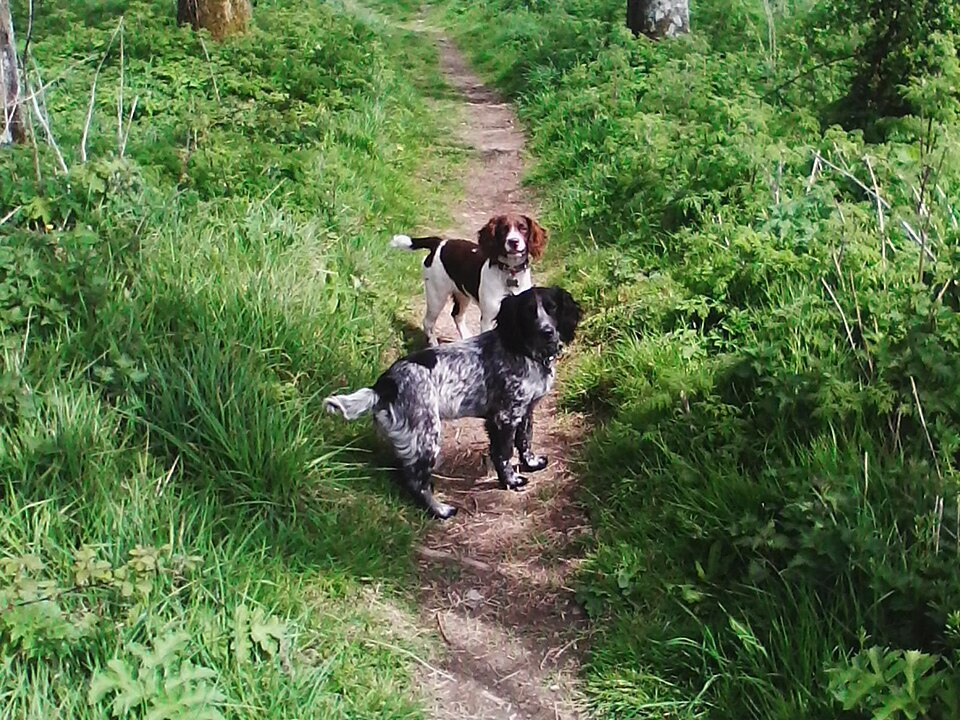
Figure: Cockers on a brush-lined path. Xyzspaniel, Wikimedia Commons[4]

Back home, let the route guide your coat check. If you passed low branches, start at the ear fringes, then check the leg feathering and feet. Support a small section of hair in one hand, pick out any grass and part the outer layer to feel for tangles underneath. The AKC recommends a thorough brushing and combing at least weekly. After brushing, lift one thin layer at a time and gently comb from near the roots to the tips. If the comb catches, hold the hair above the snag and tease it apart from the ends to avoid pulling on the skin.[1]
Once the fringe is smooth, gently lift the ear flap. The AKC recommends checking the ears weekly for debris, excess wax and signs of infection. Redness, swelling or tenderness is a reason to have a veterinarian examine the ear. Hair around the feet, on the face, beneath the neck, on the underside of the ears and under the tail usually needs trimming about once a month. A groomer familiar with the breed can show you where to shorten the hair and what to leave. Allow time for nail trims at least monthly and frequent brushing of the teeth with dog toothpaste.[1]
If you’re choosing a puppy, ask the breeder which health tests each parent has had and look for the dog’s name on each result. The AKC lists progressive retinal atrophy, hip dysplasia, familial nephropathy and adult-onset neuropathy among the breed’s health concerns. The parents’ records tell you which risks the breeder investigated. Your veterinarian can assess the puppy itself. For the everyday decision about fit, picture a typical weekday in your household. Is someone glad to take a dog out, pause while it follows a scent, then sit down at home and work a comb through the hair along its ears and legs?[1]
References
-
[1] American Kennel Club. English Cocker Spaniel.