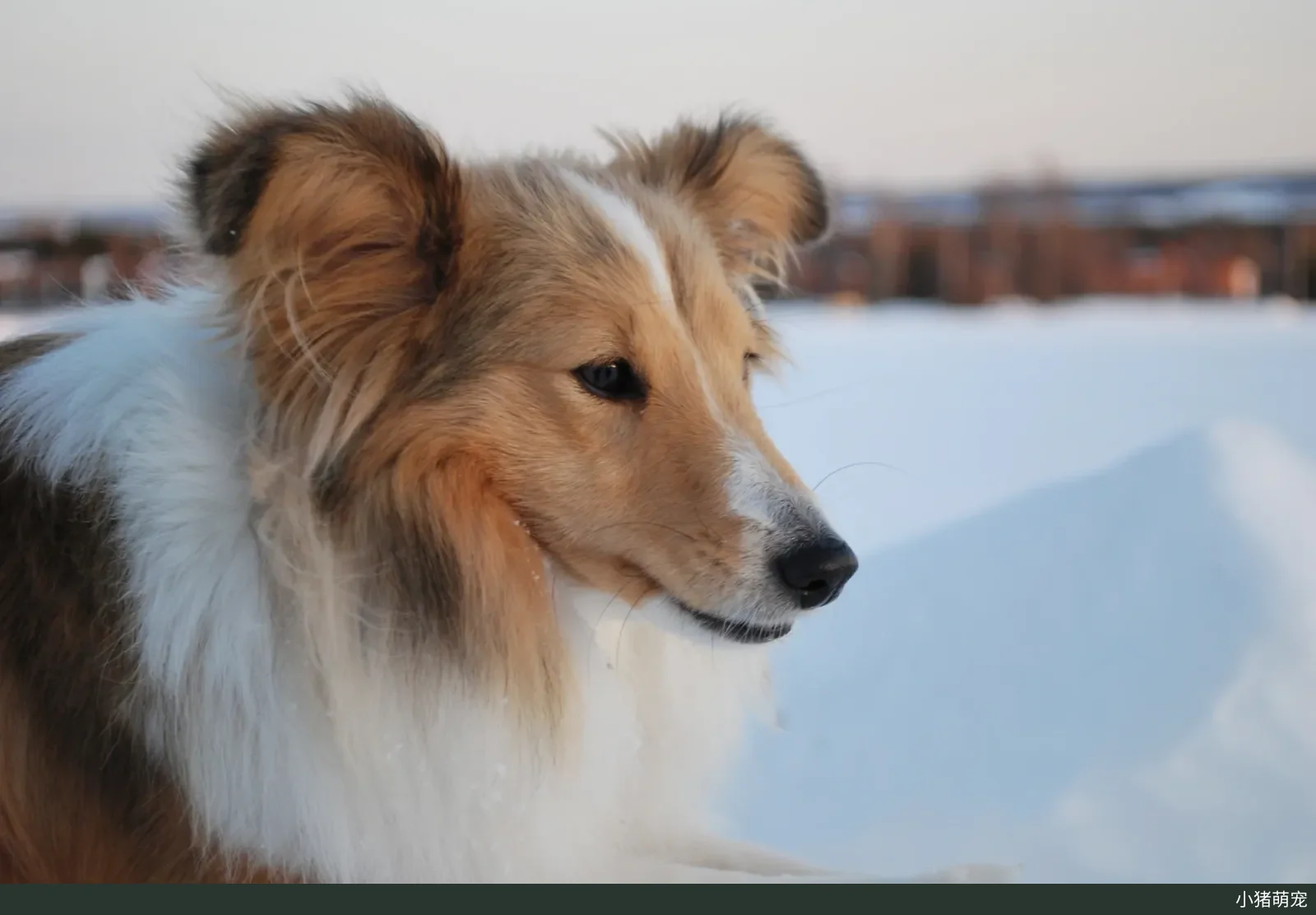
A 1.5-year-old sable Sheltie bitch, photographed March 30, 2011. Author: Linsenhejhej; source: Wikimedia Commons; license: CC BY-SA 3.0
The Shetland Sheepdog (nickname Sheltie) comes from the Shetland Islands north of Scotland. Often called a “miniature Collie,” it is in fact a distinct breed. Height at the withers is roughly 33–41 cm; it wears a thick double coat, is smart and sensitive, deeply devoted to family, and a little reserved with strangers. Drawing on AKC and FCI breed standards and veterinary sources, this article covers origins, appearance, temperament, exercise and training needs, and common health issues.
Origins: Farm Help on the Shetland Islands
The Sheltie’s homeland is the Shetland Islands off northern Scotland—changeable weather, rugged ground. Per the AKC, early Shelties were even smaller than today’s, only 8–10 inches (about 20–25 cm) at the withers, with mixed blood including Greenland Yakki dogs, Pomeranians, small spaniel-type dogs, and others. Islanders used them on farms: keeping birds and free-ranging Shetland sheep out of gardens and winter fish drying racks, sounding the alarm when strangers approached, and serving as household companions. Scottish working Collies (forerunners of today’s Border Collie) that later arrived with larger sheep may also have contributed blood.
In the early 20th century Shelties drew notice on mainland Britain; breed clubs and standards formed in Shetland, Scotland, and England, and breeders introduced show Collies to refine type. The AKC recognized the breed in 1911; the American Shetland Sheepdog Association (ASSA) was founded in 1929. Thereafter breed clubs in Britain and America banned further Collie crosses, though AKC articles note some undeclared Collie crosses afterward, so early pedigrees are not fully clear. Today the FCI registers the country of origin as Great Britain, places the breed in Group 1 (Sheepdogs and Cattle Dogs) in the Sheepdogs section, and formally recognized it in 1954.
Appearance: Compact Size and Double Long Coat
The AKC standard acknowledges that the Sheltie’s relationship to the Rough Collie is like that of the Shetland pony to large horses: similar outline, but an independent small working dog. Size wording differs by association. The AKC requires 13–16 inches (about 33–41 cm) at the withers; outside that range is a disqualification in the show ring. The FCI standard gives ideal heights—37 cm for males, 35.5 cm for females—with more than 2.5 cm deviation “highly undesirable.” An AKC article notes that when the U.S. revised its standard in 1952, size parted ways with British clubs. Neither standard specifies weight; the UK veterinary charity PDSA gives an average of about 9 kg.
The head, from the side or above, is a long, blunt wedge, with almond eyes; ears are small and set high, about three-quarters erect with tips tipping forward. The double coat has a long, straight, slightly harsh outer coat and a short, dense undercoat that “lifts” the outer coat; the neck mane and chest furnishings are especially full. AKC-accepted colors are black, blue merle, and sable (gold to mahogany), with varying white and/or tan markings; brindle is a disqualification. FCI lists sable, tricolor, blue merle, black-and-white, and black-and-tan. That coat needs frequent care; PDSA recommends daily brushing.
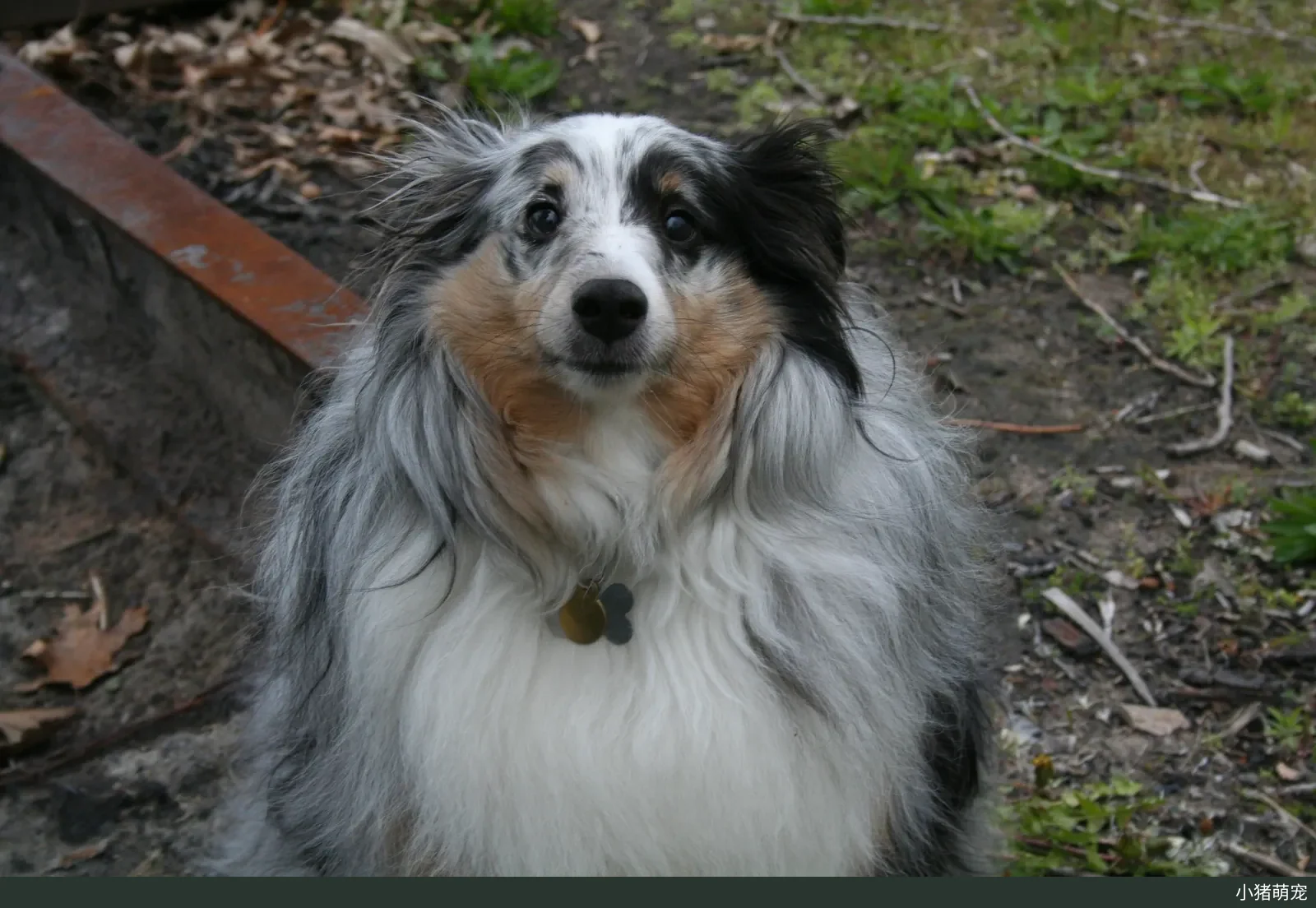
Blue merle tricolor Sheltie Lincoln sitting outdoors in spring, photographed April 30, 2012. Author: Gregory Varnum; source: Wikimedia Commons; license: CC BY-SA 3.0
Temperament, Exercise, and Training
The AKC standard describes the Sheltie as “intensely loyal, affectionate, and responsive” to its owner, able to be reserved with strangers but not fearful or shy; the FCI describes an alert, gentle, intelligent, hardy, active dog that is “never nervous.” An AKC article also cites ASSA members: like many herding breeds, it is naturally sensitive to visual and sound stimuli. Responsible breeders therefore emphasize early puppy socialization, which matters greatly for a stable adult temperament.
On exercise, PDSA suggests about an hour a day; Shelties also love games. An AKC article notes that size suits apartment living, yet they are sturdy and agile enough for fetch and hiking, and some enjoy swimming; they are also familiar sights in obedience and other performance events. On training, PDSA finds them smart and responsive, recommends reward-based methods, and urges early training and socialization so they grow into confident, friendly dogs.
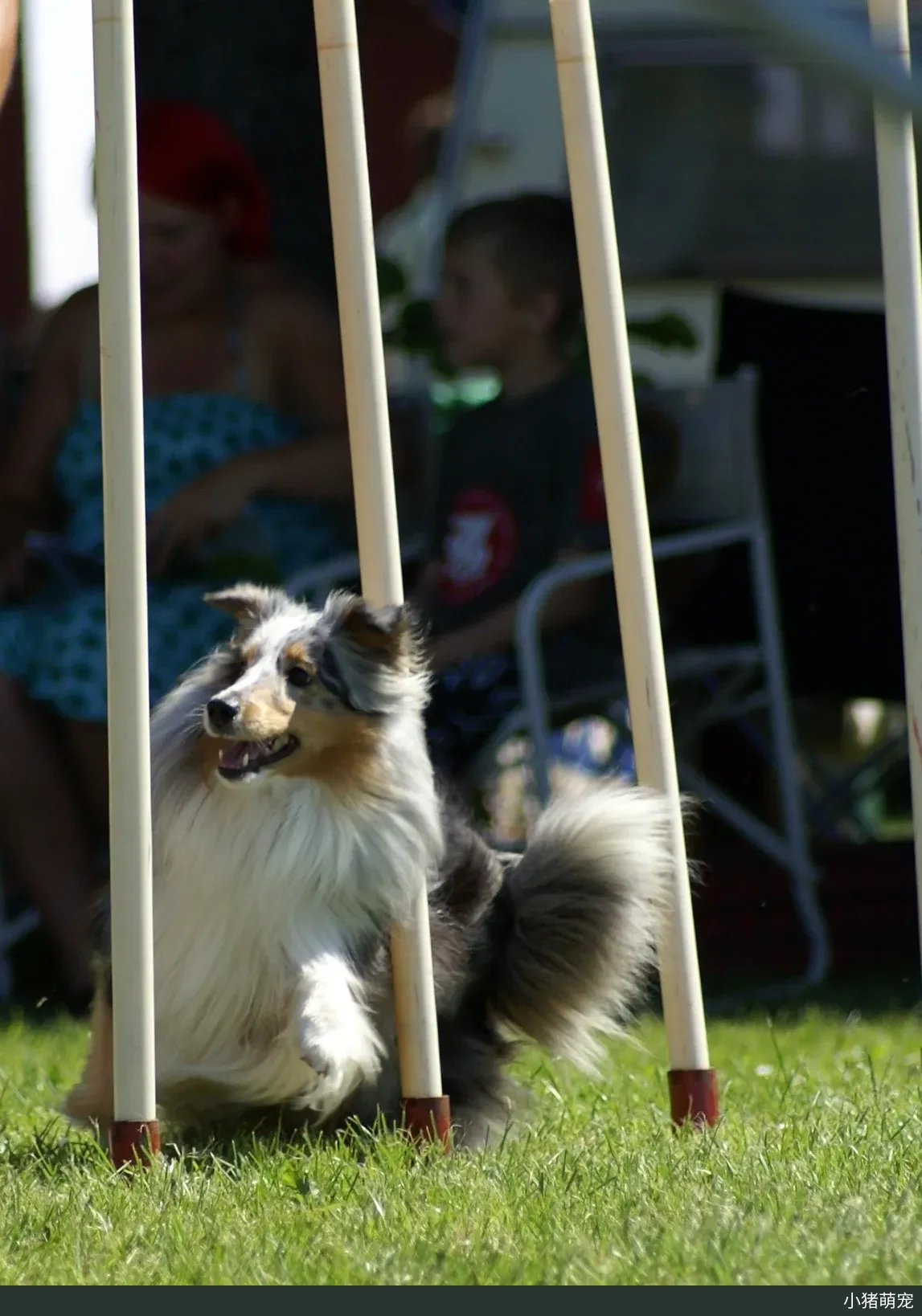
A Sheltie weaving through agility poles, photographed June 9, 2007. Author: Jens Gyldenkærne Clausen; source: Wikimedia Commons (originally on Flickr); license: CC BY-SA 2.0
Common Health Issues and Drug Safety
PDSA lists Sheltie predispositions including collie eye anomaly (CEA, abnormal eye-fundus development), progressive retinal atrophy (PRA, which can progress from night blindness toward blindness), hip dysplasia, Legg-Calvé-Perthes disease, patellar luxation, von Willebrand disease (a clotting disorder that can cause excess bleeding), distichiasis, and hypothyroidism. Some of these can be screened in the UK under British Veterinary Association (BVA) and Kennel Club canine health schemes. PDSA advises confirming that parents were screened and learning the health history of the prior two generations before taking a puppy.
Drug safety needs special attention. Among breeds Washington State University’s veterinary college lists for MDR1 mutations, Shelties have an approximate mutation frequency of about 15%; carriers can have severe or life-threatening reactions to certain common drugs. For example, the antidiarrheal loperamide (Imodium) causes neurotoxicity in mutant dogs at ordinary antidiarrheal doses; the university advises all mutant dogs to avoid it. Genetic testing is the only way to know status—so do not give human medicines on your own, and tell the veterinarian the results when seeking care.
Veterinary literature also links two further issues to Shelties. First, dermatomyositis: Wahl et al. (2008) in Veterinary Dermatology note that this presumed autoimmune skin-and-muscle inflammation in dogs is most common in Rough Collies and Shelties, with lesions often on the face, ears, tail, and distal limbs, appearing as early as 2–6 months; Shelties mainly show skin lesions. Second, gallbladder disease: a 2007 JAVMA retrospective of 38 cases found Shelties predisposed to gallbladder disease, including 25 confirmed mucoceles; many also had lipid abnormalities; 11 of 38 were incidental findings, and most dogs had no clear signs while cysts formed. These are breed tendencies, not inevitabilities. PDSA gives a lifespan of 10 years or more; regular checkups and vet-guided screening are the practical path to healthy aging together.
References
-
American Kennel Club. Official Standard of the Shetland Sheepdog (approved 1959-05-12, reformatted 1990-07-18)
-
AKC Staff. Shetland Sheepdog History: A Pint-Sized Package (updated 2024-02-07)
-
American Kennel Club. Breeds by Year Recognized (page undated; accessed 2026-10-17)
-
Fédération Cynologique Internationale. FCI-Standard N° 88: Shetland Sheepdog (current effective standard published 2026-09-08)
-
PDSA. Shetland Sheepdog (page undated; accessed 2026-10-17)
-
Washington State University, WADDL. MDR1 in Dogs (page undated; accessed 2026-10-17)
-
Wahl JM, Clark LA, Skalli O, et al. Analysis of gene transcript profiling and immunobiology in Shetland sheepdogs with dermatomyositis. Veterinary Dermatology, 2008.
-
Gallbladder disease in Shetland Sheepdogs: 38 cases (1995–2005). Journal of the American Veterinary Medical Association, 2007, 231(1): 79. (abstract verified only)