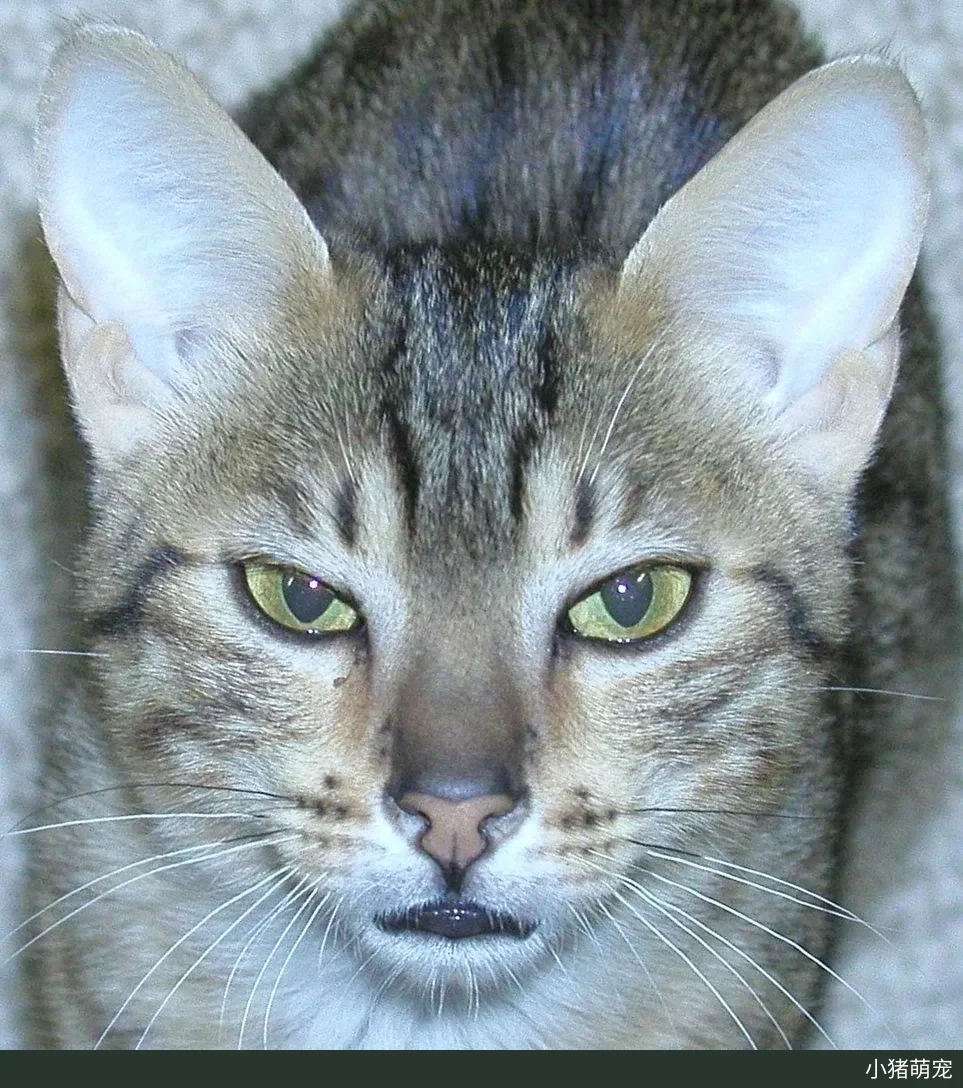
Egyptian Mau face close-up; the dark forehead stripes and green eyes are hallmark traits of the breed (original photo December 2002). Photo: Malcolm Gin (cropped and rotated by Abujoy); source: Wikimedia Commons; license: CC BY-SA 3.0.

The Egyptian Mau is the breed both CFA and TICA call the “only naturally spotted domestic cat”: randomly scattered spots, an “M” pattern on the forehead, and gooseberry-green eyes are its signature. They are smart and affectionate, yet especially sensitive to strangers and sudden loud noises. Drawing on CFA, TICA, and FIFe materials and veterinary genetics research, this article covers origins, appearance, temperament, health risks, and care.
Origins and Breed Recognition
“Mau” means “cat” in ancient Egyptian; CFA also notes a sense of “sun.” Per CFA, papyrus paintings and murals from about 1550 BCE already show spotted cats resembling today’s Egyptian Mau; ancient art only shows similar looks, however, and cannot prove a direct bloodline to modern cats. The modern breed owes its foundation to Russian princess Nathalie Troubetskoy, living in Rome: captivated by a spotted cat from Egypt, she sought others and began breeding. When she moved to the United States in 1956 she brought three Egyptian Maus—TICA records two silver females, Baba and Liza, and one bronze male, JoJo. Associations then recognized the breed in turn: CFA accepted registration in 1970 and championship status in 1977; TICA in 1979; FIFe’s standard records recognition in 1992. TICA also notes that the early gene pool was very limited, and newer bloodlines introduced in recent years have expanded the population.
Appearance
The Egyptian Mau is a medium, muscular shorthair. The CFA standard says males are usually larger than females, but none of the associations gives a specific weight range. Most striking are the randomly placed spots: varied in size and shape, and not required to match on left and right. The forehead has an “M” mark (TICA calls it the “scarab mark”), the cheeks have two eyeliner-like stripes, and the tail is banded with a darker tip. CFA, TICA, and FIFe all recognize three show colors: silver, bronze, and smoke; CFA also notes that solid black and dilute individuals appear occasionally—they may be registered but not shown. Eyes are large, slightly slanted almonds in “gooseberry green.” Kitten eye color changes; both CFA and TICA standards require green to be evident by 8 months and fully green by about 18 months. Two athletic traits stand out: loose skin folds from the flank to the rear knee that aid turning and jumping, and hind legs slightly longer than the front, so the cat stands as if on tiptoe. TICA’s page says the Egyptian Mau can run about 30 mph, without citing a measurement source—treat that as anecdote.
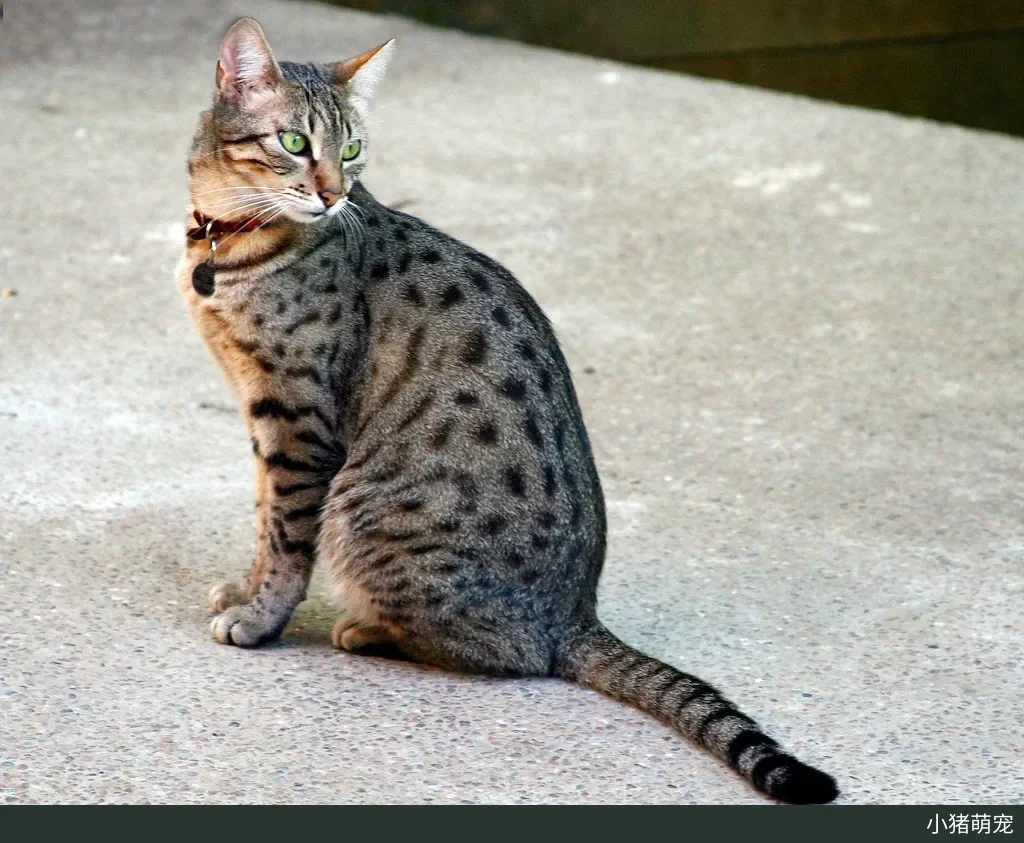
A bronze Egyptian Mau sits sideways and looks back; randomly scattered dark spots, a banded tail, and a black tip are all clear (August 2008). Photo: liz west (Flickr user Muffet); source: Flickr, also on Wikimedia Commons; license: CC BY 2.0.

Temperament and Living Together
CFA and TICA describe Egyptian Mau temperament in much the same way: intelligent and loyal, deeply attached to their chosen people, fond of interactive play; some learn to retrieve toys and can adapt to walking on a harness. They are active climbers—TICA suggests providing a cat tree, or the fridge and bookcase tops will be “requisitioned”; some also figure out how to open doors and drawers, or even turn on a tap to play with water. The other side is sensitivity and caution: with strangers they often keep their distance, and sudden loud noises easily startle them, so TICA stresses early socialization. Their voice is usually soft; when happy they may wag the tail, knead, or “chat” with purrs and trills. If children and other pets are cat-friendly and can match their energy, they can be excellent family companions. These are association summaries of general tendencies—each cat still has its own temperament.
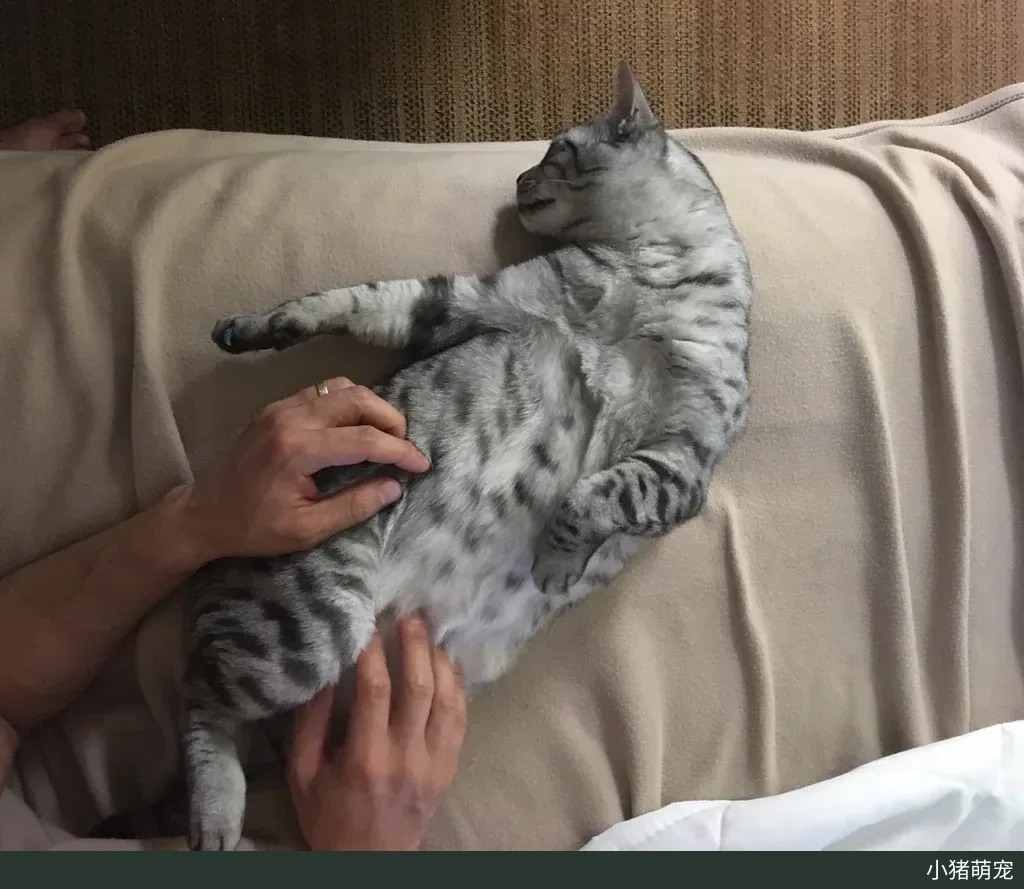
A silver spotted cat lies on a blanket with eyes closed, enjoying a pet; the photographer’s original title labels the breed as Egyptian Mau (September 2017). Photo: Harry Somers (Flickr account Fresh Materials); source: Flickr; license: CC BY 2.0.
Health Risks and Care
TICA’s expected lifespan is 10–15 years or more (with good care). Breed associations generally regard the Egyptian Mau as a healthy natural breed, but list several issues worth watching. First is erythrocyte pyruvate kinase deficiency (PK deficiency): an autosomal recessive hemolytic anemia with variable age of onset and signs—severe lethargy, weakness, weight loss, jaundice, and abdominal enlargement. A 2012 BMC Veterinary Research survey of 38 breeds found, in a non-random sample, mutant allele frequencies of about 13% in Bengals and Egyptian Maus; researchers therefore recommended genetic testing for Egyptian Maus, and the UC Davis Veterinary Genetics Laboratory also lists the breed among those recommended for testing. CFA notes that breeders have been testing for PK deficiency. Second is urolithiasis—stones in the kidneys and urinary tract; CFA notes that not all genetically related problems yet have a DNA test. Third, TICA mentions a neurological disease that can appear as early as 7 weeks (leukodystrophy). Veterinary literature includes a 1976 report describing spongy degeneration of brain and spinal-cord white matter in two Egyptian Mau kittens; cases are few, so incidence cannot be estimated from them. As for structural health debates tied to selecting for folded ears, short legs, or flat faces, Egyptian Mau standards do not pursue those traits: it is a balanced shorthair; CFA deducts for a “short or round head,” and TICA requires a facial profile that is neither overly concave nor straight.
Daily care is straightforward. Egyptian Maus shed little; CFA suggests a weekly brush lasting a few minutes to cut shedding and hairballs; regular baths are unnecessary, and human shampoo should not be used if you do bathe. TICA also suggests routine nail trims (usually weekly), cleaning dirty ears with a vet-recommended cleaner, and frequent brushing with pet toothpaste. They are energetic—home should have a cat tree and high perches, plus daily interactive play. For water, TICA recommends fresh water daily, with the bowl at least 3 feet (about 90 cm) from the food dish, or a filtered fountain. Because they are noise-sensitive, a new Egyptian Mau is best given a quiet small space to settle in. If getting a cat from a breeder, ask about parental PK-deficiency results and family health history; diet and health management should follow veterinary advice.