For a Flat-Coated Retriever, the retrieve is complete when the bird reaches the handler’s hand. The breed was developed in Britain in the mid-19th century to retrieve waterfowl. A dog would watch where a bird fell, wait for a signal, then swim out, take the bird gently in its mouth and carry it back. A toy gives a dog a chance to use those same skills at home. Chasing it is fun. Turning back with it, stopping within reach and holding it until a hand is ready all deserve practice too.[1]
The liver-colored female standing on the grass shows the breed’s outline from nose to tail. She has a long head, with only a slight change of angle from forehead to muzzle. Her small ears lie close to her head. The neck flows into shoulders that slope back, the back is level, and the belly rises slightly behind a deep chest. A Flat-Coat stands about as tall at the shoulder as a Labrador Retriever, with a longer, leaner outline in profile. Black is the other typical coat color. On either color, look at how the dense coat lies close along the body and then forms a longer fringe, called feathering, behind the legs and beneath the tail.[1]
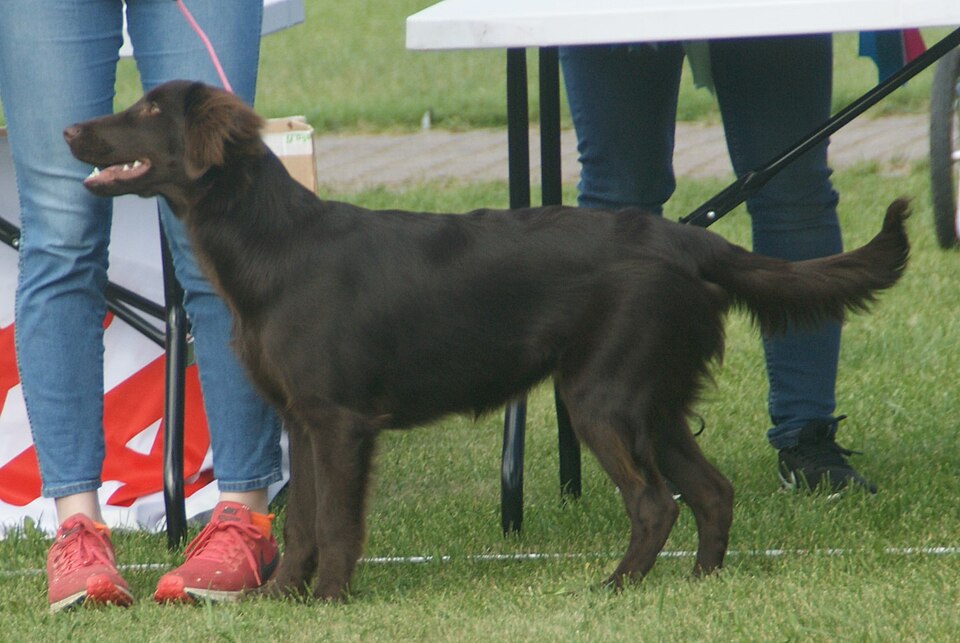
A liver Flat-Coat stands in profile. Canarian, Wikimedia Commons[4]

Start with the toy within reach
The black dog on the beach has an orange ball in its mouth. What comes next is the part that’s easy to skip when playing fetch. Throw the ball a long way every time and the dog gets plenty of practice chasing it, with little guidance about where to deliver it. Try teaching the last part first. Sit facing your dog and offer a toy it’s willing to investigate. When the dog leans in to sniff, praise it and give a small reward. Once it readily touches the toy with its mouth, save the reward for the moment it takes hold.[2]
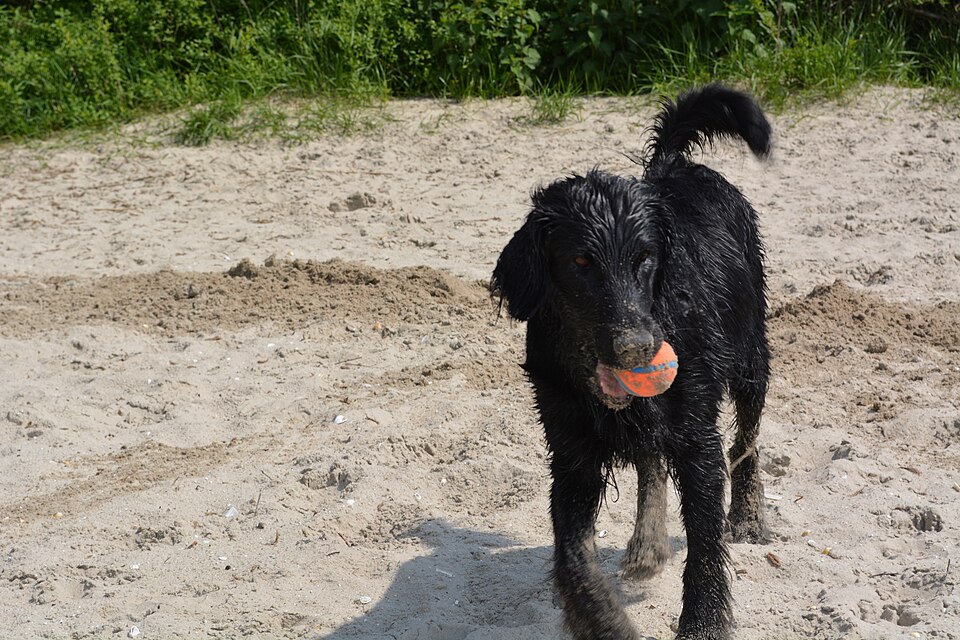
A Flat-Coat holds a ball on the beach. Mennoj, Wikimedia Commons[5]

At first, you and the dog can hold the toy together. When the dog can keep a steady grip for a moment, ease your hand away. Bring it back under the toy while the dog is still holding it, offer praise, then take the toy and give the reward. The dog has now practiced the whole handover while you’re close enough to make it easy. Next, put the toy at your feet for the dog to pick up. Move it a little farther away each time. If the dog starts dropping it halfway back, bring the next pickup closer so it can carry the toy all the way to your hand.[2]
Sometimes the dog comes all the way back, only to turn away with the toy as you reach for it. Practice the exchange on its own. Give the dog a toy it likes but will readily give up, then hold a small piece of food it likes even more near its nose. As soon as the dog opens its mouth, praise it and give it the food. When it finishes eating, give the toy back. Once the exchange is familiar, say “Give” just before showing the food. With practice, the word itself can prompt the release. Handing over the toy sometimes starts another round of play, and nobody has to chase the dog around the house to get the ball back.[3]
Plan a walk for an ordinary workday
Flat-Coats are energetic dogs. The American Kennel Club (AKC) recommends long daily walks and play with their owners. Pick a route someone in the household has time to walk on a weekday. Along the way, stop somewhere safe with few distractions, place the toy nearby where the dog can see it, and practice a few pickups and handovers before walking on. The dog gets a good stretch of walking as well as moments when it has to pay attention to where you are and when your hand is ready. Once the retrieve is familiar, tracking, obedience or agility may also suit the dog’s interests.[1][2]
To see how well a Flat-Coat would fit into your household, look at the busiest day on your calendar. Who has time for a long walk in the morning? If everyone leaves early and comes home late, who can come back during the day to keep the dog company? Does the person taking over in the evening know the cue everyone uses for the handover? Flat-Coats enjoy being with their families. They mature slowly and can keep their puppyish love of play well into adulthood. Regularly spending long stretches alone can lead to behavior a family finds hard to manage. A yard offers space to play. Once the toys are out there, someone still has to go outside and join the dog.[1]
A family bringing home a puppy will also need time for early socialization and puppy classes. Flat-Coats tend to notice how people respond to them and can be sensitive. A dog that delivers a toy neatly in the living room may spend its first outdoor session looking around. Bring the toy closer, wait for the dog’s attention to return, and reward one easy pickup. Everyone who takes a turn with the dog can use the same approach. Start with the part it can manage that day and build from there, keeping your voice calm.[1][2]
Check the ears and feathering after a walk
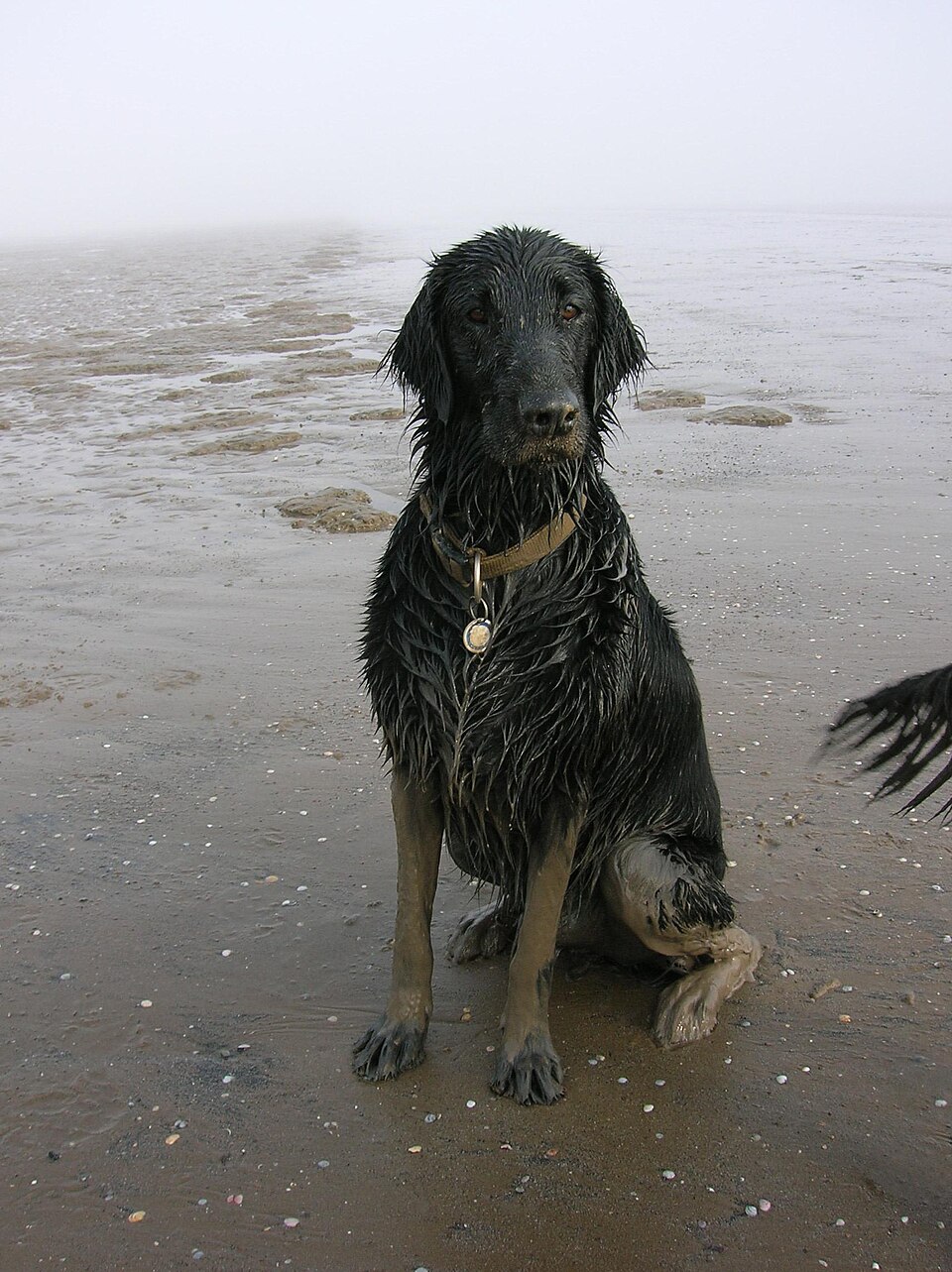
Wet hair hangs in strands on the ears and chest. Cheesy mike, Wikimedia Commons[6]

“Flat” describes the way the coat lies along the body. On the dog sitting on the beach, the wet hair around the ears and across the chest hangs in strands, and mud clings to the legs. A coat that protected a working dog in cold water, rough weather and dense cover can also collect dirt and loose hair. The AKC recommends a weekly grooming session with a brush and a metal dog comb. Brush along the body, then work the comb through the longer hair behind the legs and under the tail, a section at a time. When you come home from a walk, look for sand or mud caught in the coat. Lift the ears to check inside and clean them as needed.[1]
Leave time for feet and teeth, too. Long nails can make walking and running uncomfortable, so trim them regularly. Brush the dog’s teeth often with toothpaste made for dogs. When asking about a puppy’s family health history, ask the breeder to show you the kneecap, hip and veterinary eye evaluation records for both parents. Check which dog each result belongs to. Those reports tell you about the parents at the time of screening. Your puppy’s own veterinary visits are where its gait, eyes and changes in health can be assessed as it grows.[1]
Before deciding, picture that weekday walk from the moment you step outside until you’re home again. Would you enjoy taking the longer route, pausing for the dog to bring the toy to your hand, then kneeling down at home to comb sand out of its feathering? When members of the household look forward to doing those things, a Flat-Coat’s love of running, carrying and seeking you out for a game can become a part of the day you both enjoy.
References
-
[1] American Kennel Club. Flat-Coated Retriever Dog Breed Information.
-
[2] American Kennel Club. How to Teach Your Dog to Fetch.
-
[3] American Kennel Club. How to Teach Your Dog to Drop It.