In 2011, Heikki Siltala photographed a black cat named Munchkinlane Yosheta in Helsinki. His catalogue lists the cat as a Napoleon Shorthair, a name you may still come across when looking up the Minuet. The International Cat Association (TICA) changed the breed’s name from Napoleon to Minuet in 2015. The World Cat Federation (WCF) calls the shorthaired variety the Minuet Shorthair, abbreviated MIS. All three names refer to a breed developed from Persian and Munchkin cats.[1–3]
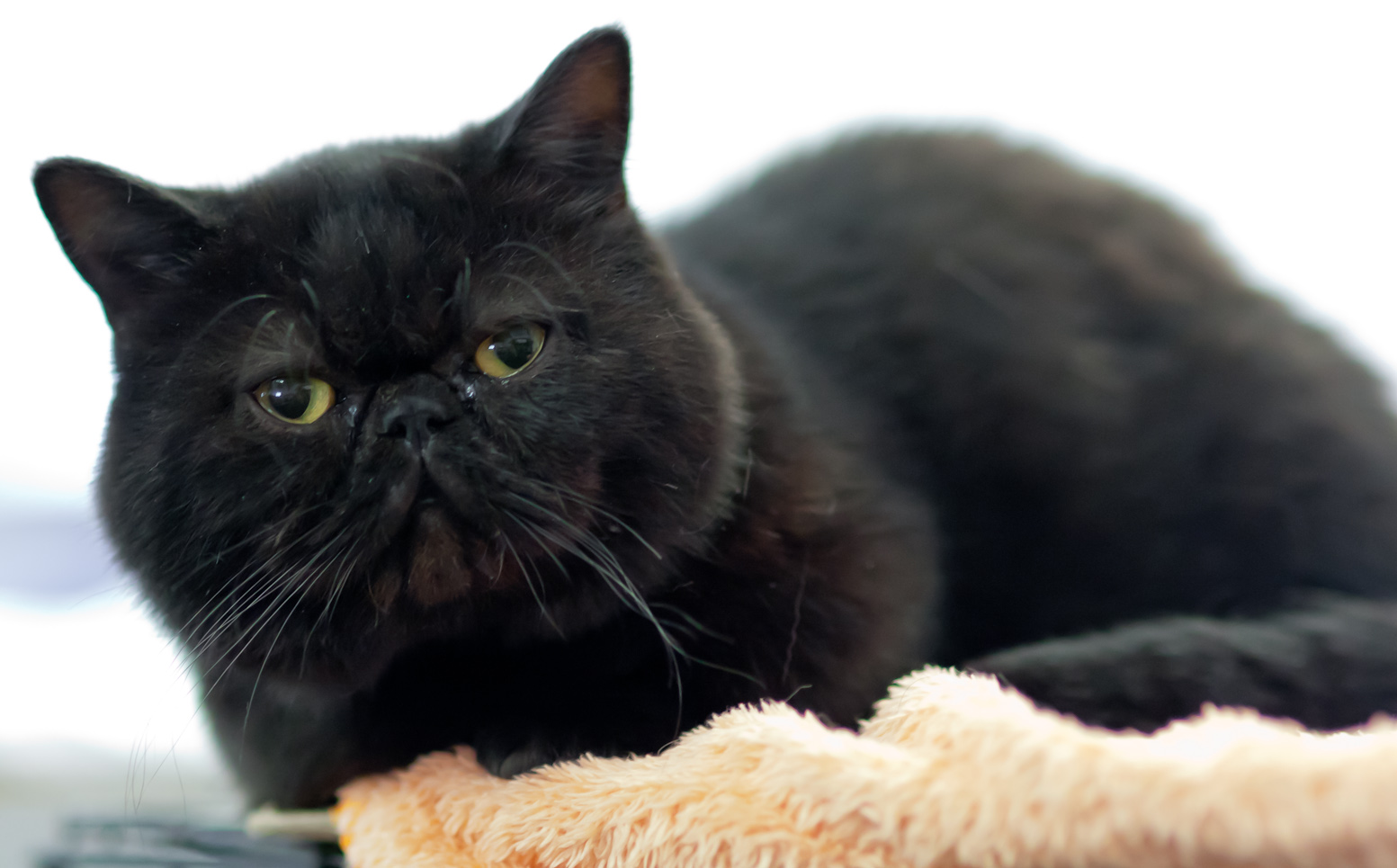
Munchkinlane Yosheta is a shorthaired Minuet. Heikki Siltala, catza.net[3]
The portrait gives a good view of the face. Broad cheeks and a short muzzle give it a rounded outline. The legs are easier to see when the cat stands naturally. WCF describes the short-legged Minuet as broad through the chest, with short, sturdy legs and large, round paws. All four paws point forward when the cat stands. Seen from the side, the body and legs together form a rectangle wider than it is tall, ideally with a level back. The legs are short in proportion to the trunk, and the cat should have solid bone and well-developed muscles. Some Minuets have long legs.[1–3]
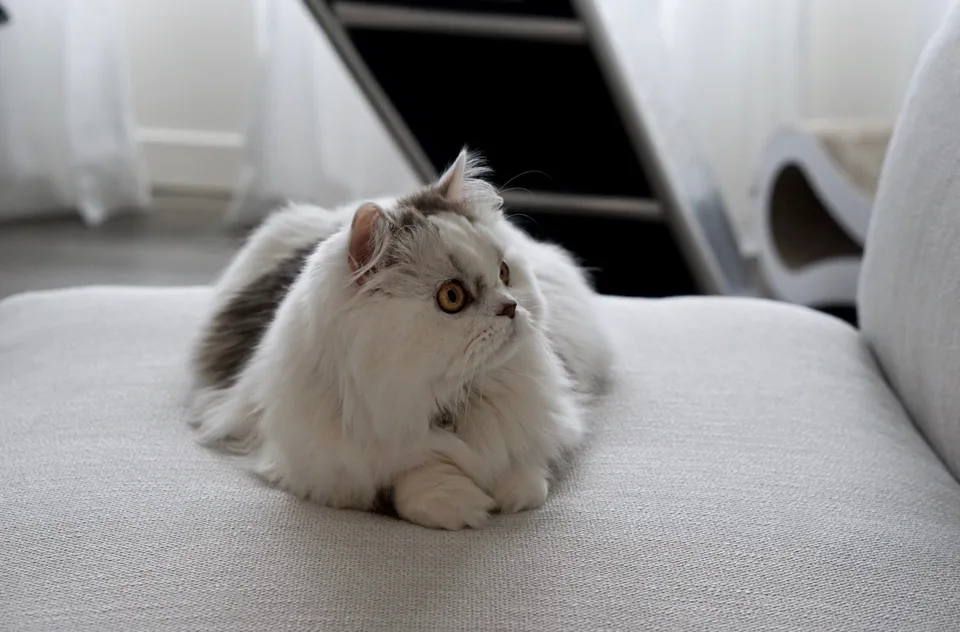
A Minuet turns in profile. Parkerwh, Wikimedia Commons[4]

From the side, you can see the short bridge of the nose extending in front of the eyes. WCF describes large, round eyes and a fairly short, broad nose, with a gentle dip where the forehead meets the bridge. The standard also calls for a short-legged cat to be able to move freely. At home, that raises a practical question. If your cat likes to watch the world from a windowsill, where will it climb up, and which way will it come down?[2,4]
Combing from the Chest to the Inner Forelegs
Look at the coat before choosing a comb. Even a shorthaired Minuet has a dense, plush coat that stands away from the body. A long coat can obscure the cat’s outline. In the photograph below, one front paw reaches forward while the long chest hair hangs all the way to the tabletop. If you always comb from the shoulders along the back to the base of the tail, it is easy to miss the places tucked out of sight, especially where the front legs meet the body.[1,2,5]
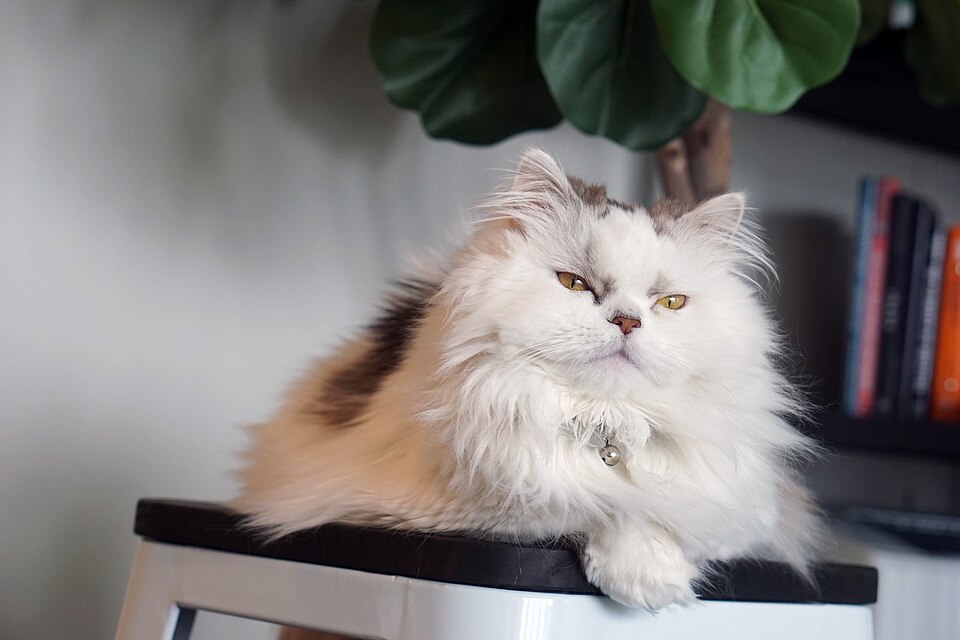
A longhaired Minuet shows its chest ruff. Parkerwh, Wikimedia Commons[5]

TICA’s Minuet Breed Committee recommends a steel comb with both widely spaced and closely spaced teeth. Comb daily or every other day, reaching into the undercoat. When your cat is resting on a familiar cushion, start somewhere it is comfortable being touched, such as the shoulders or back. Then part the fur behind the ears, on the belly and along the insides of the legs, working through a small section at a time. If the cat gets up and leaves, save the rest for another session. Pay attention to where tangles form so you know where to spend a little extra time next time.[1,6]
A Step Between the Floor and the Windowsill
A cat already settled on a high perch gives you few clues about how it will get down. Look at the route from the floor up. Is there a firm foothold between the floor and the sill? Once there, can the cat stand securely and turn before taking the next step? Beside a favorite window, for example, you could set a low platform that stays steady, secure a nonslip mat to the top and move flowerpots out of the landing space. Then watch which route the cat chooses. If it usually comes down at the other end of the sill, leave that landing clear too.[2,6]
Trace the routes your cat uses every day. Give it an easy way to reach drinking water, a litter box and a quiet sleeping spot, so climbing to a high place is always a choice. A litter box with one low side lets the cat step in, turn around and step out comfortably. In a home with several cats, look at the doorways as well. Two boxes in opposite corners of a room may both be out of reach if one cat guards the narrow doorway. Moving one box to a spot with a different approach gives the other cat a way through.[6]
The Feline Veterinary Medical Association identifies hiding places, separate locations for essential resources, opportunities for hunting play and predictable interaction as needs shared by indoor cats. Alongside the steps for a short-legged Minuet, leave some open floor space for play. Draw a wand toy across the floor and pause it at the edge of a cardboard box so the cat can crouch, wait and pounce. If it prefers chasing a rolling ball, clear a stretch of hallway. Choose a regular time when someone can join in. When the cat retreats to its hiding place, let that round of play end.[1,6]
Changes in How Your Cat Moves
Short legs raise a welfare question because the bones can differ in alignment as well as length. Anderson and colleagues used imaging to examine cats with an inherited form of disproportionately short limbs. They found changes in the shape of bones in both the front and hind legs of the cats examined, including an outward twist of the radius, one of the two forearm bones. How often Minuets develop joint pain over a lifetime remains unknown from this study. The UK’s Governing Council of the Cat Fancy (GCCF) lists the Minuet and Munchkin among the short-legged breeds it declines to recognize, citing reported health problems and concerns about quality of life as the cats age.[7,8]
At home, your best point of comparison is your own cat. Perhaps it used to take the step up to the window every day and now often stops in front of it. A cat that once stepped easily into the litter box may start shifting its weight from paw to paw, or you may notice a limp as it walks. Changes like these warrant a veterinary appointment. Note when the change began and which movement brings it out. If you can, take a short video of the cat walking naturally. The veterinarian can use that history, watch the cat walk and examine it by touch to decide whether a particular area needs an X-ray. When you first put together the cat’s health records, keep a copy of each parent’s screening report for polycystic kidney disease. TICA specifically recommends parental screening because of the Minuet’s Persian ancestry.[1,9]
References
-
The International Cat Association. Minuet.
-
World Cat Federation. Minuet Shorthair (MIS). November 2022 edition.
-
Heikki Siltala. Munchkinlane Yosheta [NAS n], photo 180062. September 17, 2011.
-
Parkerwh. Minuet Cat.png.
-
Parkerwh. White gray long hair minuet.jpg.
-
Feline Veterinary Medical Association. New Feline Veterinary Medical Association Position Statement Reimagines Life for Indoor Cats. August 28, 2025.
-
Anderson LM et al. Skeletal Manifestations of Heritable Disproportionate Dwarfism in Cats as Determined by Radiography and Magnetic Resonance Imaging. 2021.
-
The Governing Council of the Cat Fancy. Unrecognised Breeds.
-
Kerwin S. Orthopedic examination in the cat: clinical tips for ruling in/out common musculoskeletal disease. 2012.