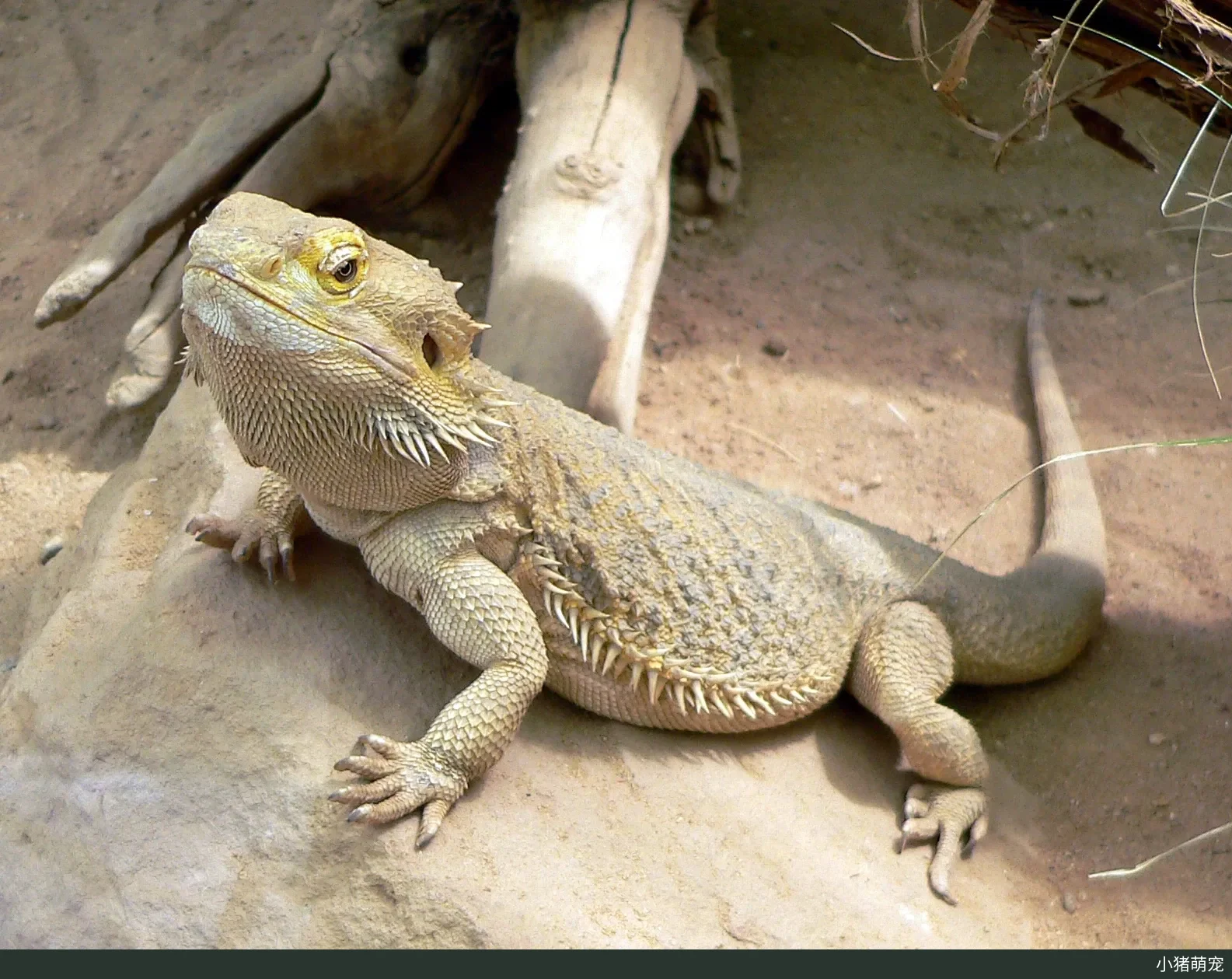
A central bearded dragon (photographed 7 July 2007 at Frankfurt Zoo, Germany). Photo: Frank C. Müller; source: Wikimedia Commons; license: CC BY-SA 2.5.

The bearded dragon (central bearded dragon, Pogona vitticeps) is native to arid inland Australia. Relatively mild-tempered, it is one of the world’s most popular pet reptiles. But “easy to keep” is not the same as “keep however you like”: it needs an enclosure with cool and warm zones, daily light and UVB, a protein-to-plant mix that shifts with age, and attention to metabolic bone disease and Salmonella. The sections below walk through each point using veterinary and conservation sources.
Natural habits and wild diet
Bearded dragons range across semi-arid inland Australia from east to center, in low open woodland, scrub, and hummock grassland dotted with trees. They are diurnal and mostly terrestrial, yet climb well, often perching on stumps, branches, rocks, or fence posts to bask and watch their surroundings. In the hottest part of the year, wild animals typically come out only in the early morning and late afternoon. The Australian Museum records adult total length at about 55 cm; veterinary sources say roughly 60 cm including the tail is common, with adult weight at least 250 g—males are generally larger, with broader heads.
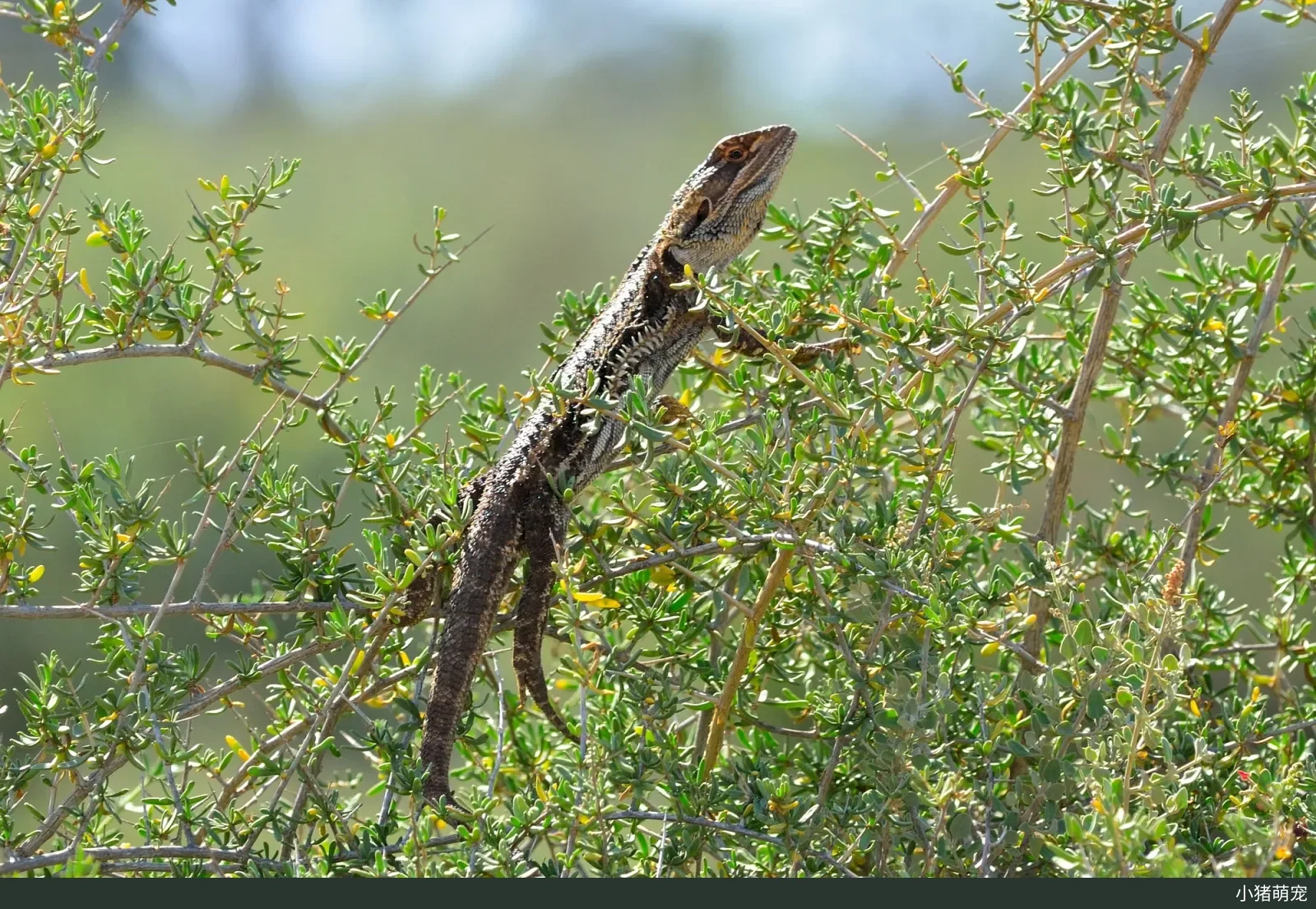
A wild central bearded dragon photographed 31 March 2012 at Neds Corner, Australia; a nitre bush (Nitraria billardierei) also appears in the frame. Photo: Chris Lindorff (originally on NatureShare); source: Wikimedia Commons; license: CC BY 2.5 AU.

The “beard” in the name is the patch of spiky-scaled skin under the jaw. When threatened, a bearded dragon gapes, flares the beard, and inflates its body so it looks larger and more prickly; adult males’ beards also turn black. Those spines are quite springy to the touch—mostly for bluff. They are usually solitary, gathering only at good basking spots or where food is abundant, and communicate with body language such as head-bobbing, arm-waving, and color change: fast head-bobs with a blackened beard are often a threat display; a slow wave often signals submission.
In the wild, bearded dragons are opportunistic omnivores: they eat leaves, fruit, and flowers, and also take invertebrates such as ants and beetles, occasionally small lizards. A 2015 Zoo Biology study flushed and examined stomach contents from 14 wild individuals; by dry matter, about 61% was animal food and 16% plant, with winged adult termites making up 95% of prey items by count—authors concluded they make full use of seasonally available prey. The sample was small and reflects only the sampling period, so it should not be used directly as a captive diet ratio. Bearded dragons are oviparous, with clutches of 11–30 eggs; captive lifespan is typically 7–12 years.
Housing and daily diet
Bearded dragons are mainly ground-active, so enclosures should favor length over height. RSPCA Australia suggests an adult enclosure of 1.2–1.8 m long, 0.6 m wide, and 0.6–0.9 m high; a veterinary rule of thumb is that length should be at least three times the animal’s total length. Provide hides and basking branches or rocks sturdy enough for adult weight. Bearded dragons are naturally solitary; RSPCA does not recommend co-housing, to avoid fighting injuries. For substrate, newspaper or kitchen paper is hygienic and easy to manage; sand or fine gravel carries an ingestion risk. Grayson Doss of the University of Wisconsin School of Veterinary Medicine advises against a full-tank sand bed; instead, offer a small dish of coconut fiber mixed with sand as a dig zone, especially for females.
As desert animals, they need a temperature gradient—cool at one end, hot at the other—so they can move to regulate body temperature. Numbers vary slightly by source: Doss’s preferred range is 25–40°C (cool end to basking spot); RSPCA Australia lists 27–45°C. They need at least 12 hours of light daily; bone health also depends on ultraviolet B (UVB), via a dedicated UVB lamp or 4–6 hours per week of unfiltered direct sunlight. Bearded dragons heat up quickly and cool slowly and can overheat—never leave a glass tank in direct sun. The Merck Veterinary Manual notes that UVB intensity falls rapidly with distance and that output declines as bulbs age; install and replace per manufacturer guidance, typically once a year. How much UVB is needed each day is still unsettled, but daily exposure is still recommended. Keep a shallow water dish available and clean it at least once a day—they often soak and may defecate in it.
The key to diet is shifting the animal-to-plant ratio with age. RSPCA Australia, citing field research, gives roughly: under 4 months about 70% animal / 30% plant; 4–12 months about half and half; adults about 90% plant / 10% animal. Another veterinary source (LafeberVet, published 2011, updated 2012) suggests adults get at least 25% animal food by volume, 50–55% dark leafy greens, and no more than 5% fruit. Adult ratios differ substantially between the two; the shared point is that juveniles are insect-heavy and dark greens increase with growth—ask a reptile-experienced vet to set proportions for body condition. Gut-load insects first, dust with calcium before feeding, and keep prey no wider than the dragon’s head. Calcium powder should be phosphorus-free or low-phosphorus, with a calcium-to-phosphorus ratio of at least 2:1; Doss generally suggests calcium without vitamin D3 or phosphorus 2–3 times a week, and a multivitamin 2–3 times a month. Feeding frequency: under 2 months, 2–3 times daily; 2–4 months, twice daily; from 4 months, every 1–2 days, preferably in the morning. RSPCA also notes that feeding live insects raises animal-welfare questions worth owners’ consideration.
Common health problems and zoonotic risk
VCA Animal Hospitals veterinarians advise a reptile-experienced vet check within 48 hours of arrival—weight, mouth, eyes, and skeleton, plus fecal microscopy. Many bearded dragons (including captive-bred ones) carry intestinal parasites such as pinworms and may need deworming.
Metabolic bone disease (MBD; medically, nutritional secondary hyperparathyroidism) is among the most common illnesses in pet bearded dragons, especially under two years. Usual causes are high-phosphorus / low-calcium diet, insufficient vitamin D3, or lack of UVB so the skin cannot make vitamin D3. Typical signs include a swollen jaw, softened jawbone (“rubber jaw”), swollen hind limbs, and shaky walking; in severe cases the animal cannot support itself and lies flat. Progression can bring muscle twitches, seizure-like episodes, and anorexia. The Merck Veterinary Manual says correcting diet and husbandry is the mainstay of treatment, and animals still eating have a better prognosis. VCA stresses treatment under veterinary guidance—do not simply add calcium on your own.
Other issues to watch: the skin fungal infection commonly called “yellow fungus disease” (VCA writes CANV; Doss’s lectures name Nannizziopsis guarroi), appearing as thickened yellow plaques on the face, back, flanks, or limbs—potentially fatal and needing aggressive antifungal treatment; adenovirus infection, common in juveniles, can cause hepatitis and GI infection, stunted growth, or death; intestinal parasites (pinworms, coccidia, and others); stomatitis; and respiratory infections that arise with stress, poor feeding, or cold, dirty conditions—sneezing, ocular/nasal discharge, open-mouth breathing. Doss also lists constipation, periodontal disease (bearded dragon teeth sit on the jaw surface and are prone to dental problems), and follicular stasis in females as common. Vague changes such as reduced appetite or lethargy also warrant prompt veterinary care.
There is also a human risk: the U.S. Centers for Disease Control and Prevention (CDC) notes that even healthy-looking, clean bearded dragons can shed Salmonella in feces. In an 21 August 2025 Morbidity and Mortality Weekly Report, CDC described a 2024 outbreak of Salmonella Cotham linked to pet bearded dragons: 26 confirmed cases across 13 states, 65% in children under 5, and most ill children lived with a bearded dragon without direct contact. CDC advice: wash hands with soap and running water after contact with the animal, its food, feces, or enclosure items; do not kiss or hold it to your face; keep it off kitchen surfaces and out of areas where young children play; change clothes before holding infants after contact. CDC also advises against bearded dragons for children under 5, adults over 65, and people with weakened immune systems.
Conservation status, regulations, and ethics
On conservation status, the IUCN Red List assessment published in 2018 lists the central bearded dragon as Least Concern (LC). Museums Victoria’s species page shows it is not on CITES Appendices and is not on Australia’s Environment Protection and Biodiversity Conservation Act (EPBC Act) threatened-species list. “Least Concern” does not mean free take: the Australian Museum notes it is protected in Australia, may not be collected from the wild, and most states and territories require a license to keep one. Australia’s Department of Climate Change, Energy, the Environment and Water (DCCEEW) states that commercial export of live native Australian reptiles is illegal; only six bird species may leave as household pets with their owners—bearded dragons are not among them.
In China, the current Wildlife Protection Law was revised on 30 December 2022 and took effect on 1 May 2023. Article 2 covers precious and endangered terrestrial and aquatic wildlife and terrestrial wildlife of important ecological, scientific, or social value. Article 40 requires State Council wildlife-protection authority approval to introduce wildlife species from abroad, measures to keep them out of the wild, and forbids unlawful release or abandonment; under Article 59, unlawful release or abandonment of wildlife introduced from abroad brings an order to recapture within a deadline and a fine of 10,000–100,000 yuan. The National Forestry and Grassland Administration’s list of captive-bred pet reptiles eligible for special marking covers seven species (such as African spurred tortoises and green iguanas); bearded dragons are not included. This article found no national-level list or rule specifically covering household bearded dragons; local practice may differ. Before keeping, breeding, or trading, confirm with the local forestry and grassland authority and keep proof of lawful origin.
Finally, an ethics note. RSPCA Australia’s position is that captive-bred wild animals should be kept as companions only when the species is clearly suited to a home environment, and inadequate care is a common cause of welfare harm in captive wildlife. A 7–12-year lifespan means long-term costs for electricity, regular UVB bulb replacement, a steady live-insect supply, and access to a reptile-capable vet. When choosing an animal, RSPCA suggests animals at least 3–6 months old that are already eating steadily; VCA considers young captive-bred individuals best as pets—older imported animals are harder to tame and more likely to carry parasites. If you can no longer keep one, find a capable new keeper or consult local authorities—never release it. Release is illegal in China and can harm local ecosystems.
References
-
Australian Museum. Central Bearded Dragon (page undated; accessed 2026-10-17)
-
RSPCA Australia Knowledgebase. How should I care for my bearded dragon? (updated 2023-10-03)
-
Pollock C. LafeberVet. Basic Information Sheet: Inland Bearded Dragon (published 2011-02-25, updated 2012-05-30)
-
Doss G. LafeberVet. Clinical Medicine of Bearded Dragons (published 2025-10-27, updated 2025-12-10)
-
Oonincx DGAB, et al. The diet of free-roaming Australian Central Bearded Dragons (Pogona vitticeps). Zoo Biology, 2015. doi:10.1002/zoo.21209
-
Merck Veterinary Manual. Nutrition in Reptiles
-
Merck Veterinary Manual. Nutritional, Metabolic, and Endocrine Diseases of Reptiles
-
Rich G, Hess L, Axelson R. VCA Animal Hospitals. Bearded Dragons - Owning
-
Rich G, Hess L, Axelson R. VCA Animal Hospitals. Bearded Dragons - Diseases
-
CDC. CDC Warns of Salmonella outbreak linked to bearded dragons (2024-06-14)
-
Xiaoli L, et al. Reoccurring Salmonella Cotham Outbreak Linked to Pet Bearded Dragons — United States, 2024. MMWR 2025;74:474–479 (2025-08-21)
-
Melville J, Wilson S. Pogona vitticeps. The IUCN Red List of Threatened Species 2018. doi:10.2305/IUCN.UK.2018-1.RLTS.T83494364A83494440.en
-
Museums Victoria Collections. Pogona vitticeps (Ahl, 1926), Central Bearded Dragon
-
DCCEEW. Wildlife trade and the law
-
DCCEEW. Household pets
-
National Forestry and Grassland Administration. Wildlife Protection Law of the People’s Republic of China (revised 2022-12-30)
-
National Forestry and Grassland Administration. New Wildlife Protection Law takes effect May 1!
-
National Forestry and Grassland Administration. Scope of special marking for nationally key protected terrestrial wildlife and products (first batch) (2022)
-
Zhengzhou Forestry Bureau. Mailbox inquiry: reply on green iguana special-marking pilot (2024)