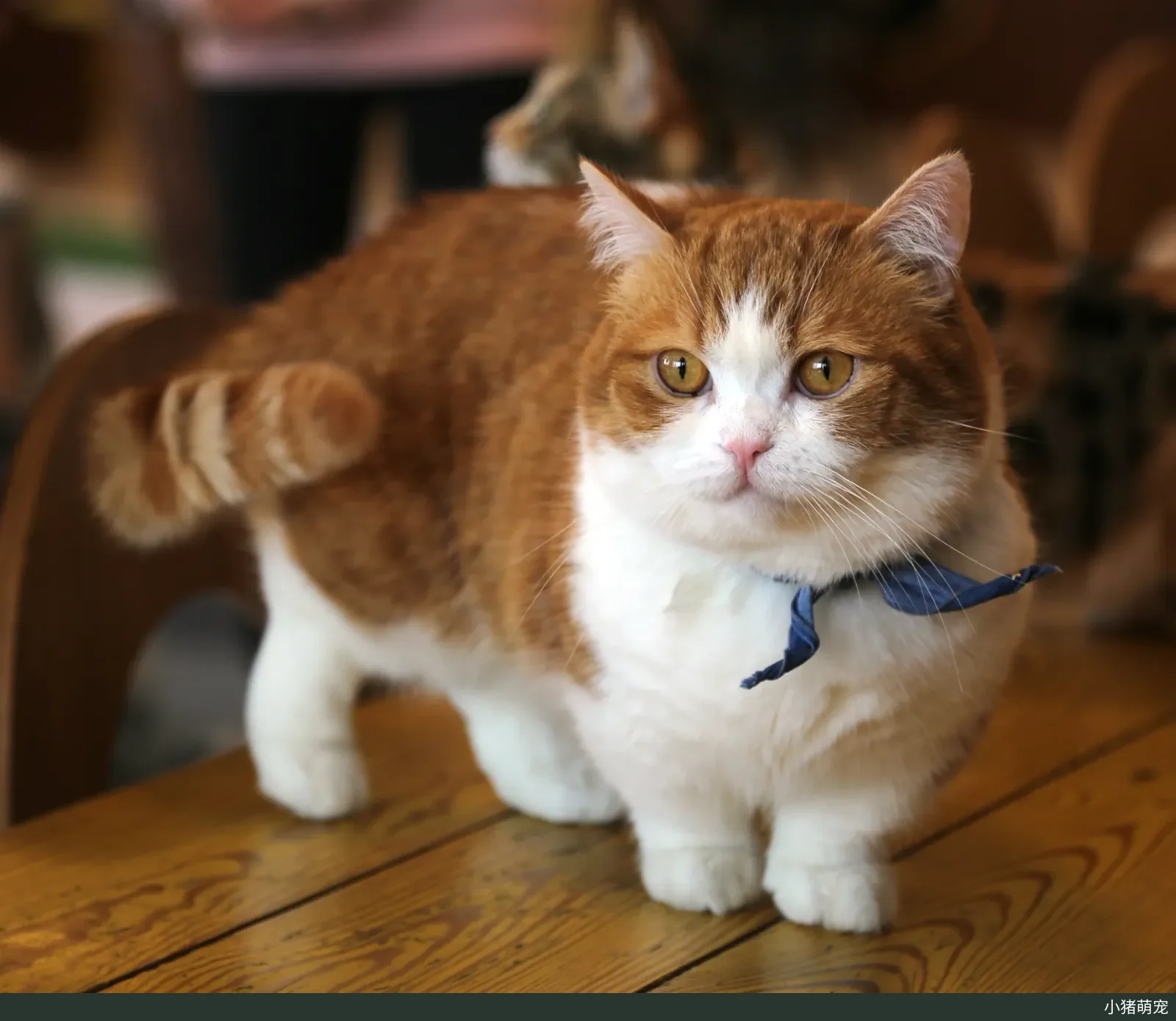
A Munchkin cat. Photo: Tasy Hong, originally on Pixabay; source: Wikimedia Commons; license: CC0 1.0.

The Munchkin is known for its short legs, the result of a dominant genetic mutation. Today’s breed is usually traced to a short-legged female named Blackberry found in Louisiana, USA, in 1983. The International Cat Association (TICA) granted championship status in 2003, but CFA, FIFe, the UK’s GCCF, and other associations still do not recognize it. This article outlines its origins, temperament, the health debate, and care basics.
Origins and breed recognition
Short-legged cats are not a recent novelty. TICA’s breed profile notes that a 1944 British veterinary report recorded short-legged cats across four consecutive generations; that line disappeared during World War II. Later records appeared in Stalingrad in 1956, New England in the 1970s, and Louisiana in the 1980s.
Today’s Munchkin is usually traced to 1983. Per TICA, Sandra Hochenedel of Louisiana (spelled Hockenedel on the TICA page) took in a pregnant short-legged female she named Blackberry; a 1995 Los Angeles Times report adds that she was a music teacher in Rayville who found Blackberry hiding under an old pickup to escape a bulldog. She later gave Toulouse, a short-legged male from Blackberry’s litter, to her friend Kay LaFrance. The breed was built from those two cats and continued outcrossing to ordinary domestic cats to widen the gene pool. The name comes from the diminutive Munchkins in The Wizard of Oz.
Associations disagree sharply on recognition. In September 1994 TICA placed the Munchkin in its new-breed development program, tracking pedigrees and breeding data under the genetics committee; from May 2003 it has had championship status, with both longhair and shorthair coats accepted. The Cat Fanciers’ Association (CFA) 2025–2026 show standards do not include the Munchkin. Europe’s Fédération Internationale Féline (FIFe), in its health and welfare rules, cites the Munchkin directly: cats whose breed trait is (pseudo)achondroplasia are not registered or recognized by FIFe; such cats, and cats with such cats in their ancestry, may not be bred, shown, or promoted. The UK’s Governing Council of the Cat Fancy (GCCF) states plainly that it has no intention of recognizing the Munchkin or any other dwarf breed.
Looks and temperament
Apart from short legs, the Munchkin’s body is much like an ordinary domestic cat’s. TICA’s breed standard says the long bones of the limbs are shortened and may be slightly bowed, but the adult torso is medium-sized—the cat does not stay kitten-sized forever. TICA’s reference weights are about 5–7 lb (about 2.3–3.2 kg) for adult females and about 7–10 lb (about 3.2–4.5 kg) for adult males. Coats come in shorthair and longhair: the shorthair is medium length, dense, and resilient; the longhair is semi-long and silky. Color and pattern are unrestricted—diversity that comes from outcrossing to ordinary domestic cats.
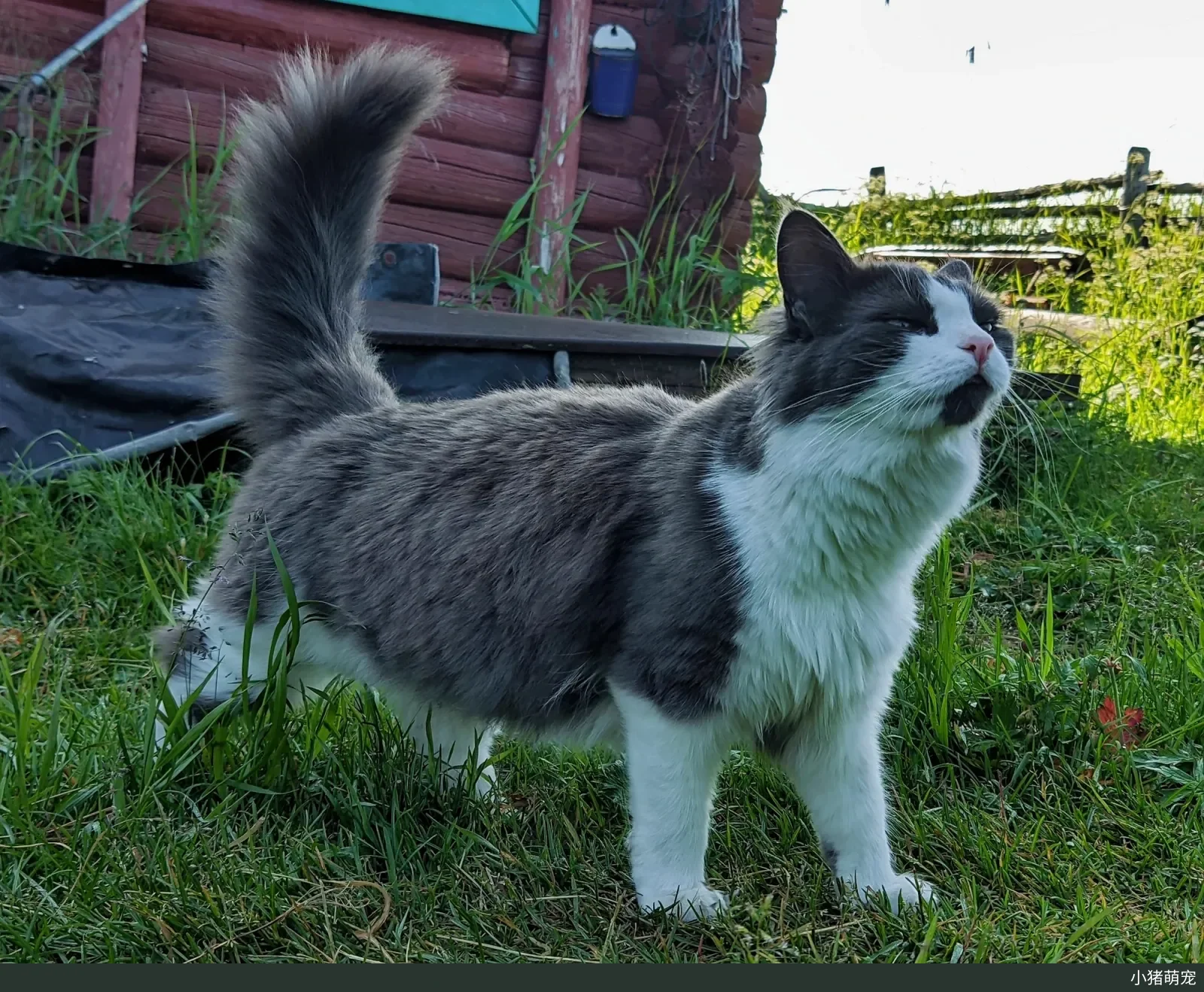
A blue-and-white bicolor Munchkin cat stretching. Photo: Egor Plenkin, originally on Flickr; source: Wikimedia Commons; license: CC BY 2.0.

On temperament, TICA describes Munchkins as curious, playful, and people-oriented: they like to run, chase, and play with toys; when something interests them they may stand up on their hind legs like a rabbit to look; some carry off shiny small objects to stash. They cannot jump as high as long-legged cats and often use intermediate perches to climb in stages. TICA’s expected lifespan is 15–18 years or more. These descriptions come from breed-association and breeder experience, not systematic research; this article also found no independent study of lifespan for this breed. Individual personalities vary as well.
The short-leg gene and the health debate
Medically, Munchkin short legs are a form of disproportionate dwarfism—chondrodysplasia. In 2020 a team at the University of Veterinary Medicine Hannover published in BMC Genomic Data a case–control analysis of 89 cats and found a structural variant within the UGDH gene that mapped completely to the short-legged type (breeders call it “standard”), which they considered the likely cause. The trait is autosomal dominant: one copy of the variant produces short legs, so two short-legged cats can still produce long-legged “non-standard” kittens. Researchers found no cats with two copies of the variant; combined with breeders’ reports of smaller litters when short-legged cats are bred together, they inferred that embryos with two copies may not be viable.
Whether short legs affect health is the breed’s biggest controversy. TICA’s position is that the mutation shortens only the long bones of the limbs, the spine is unaffected, Munchkins are not more prone to arthritis, and no breed-specific disease testing is required (except for individuals outcrossed to other breeds). Veterinary research is more cautious. A 2021 study in Veterinary and Comparative Orthopaedics and Traumatology compared radiographs of five adult short-legged cats with skeletally normal cats and found clear limb-alignment abnormalities in both fore and hind limbs—for example, proximal femoral varus (coxa vara), proximal tibial valgus, and distal tibial varus. No clear osteoarthritis was visible on those radiographs at the time, but the authors stressed the small sample and relatively young ages, so long-term effects could not be inferred; such misalignment may change joint loading. After the study, the authors also saw a 6-year-old short-legged cat with sudden hind-limb paresis; MRI showed multilevel disc degeneration and one disc herniation, so they argued that effects on intervertebral disc health could not be ruled out.
On welfare grounds, International Cat Care holds that genetic traits that harm health or welfare should not continue to be bred, and lists short-legged cats as an example; its veterinary position statement also calls for discouraging breeding for extreme conformation such as chondrodysplasia. RSPCA Australia notes that Munchkin conformation may limit activity and natural behavior, and that abnormal limb development may harm joints; in Victoria, under the local code of practice on breeding animals with heritable defects that cause disease, such cats must not be used for breeding. Large long-term studies are still lacking, so the more accurate claim is that how much short legs affect lifelong health remains unsettled—but imaging already shows skeletal alignment abnormalities, and related risks should not be ignored.
Care points
- Know the rules and the debate before bringing one home: Munchkins cannot be registered or shown under FIFe or GCCF systems, and must not be bred in Victoria, Australia. RSPCA Australia suggests that if a cat has exaggerated features that affect welfare, sterilization can prevent passing those traits on, and a veterinarian can advise on points to watch.
- Set up a “low-threshold” home: Short-legged cats generally cannot jump very high; provide cat trees with closely spaced levels, steps, or ramps so they can climb in stages. TICA suggests low-sided bowls or water fountains, with water about 1 m (3 ft) from the food bowl; also keep a tall scratching post.
- Watch limbs and spine: Given the joint-loading concerns above, watch for limping, reluctance to jump, gait changes, or hind-limb weakness, and seek care promptly; at regular checkups, ask the veterinarian to focus on limbs and spine.
- Grooming is straightforward: TICA suggests brushing shorthairs once a week and longhairs twice a week to prevent mats; also trim nails, clean ears, and brush teeth with veterinary-approved pet toothpaste on a regular schedule.
- Feed like an ordinary adult cat: TICA sees no special nutritional needs—balanced quality cat food and fresh water daily; refine the plan with your veterinarian.
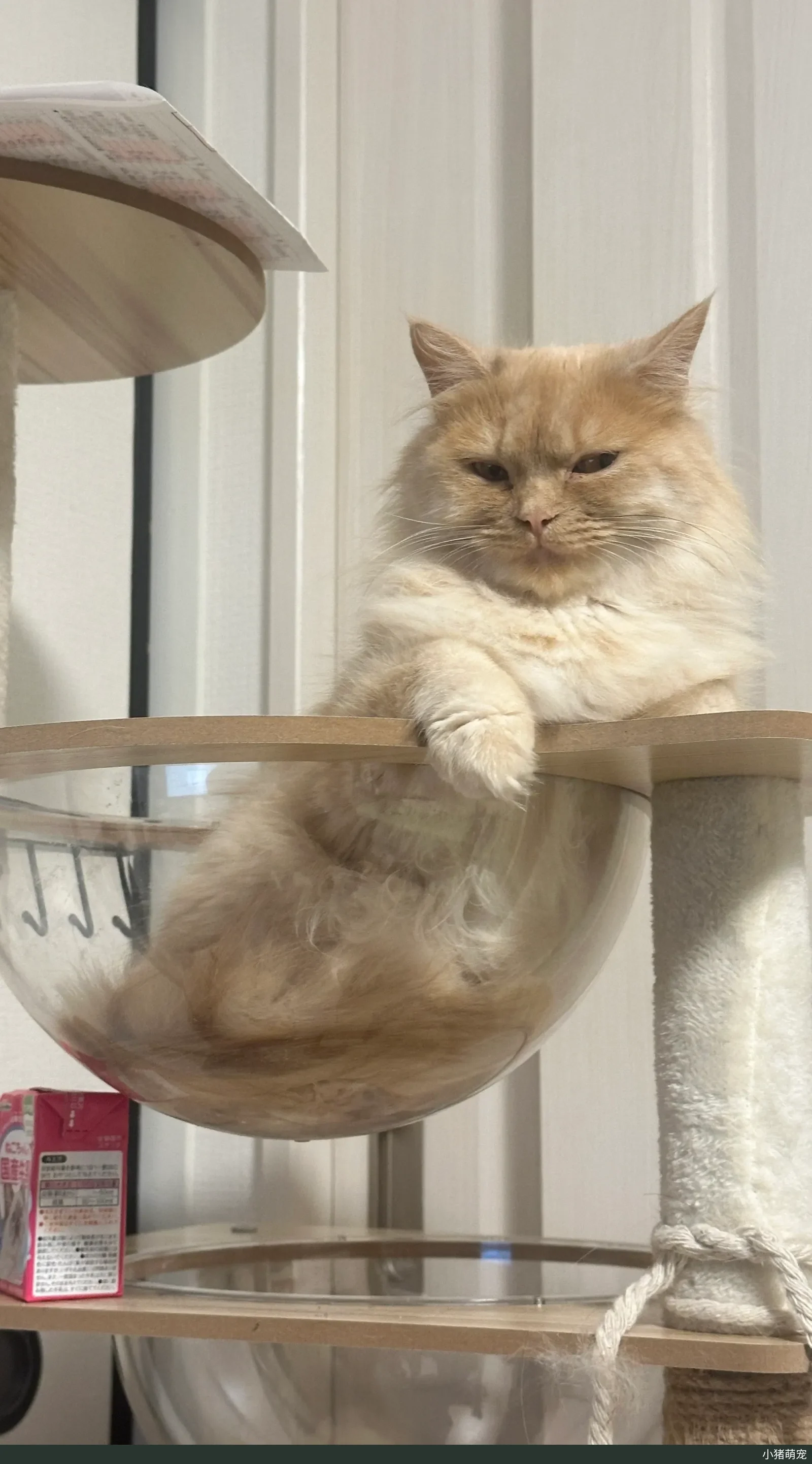
A Munchkin cat sitting in a clear bowl. Photo: Venezsian1573; source: Wikimedia Commons; license: CC0 1.0.

References
-
The International Cat Association (TICA). Munchkin. Accessed 2026-10-17.
-
Los Angeles Times. Critics Dog Cat. 1995-07-21.
-
The Cat Fanciers' Association (CFA). Show Standards 2025–2026. Accessed 2026-10-17.
-
Fédération Internationale Féline (FIFe). Health & Welfare Rules. Accessed 2026-10-17.
-
Governing Council of the Cat Fancy (GCCF). GCCF's Welfare Statement. Accessed 2026-10-17.
-
Struck A-K, Braun M, Detering KA, et al. A structural UGDH variant associated with standard Munchkin cats. BMC Genomic Data, 2020-06-30.
-
Anderson LM, Fox DB, Chesney KL, Coates JR, Torres BT, et al. Skeletal Manifestations of Heritable Disproportionate Dwarfism in Cats as Determined by Radiography and Magnetic Resonance Imaging. Vet Comp Orthop Traumatol, 2021;34(5):327–337.
-
International Cat Care. Inherited disorders in cats. Accessed 2026-10-17.
-
International Cat Care. Feline Conformational Health and Welfare in Cat Breeding. Accessed 2026-10-17.
-
RSPCA Australia Knowledgebase. What are the health and welfare issues associated with exaggerated physical features in cats?. Accessed 2026-10-17.