Look up the Havana Brown in the World Cat Federation’s breed standards and you’ll find it under Havana, code HAV. The WCF notes that other associations use the names Havana Brown or Suffolk. The Cat Fanciers’ Association calls the breed Havana Brown and describes its characteristic color as chocolate brown. The name matters when you’re looking at photographs. The WCF standard also recognizes a lilac variety with a faint pink cast to its gray coat. For the brown variety pictured here, begin with the outline of the standing cat, then take a closer look at the face.[1][2]
A side view shows how the legs, body, and tail fit together. The WCF describes a medium-sized cat with a firm, muscular body of moderate length. The legs are long and straight, the hind legs a little longer than the forelegs, and the paws compact and oval. In the first photograph, the raised tail makes it easy to follow its taper all the way to the tip. A mature male may carry enough muscle to make his legs look less slender. The standard gives more weight to the balance of these proportions than to size alone.[1]
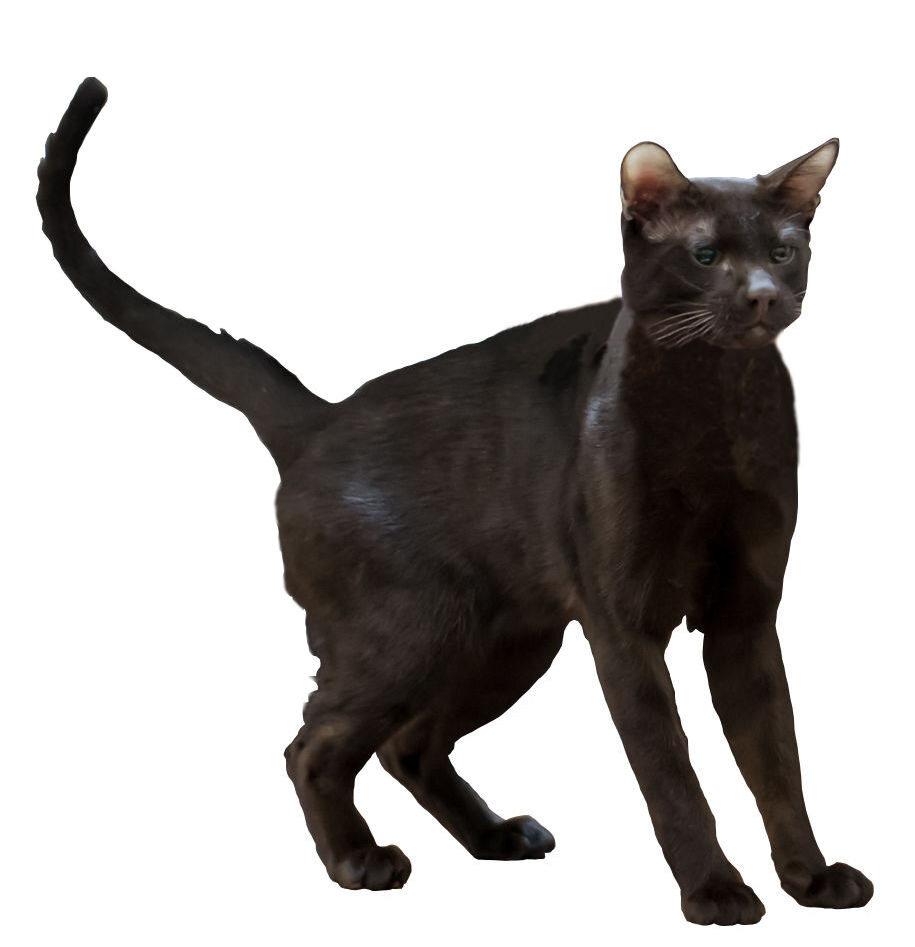
Figure: The Havana Brown in profile. Heikki Siltala / Desaix83, Wikimedia Commons[4]

Light can make the brown surprisingly hard to read. The smooth coat lies close to the body and catches the light along a curve. As the shoulder turns into shadow, the same deep brown can look almost black. Find an evenly lit patch on the shoulder or cheek and follow the hair into the shade. The WCF describes a solid, even color ranging from warm brown to the reddish brown of mahogany. Even color allows for all the highlights and shadows you see in a photograph. On the brown variety, the whiskers are brown too, the nose is brown with a rosy flush, and the paw pads have a rosy tone.[1]
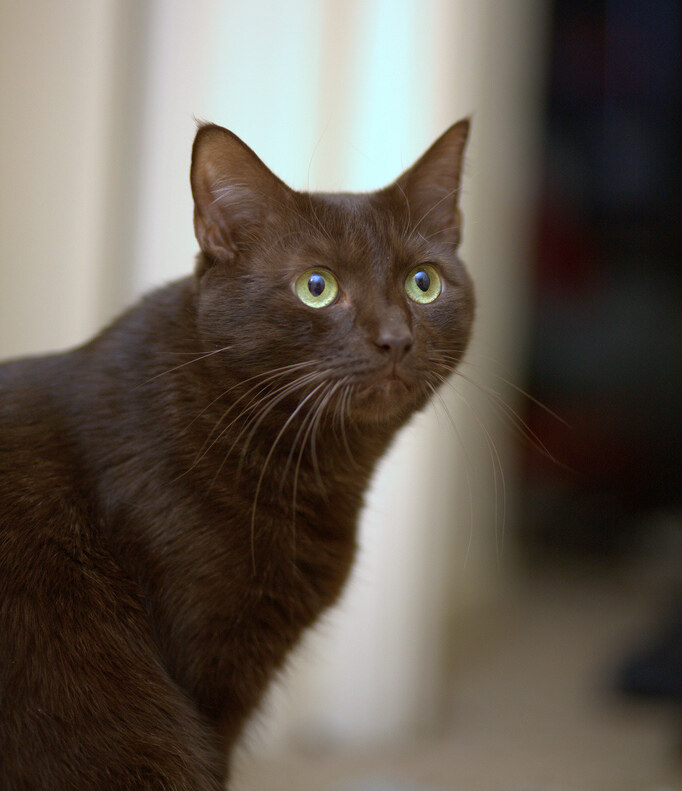
Figure: The brown coat in indoor light. Dave Scelfo, Wikimedia Commons[5]

To see what gives the muzzle its square end, look at where the whiskers grow. They emerge from two rounded pads on either side of the nose. Viewed from slightly above, the head is longer than it is wide. Follow the outline of either cheek toward the nose and you’ll see a distinct indentation just behind the whisker pad. The pad fills out the outline again, giving the muzzle its nearly square finish. In profile, the flat forehead changes angle at eye level, and the strong chin sits in line with the tip of the nose. Those contours remain recognizable even in a dark photograph.[1]
The large ears are set well apart, with rounded tips and a slight forward tilt. The upward glance in the third photograph gives a clear view of the ear tips. A straight-on view makes the spacing easier to judge. The eyes have oval openings, and the WCF calls for a vivid, even green in a range of shades. Notice how the light eyes stand out against the dark face in the indoor photograph. Taken together, the eye shape, ear position, and muzzle give a fuller impression of the breed. The forward tilt alone gives the cat an alert look. Its next move tells you more about whether it wants company.[1]
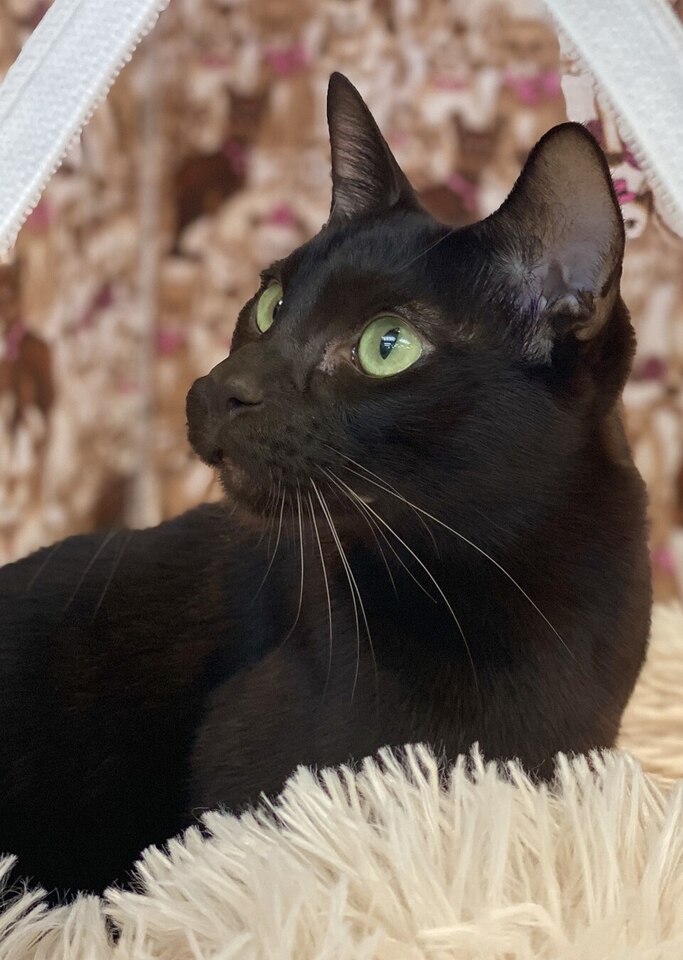
Figure: Ear tips and muzzle with the head raised. Havanabrowngirl, Wikimedia Commons[6]

Under your hand, the coat should feel smooth and lie close to the body. The WCF describes it as short to medium in length, with no undercoat.[1] Everyday grooming is fairly simple. When the cat settles beside you, brush gently in the direction the hair grows. Notice where it leans into the touch and when it turns to leave. A coat that takes little tending leaves time for things the cat can initiate. The CFA describes Havana Browns as active and sociable. Give yours opportunities to join in and see which ones it takes.[2][3]
A cat that follows you into a room may simply want to sit nearby. Leave a spot beside your favorite chair where it can watch what you’re doing and get down whenever it likes. If it comes over for a stroke, pause after a few strokes and see whether it leans in again. For play, draw a toy away along the floor so the cat can watch, stalk, chase, and catch it. Let the game end when it wanders off to rest. The Feline Veterinary Medical Association recommends predictable, positive interactions for indoor cats. When family members respond consistently, the cat learns how to start an encounter and how to end it.[3]
To plan the space, trace the routes your cat can take from its usual resting place. Can it reach water, food, a litter box, and a scratching surface? Where can it retreat when visitors arrive? A sturdy perch gives it a view of the room, while a hiding place down low offers quiet. In a home with several cats, look closely at doorways. Two bowls can be several feet apart and still be equally hard to reach if another cat sits in the only entrance. Spread resources across different locations, then watch whether each cat can get to them comfortably.[3]
Knowing your cat’s usual habits also helps you spot changes in its health. Indoor living reduces exposure to some hazards, but persistent distress can affect behavior and physical wellbeing.[3] If a cat that usually comes out to play starts hiding for long stretches, or its eating, drinking, or litter box habits change noticeably, contact your veterinarian promptly. Describe when the change began, which places the cat still visits, and whether anything at home has changed, such as a moved litter box or a new animal. Those details help the veterinarian consider both the cat’s physical condition and what it encounters at home.
References
-
[1] World Cat Federation. Havana (HAV). September 29, 2019.
-
[2] The Cat Fanciers’ Association. Havana Brown.
-
[3] Feline Veterinary Medical Association. New Feline Veterinary Medical Association Position Statement Reimagines Life for Indoor Cats. August 28, 2025.