Veiled chameleons (Chamaeleo calyptratus) need tall, ventilated cages, foliage they can hide in, and clear day–night temperature, humidity, and UVB gradients. Chameleon Academy’s care page and 2022C summary give a checkable starting range: set climate and light first, then tune to the animal’s behavior—not treat the species as a desk pet.[1][2]
Climate: dry days, humid nights, real night drop
The care summary targets daytime ambient 72–78°F (22–25°C), nights 55–65°F (13–18°C), and a basking spot near 85°F (29°C), with daytime relative humidity about 40–50% and nights 80–100%. Branches should dry during the day; add airflow when fogging at night. Mount basking lamps above the cage for a gentler heat field that reduces casque burns, and skip night heat in ordinary rooms.[1][2]
UVB, hydration, and cage limits
Aim for about UVI 3 at the basking branch with a dedicated reflector, verified with a Solarmeter 6.5; cage-top UVI near 7.4 is the reference through ~70% screen. Hydration uses short mist cycles (1–2 minutes in the summary) plus live plants and retreat branches. Minimum housing is roughly 2×2×4 ft or 36×18×36 in, ideally larger, with one chameleon per cage. Non-growing, non-gravid adults often take 3–5 safe-size feeder units every other day; overfeeding and excess heat raise oversized clutches and dystocia risk in females.[1][2]
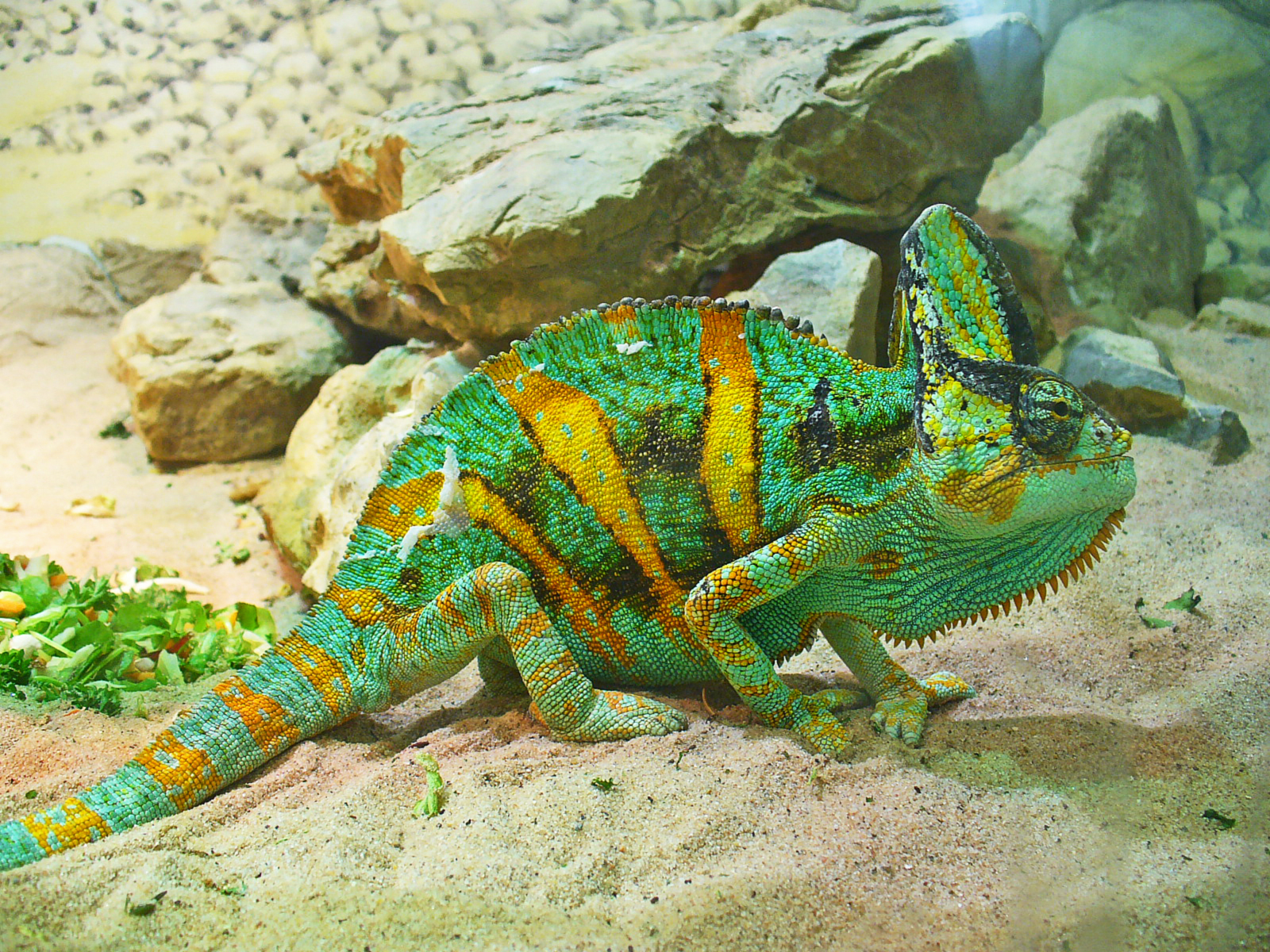
Figure: Veiled chameleon (Chamaeleo calyptratus). Llez, Wikimedia Commons


Figure: Veiled chameleon on exhibit. Syrio, Wikimedia Commons


Figure: Veiled chameleon on a branch. Fungus Guy, Wikimedia Commons

These numbers are starting points, not slogans: if a chameleon huddles under the lamp, stays dark, or keeps its eyes closed by day, recheck temperature, UVB, and health before raising intensity. Captive-bred animals, solitary housing, and access to a reptile veterinarian are safer than chasing wild-caught color morphs.[1][2]
References
[1] Chameleon Academy. Veiled Chameleon Care.
[2] Chameleon Academy. Veiled Care Summary 2022C.