Seen from the side, a Coton de Tulear in full coat can look like one sweep of white from shoulder to hind leg. Run a hand along the dog’s side and your palm may touch only the hair that hangs on the outside. For a family that wants to keep the coat long, the daily work starts underneath. Someone needs to part the hair gently and make sure a comb can pass through the section closest to the skin. The breed’s name offers a clue to what that coat feels like.[1][2]
Coton is French for cotton, a reference to the texture of the hair. Tulear is a port city in Madagascar, where members of the nobility once kept these small dogs as companions. The breed came to be known as the “Royal Dog of Madagascar.” That history as a companion is easy to recognize in an ordinary household. A Coton may quietly follow a family member from room to room, then turn into a lively playmate when someone has time for a game.[1]
Beneath the abundant hair is a sturdy little dog. The breed standard gives an ideal adult height of about 9 to 11 inches (23 to 28 centimeters) at the shoulder. In profile, the body is longer than the dog is tall, with a slight arch over the loin. Watch the tail as the dog sets off. At rest it hangs down, with a small upward hook at the tip. In motion it can curve over the back, giving the same dog quite a different outline.[2]
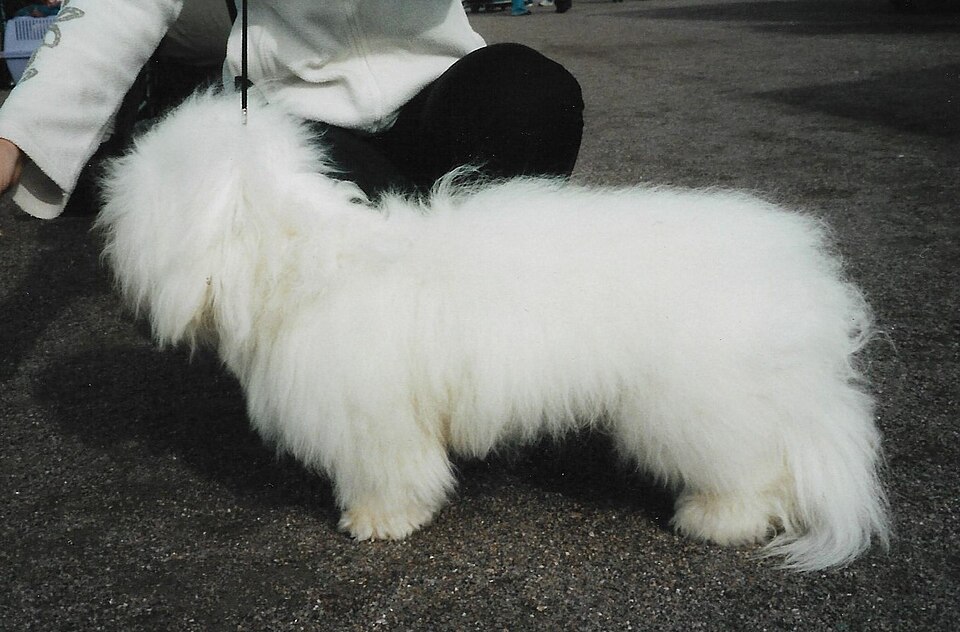
A standing Coton shows its outline in profile. Canarian, Wikimedia Commons[4]

From the front, the dark eyes look rather round and sit well apart. Their dark rims and the black nose stand out against the pale facial hair. At the cheeks the white hair falls alongside the face, while on the crown it fluffs up. The breed standard describes a soft, dense, supple coat that may have a slight wave. It is the feel of the hair that gives the Coton its name. Even where it hangs straight, it can have that characteristic cottony texture.[2]
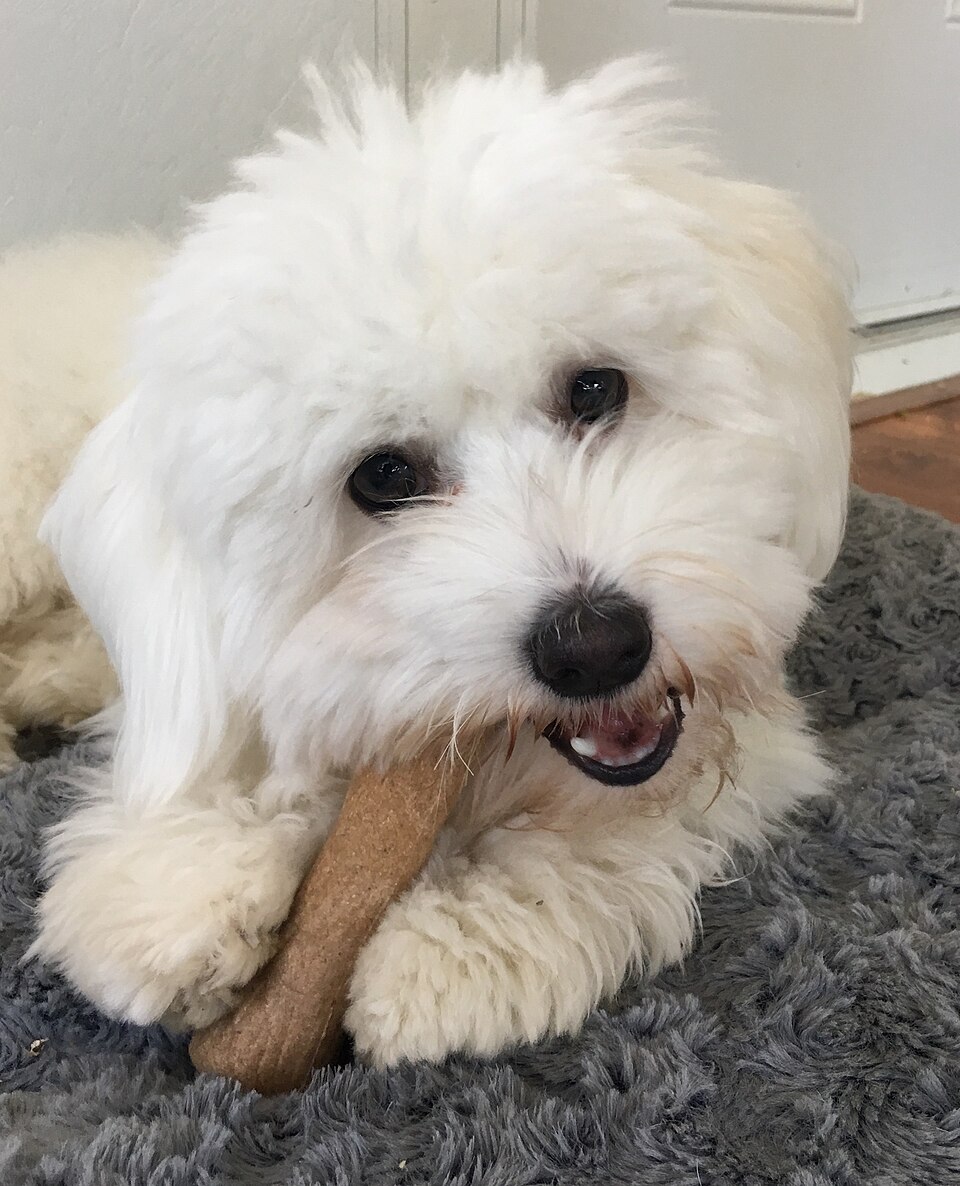
The white coat frames Luna’s eyes and nose. Cybersharmila, Wikimedia Commons[5]

Make company part of daily exercise
Even a dog this small benefits from a walk set aside for it each day. The American Kennel Club (AKC) describes the Coton’s exercise needs as moderate and gives two simple examples, a leisurely walk with the family and a game of chase with a ball in the yard. Start with a route you can comfortably fit into your day and walk at your dog’s pace. If the dog is still eager to play when you get home, roll a ball somewhere safe, let the dog catch up with it, and give it time to come back to you. The walk gets the dog moving, and the game gives it a reason to seek you out again.[1]
To picture how a Coton would fit into your home, think through an ordinary workday. Who can take the dog out in the morning? When can someone put their work down and give a game their full attention? A yard is handy for a ball game, and a walking route close to an apartment can be just as much a part of the daily routine. A bored Coton may find things to chew or damage. If your dog tends to go looking for something to do just when the household gets busy, try moving a walk or a game to the quieter stretch beforehand. Then leave a toy the dog can enjoy on its own.[1]
A Coton can be affectionate with familiar people and still need practice feeling comfortable around strangers. These dogs are alert to activity around them. From puppyhood, introduce visitors and new places gradually, while the dog is relaxed. When someone comes to the door, for instance, leave the puppy enough space to watch. Say its name and reward it as soon as it turns to look at you. Once that response comes easily in a familiar room, practice somewhere a little busier. Keep the exchange playful and finish while the puppy is still interested. At the next visit, you can ask for something it already knows how to do.[1]
Part the coat to reach the roots
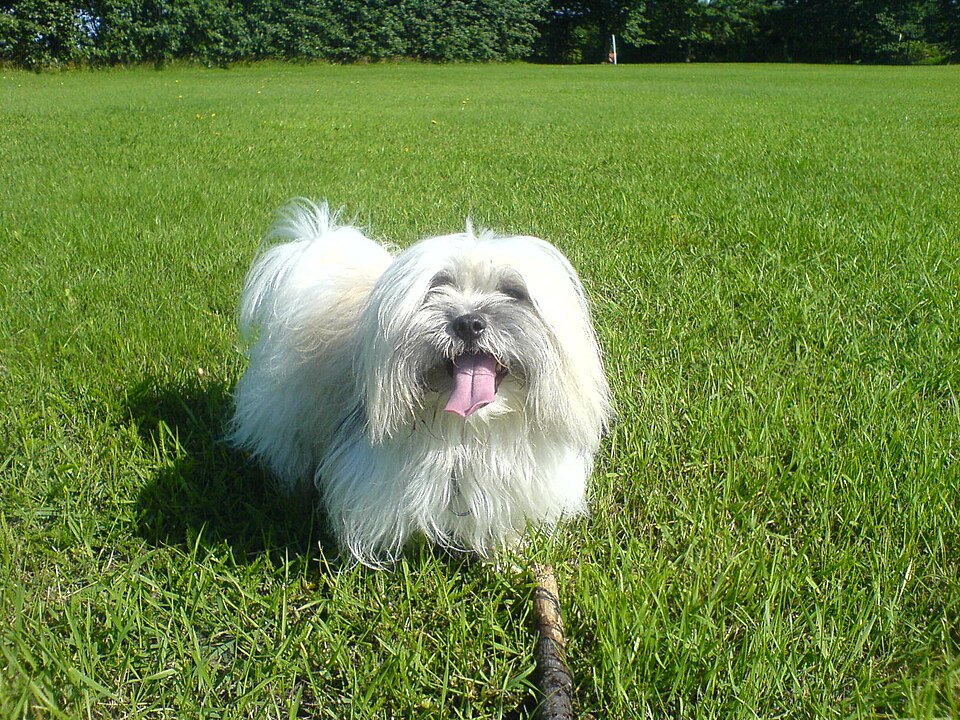
Long hair falls from the cheeks and chest. janbystrom, Wikimedia Commons[6]

A puppy’s coat is softer than an adult’s and easy to comb, which makes this a good time to teach the puppy what grooming feels like. Choose a moment when it is awake and settled. Steady it gently with one hand and part a small section of hair with the other. Comb just that patch, give the puppy a reward while it is still standing comfortably, and finish there. As it gets used to the feel of your hands and the comb, cover a little more at each session. By the time its coat grows long, the puppy will know what to expect when you reach over to part the hair.[1][2]
For the daily comb-through of a long coat, start on one side of the dog. Lift the outer hair to expose a thin layer near the skin. Support a small lock in your hand and ease the ends free first, working progressively closer to the roots. Once the lock is loose, set the comb into the hair near the skin and draw it gently through to the tips. Let down another thin layer and repeat. If the comb catches, stop and divide the lock into smaller pieces. The AKC recommends using a spray conditioner made for dogs to reduce breakage. To check a finished section, part it again. The comb should travel easily from near the skin all the way to the ends.[1]
A brush can skim smoothly over the surface while the hair underneath tangles into mats against the skin. Severe matting may leave shaving the coat short as the only option. Before settling on a coat length, ask a groomer to show you how to work through the layers, then comb one side yourself. That gives you a feel for the job you would be taking on each day. If you love the way a long coat falls, set aside a regular time for it. If a busy workweek makes that hard to sustain, you can choose a short trim from the outset and book the next one. With either length, part the hair around the ears a few times a week and look for wax or debris inside.[1]
What should you ask before bringing a puppy home?
When talking with a breeder about the puppy’s parents, ask what each dog is like, how each responds to grooming, and whether you can see both dogs’ health screening results. The AKC lists kneecap, hip, heart, and eye evaluations for the breed. Conditions seen in Cotons include slipping kneecaps (patellar luxation), hip dysplasia, and eye problems. For each record, match the name of the dog to the examination and its result. That way you can tell exactly which evaluations each parent of this litter has had.[1][3]
When you meet the puppy you might bring home, ask its caregiver to get out the comb they usually use. Watch how the puppy settles into a stand, where it is comfortable being touched, and when it needs a break. At home, you can adjust the pace of a walk, the length of a lesson, and the length of the coat to suit the dog in front of you. If your family can picture both taking that daily walk and sitting down beside the dog to comb through the hair you can’t see, you have a good sense of what sharing a home with a Coton involves.[1]
References
-
[1] American Kennel Club. Coton de Tulear Dog Breed Information.
-
[2] American Kennel Club. Official Standard of the Coton de Tulear.
-
[3] The United States of America Coton de Tulear Club. Health screening and questions for prospective puppy buyers.