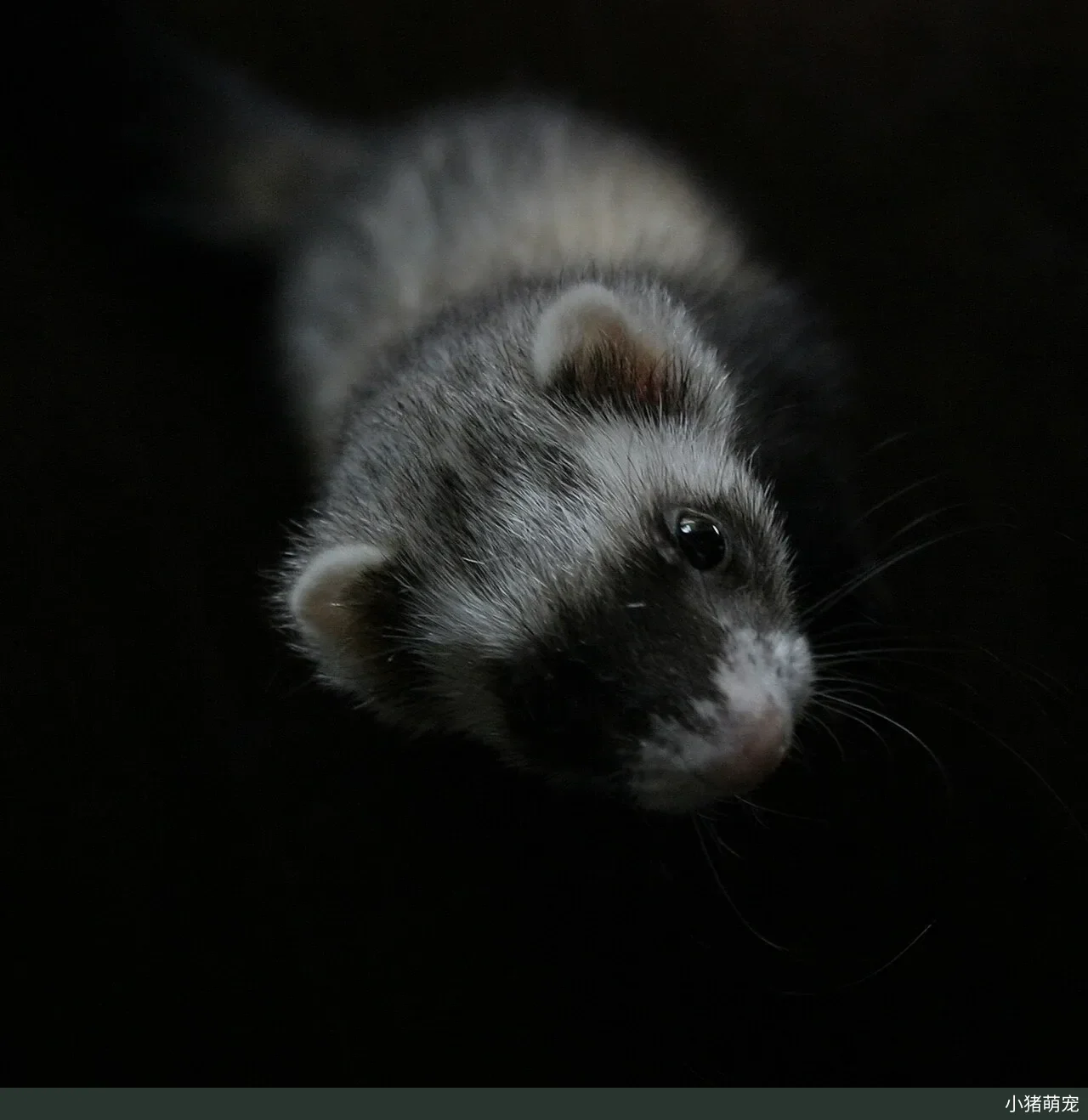
A typical domestic ferret look: dark “mask,” white muzzle, and long whiskers. Photo: Nfeldman, source: Wikimedia Commons, license: CC BY 3.0.

Ferrets are domestic mustelids generally thought to descend from the European polecat. They are curious and love to squeeze into spaces; sleep or rest can run up to 20 hours a day. They are carnivores and need a high-protein diet, a home set up against escape and accidental swallowing, and veterinary care attentive to canine distemper, insulinoma, and adrenal disease. Ferrets are not on CITES Appendices or China’s two wildlife lists, but personal inbound carriage is restricted, and abandoning or releasing them harms animals and ecosystems.
Origins and habits
The ferret’s scientific name is Mustela putorius furo; it belongs to the order Carnivora, family Mustelidae, alongside weasels, badgers, and mink. It is generally thought to have been domesticated from the European polecat (Mustela putorius), though the exact place of domestication remains unsettled. The Merck Veterinary Manual notes that ferrets have been kept by humans for more than two thousand years and were used as hunting animals in Europe, Australia, and New Zealand; they are fully domesticated and, if turned outdoors, are likely to starve.
Per Merck Veterinary Manual figures, males may reach about 2 kg and females about 1.2 kg; they reach adult size at 5–6 months, are considered adult at one year, and typically live 6–10 years, though many die earlier from accidents or disease. Bodies are long and slender; common colors include albino (white with red eyes), sable, cinnamon, and chocolate, often with white patches on the throat or toes; color and density also shift with season—darker and thicker in winter, lighter with a molt in summer.
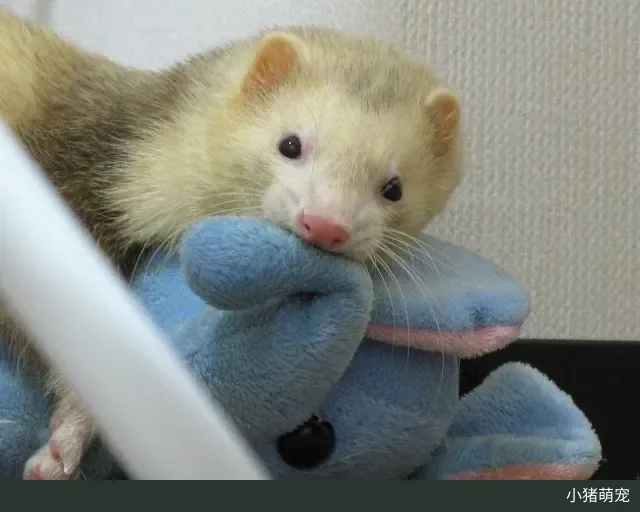
A light-colored ferret playing with a plush toy. Curiosity and chewing are natural; keep soft small household items put away to prevent swallowing. Photo: Shihuku / Web-mstr, source: Wikimedia Commons, license: CC BY-SA 3.0.

Ferrets sleep a lot: the UK’s Royal Society for the Prevention of Cruelty to Animals (RSPCA) notes sleep or rest can last up to 20 hours a day, with peak activity at dusk. When awake they are curious, almost fearless, and very persistent; they can squeeze through tiny openings and love chewing foam, erasers, rubber bands, buttons, and other soft or plastic small items—the Merck Veterinary Manual lists these traits among common causes of ferret injury and even death. Biting is also part of their nature: ferrets play with people the same rough way they play with companions, especially obvious in 3–4-month-old intact males kept long in pet shops with little human interaction. The manual suggests putting the ferret briefly back in its cage to “cool off” each time it bites; consistency teaches that biting people is not allowed.
On group versus single housing, expert advice is not uniform. The Merck Veterinary Manual (professional edition) notes that the wild relative, the polecat, is solitary, yet many ferrets are quite social, so some veterinarians prefer single housing to avoid group stress; if kept in groups, limit to 3–4. The RSPCA instead advises planning for more than one ferret if you keep them—up to four in a group, preferably littermates, all neutered; a single ferret needs daily human companionship and interaction. Either way, watch daily: repeated hiding or fighting are signals to adjust grouping or the environment.
Home setup and diet
Before bringing a ferret home, “ferret-proof” the house. The Merck Veterinary Manual advises sealing holes larger than about 2.5 cm (1 inch) in walls, floors, ductwork, and appliances, using metal mesh rather than tape—ferrets can peel tape off; check refrigerators, dishwashers, ovens, washing machines, and dryers before closing doors or starting cycles; recliner chairs, sofa beds, and thick-cushion sofas can crush or trap them, and check under carpets and under box-spring mattresses; put away erasers, balloons, foam plastic, rubber bands, and anything else that might be swallowed—intestinal obstruction can be fatal and usually needs emergency surgery. When you cannot supervise, keep ferrets in their enclosure.
On housing, the Merck Veterinary Manual (professional edition) notes that standard ferret cages are usually not enough for play, so plan daily supervised out-of-cage time and enrichment such as balls, tunnels, and foraging toys. Prefer metal mesh with openings no larger than about 2.5 cm, a solid floor, lockable doors, and height enough for the ferret to stand on its hind legs; place the litter tray away from food and sleeping areas. Hammocks or sleep boxes lined with old T-shirts are popular; hay, straw, wood shavings, and wood chips are not recommended as bedding because inhaled dust can chronically irritate the upper airways. The RSPCA also advises a ventilated, dry home without drafts; clean food bowls, water gear, and toilet areas daily, and thoroughly clean living and play areas at least weekly.
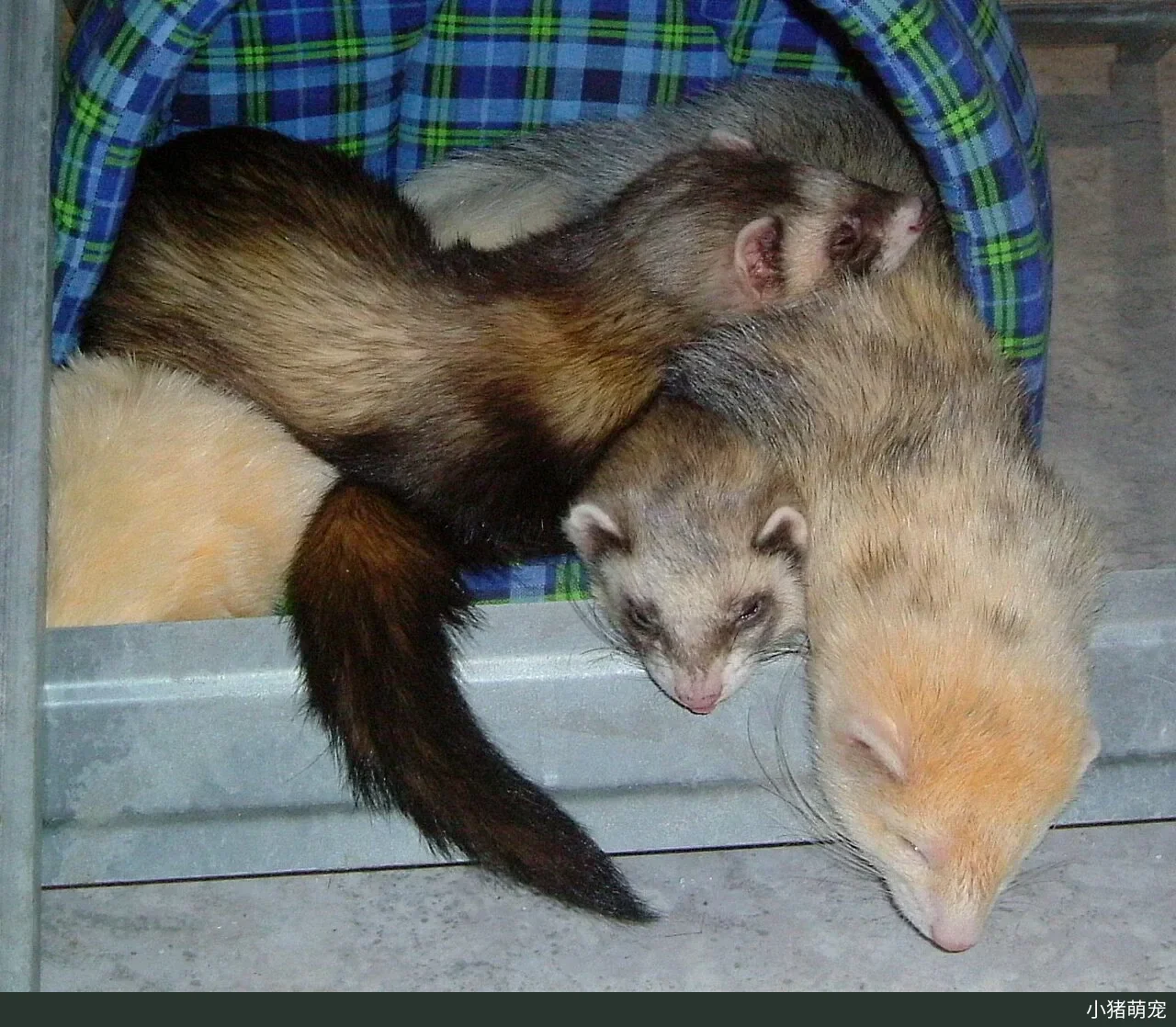
Several ferrets packed into a checkered fabric nest, sound asleep—sleep or rest can last up to 20 hours a day. Photo: Viki, source: Wikimedia Commons, license: CC BY-SA 3.0.

Temperature is a hard limit. Ferrets cannot sweat and overheat easily; the Merck Veterinary Manual stresses that cages must never sit in direct sun. Suitable ranges differ slightly by source: the RSPCA suggests about 15–21°C; the Merck Veterinary Manual (owner edition) suggests about 18–24°C (65–75°F) and never above about 32°C (90°F). In hot summer regions, plan cooling in advance.
On diet, ferrets are carnivores. The Merck Veterinary Manual (professional edition) highlights high protein needs—about 35%–40% of the diet; fat can vary, but carbohydrates should stay under 25% and fiber under 2.5%. Options include quality commercial ferret food or quality kitten food. In some countries whole rodents, rabbits, pigeons, or raw bone-and-meat diets (BARF) are popular, but the manual warns that such raw meat must be human-grade and free of pathogens such as Salmonella and Campylobacter.
Common health problems
Endocrine disease is among the most common ferret illnesses, mainly insulinoma and adrenal disease. Insulinoma is a tumor of pancreatic β-cells, common in ferrets older than 2–3 years. Excess insulin causes hypoglycemia; signs range from lethargy, a vacant stare upward, and hind-limb weakness to drooling, pawing at the mouth, and teeth grinding, and in severe cases collapse, generalized seizures, or coma; an important feature is that symptoms often ease after a little food. Diagnosis usually requires blood glucose after at least four hours of fasting. Surgery and drugs can control the disease but neither cures it; long-term glucose monitoring is needed. The Merck Veterinary Manual (owner edition) notes that a weak or collapsed ferret may be given a little honey or corn syrup, but nothing should go in the mouth during a seizure—seek care immediately.
“Adrenal disease” in ferrets differs from Cushing’s in cats and dogs: it is mainly excess sex-hormone secretion from the adrenal, not cortisol. The classic sign is symmetrical hair loss, often starting at the tail and rump and spreading toward the head, often with itch; a neutered female’s vulva may swell again, a neutered male may resume sexual behavior, and some males develop difficulty urinating from prostate enlargement. The Merck Veterinary Manual (professional edition) presents the currently favored explanation: after neutering, persistently elevated gonadotropins chronically stimulate the adrenal cortex; the age at neutering is no longer thought to play a major role. Treatment options include surgery or a long-acting deslorelin implant; the manual says the implant is licensed for this indication and is increasingly preferred clinically; whether it is available in China and how to use it should be discussed with a veterinarian. Separately, jills are induced ovulators; without breeding or neutering they may stay in heat and develop severe estrogen-related pancytopenia. In Europe, “chemical neutering” with deslorelin implants instead of surgery is already common, and early data suggest it may lower adrenal-disease incidence. Neutering method and timing are best weighed with an exotic-pet veterinarian.
Among infectious diseases, canine distemper is the most dangerous. The Merck Veterinary Manual notes ferrets are susceptible to canine distemper virus, which can spread by aerosol or contact with ocular/nasal secretions, urine, and feces; once clinical disease appears, mortality approaches 100%, usually death 12–14 days after infection, so vaccination is strongly advised. The manual’s schedule is U.S.-framed: distemper vaccine around 8, 11, and 14 weeks of age; rabies after 3 months of age; then boosters every 1–3 years depending on the product used, preferably not giving both vaccines on the same day; it also notes that no distemper vaccine is currently specifically approved for ferrets in the United States. Which vaccines to use in China and how to schedule them should be discussed with a local veterinarian. Ferrets can also catch influenza A and B, which can pass between people and ferrets—practice hygiene when household members have colds; ear mites and fleas are also common in ferrets and can spread among ferrets, cats, and dogs.
Legal status and ethical notes
Start internationally. In CITES Appendices I, II, and III valid from 5 March 2026, Mustelidae lists only a few species; the black-footed ferret (Mustela nigripes) is on Appendix I. Neither the European polecat nor its domestic form, the ferret, appears in the Appendices, so ferret trade is not CITES-controlled. Do not confuse the two: the black-footed ferret is a rare North American wild species, not the same animal as the pet ferret.
In China, the National Key Protected Wild Animals List (National Forestry and Grassland Administration and Ministry of Agriculture and Rural Affairs Announcement No. 3 of 2021) lists under Mustelidae only the yellow-throated marten, beech marten, sable, wolverine, and three otter species; the List of Terrestrial Wild Animals of Important Ecological, Scientific, and Social Value (National Forestry and Grassland Administration Announcement No. 17 of 2023—the so-called “three-haves” list) includes native mustelids such as the steppe polecat, Siberian weasel, and mountain weasel. Neither list includes the ferret or the European polecat, but native weasels such as the steppe polecat are legally protected wildlife and must not be confused with pet ferrets. In 2020, Guangzhou’s agriculture and rural affairs bureau, answering a public inquiry, also stated that the “Angora ferret” is not a nationally or Guangdong-listed protected terrestrial wild animal, nor a “three-haves” animal. Note that this reply predates the 2023 “three-haves” list and is a local case reply; lists are updated periodically and localities may have other rules—confirm current requirements with local authorities before keeping one.
On cross-border movement, General Administration of Customs Announcement No. 5 of 2019 allows personal inbound live animals only as dogs or cats, and only one animal per person per entry. Ferrets therefore cannot enter as personally carried pets; be especially careful about claimed overseas hand-carried ferrets and whether the source is lawful.
Rules elsewhere vary widely. The Merck Veterinary Manual (owner edition) notes that California and Hawaii ban keeping ferrets, as do some cities including New York City. New Zealand’s Department of Conservation lists ferrets as “unwanted organisms”: in the 1880s ferrets were introduced with stoats and weasels to control rabbits; by 1900 they were widely established in the wild and contributed to declines in native birds such as kiwi; since 2002 New Zealand has banned selling, distributing, and breeding ferrets as pets.
Finally, a few ethical notes. First, a ferret may stay with you 6–10 years and needs daily supervised activity time, a specialized diet, and an exotic-experienced veterinarian—confirm a nearby clinic that will see ferrets before you get one. Second, never abandon or release: domestic ferrets outdoors are likely to starve, and if they form wild populations they can threaten native wildlife as in New Zealand. China’s Wildlife Protection Law (effective 1 May 2023) requires that releases use local species suited to survival at the release site, and that wildlife introduced from abroad not be illegally released or discarded; whether a domestic ferret counts as “wildlife” under that law is not separately spelled out, but the principle is still worth following. Third, prefer sources that can document origin and provide health and vaccination records, or consider adoption—do not impulse-buy because the look is cute.
References
-
Schoemaker NJ, van Zeeland YRA. Management of Ferrets. Merck Veterinary Manual (professional edition), comprehensively reviewed June 2021, updated August 2026.
-
Schoemaker NJ, van Zeeland YRA. Endocrine Disorders of Ferrets. Merck Veterinary Manual (professional edition), comprehensively reviewed June 2021, updated July 2026.
-
Schoemaker NJ, van Zeeland YRA. Infectious Diseases of Ferrets. Merck Veterinary Manual (professional edition), comprehensively reviewed June 2021, updated July 2026.
-
Morrisey JK. Description and Physical Characteristics of Ferrets. Merck Veterinary Manual (owner edition), comprehensively reviewed January 2020, updated May 2026.
-
Morrisey JK. Special Considerations for Ferrets. Merck Veterinary Manual (owner edition), comprehensively reviewed January 2020, updated May 2026.
-
Morrisey JK. Introduction to Ferrets. Merck Veterinary Manual (owner edition), comprehensively reviewed January 2020, updated September 2024.
-
Morrisey JK. Hormonal Disorders of Ferrets. Merck Veterinary Manual (owner edition), comprehensively reviewed January 2020, updated September 2024.
-
RSPCA. Creating a good home for your ferrets (page undated; accessed 17 October 2026).
-
RSPCA. Keeping ferrets together (page undated; accessed 17 October 2026).
-
Duda J. Mustela putorius furo (domestic ferret). Animal Diversity Web, University of Michigan Museum of Zoology (student-authored entry, undated).
-
CITES Secretariat. Appendices I, II and III valid from 5 March 2026.
-
National Forestry and Grassland Administration & Ministry of Agriculture and Rural Affairs. Announcement No. 3 of 2021 (National Key Protected Wild Animals List), issued 5 February 2021; list entries cross-checked against Shanghai Greening and City Appearance Administration reprint.
-
National Forestry and Grassland Administration. Announcement No. 17 of 2023 (List of Terrestrial Wild Animals of Important Ecological, Scientific, and Social Value), finalized 26 June 2023; full list cross-checked against Zhongshan municipal government reprint PDF.
-
Guangzhou Municipal Agriculture and Rural Affairs Bureau. Interactive reply: quarantine needs for keeping leopard geckos, Angora ferrets, and similar animals, replied 1 June 2020.
-
Standing Committee of the National People’s Congress. Wildlife Protection Law of the People’s Republic of China, revised 30 December 2022, effective 1 May 2023.
-
General Administration of Customs. Announcement No. 5 of 2019 (Further standardizing quarantine supervision of inbound companion animals).
-
New Zealand Department of Conservation. Ferrets: New Zealand animal pests (page undated; accessed 17 October 2026).