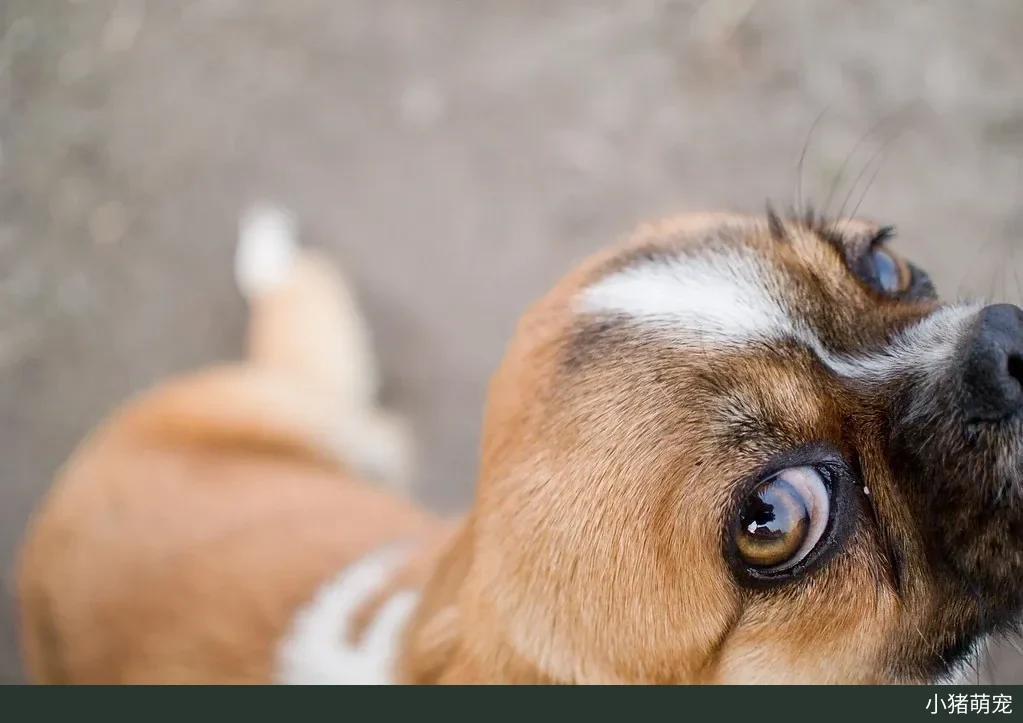
Facial close-up of a brown-eyed dog looking straight at the camera. Photo: Ivan Radic; source: Flickr; license: CC BY 2.0.
On 16 October, the World Animal Day website published its 2026 roundup: this year’s theme was “See the World Through Their Eyes,” with 61 events registered on the site, 33 million online reach, and 19,000 mentions. Those figures were released by coordinating body Naturewatch Foundation without a stated methodology; the roundup itself cites no research.
Origins of the day and this year’s theme
World Animal Day falls each year on 4 October—the feast day of Francis of Assisi, regarded as the patron saint of animals. Per the World Animal Day site and its compiled history, the day was started by Heinrich Zimmermann, publisher of the German magazine Mensch und Hund (Man and Dog): the first event was held on 24 March 1925 at Berlin’s Sportpalast with more than 5,000 people; 1929 was the first year it ran on 4 October; in May 1931 an international animal-protection congress in Florence, Italy, adopted his proposal to make 4 October a worldwide World Animal Day. In 2003 the British animal-welfare charity Naturewatch Foundation launched the World Animal Day website, introduced an ambassador program in 2007, and now coordinates globally; the site says there are more than 90 ambassadors in over 70 countries.
The 2026 theme was announced by Naturewatch Foundation on 19 March, chosen from “hundreds” of public submissions; the submitter was Zoe Bizicki of the United Kingdom, communications and operations officer at the orangutan charity Orangutan Foundation. In her submission note she wrote that climate change and human activity affect not only people but animals, yet decisions are often made from a human viewpoint alone. In a 2 September article on the site she added that people often appreciate animals only when it is “convenient,” and the theme invites pausing to notice their lives. Official illustrator Emma Jayne drew this year’s commemorative artwork inspired by the Coral Triangle, presenting coral and bleaching through a fish-shaped “lens.”
Twelve days after 4 October, the World Animal Day site on 16 October published the roundup titled Seeing the World Through Their Eyes on World Animal Day 2026. It was written by the coordinating body itself (self-identified as “World Animal Day HQ, Naturewatch Foundation”), summarizing participation by ambassadors, partner groups, prominent accounts, and schools—more an annual summary than news reporting.
Activities in the roundup
The roundup’s centerpiece is ambassador activity. Per the piece: Romania’s Claudio Iosim of Animed Arad and a partner ran a half-marathon relay; Rwanda’s Dr. John Claude of RAWO and team first spoke on animal welfare at a farm, then met veterinary students in another region and vaccinated dogs against rabies; DRC’s Paterne Bushunju of Sauvons Nos Animaux spent a day with Young Friends of Animals Club children at Haven of Peace shelter in Bukavu; Brazil’s Rosangela Gebara of Ampara Animal Institutes released a new animation on responsible pet ownership and gave books to more than 100 local primary pupils. The original roundup, however, left only the placeholder “NAME” where the animation title should be; the title is still unknown.
Policy circles also moved. The roundup notes that Pet Alliance Europe held its annual #PetPower Night in Belgium on “animals that heal.” Pet Alliance Europe’s own press release is more specific: the event ran on 29 September in Brussels under the full theme “A Different Kind of Care: Animals That Heal,” with MEPs, European Commission and Council officials, animal-welfare groups, and assistance- and therapy-animal associations. Per the Union of European Veterinary Practitioners (UEVP), guests from Italy’s San Patrignano community Sanpa Dogs program described how caring for rescue dogs forms part of addiction-recovery plans. On attendance the two sources differ: the roundup says “more than 100 guests,” the press release “nearly 100 participants.”
In the United Kingdom, the Naturewatch Foundation team moved its “office” to Pittville Park in Cheltenham and collected pet food at the weekly parkrun. Per the charity’s 4 October press release, the collection was on Saturday 3 October; “hundreds” of runners and residents brought pet food and supplies for Teckels Animal Sanctuaries and Cheltenham Animal Shelter (the roundup misspelled the former as “Tackles”). It was part of the annual “Donate a Dinner” campaign: the campaign page went up on 5 August and listed 25 participating UK rescue groups. The press release did not disclose quantities collected.
A dog behind wire fencing at Paws and More shelter in Washington, Iowa, U.S. (unrelated to the UK events in the article). Photo: Nhandler; source: Wikimedia Commons; license: CC BY 2.5.
Online, the roundup claims 33 million reach and 19,000 mentions this year. National Geographic India’s account, the Jane Goodall Institute, and others posted; the latter introduced chimpanzee Kefan, detection dog Kivuli, and shy young gorilla ZZ at Tchimpouga sanctuary in the Republic of the Congo; FOUR PAWS posted on 4 October stressing that animals are sentient. Stourbridge station’s ginger cat George (the roundup says more than 40,000 followers) also “posted” a short poem: animals do not care about our jobs, houses, and savings—they understand kindness, safety, and love. On schools, the roundup names Knockhill Primary School’s animal-themed assembly and Forest Oasis Nursery guiding young children to observe local wildlife.
Evidence sources and limits
To be clear up front: this roundup is the organizers’ own annual summary, not a research paper or third-party news investigation. It cites no scientific studies, datasets, or external statistics; numbers and activity descriptions all come from the organizers and their ambassador network.
Treat three figures separately. “61 events” are those registered on the World Animal Day site—registration is voluntary, so unregistered events are missing; it is neither a global total nor a measure of scale. “33 million” and “19,000 mentions” do not state platforms, time window, tools, or definitions. Social-media “reach” usually means how many people or impressions might have seen content—more like counting how many walked past a poster than how many stopped to read or actually donated a bag of cat food. These figures are organizer self-reports only and cannot support claims about real animal-welfare impact.
Parts of this article that could be checked against other materials include: this year’s theme and submitter (Naturewatch’s 19 March announcement; the submitter’s 2 September article); the Cheltenham parkrun collection (Naturewatch press release and a local chamber event listing); and Brussels #PetPower Night (Pet Alliance Europe press release). Most of those materials also come from event parties, so they show consistency of messaging rather than independent verification. Cross-checks also found the three discrepancies noted above: guest counts, a misspelled organization name, and the missing animation title. Ambassador activities in Romania, Rwanda, DRC, and Brazil are paraphrased from the roundup alone; no other public sources were found, and details such as how many dogs were vaccinated were not disclosed.
Separately, the FOUR PAWS article says “a growing body of scientific evidence shows that many animals have complex cognitive and emotional lives,” but attaches no specific study citations. That is an advocacy organization’s position and should be read as advocacy, not new evidence supplied by this news item.
Meaning for pet owners
For people with cats and dogs at home, this item brings no new research findings or rule changes—more a reminder to see the animals around us from another angle. FOUR PAWS’ advice is simple: look at an animal and consider what it may feel right now—they can fear and enjoy, hurt and be comfortable, remember experiences and learn from them. In daily life, before taking a dog to a busy market, think what the noise, smells, and crowds mean for it. For more accurate reading of a pet’s emotional and behavioral signals, consult a veterinarian or qualified behavior professional; this roundup offers no specific methods.
A second takeaway is the “Donate a Dinner” idea: donate pet food or supplies directly to a local rescue, organize a workplace or school collection, or give the cost of one meal. The listed participating groups are all in the UK; readers elsewhere who want to follow the idea should first ask a nearby shelter what they need and whether they accept opened food, then prepare—so well-meant donations are actually usable.
Third is responsible ownership and vaccination. Rwanda’s ambassador vaccinating dogs against rabies and Brazil’s ambassador teaching children about responsible ownership via animation both point to basic care duties; follow local law and veterinary advice for your own pets’ immunization. FOUR PAWS also calls for adopting instead of buying and challenging harmful breeding practices—advocacy positions you can weigh against your own circumstances.
References
-
World Animal Day. Seeing the World Through Their Eyes on World Animal Day 2026. 2026-10-16.
-
Naturewatch Foundation. Announcing The World Animal Day 2026 Theme. 2026-03-19.
-
Zoe Bizicki (Orangutan Foundation). See the World Through Their Eyes. World Animal Day, 2026-09-02.
-
World Animal Day. About Us. Publication date not stated.
-
World Animal Day. Origin of World Animal Day (PDF). Filename marked updated 2020-12.
-
Naturewatch Foundation. Donate A Dinner This World Animal Day. 2026-08-05.
-
Naturewatch Foundation. Hundreds of Cheltenham parkrunners go the extra mile for animals this World Animal Day. Pressat, 2026-10-04.
-
Cheltenham Chamber of Commerce. Cheltenham Parkrun on World Animal Day with Naturewatch Foundation. Event listing; publication date not stated.
-
Pet Alliance Europe. Pet Alliance Europe spotlights the healing power of pets at annual #PetPower Night 2026. 2026-09-29.
-
UEVP. Pet Alliance Europe highlights the healing power of pets. 2026-10-01.
-
FOUR PAWS International. World Animal Day 2026: See the World Through Their Eyes. 2026-10-04.