Seen in profile, the Kerry Blue Terrier has a beard that falls from a long muzzle and a sturdy, upright frame beneath a thick, wavy coat. This medium-sized terrier takes its name from County Kerry in Ireland, where it did a variety of farm jobs. It also hunted small game and birds and retrieved game on land and in water. That last job gives you a glimpse of what a Kerry can bring to family life. Running out is only half a retrieve. Then the dog turns and looks for you. [1]
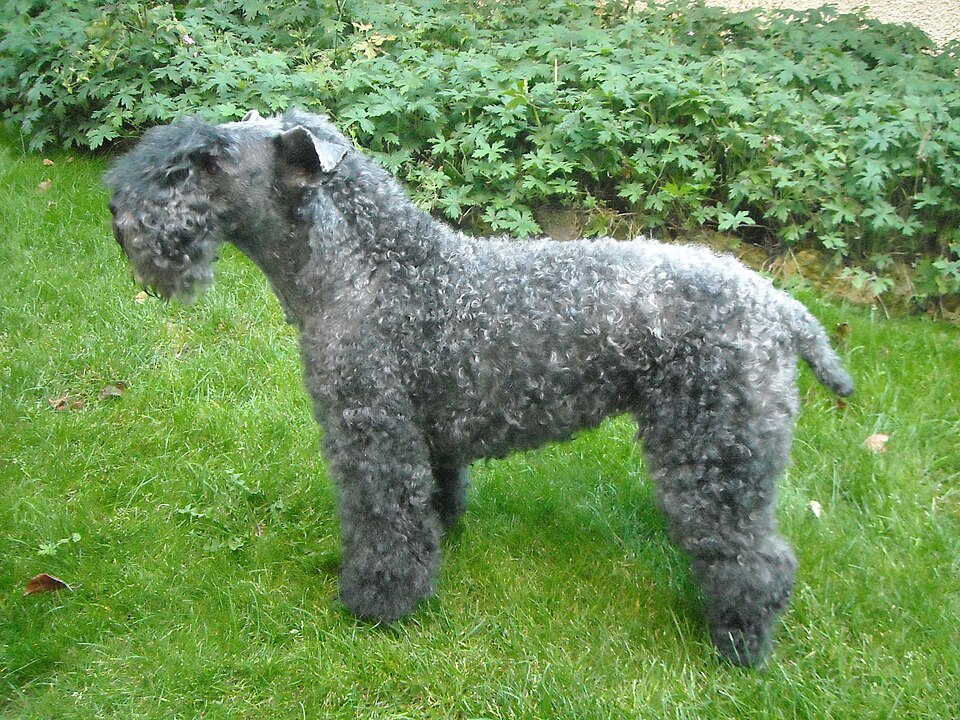
A Kerry Blue Terrier stands in profile. Eponimm, Wikimedia Commons[3]

The blue in the name can be hard to spot in a puppy. Kerries are born black, and their coats gradually lighten as they grow. Adult shades range from deep slate to pale blue-gray. One Kerry may look almost black all over, while another looks silver in the sun. Other clues are the proportions of the head and body, the well-developed hindquarters, and the waves in the coat. Adult males stand about 46 to 50 centimeters at the shoulder and females about 44 to 48. Try measuring that height against your own leg. It is easier to picture the size of the dog that way than to judge it through all the leg hair in a photograph. [1]
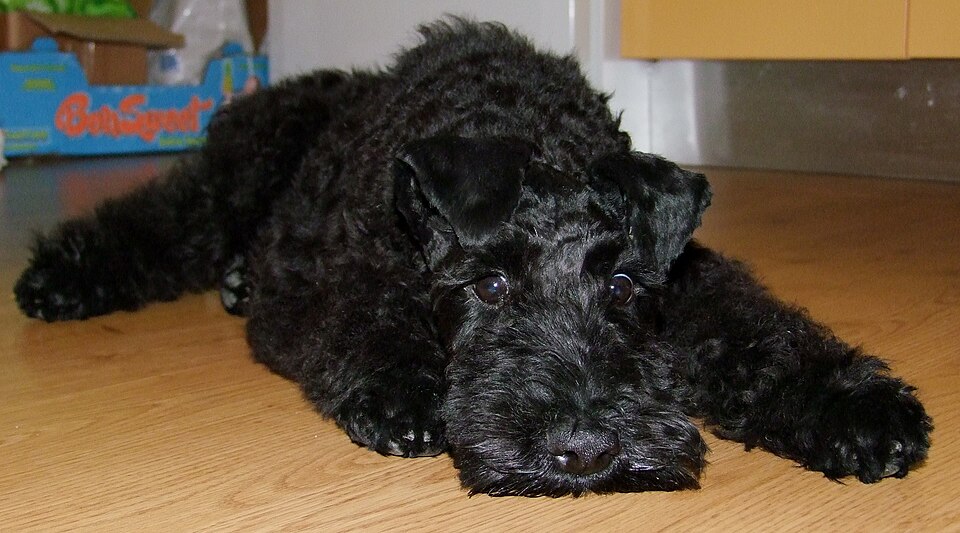
A Kerry Blue puppy shows its dark coat. Vbi20, Wikimedia Commons[4]

Practice the return
The American Kennel Club (AKC) lists fetch among the activities Kerries enjoy. Choose a fenced space where you can see the ground clearly, and toss a toy just a few steps away. When your dog picks it up, take a step or two back and call the dog toward you. Offer encouragement as soon as the dog comes close. Once the dog lets go, toss the toy again. Those last few steps are worth spending time on at first. When your Kerry brings the toy all the way back to you, the next round can begin. Longer throws can come later. [1]
Watch which part of the game your dog enjoys. One Kerry might love the chase, then wander off to sniff the grass as soon as the toy lands. Try a shorter toss, and practice turning at the sound of the dog's name as a separate exercise. Another Kerry might carry the toy straight back, eager for another throw. If the dog already knows how to sit on cue, ask for a sit and reward it with the throw. That gives you a chance to practice one familiar skill in a game the dog wants to keep playing. Walks, outdoor play, and a jog together can all have a place in the routine. Adjust the exercise to your dog's age, stamina, and energy that day. [1]
Practice turning back on a busy walk
Beyond the fence, an approaching dog or a small animal darting across the path can be more interesting than the toy in your hand. Kerries are alert and inclined to give chase. For a leashed walk, choose a route with room to step aside. Pause far enough away that your dog can see the movement and still respond when you call. Reward the turn toward you, then walk on together. If your Kerry keeps staring ahead and the leash draws tight, move farther away. Start the next attempt at that greater distance. [1]
When a puppy comes home, a basic class with an instructor who has worked with terriers gives the people who care for the dog a chance to learn together. Everyone can practice when to give a cue and when to reward the response. Between classes, take a different route through a familiar neighborhood. Let the puppy watch people and dogs pass from a little way off, then carry on together. The AKC recommends taking Kerries out regularly to experience different surroundings and avoiding off-leash dog parks. Being able to pass another dog calmly is a social skill worth practicing on an ordinary walk. [1]
To see how a Kerry might fit into your household, picture an ordinary workday. Who can take the morning walk and stop a few times to practice along the way? Who would enjoy a few rounds of fetch in the evening? Kerries also like to settle beside the family to watch television. Exercise outdoors and quiet company at home can fit into the same day. If you have a yard, it is easy to open the door and let the dog run. When your Kerry turns around with the toy, will someone be out there to take the next throw? [1]
Comb through the wavy coat every week
Time together also helps a Kerry learn to stand comfortably while you handle the beard, legs, and paws. The breed sheds little, and its dense coat can feel soft under your hand even when there are tangles underneath. The AKC recommends a thorough brushing and combing once a week. Work in sections. Part the coat, brush one thin layer smooth, then ease a comb through it before moving to the next layer. Include the hair on both sides of each leg and under the chin. If the comb catches, pause and gently separate that small tangle so grooming stays comfortable. [1]
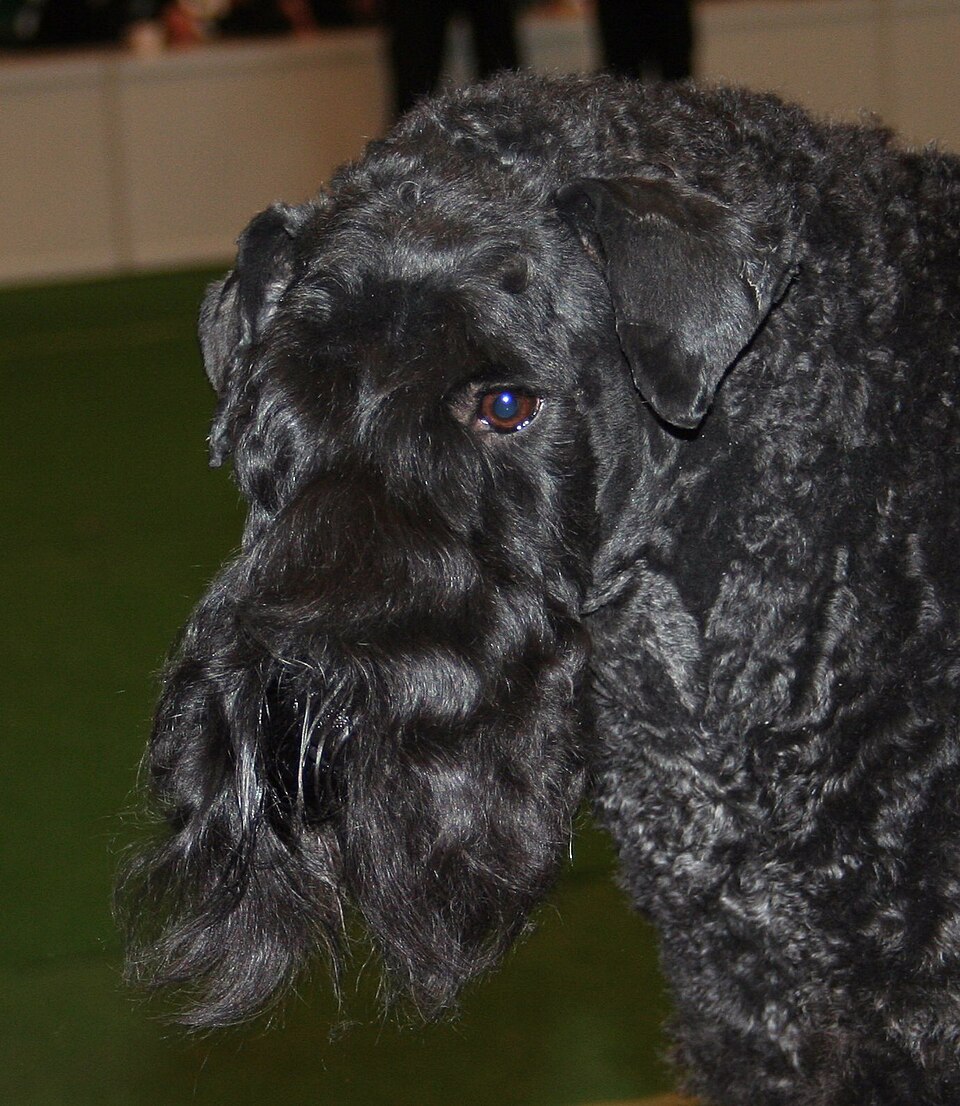
A long beard frames the Kerry Blue's muzzle. Pleple2000, Wikimedia Commons[5]

In the close-up, the hair on the ear and cheek is short, while a long beard hangs below the muzzle. Trimming gives those areas their different lengths. Alongside weekly brushing, the AKC recommends a full groom every six to eight weeks. Parts of the head, neck, ears, and belly are clipped, and the rest of the coat is shaped with scissors. If this is your first Kerry, ask a groomer who knows the breed to put the comb in your hand. Practice reaching the underside of the beard and supporting a leg as you work. Then someone at home will know how to care for the coat between appointments. [1]
Ask about both parents' health checks
If you are considering a puppy, ask the breeder to walk you through the hip and eye records for each parent. The United States Kerry Blue Terrier Club recommends an OFA or PennHIP evaluation to screen for hip dysplasia and an eye examination by a board-certified veterinary ophthalmologist. On each record, match the dog's identity to the examination and its result. Even if the breeder has already discussed DNA testing, ask to see the hip and eye reports too. They answer different questions. [1][2]
Once your Kerry comes home, the parents' records can provide background for veterinary visits. If a dog that used to run back happily with a toy develops a persistent limp, tell your veterinarian which leg seems affected and when the change began so the vet can assess it. Everyday observations are worth remembering, too. On which route this week could your dog turn back when called? Which leg still needed a pause during brushing? Paying attention to those details makes it easier to plan the next outing or grooming session for the Kerry who lives with you. [1][2]
References
-
[1] American Kennel Club. Kerry Blue Terrier Dog Breed Information.
-
[2] United States Kerry Blue Terrier Club, Inc. USKBTC Parent Club Health Statement.