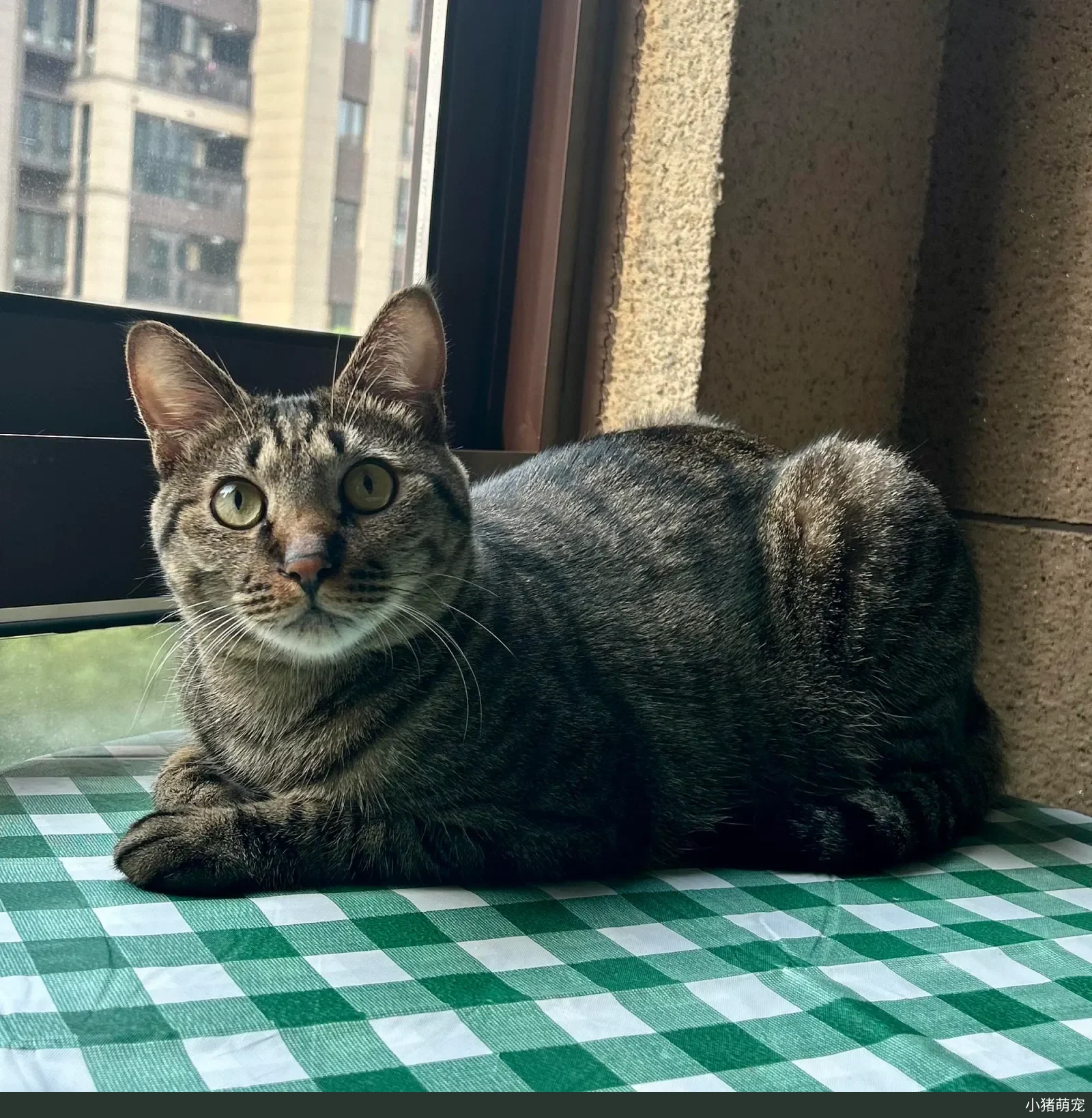
Uploader-labeled Dragon Li (Li Hua) house cat “Fernando,” photographed April 2025. Figure: Wozbozkoz / Wikimedia Commons, CC BY-SA 4.0.

The Li Hua is a short-haired tabby house cat common across Chinese towns and villages: a brown ground coat covered in black fishbone-like stripes and a sturdy build. In 2010 the Cat Fanciers’ Association (CFA) accepted it for showing as “Chinese Li Hua”; in 2015 it revoked that status because the breeding population was too small. This piece introduces this familiar neighbor from four angles: origins, looks and temperament, health, and day-to-day care.
Origins and registration history
Start with the name. “Li Hua” often calls to mind the leopard cat (also called “li mao” in folk usage), but the two are not the same animal. In November 2025, researchers from Peking University, the University of Oxford, and other institutions published in Cell Genomics an analysis of 22 small felid bones from 14 archaeological sites in China: from about 5,400 years ago through roughly 150 CE, the animals living around human settlements were leopard cats, not domestic cats; the earliest known Chinese domestic cat comes from the Tongwan City site in Shaanxi and dates to about 730 CE, mid-Tang. Genetic inference suggests that Tang cat was either all white or a mackerel tabby with white spotting.
Genomic analysis shows that Chinese domestic cats, like domestic cats worldwide, descend from the African wildcat and are closely related to Levantine wildcats and ancient Central Asian domestic cats. The researchers therefore suggest cats were likely brought into China by traders along the Silk Road in the Tang era, while acknowledging that samples along that route before 700 CE are too few for the route to be considered settled. The study also found no desert-cat or Asian wildcat ancestry in ancient Chinese domestic cats. Note that the work concerns Chinese domestic cats as a whole; it did not specifically test a “Li Hua” breed.
International recognition of the Li Hua as a “breed” is only about a decade old. CFA’s archived breed profile says Chinese Li Hua was accepted at the February 2010 board meeting, shown in the Miscellaneous class, and described as a naturally occurring, non-hybrid breed. Five years later, the CFA breed committee reported at the February 8–9, 2015 board meeting: only 8 to 14 different individuals were shown each year over those five years, at most about 50 in total; the United States had only one truly active breeder, and the main advocate in China said they would step back; judges’ comments in the prior two years were more negative than positive and held that recent show cats did not resemble the animals in the original application. The board then voted to remove it from Miscellaneous as of May 1, 2015; CFA has not registered Li Hua cats since.
It does not appear in CFA’s 2025–2026 standards compilation or in FIFe’s published list of recognized breeds. For most households, then, a family Li Hua is more accurately “a Chinese domestic house cat with Li Hua tabby markings” than a pedigree-registered purebred—and that does nothing to make it any less a good cat.
Looks and temperament
CFA’s Li Hua standard of the day recognized only one color: brown mackerel tabby. Each body hair is banded—black at the root, pale yellow in the middle, brown at the tip—what the standard called a “mouse coat”; there must be at least one complete “necklace” marking on the chest, black rings on the legs, and a ringed tail that must end in a black tip. White paws, a white muzzle, or white spotting on the body were disqualifying. The standard also had a charming detail: small black dots above and behind the mouth corners that make the cat look as if it is smiling.
On type, the standard described a head like a “hexagonal diamond,” longer than wide, with a long, straight nose; eyes large and almond-shaped, outer corners higher than inner, green, yellow, or brown allowed, green preferred. The body is broad, sturdy, and rectangular, with a wide chest and well-developed muscle; adult males weigh over 11 pounds (about 5 kg), females at least 8.75 pounds (about 4 kg). The coat is short, dense, and close-lying, without a thick undercoat; the standard notes that cold hardiness is not especially strong. They also mature slowly and may take three years to reach full size.
On temperament, CFA’s profile described the Li Hua as gentle and easygoing, able to live peacefully with other cats, loyal to its people, and intelligent; the opening of the standard also called them historically fine hunters. These are breed-association summaries, not behavioral measurements. For any one cat, temperament also depends on how it was raised: AAFP and ISFM environmental-needs guidelines note that kittens that get gentle human contact in the critical socialization window of 2–7 weeks of age tend to be friendlier and less easily stressed as adults.
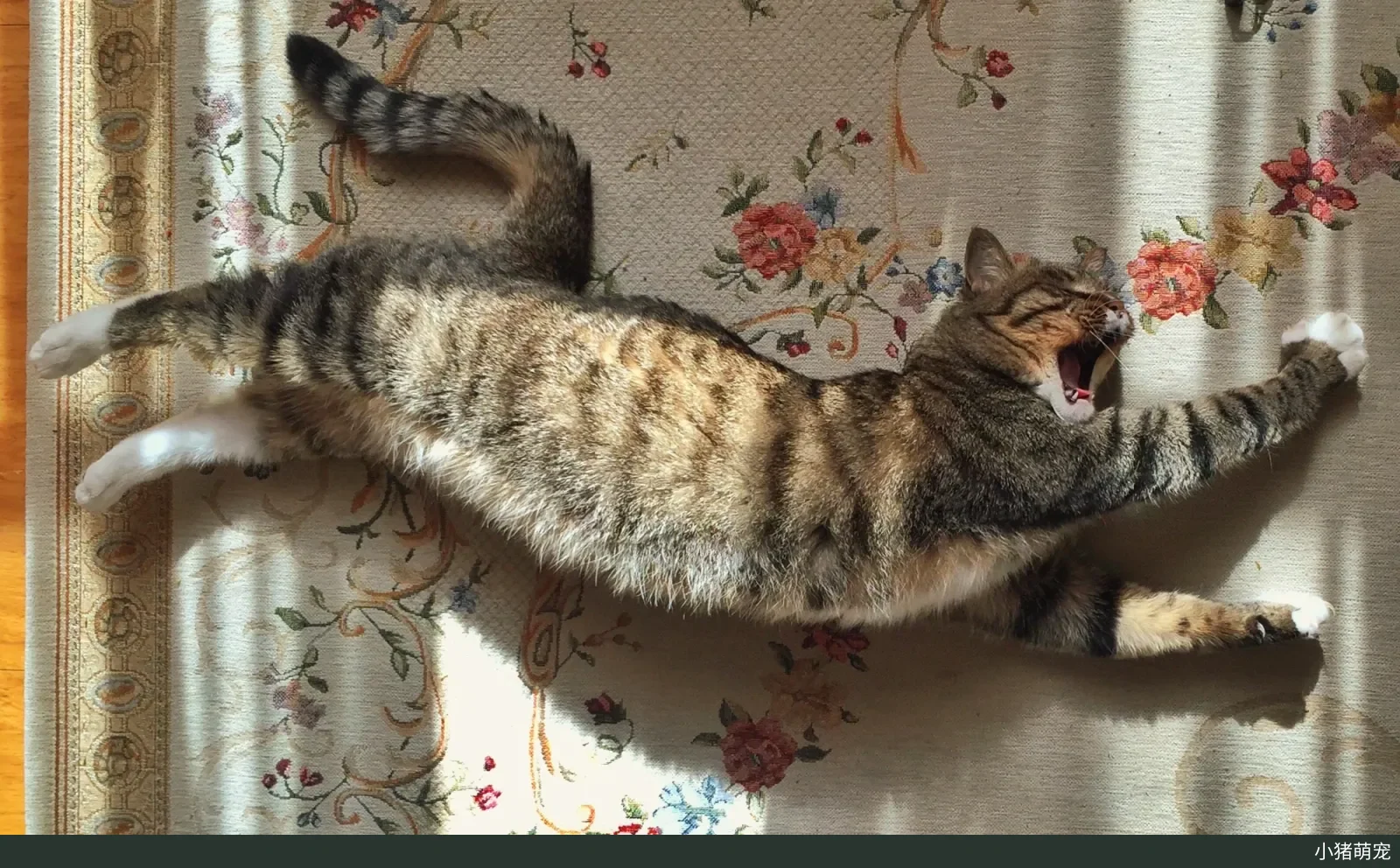
Uploader-labeled Li Hua “Taiga” stretches and yawns in the sun, photographed May 2015. It has white paws—a disqualifying trait under CFA’s standard of the day—showing that everyday “Li Hua” covers a wider look than the breed standard. Figure: Hal 0005 / Wikimedia Commons, CC BY-SA 4.0.

Health
Bottom line first: we found no breed-specific veterinary studies or genetic-disease screening data for the Li Hua, so we cannot claim it is “naturally healthy,” nor name a signature “breed disease.” What is clear is that the Li Hua standard is not built on harmful mutations or extreme conformation: CFA required a long, straight nose and a normal bite, and listed curled or malformed tails and abnormal toe counts as disqualifying. That contrasts with some contested breeds—International Cat Care notes that the Scottish Fold’s fold mutation also affects cartilage throughout the body, causing osteochondrodysplasia and painful arthritis, and considers continued breeding unethical; its position statement also argues against breeding for folded ears, chondrodysplasia (short legs), extreme brachycephaly, and similar traits.
The idea that “street cats are tough” also needs a question mark. A 2014 Royal Veterinary College VetCompass study did not find more common disorders in pedigree cats than in non-pedigree cats; abscesses and hyperthyroidism were recorded more often in non-pedigree cats. In a 2023 study the same team randomly sampled 18,249 cats seen in UK primary-care clinics in 2019; the most common diagnoses were periodontal disease (15.2%), obesity (11.6%), and dental disease (8.2%), and the authors stressed that obesity and dental disease are both preventable. These are overall UK cat figures, not Li Hua-specific statistics, but they make a useful care checklist for Li Hua households.
Care basics
The 2013 AAFP and ISFM Feline Environmental Needs Guidelines summarize a healthy home environment in five “pillars”: safe places to hide; multiple separated stations for food, water, litter boxes, scratching, play, and rest; opportunities to play and simulate hunting; positive, predictable human–cat interaction; and respect for the cat’s sense of smell. The guidelines stress that these needs apply to all house cats. For a Li Hua the standard described as a “good hunter,” follow the guidelines by scheduling several wand-toy chase sessions a day and hiding part of the dry food or using puzzle feeders so the cat “forages while it eats.”
Day to day, treat weight and oral health as two priorities: weigh regularly, portion by body condition, and ask the vet to check the teeth at checkups. CFA’s profile also recommended indoor living, neutering, and providing scratching posts or other outlets, while firmly opposing declawing. Because the Li Hua coat lacks a thick undercoat, do not leave the cat on a cold balcony or outdoors for long stretches in winter.
If you plan to buy from a breeder, one further note: CFA has not registered Li Hua cats since May 2015, so any sales pitch centered on a “CFA pedigree certificate” is worth questioning for the certificate’s origin.
References
-
The Cat Fanciers' Association. Breed Profile: The Chinese Li Hua (Internet Archive snapshot 2015-01-07; original page undated).
-
The Cat Fanciers' Association. Summary of Motions, CFA Executive Board Meeting, February 8/9, 2015. 2015.
-
The Cat Fanciers' Association. CFA Executive Board Meeting Transcript, February 8–9, 2015. 2015.
-
The Cat Fanciers' Association. CFA Show Standards 2025–2026. 2025.
-
Fédération Internationale Féline. Breeds (accessed 2026-10-17).
-
Han Y, Hu S, et al. The late arrival of domestic cats in China via the Silk Road after 3,500 years of human-leopard cat commensalism. Cell Genomics, 2025-11-27.
-
O'Neill DG, Gunn-Moore D, Sorrell S, et al. Commonly diagnosed disorders in domestic cats in the UK and their associations with sex and age. Journal of Feline Medicine and Surgery, 2023.
-
O'Neill DG, Church DB, McGreevy PD, et al. Prevalence of disorders recorded in cats attending primary-care veterinary practices in England. The Veterinary Journal, 2014.
-
International Cat Care. Scottish Fold osteochondrodysplasia. First published 2024-06-18, updated 2025-09-26.
-
International Cat Care. Feline Conformational Health and Welfare in Cat Breeding (position statement, undated).
-
Ellis SLH, Rodan I, Carney HC, et al. AAFP and ISFM Feline Environmental Needs Guidelines. Journal of Feline Medicine and Surgery, 2013.