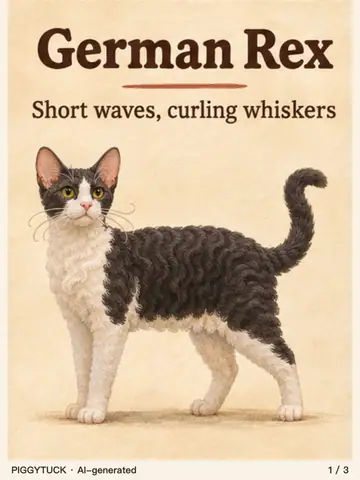
A German Rex (GRX) has a short coat that forms soft, velvet-like waves and whiskers that are shorter than usual and curly. FIFe recognised the breed in 1982.[1][2] A gentle weekly brush is a chance to remove loose fur and check the skin.[3]
Recognising type and waves under FIFe
The German Rex is medium-sized, with rather fine, medium-length legs; a rounded head with good breadth between the ears, well-developed cheeks, a slight indentation at the nose base, and a strong chin; medium-large ears wide at the base with slightly rounded tips, finely haired outside and lightly inside; medium, well-opened eyes set toward the outer rather than inner edge of the nose outline, with brilliant colour harmonising with the coat.[1][2]
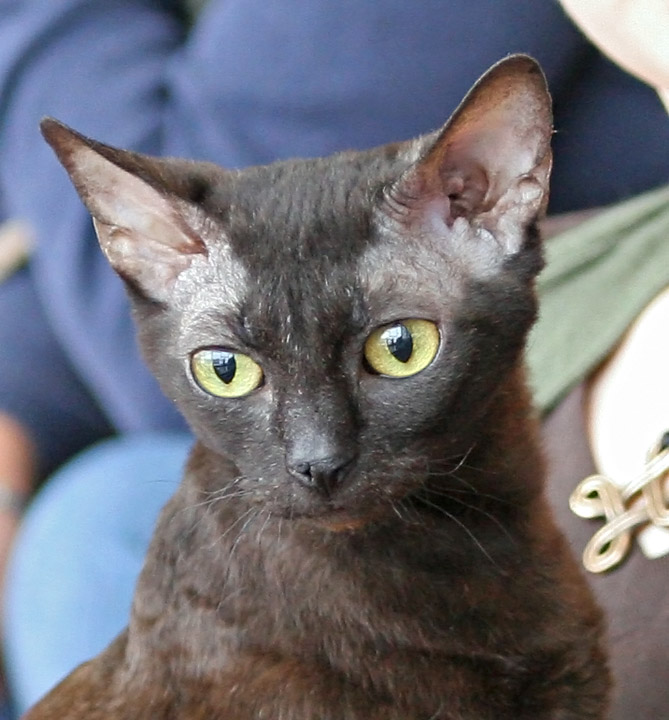
Figure: Dark brown German Rex Lotti, head-and-chest close-up with open ears. Heikki Siltala, catza.net[5]
The body is medium length, strong and muscular but not coarse; the chest is strong and rounded in profile; the back is straight from shoulders to rump; the medium-length tail has a substantial base tapering to a rounded tip and is well covered with fur, with tail coat scored separately.[2] The coat is the hallmark: short and velvety, soft and very silky, density from thin and soft to thicker, wavy without guard hairs—waves, quality and texture carry 40 points; curly whiskers add 5 points.[1][2] The profile adds that density may vary, yet the coat must stay short, wavy all over and very silky, feeling like soft velvet.[1] FIFe recognises all colour varieties and patterns, including any amount of white, judged in colour-variety groups that include black/blue/chocolate/lilac/cinnamon/fawn and their smoke and white combinations, plus red/cream/tortie solid, silver and golden groups.[2] The photo individuals are labelled with FIFe-style EMS codes—Lotti as [GRX b], Germi as [GRX a 21 33]—consistent with FIFe’s recognition of multiple colour groups, including chocolate-coded entries.[2][5][6][7] Colour recognition can differ across associations; treat each association’s current text on its own terms rather than reading one older exclusion list as a universal rule.[2]
Coat grooming and home setup
A German Rex can often groom its own short coat. Brief weekly brushing helps keep the coat in good condition, remove dust, dead skin and loose hair, and let you check coat and skin. Many long-haired cats need daily grooming to prevent knots—that is a long-hair frequency, not the default schedule for a short-coated German Rex.[3] Regular grooming also lets you spend time with your cat and monitor health, and can improve circulation. Soft-bristle or pin brushes, and grooming mitts useful for shorter-coated breeds, fit this coat better than long-hair dematting routines; seasonal brushes can help during moult.[3] Keep each grooming session short, use praise and treats, and stop if the cat twitches, tail-swishes, growls or hisses.[3] Watch for sore patches, wounds or matting, and see a veterinarian if coat condition changes.[3] Curly whiskers and eyebrows are part of the breed look—keep facial grooming light.[1][2]
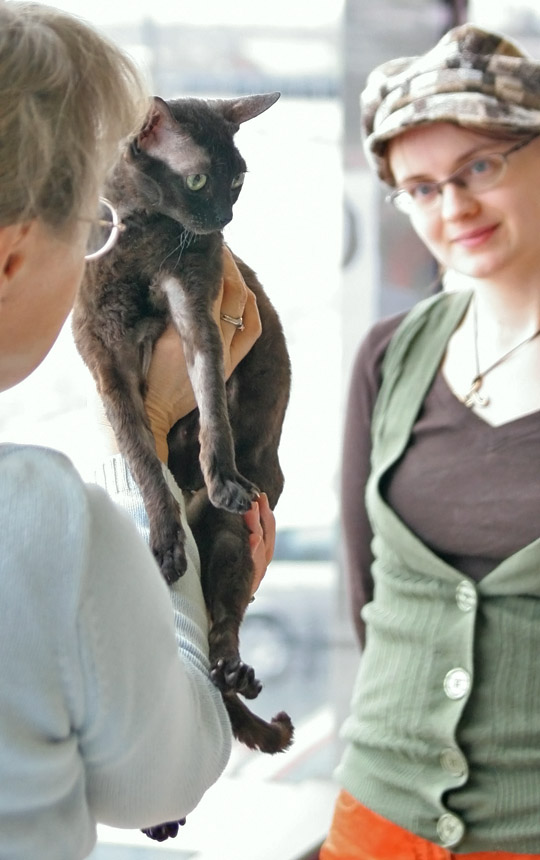
Figure: Dark brown German Rex held upright at a show with a curved tail. Heikki Siltala, catza.net[6]
Provide a quiet retreat and separate spots for food, water, litter, scratching, and rest. A sturdy shelf or box gives a German Rex somewhere to hide or watch the room, and regular games offer chances to stalk and pounce. Keep interactions predictable, let the cat walk away when it has had enough, and be mindful of changes to familiar scents.[4] Many German Rex cats are playful and sociable; adapt the setup to the cat you live with.[1][4]
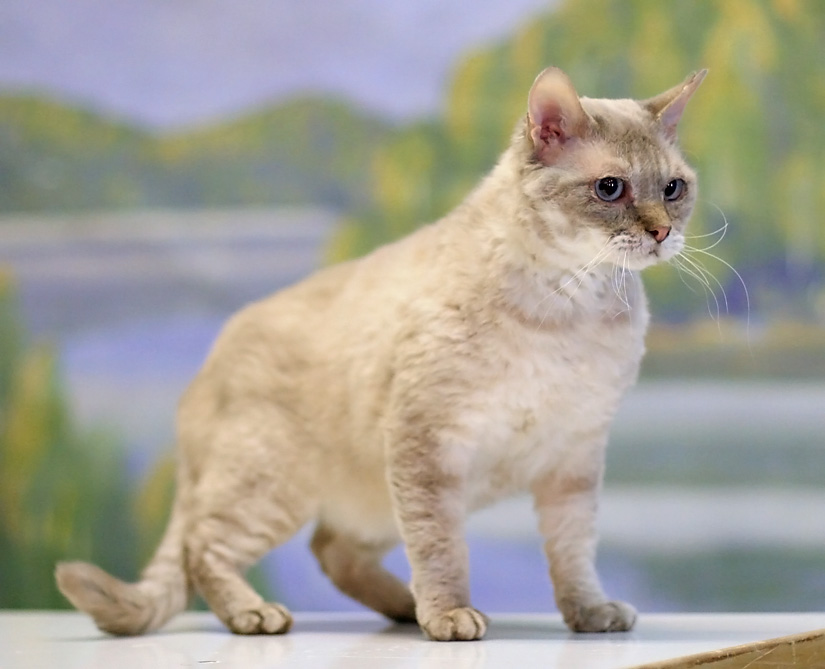
Figure: Light-coated German Rex Germi on a show table with blue eyes. Heikki Siltala, catza.net[7]
Day-to-day checks and veterinary talk
Treat coat and skin integrity as a routine observation during grooming: redness, wounds, sudden hair loss or worsening mats are reasons to contact a veterinarian. Mention recent changes in appetite, drinking, litter use or activity so the clinician can judge local versus systemic change.[3] The five indoor pillars are a useful checklist when discussing home setup, behaviour and stress with a veterinarian, but they do not replace exams, vaccines or individual medical plans.[4] When talking with breeders, ask about coat and skin care history, grooming frequency and tools used, and keep association appearance lines separate from the home-care plan.[2][3]
Short velvety waves, curly whiskers, a rounded head, and wide-set ears help identify a German Rex. At home, make time for gentle brushing, play, and observation of the skin and coat.[2][3][4] Adjust the routine to the cat’s energy and response to grooming.[1][2][4]
References
-
Fédération Internationale Féline. German Rex.
-
FIFe (01.01.2026). Breed standard: German Rex / GRX.
-
RSPCA. Grooming your cat.
-
Feline Veterinary Medical Association (2025-08-28). New Position Statement Reimagines Life for Indoor Cats.
-
Siltala, H. Lotti GRX photo 061109. catza.net.
-
Siltala, H. Lotti GRX photo 061129. catza.net.
-
Siltala, H. Germi GRX photo 052045. catza.net.