Lassie gave generations of readers and moviegoers a familiar picture of the Collie: a long-haired dog with a white ruff. Long before the breed appeared on screen, Collies worked alongside shepherds in Scotland. They enter the written record around 1800. In the second half of the nineteenth century, Queen Victoria grew fond of the local herding dogs during her stays at Balmoral Castle in the Scottish Highlands, and her interest helped make them known to a wider public. The American Kennel Club (AKC) registers this breed as the Collie. The Border Collie is a separate breed.[1]
Seen in profile, the Collie is a large, lightly built dog, standing 22 to 26 inches (about 56 to 66 centimetres) at the shoulder. Follow the line of the head from the ears towards the nose and you can see its long wedge shape. From the front, the almond-shaped eyes are easier to see, and a slight movement of the ears can change the dog's expression. A Rough Collie's coat stands out around the neck and chest. A Smooth Collie's shorter coat follows the outline of the body. Both come in sable and white, tricolour, blue merle, or white. The head, eyes and proportions can help you recognise a Smooth even without the familiar ruff.[1]
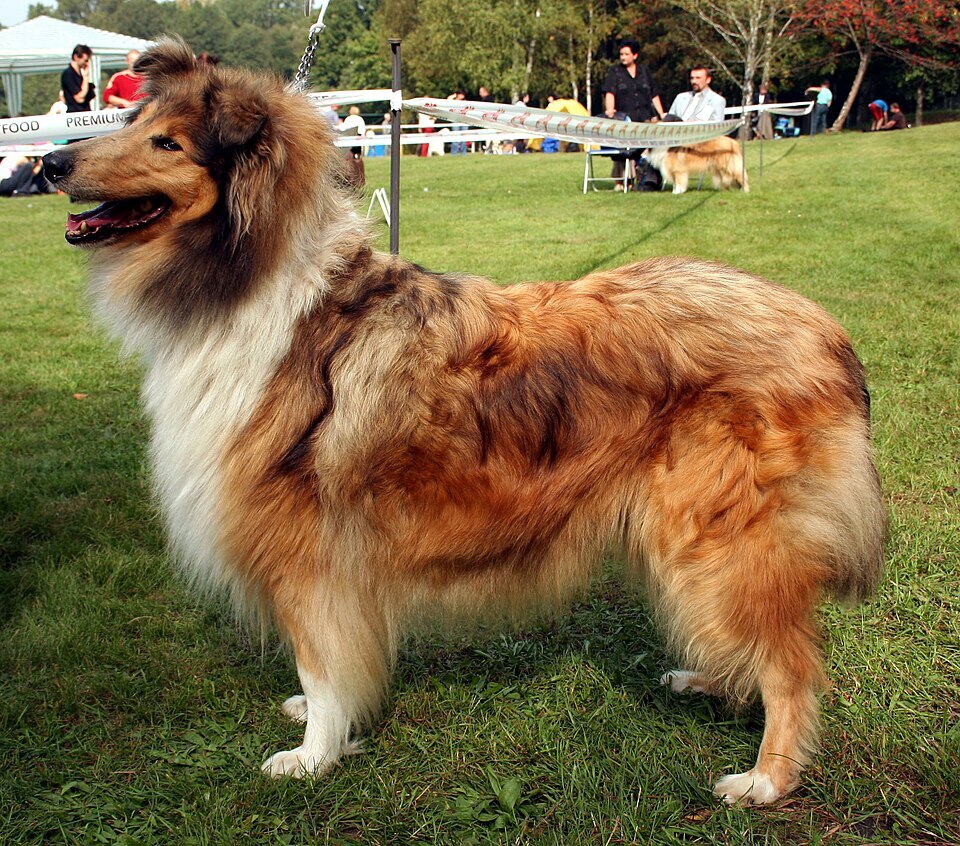
Figure: A Rough Collie in profile. Pleple2000, Wikimedia Commons[2]

A Collie's herding background has a practical bearing on an ordinary weekday. This is an athletic dog that enjoys going out with someone. Who in the household would take the walk, and where along the way could the dog stretch out and run safely? The AKC suggests daily walks, opportunities to run in a fenced space, and games such as fetch. Each serves a slightly different purpose. A walk gets you out together, while a fenced area gives the dog room to break into a run. The distance and pace can reflect the stamina and interests of the individual dog.[1]
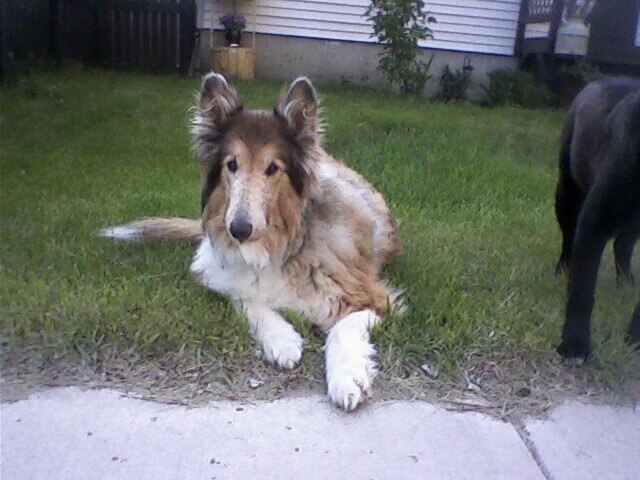
Figure: A Collie in stride. Sekuloff, Wikimedia Commons[3]

If you have a fenced yard, think about who will be on the other side of the back door with the dog. During fetch, the dog gets to chase a toy across the grass, bring it back to you, and see you set the game going again. Left out on the same patch of grass for long stretches, a Collie may find little to do and start barking out of boredom. Companionship matters indoors, too. When the game ends, is there a place where the dog can come back in and settle near the family?[1]
Fetch can give you something to teach as well as something to throw. Start with the toy close by. If the dog picks it up and turns towards you, encourage that turn. You can build on it until the dog brings the toy all the way back for another throw. Collies generally enjoy learning and respond well to gentle, positive teaching. A puppy class offers introductions to other dogs and people, and practising at home gives you both a chance to use what you have learned. For a family that enjoys this part of life with a dog, obedience or agility offers more to learn together.[1]
Collies have a reputation for being fond of children. How well a particular dog fits your family depends partly on what each of you enjoys doing. A child might love throwing the toy. Is there an adult who would enjoy teaching the return and taking the dog out on workdays? Would the family welcome its company on a quiet evening after the walk? When meeting a prospective dog, ask which games it chooses, see how it responds to an invitation to play, and find out how it usually settles afterwards. Those details help you picture the dog in your own home.[1]
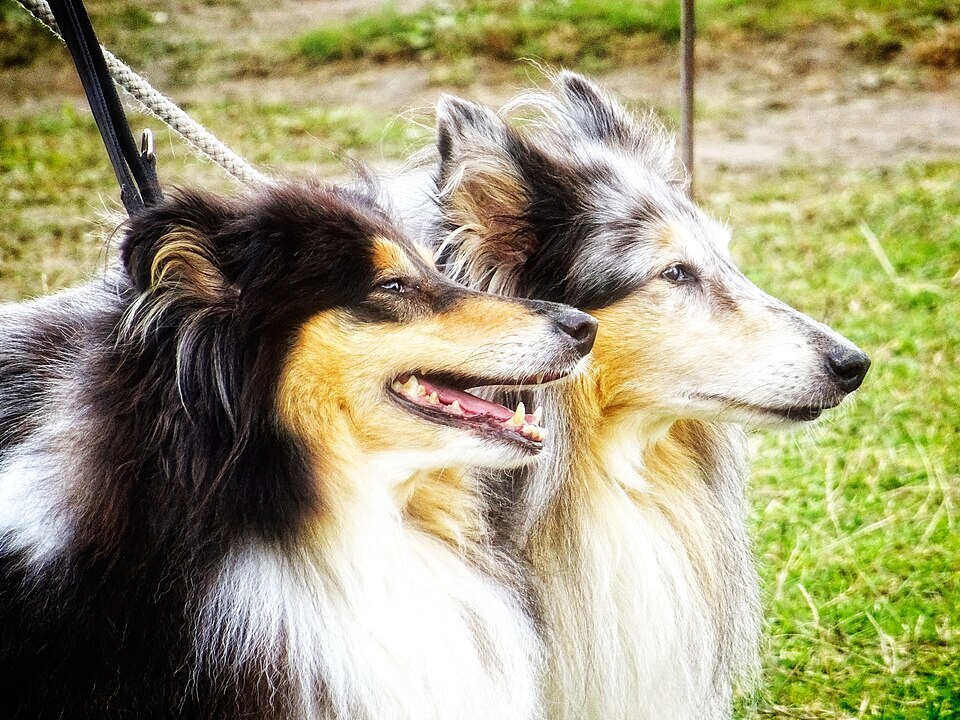
Figure: The head shape of two Rough Collies. Garry Knight, Wikimedia Commons[4]

If both varieties appeal to you, picture the weekly brushing a Rough Collie needs. The long outer coat can look tidy while loose undercoat is still caught beneath it. The AKC recommends brushing down to the skin each week. Part a small section of coat so you can see whether the hair separates freely near the roots, then work your way to the next section. The mane is what catches the eye when the dog stands in profile. Two of the places that need your attention are harder to see: behind the ears and behind the elbows, where mats readily form.[1]
A Smooth Collie spares you much of the work of untangling long hair. It also has a double coat, though, and regular brushing removes loose undercoat, especially during shedding periods. The choice comes down to a fairly tangible difference in your week. If you enjoy working through a long coat section by section, grooming a Rough can become time you look forward to spending together. If you love the Collie's build and temperament but would struggle to keep up with mats behind the ears and elbows, the Smooth's grooming needs may suit you better.[1]
Before bringing a puppy home, ask the breeder for its eye examination record. Collie eye anomaly is an inherited eye disease, and the AKC recommends an examination by a board-certified veterinary ophthalmologist when the puppy is six to eight weeks old. A record identifying your puppy tells your veterinarian when it was examined and what the specialist found. A second piece of information concerns medication. Some Collies carry an MDR1 gene variant associated with sensitivity to certain drugs. Bring any available genetic test result to veterinary appointments so the veterinarian can take it into account when choosing medication. Keep both records, since each answers a different question about your dog.[1]
[1] American Kennel Club. Collie[1].