WCF’s Aphrodite’s Giant longhair (APL, February 2012) links the breed to Cyprus prehistoric remains and a genetic-fingerprint narrative, including DNA scans of about thirty cats. Treat that as registry storytelling, not archaeological or lab proof for every pet. The body must be big, strong, lean-muscular and not cobby, with a long back and neck, muscular shoulders and hips, slightly longer hind legs, and a medium-to-long balanced tail—more slender at the tip in shorthairs, well plumed in longhairs.[1]
Structure, head, and seasonal coat
From the front the head is a long triangle with a straight cheek line; muzzle and nose are long and straight with a very slight dip under eye level; chin and teeth are strong; the forehead is slightly domed. Eyes are olive-shaped and oblique; all colours are allowed if even. Ears are medium to large, wide-based, set in an open V. The coat is soft cotton-woolly semi-longhair with winter undercoat and a much shorter, often undercoat-free summer coat; little topcoat; very soft to the touch; a full plumed tail. All colours except pointed and mink are allowed; solids should be without white; bicolours desire irregular white placement. Body scores 35 and coat/colour 25, so large balanced structure plus the cotton coat are the recognition centre of gravity.[1]
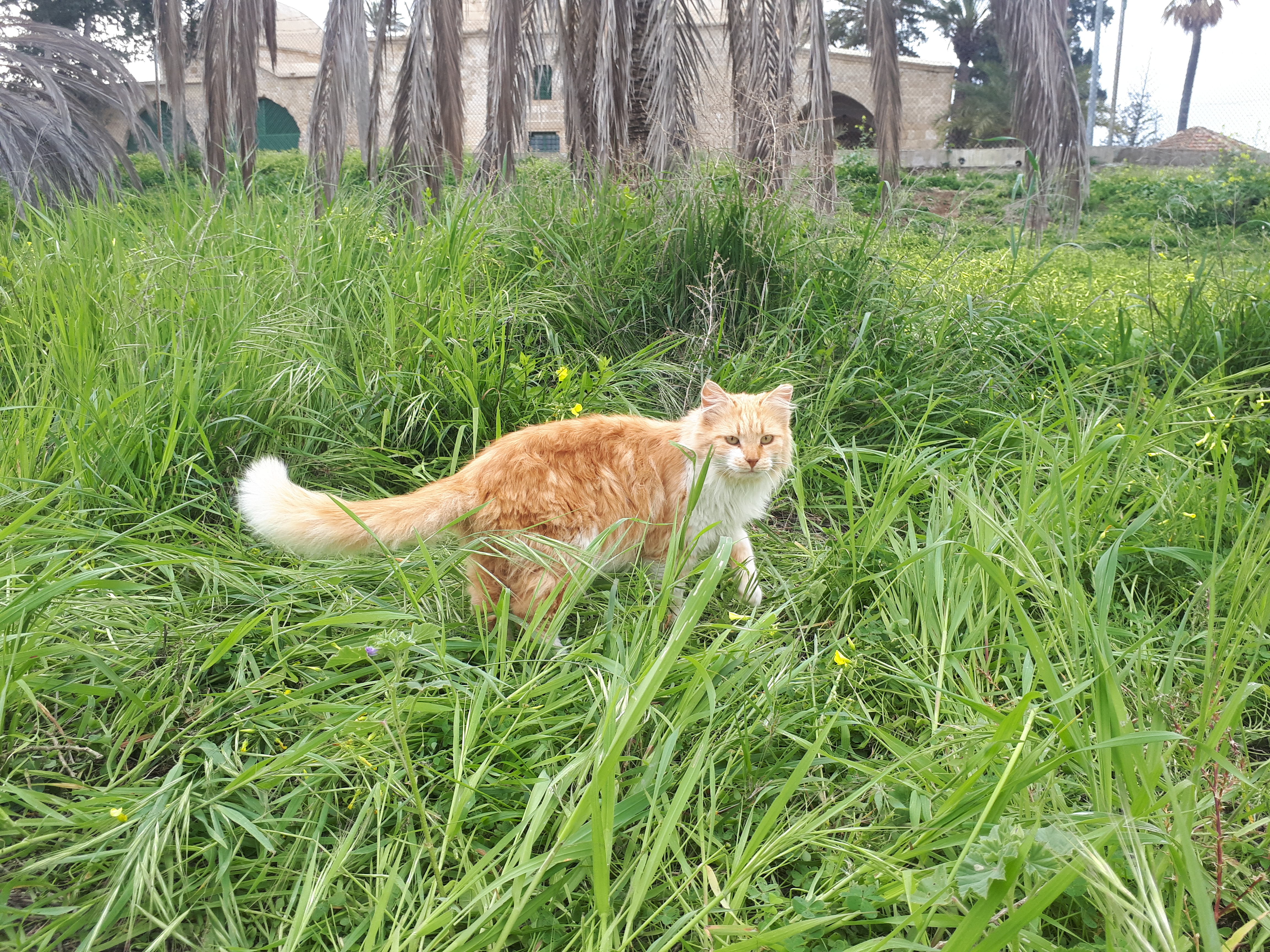
Fig: Aphrodite’s Giant in profile showing large build and semi-long coat. Apanag10, Wikimedia Commons


Fig: Front sit showing the long triangular head and ear placement. Apanag10, Wikimedia Commons


Fig: Cyprus-linked Aphrodite cat standing with a soft semi-long coat. Aphrocats, Wikimedia Commons

Household life: space and grooming
“Giant” refers to size development, not a guaranteed temperament. Provide wider pathways, sturdy trees and load-bearing shelves, and FelineVMA’s separated resources so large cats are not forced through choke points. Comb more in the winter coat, less after the summer thin-down, while watching skin and mats. Predictable interaction matters because indoor giants depend on caregivers for movement outlets.[1][2]
Recognition notes versus veterinary care
GCCF lists Aphrodite in a green “not yet applied, probable acceptance” tier with a legality note on Cyprus export—another registry’s process, not a health verdict on a WCF cat. Large size and semi-longhair are not diagnoses; turn them into an individual checklist for joints, obesity, oral care and coat-related skin issues. Origin stories do not replace exams or prevalence data.[3][1][2]
Large semi-longhair: space, seasons, story limits
Read “Giant” as size and bone development so you prepare load-bearing trees and wider pathways—not as a temperament warranty or a hidden “fine for first-time owners” claim. Winter cotton undercoat and summer thinning are written seasonal differences; grooming plans should change with the season instead of one year-round salon schedule. Prehistoric-grave and DNA-fingerprint passages are registry narrative: cite them as such, and do not pretend every pet has completed that lab proof. GCCF’s legality note on Cyprus export reminds readers that cross-border movement involves law and welfare process, not “available for sale equals appropriate.” Large indoor cats tip into conflict or obesity when resource stations are scarce; a five-pillar checklist beats “talk to it more.” Keep joints, weight, teeth and coat-related skin on the routine list rather than hunting a single breed-disease label. In the first two weeks home, stabilise water and litter routes before raising climb height. Separating cultural story from checkable outline clauses keeps reading on track.[1][2][3] Keep citation numbers tied to sentences you actually read; if only an abstract was available, say so in internal notes and do not promote it to full-text evidence. A household decision list should include traceable origin, a recent exam, a budget for environment changes, and a care path when pain or elimination changes appear. Those steps fit rare breeds and local landraces alike and reduce treating association wording as a lifestyle promise. Avoid two common swaps: treating “association-allowed looks” as “proven for every home,” and treating “welfare policy raises concern” as “every similarly shaped cat is already diagnosed.” Keep source layers side by side—breed standard, indoor-environment statement, welfare policy, and the individual veterinary record—each answering a different question. If public sources lack breed-specific screening advice, say that a public prevalence/screening table was not found instead of borrowing a neighbour breed’s numbers. That is how a mid-length profile can carry both recognisable traits and executable limits. Large cats need tip-resistant dishes and separated water points; if smaller cats share the home, use a cat-count-plus-one resource rule to cut competition. Taken together, treat the article as a three-part kit—look recognition, environment readiness, and health boundaries: check recognisable traits against association clauses, audit the home with the indoor five pillars, and return pain, lameness, elimination or skin changes to an individual veterinary path. That keeps a mid-length profile from inventing husbandry anecdotes or turning an ideal type into a promise about every cat. Add a check order: copy the association name, code and update date first, then observable coat/tail/ear/eye clauses, and only then faults and disqualifications. Turn those clauses into a look-alike checklist that never answers “is it healthy.” On environment, tick safe place, separated resources, play/predation, predictable interaction and sensory respect—and fix missing ticks. On medicine, keep vaccine/parasite records, neuter status, prior imaging/labs, and the clinic to call when something changes. If a source offers stories without records, write the gap into the adoption decision instead of filling it with adjectives. Those four steps let traits and boundaries land as household actions. Final reminder: do not pad boundaries with empty disclaimers, and do not invent first-person feeding diaries; every look claim should point back to a read standard or report sentence, and every health concern to veterinary or welfare-policy text. If readers keep only three lines: standards identify looks, statements govern environments, and medical records govern this one cat.